
Which railway infrastructure investment reports show real demand

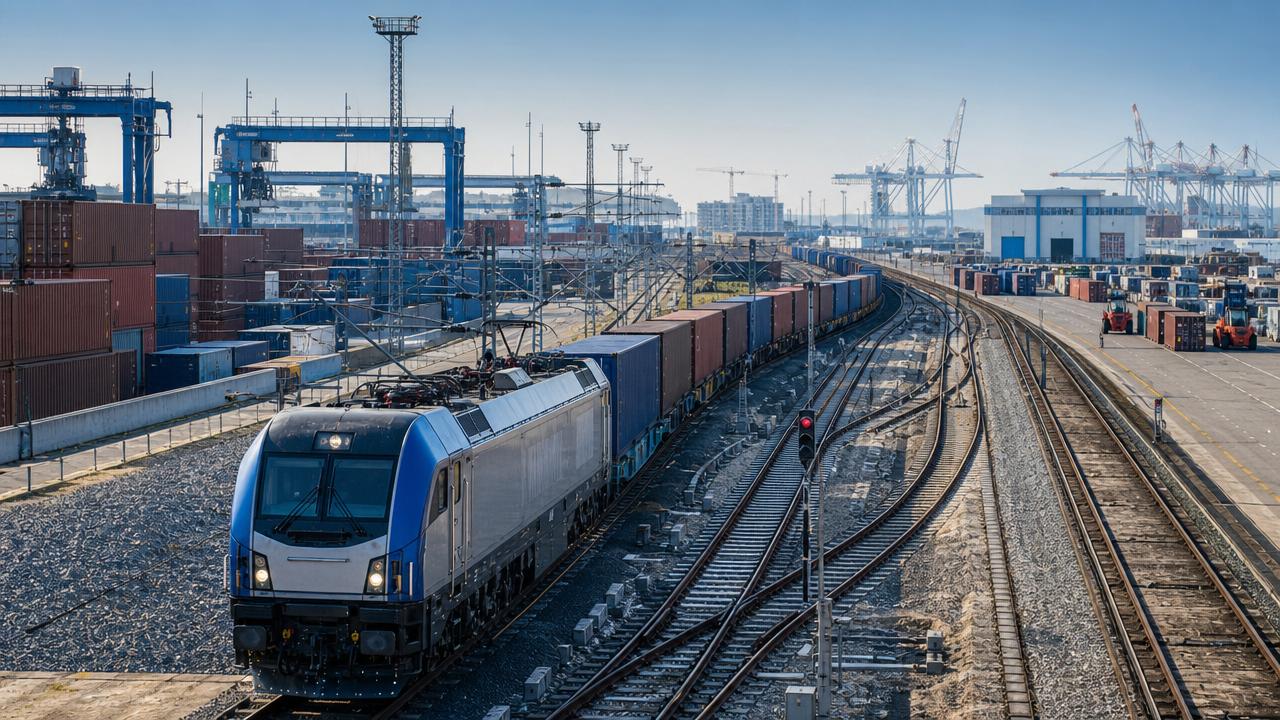
For enterprise decision-makers, not all railway infrastructure investment reports reveal genuine market traction. The most valuable reports connect capital plans with freight volume shifts, corridor bottlenecks, signaling upgrades, and cross-border policy alignment. Understanding which railway infrastructure investment reports show real demand helps leaders prioritize projects, reduce risk, and capture long-term opportunities in heavy-haul, intermodal, and smart rail development.
In practice, many reports list headline budgets, headline route lengths, or ambitious completion dates, yet fail to answer the questions that matter most to boards, procurement teams, and corridor planners. Is the spending tied to measurable freight demand? Does the project require locomotives, wagons, track maintenance systems, ETCS or CBTC upgrades, and intermodal equipment within a defined 12–36 month window? Are standards, financing, and customs frameworks aligned well enough to move from policy intent to contracted execution?
For organizations operating across heavy-haul rolling stock, rail infrastructure, smart signaling, and rail-port integration, the right railway infrastructure investment reports are not simply informative documents. They are early indicators of equipment demand, engineering demand, and long-cycle procurement demand. This is especially true where freight corridors span 500–2,000 km, axle loads exceed 25 tonnes, or signaling modernization requires staged deployment over 3–5 years.
What separates real demand signals from investment noise
The first filter is specificity. Strong railway infrastructure investment reports do more than mention “network modernization” or “capacity expansion.” They identify route sections, throughput constraints, signaling gaps, and asset classes. For example, a credible report may specify double-tracking over 180 km, a new intermodal terminal with 600,000 TEU annual design capacity, or ETCS Level 2 rollout across 14 stations and 320 km of freight-priority line.
The second filter is operational linkage. If a report shows freight tonnage growth of 6%–9% annually but contains no detail on siding length, yard capacity, axle load upgrades, or locomotive utilization, the demand case remains weak. By contrast, when freight growth is tied to crossing delays, dwell time reductions, and track maintenance backlogs, the report usually reflects an executable market need rather than a policy headline.
Four signs that a report reflects active market demand
- It links capital expenditure to measurable bottlenecks such as 24–48 hour border dwell, single-track saturation above 75%, or yard turnaround exceeding 18 hours.
- It defines technical scope, including rail weight class, signaling standard, bridge loading limits, maintenance intervals, or terminal handling targets.
- It identifies implementation phases, often in 2–4 stages, with procurement windows for civil works, track systems, rolling stock, and communications infrastructure.
- It shows policy or financing alignment, such as customs reform, public-private concession structures, or cross-border standard harmonization.
Why freight-first indicators matter
Passenger rail announcements often attract more media attention, but freight-led infrastructure is usually the clearer demand signal for industrial suppliers and EPC contractors. Heavy-haul corridors, mineral lines, dry port connectors, and port evacuation railways typically generate a more direct requirement for track renewal, wagon fleets, locomotives above 4,000–6,000 hp, and digital signaling upgrades with predictable maintenance cycles.
This is where a technical intelligence platform such as G-RFE adds value. Decision-makers need to compare projects not only by budget size, but by engineering depth, standards exposure, asset intensity, and corridor interoperability. A $1 billion program with unresolved right-of-way issues may be less attractive than a $350 million corridor package with clear axle load targets, funded track possession windows, and a 24-month procurement timeline.
The table below shows a practical framework for evaluating whether railway infrastructure investment reports indicate real procurement potential or only high-level strategic intent.
A useful pattern emerges from this comparison. The best railway infrastructure investment reports combine commercial logic with engineering detail. They make it easier to estimate demand for track systems, rail engineering machinery, train control technology, and maintenance services over a defined period rather than a vague long-term horizon.
Which report types usually show real railway demand
Not every document category has equal value. For enterprise decision-makers, several report types consistently outperform generic market outlooks because they reveal how capital will translate into physical network changes, operational upgrades, and supplier engagement.
1. Corridor capacity and freight flow studies
These reports are often the most actionable because they expose where the rail system is already under stress. Look for train density, slot utilization, average speed, wagon turnaround, and terminal queue metrics. If a study shows average freight speeds below 25 km/h, corridor occupancy above 80%, or recurring 12-hour terminal delays, infrastructure and systems investment usually follows.
2. National rail modernization plans with funded phases
A modernization plan becomes valuable when it moves beyond policy narrative into funded packages. Reports that identify Phase 1 track renewals, Phase 2 signaling migration, and Phase 3 intermodal connectivity over a 3–7 year sequence are strong indicators. They allow suppliers to map when demand will emerge for maintenance machinery, communications systems, or rolling stock upgrades.
3. Port-rail and dry port integration reports
For companies involved in intermodal rail-port systems, these are high-value sources. If a seaport is targeting a rail modal share increase from 12% to 25% within 5 years, the resulting demand may include terminal tracks, signaling enhancements, shunting locomotives, automated handling coordination, and customs-linked digital infrastructure.
4. Signaling migration and safety compliance assessments
Reports focused on CBTC, ETCS, GSM-R replacement, or legacy signaling obsolescence are especially valuable when they include asset condition data and migration constraints. A system with 30% spare-part obsolescence, failure intervals trending downward, or cross-border compatibility problems is much closer to procurement than one that only states an ambition to digitize operations.
The following table helps decision-makers rank the report categories that most often indicate real market demand across G-RFE’s five industrial pillars.
The common thread is immediacy. The most useful railway infrastructure investment reports are close enough to operations that they expose where engineering intervention is unavoidable, not merely desirable.
How enterprise teams should evaluate report credibility
A disciplined reading process reduces the risk of chasing politically attractive but commercially weak opportunities. Senior leaders should use a structured review model that blends technical, regulatory, and procurement signals.
A five-step review model
- Check whether the report quantifies demand with freight tonnage, train frequency, terminal dwell, or network utilization data.
- Verify that infrastructure scope is tied to technical standards such as UIC, EN, AAR, ETCS, or GSM-R where relevant.
- Look for package sequencing, including design, civil, systems, commissioning, and maintenance phases over 12, 24, or 36 months.
- Assess funding confidence by identifying sovereign budgets, concession structures, development finance participation, or PPP frameworks.
- Test interoperability readiness, especially for cross-border freight corridors where customs, safety rules, and communication protocols must align.
Questions procurement and strategy teams should ask
Does the report imply demand for new-build assets or life-extension services? Is maintenance mechanization part of the plan, or is labor intensity still assumed to remain high? Are locomotives and wagons compatible with the proposed axle loads, clearance envelope, and braking requirements? Will signaling upgrades require onboard retrofit at fleet level or only wayside investment? These questions determine whether the opportunity fits your operating model.
At G-RFE’s level of analysis, this distinction matters. A rail authority upgrading 400 km of corridor may create demand across all five pillars, but not at the same time. Track renewal machinery may be needed first, GSM-R migration second, yard automation third, and locomotive fleet expansion only after path reliability improves above a target threshold such as 85% on-time departure.
Common mistakes when reading railway infrastructure investment reports
Many firms overestimate demand because they focus on announced spending totals rather than implementation friction. The size of the budget matters less than how much of it is technically prepared, regulatorily aligned, and operationally urgent.
Mistake 1: Treating route length as a demand proxy
A 900 km rail program may look attractive, but if only 120 km is fully permitted and tender-ready, near-term demand is limited. Report readers should distinguish between total planned network scope and the first executable package.
Mistake 2: Ignoring asset compatibility
A corridor may target heavier loads or longer trains, but if bridges, yard lengths, braking systems, and signaling blocks are not upgraded in parallel, the commercial opportunity may be delayed by 18–36 months. This is particularly relevant in heavy-haul and cross-border freight projects.
Mistake 3: Underweighting policy execution risk
Some railway infrastructure investment reports identify compelling trade logic but overlook customs integration, safety certification pathways, or operator access rules. If border processing remains fragmented, freight growth assumptions may not convert into actual train movements even after physical works begin.
Mistake 4: Missing the maintenance demand layer
New infrastructure creates long-term maintenance demand. Reports that include tamping cycles, rail grinding needs, inspection frequency, and possession planning are especially useful because they point to recurring service and machinery demand, not only one-time construction spend.
How to turn report intelligence into action
The practical value of railway infrastructure investment reports lies in how they shape commercial timing. Once a report passes the demand-signal test, enterprise teams should classify opportunities into near-term, mid-term, and watchlist categories. Near-term projects usually have technical scope, funding pathway, and procurement windows visible within 6–18 months. Mid-term opportunities may need another 12–24 months of policy or engineering preparation.
This approach is especially effective for organizations serving rail authorities, OEMs, and EPC contractors. Heavy-haul rolling stock suppliers can focus on corridors where axle load, siding extension, and freight growth are all aligned. Signaling providers can prioritize migration programs with legacy obsolescence and interoperability pressure. Engineering machinery providers can target corridors where maintenance backlogs and possession constraints are explicitly quantified.
A practical internal checklist
- Map each report to one or more of the five G-RFE pillars.
- Score technical readiness from 1 to 5 based on scope clarity and standards alignment.
- Score procurement timing from 1 to 5 based on funding, phasing, and tender visibility.
- Score corridor urgency from 1 to 5 using freight congestion, reliability, and modal shift pressure.
- Review every 90 days, because rail programs often move in policy bursts rather than linear schedules.
The railway infrastructure investment reports that show real demand are the ones that connect policy ambition with engineering necessity and operational pain. They are detailed enough to reveal what will be built, when procurement will open, which standards will govern delivery, and where recurring service demand will emerge after commissioning.
For enterprise decision-makers, this level of intelligence improves capital allocation, partnership strategy, and bid timing across heavy-haul locomotives, track systems, smart signaling, intermodal rail-port platforms, and specialized rail engineering machinery. If you need a clearer view of which reports signal bankable demand and which only reflect planning intent, now is the right time to refine your screening framework.
To identify high-conviction rail opportunities with stronger technical and regulatory grounding, contact us to get a tailored market intelligence approach, consult project-specific details, or explore more solutions aligned with your railway investment strategy.
Industry Briefing
Get the top 5 industry headlines delivered to your inbox every morning.