
When High-Capacity Rail Expansions Fail to Deliver Throughput

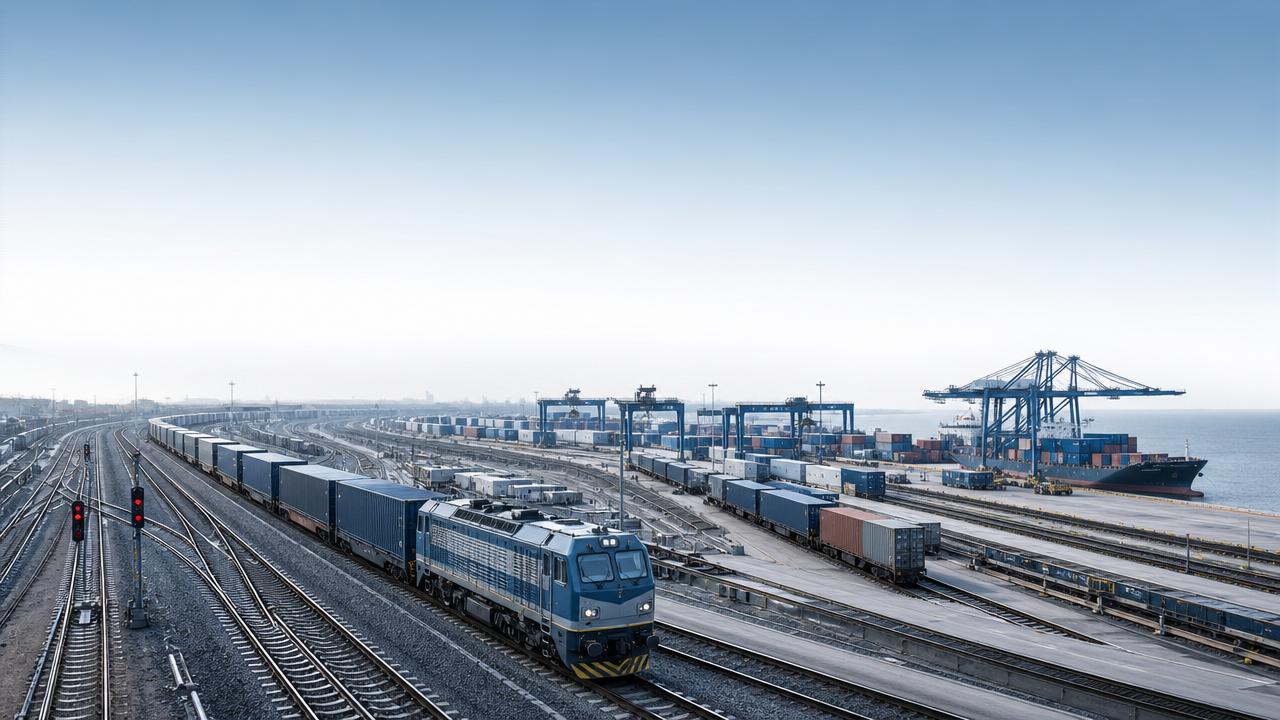
High-capacity rail expansions are often approved on the promise of moving more freight, yet many projects fall short once operations begin. For project managers and engineering leads, the real constraint is rarely track length alone—it is the interaction of signaling, yard design, maintenance windows, axle load strategy, and corridor integration. This article examines why added capacity does not always translate into higher throughput and what decision-makers must assess before scaling investment.
Why can a high-capacity rail expansion increase assets but not actual throughput?
This is the core question behind many underperforming corridor programs. A high-capacity rail investment may add new track, longer loops, upgraded structures, or heavier rolling stock capability, but throughput depends on the whole operating system. Freight volume moves only as fast as the corridor’s slowest constraint. If one terminal cannot process trains quickly, if one interlocking remains restrictive, or if maintenance possession blocks peak paths, the additional civil works will not produce proportional output.
In practice, rail capacity is not a single number. There is theoretical capacity, timetable capacity, practical operating capacity, and sustained yearly throughput. Many planning models focus on infrastructure geometry while underestimating variability: train mix, dwell time, locomotive availability, wagon condition, crew turnover, weather, and network handoff delays. On paper, a high-capacity rail line can appear ready for growth; in daily operations, dispatching conflict and terminal congestion can erase that advantage.
For project leaders, this means the business case should be framed around end-to-end freight movement, not just route expansion. The corridor must be evaluated as an integrated production chain where signaling headways, loading rates, yard productivity, and maintenance access matter as much as rail tonnage assumptions.
What hidden bottlenecks most often undermine high-capacity rail performance?
Several bottlenecks repeatedly appear in rail programs that were technically ambitious but operationally incomplete.
First, signaling and headway design. A corridor may gain extra track kilometers, yet older signaling logic, insufficient block optimization, or restrictive interlocking layouts still limit train frequency. If the control system was not upgraded with the same rigor as the track works, the new corridor can remain capacity-constrained.
Second, terminal and yard interface. Throughput is often lost in marshaling yards, loading sidings, port rail access, and receiving terminals. Long mainline capacity means little if trains queue outside a port because arrival sequencing, unloading equipment, or last-mile track access is inadequate. This is particularly relevant in intermodal and bulk freight networks where cycle time drives revenue more than line-haul speed alone.
Third, maintenance windows. Heavy-haul and mixed-use corridors require planned possessions for rail grinding, tamping, inspection, turnout renewal, and signal maintenance. A high-capacity rail network that assumes round-the-clock theoretical use without realistic maintenance time will almost always disappoint in service.
Fourth, fleet mismatch. Expanded infrastructure may be designed for heavier axle loads or longer trains, but if locomotive power, braking performance, coupler limits, wagon availability, or train makeup rules are not aligned, the corridor cannot exploit that design envelope.
Fifth, corridor integration. One upgraded segment does not automatically improve a cross-border or regional route. Handover procedures, gauge transitions, customs dwell, power system changes, and operating rule differences can absorb the capacity that civil works were expected to unlock.
How should project managers distinguish between “capacity added” and “throughput delivered”?
The distinction is essential for governance and investment control. Capacity added is usually an engineering output: kilometers doubled, loops extended, bridges strengthened, axle load raised, signaling renewed. Throughput delivered is a business outcome: more trains per day, more net tonnes moved, shorter cycle times, higher on-time departure performance, or lower cost per tonne-kilometer.
For a high-capacity rail project, managers should insist on corridor-level metrics that connect infrastructure with operations. Useful indicators include average terminal dwell, train path consumption, effective headway under degraded mode, possession-adjusted daily capacity, locomotive turnaround, and variance between planned and actual cycle time. These measures reveal whether the system performs in real conditions rather than ideal simulation.
A practical way to manage this is to separate three review layers: design capacity, timetable capacity, and resilient operating capacity. The first asks what the infrastructure can support in theory. The second asks what can be scheduled under normal operating assumptions. The third asks what can still be delivered during disruption, maintenance, weather events, and fleet imbalance. Only the third layer reflects what customers and executives will experience.
Which early warning signs suggest a high-capacity rail project may underdeliver?
Underperformance rarely appears without signals in the planning stage. If project reviews focus mostly on linear infrastructure quantities and not enough on operating philosophy, risk is already emerging. The same applies when the benefits case assumes uniform train performance despite a mixed fleet or when yard reconfiguration is postponed to a later phase.
Another warning sign is when loading and unloading nodes are treated as external stakeholders rather than capacity-critical assets. In freight rail, terminals are part of the production system. A corridor cannot be truly high-capacity rail if the mines, industrial sidings, inland terminals, or ports at each end are not engineered to the same throughput logic.
Decision-makers should also be cautious when benefits rely heavily on one assumption such as longer trains. Longer formations may reduce train count, but they can increase yard occupation time, complicate overtaking, require siding extensions beyond the project scope, and intensify consequences when failures occur. A single train break, brake issue, or wagon defect can consume more path capacity than planners expected.
Quick diagnostic table for project reviews
Are longer trains and heavier axle loads always the right answer?
Not always. These measures are powerful tools, but they are not universal solutions. In some high-capacity rail corridors, increasing train length can improve line efficiency. In others, it creates instability because sidings, yards, loading stations, brake systems, and rescue arrangements were not upgraded together. Longer trains can also reduce timetable flexibility, especially on mixed networks where passenger priority or overtaking requirements still exist.
Heavier axle loads follow the same logic. They can unlock more tonnage per train, but they accelerate wear on rail, sleepers, bridges, turnouts, and formation layers if lifecycle engineering is incomplete. A project that optimizes only for higher gross tonnage without fully funding maintenance and renewal may show an early output boost followed by reliability decline. For engineering leaders, the correct question is not whether longer or heavier is technically possible, but whether the full asset system can sustain it economically.
This is where standards and benchmarking matter. Comparing proposed parameters against UIC, EN, and AAR-informed performance ranges can sharpen decisions, but local operating context still governs the result. Gradient profile, climate, commodity type, brake regime, and traffic mix can all change the answer.
What should engineering and project teams validate before approving the next high-capacity rail expansion phase?
Before committing additional capital, teams should validate the corridor as a synchronized system rather than a set of separate packages. Start with train service design. What exact traffic pattern is expected: unit bulk, intermodal, mixed freight, cross-border flows, seasonal surges, or port-driven peaks? Capacity solutions that work for one pattern may fail for another.
Next, test operational resilience. What happens during signal failure, turnout outage, locomotive shortage, weather restrictions, or temporary speed limits? A high-capacity rail corridor that performs only in ideal mode is not robust enough for industrial freight commitments. Simulation should include degraded scenarios, recovery time, and ripple effects on yards and terminal interfaces.
Teams should then review asset stewardship. Higher output often means higher fatigue and tighter maintenance tolerances. If inspection intervals, spare part strategy, engineering machinery access, and workforce capability are not developed at the same time, throughput improvements may prove temporary. This is especially important for specialized rail engineering machinery and digital signaling systems, where possession planning and technical support directly affect reliability.
Finally, validate governance. Who owns corridor performance across infrastructure, operations, terminals, fleet, and customer commitments? Many high-capacity rail projects miss targets because each party optimizes a local KPI while total corridor output suffers. A shared dashboard and escalation model are often more valuable than another round of isolated design refinement.
What are the most common misconceptions decision-makers should avoid?
One misconception is that more track automatically means more freight. Extra track is valuable, but only when dispatching logic, terminal flow, and fleet readiness can use it. Another is that nominal annual capacity equals saleable capacity. In reality, outages, possessions, speed restrictions, and variability reduce what the market can rely on.
A third misconception is treating signaling as a supporting package rather than a throughput driver. On a modern high-capacity rail corridor, communication, train control, and interlocking architecture shape practical performance as much as earthworks and structures do. A fourth is underestimating interface management. Rail-port systems, customs procedures, industrial loading loops, and neighboring networks are not peripheral details; they often decide whether investment translates into revenue.
The last misconception is assuming that one benchmark applies everywhere. Even the best international reference case must be adjusted for local gradients, climate stress, labor model, commodity behavior, and regulatory environment. Copying a headline capacity figure without copying the enabling operating conditions is a common route to disappointment.
How can project managers turn high-capacity rail investment into measurable throughput gains?
The most effective approach is phased validation. Instead of approving a corridor solely on construction scope, define success as a sequence of operational milestones: reduced dwell, improved train cycle time, increased path utilization, lower unplanned possession impact, and higher net tonnes delivered. This keeps the program tied to business performance.
It also helps to align procurement and engineering packages around the same throughput objective. Rolling stock, signaling, yards, maintenance machinery, and port interfaces should be specified against one corridor production model. Where possible, use integrated simulations and joint design reviews involving infrastructure engineers, dispatchers, maintainers, and terminal operators. This reduces the gap between what is built and what can actually run.
For institutional buyers, freight operators, and EPC leadership, the lesson is simple: a high-capacity rail program succeeds when the corridor behaves as one engineered system. Added infrastructure is necessary, but it is not sufficient. Throughput is earned through coordination, operating discipline, and lifecycle alignment.
What questions should be discussed first before moving into a specific plan or partnership?
If you need to confirm the right direction for a high-capacity rail expansion, begin with a focused set of questions: What is the true corridor bottleneck today? Which throughput metric matters most to the business case? Are signaling, yard, and terminal upgrades synchronized with the track program? Can the rolling stock fleet support the intended axle load and train length strategy? How much capacity remains after realistic maintenance windows and degraded-mode events are included? And which interfaces outside the project boundary could still absorb the expected gains?
Those questions create a stronger basis for technical scoping, budget control, procurement sequencing, and partner selection. For project managers and engineering leads, they also help shift discussion from optimistic headline capacity to deliverable, resilient freight throughput—the measure that ultimately determines whether a high-capacity rail investment has succeeded.
Industry Briefing
Get the top 5 industry headlines delivered to your inbox every morning.