
Timber Industry Regulations: Key Compliance Risks in 2026

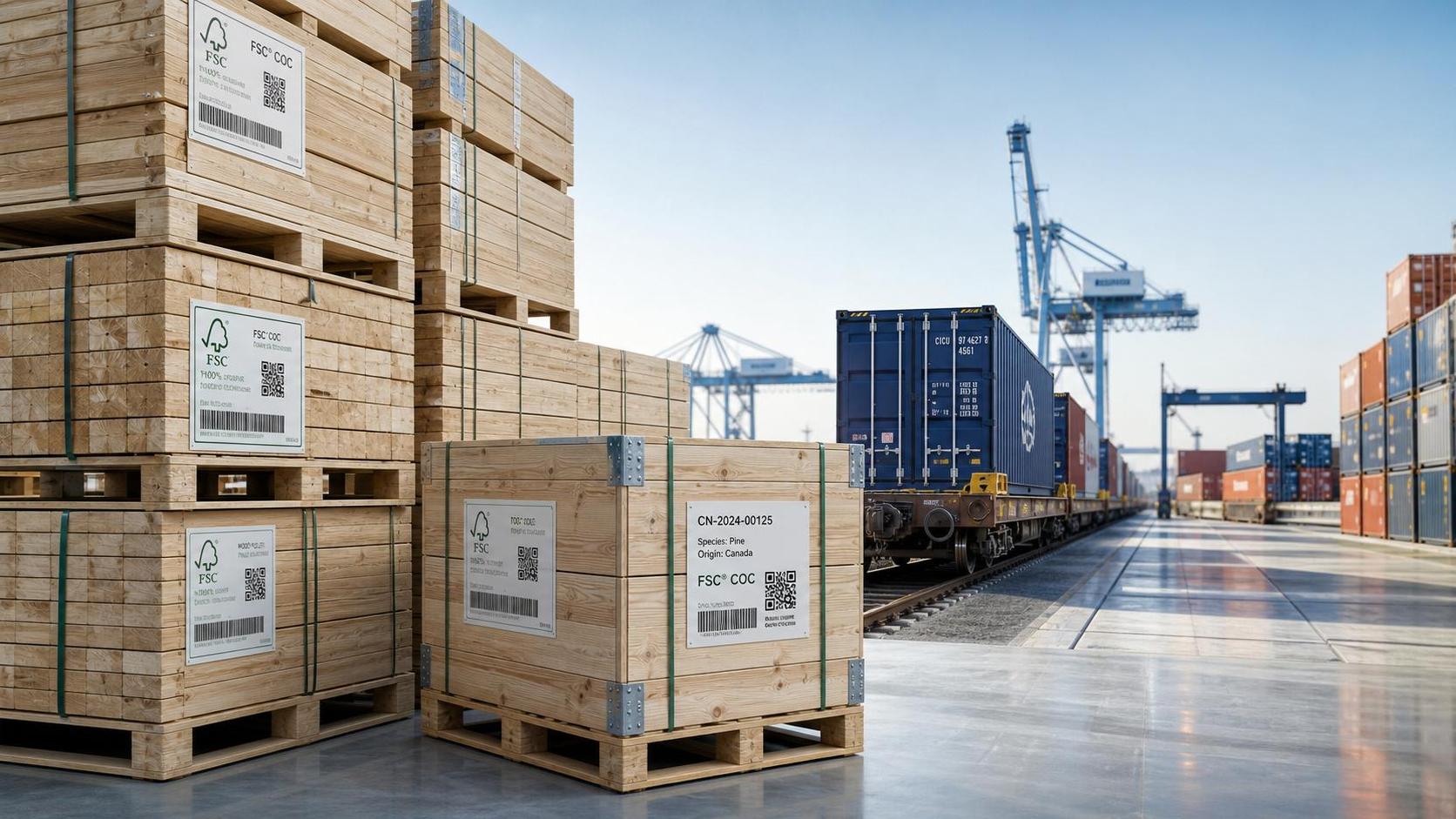
As 2026 approaches, timber industry regulations are moving from a specialist concern to a board-level issue. Tightened due diligence rules, stricter sustainability disclosures, and rising enforcement across trade lanes mean timber now carries regulatory weight far beyond the forest sector.
That shift matters across integrated supply chains. Timber products move through ports, rail corridors, inland terminals, and multimodal networks, so compliance failures can disrupt logistics planning, financing, procurement, and market access at the same time.
For organizations tracking freight infrastructure and cross-border industrial systems, the issue is not only legality of origin. It is also whether operational data, transport documentation, supplier controls, and reporting frameworks can withstand scrutiny under evolving timber industry regulations.
Why timber compliance has become more complex
At a basic level, timber industry regulations govern how wood and wood-based goods are harvested, traded, transported, declared, and verified. In practice, the rules now extend into environmental claims, land-use risk, sanctions exposure, and chain-of-custody reliability.
The pressure is coming from several directions. Governments are linking import access to deforestation controls. Investors want clearer traceability. Customers expect evidence, not statements. Enforcement agencies increasingly compare customs data, shipping records, and supplier declarations.
This creates a harder compliance environment for companies that buy timber, use timber packaging, finance timber-heavy projects, or move forest products through large transport networks.
From a broader industrial perspective, the challenge resembles other infrastructure sectors. As seen in rail engineering and intermodal systems, compliance is no longer handled by isolated documentation teams. It depends on system integrity, data continuity, and standard-based verification.
The main compliance risks in 2026
Not every risk carries the same business impact. Some trigger shipment delays. Others create legal exposure, revenue loss, contract disputes, or lasting reputational damage.
1. Traceability gaps across the supply chain
The first major weakness is incomplete traceability. Many businesses still rely on fragmented invoices, certificates, and broker statements without a single verified record connecting origin, processing, transport, and final delivery.
Under stricter timber industry regulations, that gap is dangerous. If source location, concession legitimacy, species data, or shipment history cannot be validated, the entire consignment may be questioned.
2. Cross-border rule divergence
Different jurisdictions define risk differently. One market may focus on illegal logging. Another may prioritize deforestation-linked sourcing, Indigenous land rights, or emissions disclosures tied to transport and processing.
That means a product accepted in one region may still fail elsewhere. Cross-border logistics operators and industrial buyers need a compliance model that reflects route-specific obligations, not just country-of-origin paperwork.
3. Weak supplier due diligence
Supplier declarations remain important, but they are no longer enough on their own. Regulators increasingly expect risk segmentation, document testing, escalation procedures, and evidence that suspicious data has been challenged.
Where suppliers operate in high-risk forest regions, buyers must assess not only certification status but also ownership structure, subcontractor use, permit validity, and historical compliance behavior.
4. Misalignment between sustainability claims and legal proof
A growing problem in 2026 is the gap between brand messaging and verifiable compliance. “Sustainably sourced” claims can create exposure if internal records cannot support them under audit or enforcement review.
This matters for contract language, ESG reporting, and investor communication. Timber industry regulations increasingly intersect with rules on disclosure accuracy and anti-greenwashing standards.
5. Transport and document integrity failures
Timber compliance does not stop at procurement. During inland movement, container transfers, rail-port handling, and warehousing, inconsistencies can appear between cargo manifests, customs descriptions, and traceability records.
For organizations operating in data-heavy freight environments, this is familiar territory. G-RFE’s focus on intermodal rail-port systems and standards-based logistics highlights the same principle: if operational records are not synchronized, regulatory risk rises quickly.
Where these risks appear in real business settings
Timber industry regulations affect more than sawmills and furniture exporters. Exposure appears in several less obvious situations across industrial and infrastructure supply chains.
In other words, timber industry regulations now touch procurement policy, logistics architecture, compliance technology, and executive reporting. The issue sits inside operational systems, not outside them.
What stronger compliance looks like in practice
A practical response starts with structure. Businesses do not need perfect visibility on day one, but they do need a defensible method for identifying and reducing risk.
Build one traceability logic across functions
Procurement, legal, sustainability, and logistics teams often maintain separate records. That creates blind spots. A unified traceability logic should connect supplier onboarding, shipment movement, customs declarations, and reporting outputs.
This is where lessons from complex freight systems are useful. In rail signaling or rolling stock maintenance, fragmented data reduces operational confidence. Timber compliance works the same way.
Prioritize risk-based supplier review
Not every supplier needs the same level of scrutiny. Higher-risk geographies, unusual species mixes, rapid volume shifts, or frequent intermediary changes should trigger enhanced review.
- Map direct and indirect timber inputs.
- Classify suppliers by region, product, and control maturity.
- Test records against transport and customs data.
- Document exceptions and response actions.
Treat declarations as evidence, not assurance
Certificates, legality statements, and chain-of-custody claims remain useful. Still, they should be checked for scope, validity period, issuing body, and consistency with transactional records.
This is especially relevant where timber passes through multimodal routes. Documentation can remain formally complete while still failing to prove actual material continuity.
Align compliance with transport intelligence
Organizations that manage high-volume corridors can gain an advantage by integrating compliance checks with freight visibility tools. Route deviations, repeated relabeling, inconsistent weights, or unusual port changes can indicate underlying risk.
G-RFE’s data-driven approach to engineering and policy is relevant here. The same discipline used to benchmark assets against UIC, EN, and AAR standards can support more reliable oversight of timber-linked freight documentation.
Signals worth monitoring through 2026
Regulatory texts matter, but enforcement behavior often reveals more. Several signals deserve close attention in the coming year.
- Expansion of mandatory due diligence for imported forest products.
- More frequent use of geolocation, satellite evidence, and digital record matching.
- Closer scrutiny of ESG statements tied to sourcing and transport claims.
- Greater coordination between customs, environmental, and financial regulators.
- Rising expectations for auditable supplier remediation processes.
Taken together, these trends suggest that timber industry regulations are becoming more data-intensive and more operationally intrusive. Passive compliance will be harder to defend.
A practical next step
The most useful starting point is a focused gap review. Compare current sourcing records, transport data, and external claims against the specific obligations in your active trade lanes.
Where timber enters complex logistics networks, review whether chain-of-custody evidence survives every transfer point. Where disclosures rely on sustainability language, test whether each statement can be supported under regulatory challenge.
By 2026, timber industry regulations will reward organizations that connect compliance with operational intelligence. The next decision is not simply whether controls exist, but whether they are integrated well enough to protect continuity, credibility, and market access.
Industry Briefing
Get the top 5 industry headlines delivered to your inbox every morning.