
Railway specification guide for safer project approval

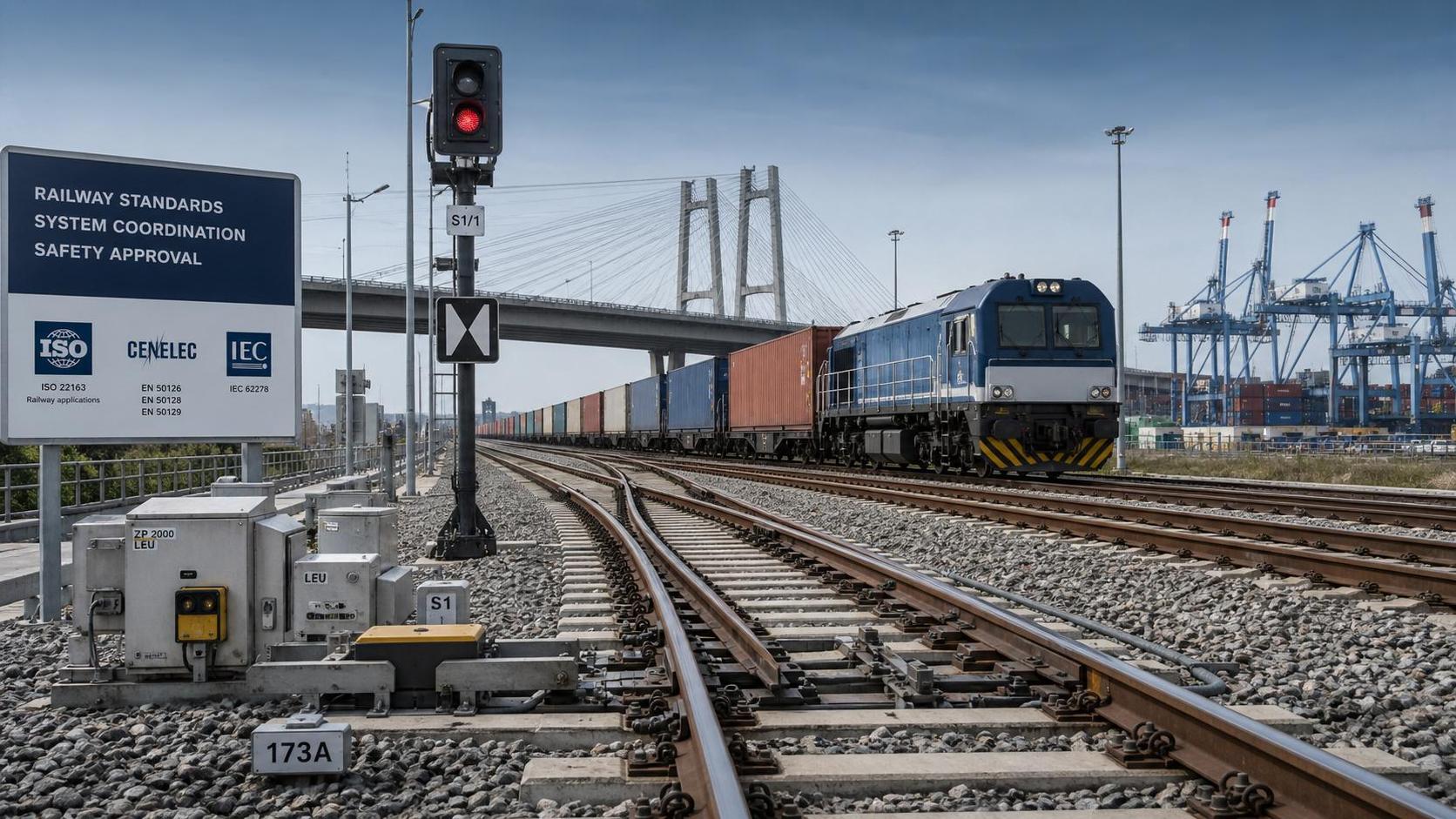
A reliable railway specification guide does more than list technical requirements. It creates a common language for design, procurement, safety review, and final approval across complex rail programs.
That matters even more now, when freight corridors must carry heavier loads, connect ports and inland hubs, and meet stricter expectations on safety, interoperability, and carbon efficiency.
In practice, approval delays often come from unclear interfaces rather than obvious engineering failures. A track package may comply locally, while signaling logic, rolling stock limits, or maintenance access remain unresolved.
A strong railway specification guide helps reduce that gap. It aligns project decisions with operating reality, recognized standards, and the evidence reviewers need before a line, upgrade, or freight system moves forward.
Why specification quality now shapes approval outcomes
Rail projects no longer sit inside a single technical silo. Civil works, rolling stock, digital signaling, energy systems, depots, and port interfaces now depend on one another from the earliest planning stages.
When specifications are fragmented, approval bodies see elevated risk. They question whether axle load, braking distance, clearance envelopes, communication protocols, and emergency procedures have been considered as one system.
This is where the broader market context matters. Cross-border freight, heavy-haul operations, and smart signaling platforms require more disciplined specification management than traditional standalone rail construction.
Organizations working across railway-freight and engineering ecosystems, including intelligence platforms such as G-RFE, highlight the same pattern: approval confidence rises when technical files are benchmarked against UIC, EN, and AAR expectations early.
That approach is not about paperwork for its own sake. It is about making sure the railway specification guide reflects how assets will actually perform in freight corridors, intermodal terminals, and future expansion phases.
What a railway specification guide really covers
At its core, a railway specification guide translates operational intent into measurable requirements. It connects policy goals, engineering design, procurement language, testing criteria, and acceptance thresholds.
A useful guide is neither too generic nor too narrow. It should define what the railway must do, under which conditions, and how compliance will be proven before commissioning.
Typical specification domains
- Track geometry, rail profile, ballast structure, turnout performance, and maintenance tolerances.
- Rolling stock compatibility, axle load, traction power, brake performance, and loading gauge limits.
- Signaling architecture, interface logic, CBTC or ETCS integration, GSM-R communication, and fail-safe behavior.
- Civil and structural constraints, including bridges, tunnels, drainage, access routes, and evacuation provisions.
- Testing, validation, documentation, and handover requirements tied to approval milestones.
Seen this way, the railway specification guide becomes a control framework. It helps every package contribute to one operational outcome instead of several partially compatible ones.
The issues that usually trigger review concerns
Approval teams rarely reject a project because a single document is missing. More often, they find unresolved assumptions between disciplines, suppliers, or standards regimes.
For example, a locomotive may meet power targets, yet exceed route limits under certain gradients. A signaling package may work functionally, while its interface with legacy interlocking remains weakly defined.
Mixed-standard environments create another challenge. Freight corridors often combine local codes with UIC practices, EN subsystems, or AAR-derived rolling stock requirements. Without a clear hierarchy, conflicts appear late.
A railway specification guide should anticipate these pressure points before formal review starts. That shortens clarification cycles and improves budget predictability.
How the guide supports real project decisions
The commercial value of a railway specification guide is often underestimated. Better specifications reduce redesign, protect tender comparability, and make supplier evaluation more objective.
This becomes especially important in freight-led investments. Heavy-haul locomotives, intelligent wagons, track maintenance systems, and intermodal equipment must perform reliably under demanding duty cycles.
G-RFE’s market perspective is useful here because it connects rolling stock, infrastructure, smart signaling, port systems, and engineering machinery as an integrated chain rather than separate asset categories.
That integrated view helps decision-makers assess whether a specification is future-ready. A corridor designed only for current loads may fail to support planned axle increases, digital upgrades, or border-operability goals.
Where the guide adds practical value
- It improves tender clarity by turning broad objectives into measurable obligations.
- It supports safer approvals by linking hazards, mitigations, and verification evidence.
- It strengthens lifecycle thinking, including maintenance windows, spare strategy, and upgrade compatibility.
- It makes cross-functional reviews more consistent across engineering, operations, and compliance teams.
Key scenarios where specification discipline matters most
Not every railway project carries the same risk profile. Some programs need a deeper railway specification guide because interfaces are more complex or operational consequences are higher.
Freight corridor upgrades
These projects often involve heavier trains, longer consists, and stricter availability targets. Specification gaps can affect track wear, braking margins, terminal throughput, and signaling headways at the same time.
Mixed legacy and new signaling environments
Approval risks increase when modern train control must coexist with older assets. Interface matrices, fallback modes, cybersecurity provisions, and migration stages need precise treatment.
Port and inland intermodal links
Here, the railway specification guide must address more than railway assets. Crane clearances, yard logic, truck-rail flows, and dwell-time assumptions can all influence rail system approval.
Specialized engineering machinery deployment
Automated track-laying or maintenance machinery introduces its own compatibility questions. Possession planning, loading constraints, and worksite protection arrangements should be specified early.
What to check before freezing the specification
A railway specification guide is strongest when it is reviewed as a decision tool, not just a technical package. Several checks can reveal hidden approval risks before procurement advances too far.
- Confirm that operational assumptions are explicit, including train length, axle load, traffic mix, climate exposure, and maintenance access.
- Map every major interface between civil, track, rolling stock, signaling, telecom, power, and depot systems.
- Verify the standard framework, especially where local rules and international references overlap or diverge.
- Check whether performance requirements are testable and tied to acceptance procedures.
- Review deviation handling so exceptions are justified, traceable, and approved at the right governance level.
Usually, the most useful question is simple: can an independent reviewer understand how the railway will operate safely from these documents alone? If the answer is uncertain, the guide needs refinement.
Building a better basis for the next approval stage
A well-structured railway specification guide does not guarantee instant approval, but it changes the quality of the conversation. Reviews become evidence-based, supplier dialogue becomes clearer, and design changes become easier to control.
For rail programs shaped by freight growth, intermodal integration, and digital control systems, that discipline is increasingly essential. It supports safer delivery while preserving flexibility for future network demands.
The next practical step is to compare current specifications against actual operating scenarios, interface risks, and the standards hierarchy governing the project. That exercise often reveals where approval confidence can be strengthened before costs escalate.
Used well, a railway specification guide becomes more than a document set. It becomes a working framework for safer project approval and more resilient rail infrastructure.
Industry Briefing
Get the top 5 industry headlines delivered to your inbox every morning.