
Smart wagon sensor innovations that improve fault detection

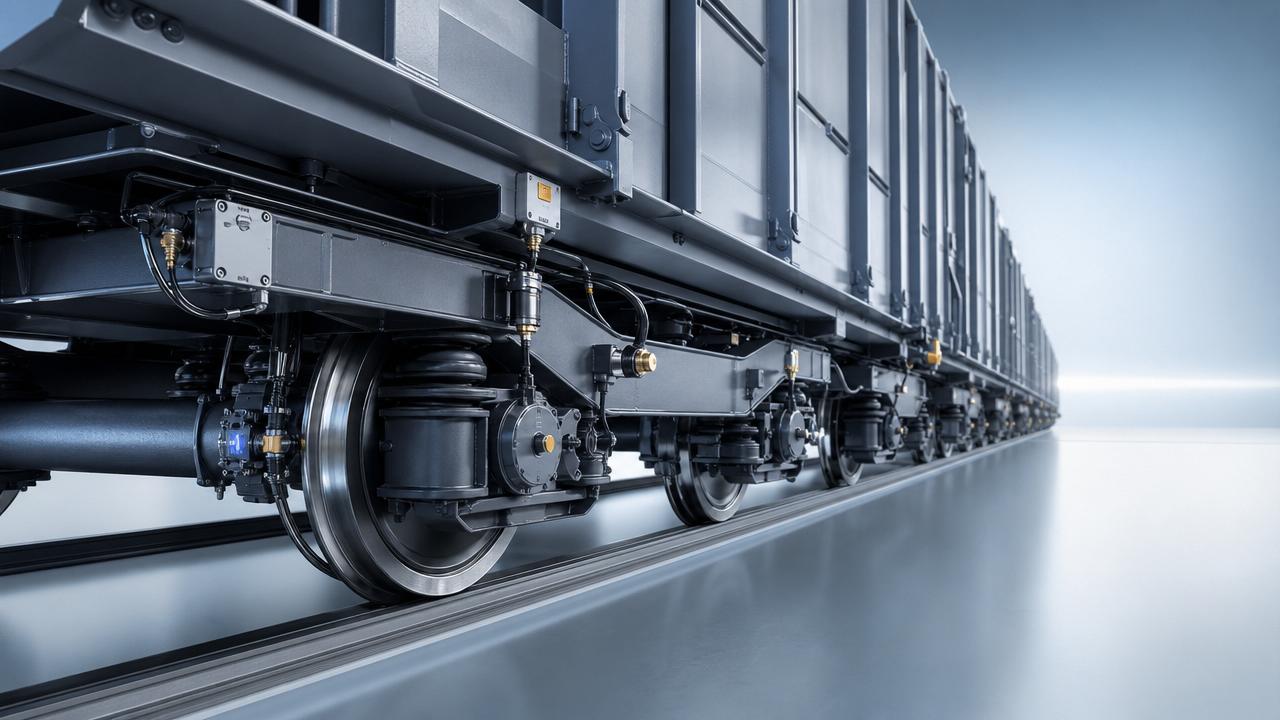
For quality control and safety teams, innovations in smart wagon sensors are changing fault detection from a reactive task into a predictive discipline. The biggest value is not simply “more data,” but earlier warning on load imbalance, wheelset stress, brake defects, overheating, vibration anomalies, and structural fatigue before they escalate into service disruption or safety incidents. For rail freight operators and engineering decision-makers, the practical question is no longer whether these sensors matter, but which sensor innovations actually improve detection accuracy, maintenance actionability, and operational reliability.
The core search intent behind “innovations in smart wagon sensors” is highly practical. Readers want to understand which sensing technologies are genuinely improving fault detection, how they work in freight wagon environments, what faults they can identify earlier than traditional inspection methods, and how to judge implementation value. For quality control and safety managers, the concern is less about futuristic concepts and more about measurable outcomes: fewer missed defects, better maintenance targeting, reduced derailment risk, and stronger auditability.
That is why the most useful way to evaluate innovations in smart wagon sensors is through a fault-detection lens. Which sensors improve visibility into hidden failure modes? Which ones reduce false alarms? Which data streams can be integrated into maintenance and safety workflows without overwhelming teams? And which technologies perform reliably across harsh heavy-haul and intercontinental freight conditions?
What quality and safety teams really need from smart wagon sensor innovation
In wagon operations, many high-consequence failures do not begin as obvious defects. They begin as subtle deviations: a small thermal rise in a bearing housing, a braking response lag, a growing vibration signature, a suspension asymmetry, or a load shift that slowly pushes forces outside safe limits. Traditional inspections remain essential, but they are periodic by nature. Smart sensors add continuity, context, and trend analysis between inspections.
For quality control teams, the real advantage is objective condition evidence. Instead of relying only on manual checks or post-incident analysis, sensor systems can provide timestamped, location-linked data on how the wagon behaved under actual operating stress. For safety managers, this improves both prevention and traceability. When alarms are linked to thresholds, severity logic, and event history, teams can make more defensible intervention decisions.
The strongest innovations in smart wagon sensors share three characteristics. First, they detect faults early enough for planned intervention. Second, they distinguish meaningful risk from normal operational variation. Third, they integrate with maintenance, fleet, and safety systems so data becomes action rather than digital noise.
Which smart wagon sensors are improving fault detection the most?
Not every onboard or wayside sensor delivers the same operational value. The most important innovations are those tied to high-risk failure modes in freight service. Several sensor categories are now providing clear benefits for wagon fault detection.
Axle load and weight distribution sensors help detect overload, uneven loading, and shifting cargo conditions. For safety teams, this matters because poor load distribution affects wheel-rail interaction, braking stability, suspension wear, and derailment risk. Newer systems are becoming more accurate under dynamic conditions, allowing teams to detect not just static overload but abnormal load transfer during operation.
Bearing and temperature monitoring sensors remain among the most valuable fault-detection tools. Excess heat in axle bearings, brake components, and wheel interfaces is a classic early warning of mechanical distress. Innovations in this area include more robust thermal sensors, better edge filtering, and multi-point temperature correlation that improves distinction between transient heating and genuine fault development.
Vibration and acoustic sensors are increasingly important because they can identify emerging faults long before visible failure. Changes in vibration spectra may indicate wheel flat spots, suspension degradation, structural looseness, bearing wear, or brake irregularities. Acoustic monitoring can also help detect abnormal friction or impact patterns. For quality teams, the innovation is not only the sensor itself, but signal processing that makes the data interpretable in real operating conditions.
Brake system sensors are becoming smarter and more diagnostic. Instead of only confirming whether a brake command was issued, advanced systems can monitor brake cylinder pressure behavior, actuation timing, leakage patterns, and response asymmetry between wagons. This is especially useful in long freight formations where brake inconsistency can remain hidden until it affects stopping performance or component wear.
Wheel and bogie condition sensors are also evolving fast. Strain, displacement, and motion sensors can identify issues such as abnormal bogie hunting, spring fatigue, alignment deviation, and excessive dynamic forces. These are highly relevant for heavy-haul operations, where repeated stress cycles can turn a minor geometry issue into a serious safety event if not caught early.
Structural health sensors embedded or mounted on wagon frames are another important innovation. Using strain gauges, fatigue-monitoring nodes, or shock-event sensors, operators can detect whether wagons are accumulating abnormal stress due to loading practices, route conditions, or impact handling. This supports both immediate fault detection and long-term asset life management.
How these innovations detect faults earlier than traditional inspection alone
Traditional wagon inspection has one major limitation: it captures condition at a point in time. A wagon may pass inspection in the depot and still develop a dangerous issue during transit. Smart sensors reduce this visibility gap by monitoring the wagon while it is moving, loaded, exposed to weather, and interacting with track conditions.
Consider bearing failure. Manual inspection may identify obvious wear or heat damage after symptoms become visible, while a temperature and vibration sensor combination can identify abnormal trends much earlier. That gives maintenance teams a window to isolate the wagon before it reaches a severe failure state.
The same applies to brake faults. A visual brake inspection can confirm component presence and basic condition, but it may not reveal intermittent actuation lag, pressure inconsistency, or wagon-to-wagon response differences under real train handling conditions. Sensor-based diagnostics expose these performance deviations where they actually occur.
Load-related faults are another strong example. Static weighbridge data is useful, but it does not always reveal dynamic instability, load shift, or asymmetric force behavior under acceleration, braking, and curvature. Modern axle load and suspension-related sensors can capture these risk patterns in service, allowing earlier intervention than compliance checks alone.
For safety organizations, early detection is not only about finding more issues. It is about identifying the right issues at the right stage. A good sensor system supports maintenance before failure escalation, not after damage has spread to adjacent components or created network disruption.
What makes a smart wagon sensor system reliable in harsh freight conditions?
Rail freight environments are unforgiving. Dust, vibration, shock, temperature variation, moisture, electromagnetic interference, and long service intervals all challenge sensor performance. That is why innovation must be judged as much by field resilience as by laboratory capability.
For quality and safety teams, reliability starts with sensor survivability. Devices mounted on wagons must tolerate repeated impact loads, weather exposure, and contamination without signal drift or frequent calibration failure. If a sensor produces unstable readings or fails too often, it quickly erodes confidence in the entire monitoring program.
Power strategy is another critical issue. Some smart wagon sensor systems use long-life batteries, while others use energy harvesting from vibration, axle rotation, or braking dynamics. The most useful innovation is not necessarily the most complex option, but the one that sustains data continuity with minimal maintenance burden.
Connectivity also matters. Freight wagons may travel across remote corridors, borders, tunnels, and mixed infrastructure environments. A sensor system should be designed for intermittent communication, edge processing, and secure data buffering. In many cases, the best systems do not depend on constant connectivity; they prioritize event capture and synchronized transmission when network access becomes available.
Finally, threshold logic must be robust. Freight operations naturally create variability, so alarm rules need to reflect wagon type, route profile, loading condition, season, and operating speed. Sensor innovation becomes truly valuable when analytics can separate normal stress patterns from emerging fault signatures with enough confidence to support operational decisions.
How to reduce false alarms and turn sensor data into useful maintenance action
One of the biggest concerns among safety and quality teams is false positives. Too many alarms can overwhelm staff, create unnecessary wagon withdrawals, and damage trust in condition monitoring. In practice, the success of innovations in smart wagon sensors depends heavily on alarm quality, not just detection sensitivity.
The most effective systems use multi-parameter validation. For example, a thermal anomaly may be treated differently if it appears alone versus appearing alongside increased vibration or abnormal brake response. By correlating signals, the system can raise confidence levels and prioritize inspections more intelligently.
Trend-based analysis is equally important. A single temperature spike may reflect a temporary condition, while a rising pattern across repeated trips suggests genuine degradation. For maintenance planners, trend visibility helps distinguish urgent safety interventions from defects that can be scheduled into the next workshop window.
Classification models should also be tied to maintenance workflows. It is not enough for the system to say “anomaly detected.” Teams need to know what subsystem is likely affected, how severe the issue may be, what inspection steps should follow, and whether the wagon can remain in service under monitoring. The more precisely sensor alerts are translated into practical work orders, the more value the technology creates.
For many fleets, a phased deployment works best. Start with a high-value fault domain such as bearing temperature, brake diagnostics, or load imbalance. Validate detection accuracy against inspection outcomes. Refine thresholds and response procedures. Then expand toward broader structural and dynamic condition monitoring once the organization has confidence in the data.
Where the business and safety value is strongest
For managers responsible for freight quality and operational safety, sensor investment must be justified beyond technology enthusiasm. The strongest business case usually appears in corridors and fleets where failure consequences are high: heavy-haul routes, long-distance intermodal freight, hazardous cargo movement, and internationally connected rail operations where service disruption costs are significant.
In these settings, innovations in smart wagon sensors can deliver value in several ways. They reduce unscheduled removals by identifying faults earlier and more accurately. They improve maintenance efficiency by targeting components that actually show degradation rather than relying only on fixed intervals. They strengthen incident prevention by making hidden defects visible before they escalate. And they improve compliance and audit readiness through better condition records.
There is also a quality assurance benefit. Sensor data helps organizations verify whether wagons perform consistently after overhaul, retrofitting, or component replacement. If a recurring vibration pattern appears shortly after maintenance, or if brake response varies between nominally identical wagons, quality teams can identify process issues faster.
From a strategic perspective, sensor-enabled fleets support a more mature reliability culture. Instead of treating faults as isolated workshop findings, operators can analyze fleet-wide failure precursors, route-specific stress patterns, and supplier-related performance trends. This allows procurement, engineering, and safety functions to work from a shared evidence base.
How safety and QC teams should evaluate sensor solutions before adoption
When assessing smart wagon sensor platforms, buyers should avoid focusing only on feature count. A more useful evaluation framework starts with five questions: What fault modes does the system detect? How early can it detect them? How often does it generate false or ambiguous alarms? How easy is it to integrate into existing maintenance and safety workflows? And how well does it perform in actual freight operating conditions?
It is also important to request validation evidence. Vendors should be able to show field results, detection thresholds, failure case studies, environmental durability data, and examples of how alerts were confirmed by inspection. For institutional users working to UIC, EN, or AAR-aligned standards, interoperability and documentation discipline are particularly important.
Another key issue is data ownership and usability. Quality and safety teams need access to interpretable data, not just dashboard summaries. If root-cause review depends entirely on the vendor, the organization may struggle to build internal diagnostic capability. Good systems support both operational simplicity and deeper technical investigation when needed.
Finally, change management should not be underestimated. Even the best sensor innovation fails if teams do not trust it, understand it, or know how to act on it. Clear alarm response procedures, maintenance training, and pilot-phase feedback loops are essential to turning sensor data into safer wagon operations.
The future direction of smart wagon fault detection
The next phase of smart wagon sensing will likely combine onboard sensors, wayside systems, and predictive analytics into a more unified fault intelligence model. Instead of treating temperature, vibration, loading, and brake behavior as separate domains, operators will increasingly correlate them to build a fuller picture of wagon health.
Artificial intelligence will help, but only where data quality is strong and operational context is respected. For quality control and safety users, the most valuable future systems will not be black boxes. They will provide explainable alerts, confidence scoring, and traceable links between raw measurements and recommended maintenance actions.
We can also expect stronger integration with digital maintenance platforms, route-condition databases, and fleet lifecycle systems. This will allow organizations to move beyond isolated fault detection toward risk-based asset management, where wagon intervention decisions consider defect severity, route exposure, cargo criticality, and network impact together.
In that sense, the most important innovations in smart wagon sensors are not simply smaller devices or faster communications. They are improvements that make detection earlier, diagnosis clearer, intervention smarter, and freight operations safer under real-world heavy-duty conditions.
Conclusion: what these innovations mean for decision-makers
For quality control personnel and safety managers, smart wagon sensor innovation should be judged by one practical outcome: whether it helps detect meaningful faults sooner and respond with greater confidence. The best systems do exactly that. They make hidden defects more visible, reduce reliance on periodic inspection alone, improve maintenance targeting, and strengthen operational safety across demanding freight corridors.
The key is to focus on technologies with clear fault-detection relevance: axle load monitoring, thermal sensing, vibration and acoustic diagnostics, brake-system monitoring, bogie and wheel condition sensing, and structural health tracking. When these are implemented with reliable hardware, sound analytics, and disciplined workflow integration, they move wagon monitoring from reactive observation to predictive control.
For organizations managing critical railway-freight assets, that shift is no longer optional. It is becoming a core capability for safer operations, better asset assurance, and more resilient rail logistics performance.
Industry Briefing
Get the top 5 industry headlines delivered to your inbox every morning.