
Freight Wagon Manufacturer Selection: Small Details That Delay Delivery

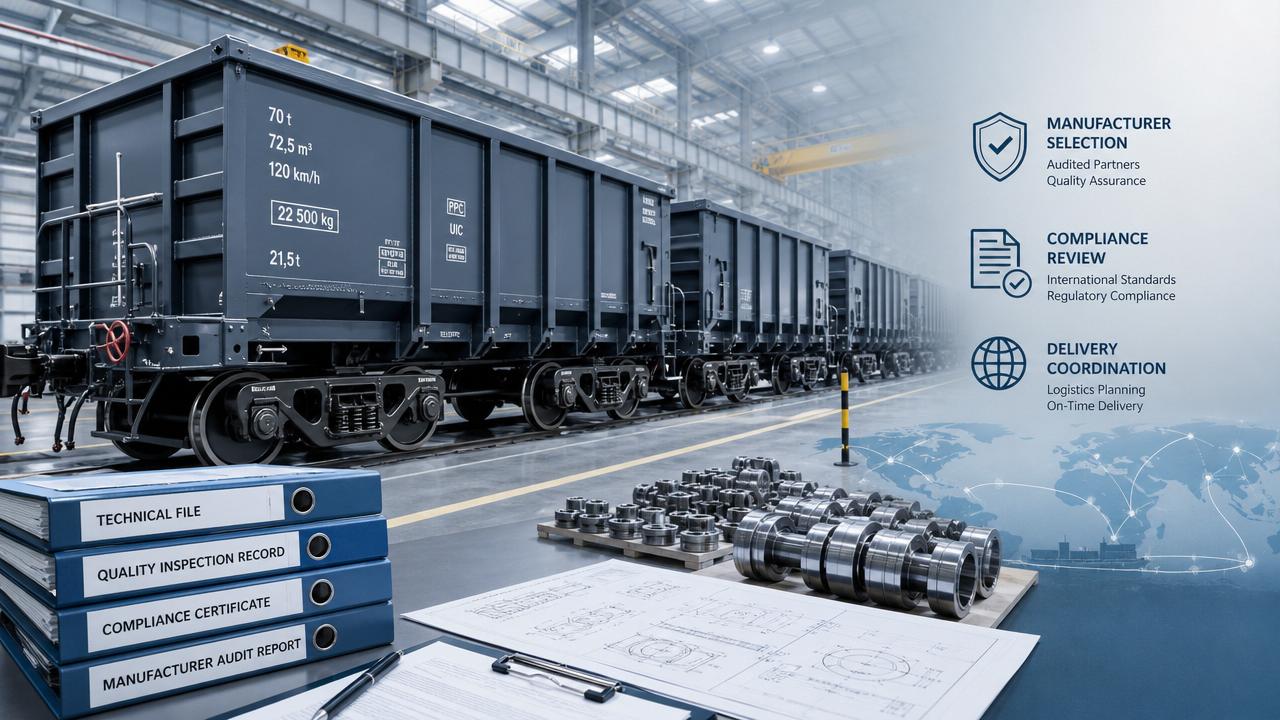
Freight Wagon Manufacturer Selection Starts With the Details
Choosing the right freight wagon manufacturer often decides whether a rail project moves smoothly or faces expensive schedule slippage.
Major delays rarely begin with dramatic failures. They usually start with small omissions hidden inside technical files, approval workflows, or delivery coordination.
In railway freight programs, wagon availability affects port throughput, mine output, corridor utilization, and fleet commissioning plans.
That is why freight wagon manufacturer selection should be treated as a structured engineering and execution decision, not only a price comparison.
This article explains which details most often delay delivery, reduce reliability, or weaken life-cycle value in modern wagon sourcing.
Why a Structured Review Prevents Hidden Delays
Railway hardware projects involve standards, fabrication capacity, testing windows, export documents, and interface compatibility.
A capable freight wagon manufacturer may still become a delivery risk if one small requirement is misunderstood at contract stage.
For example, missing weld procedure approvals can slow production release.
Incomplete axle-load validation can trigger redesign.
Weak material traceability can block final inspection or financing milestones.
A structured review keeps technical, regulatory, and logistics checkpoints visible before they become expensive schedule disputes.
Core Factors to Check Before Selecting a Freight Wagon Manufacturer
- Verify compliance with UIC, EN, AAR, and local railway authority rules, including gauge, braking, coupler, and axle-load requirements before design freeze.
- Confirm full material traceability for steel plates, wheelsets, bogie frames, and critical welds, with heat numbers linked to inspection records and certificates.
- Review welding qualifications, WPS/PQR documentation, and non-destructive testing coverage, because unresolved fabrication quality issues usually create late-stage rework.
- Check whether the freight wagon manufacturer controls key sub-suppliers for braking systems, bearings, draft gear, and suspension parts with stable lead times.
- Assess engineering responsiveness during clarification rounds, since slow drawing revisions often delay approval cycles more than factory production itself.
- Validate payload, tare weight, and dynamic performance assumptions against route conditions, loading profiles, and track maintenance quality.
- Examine prototype testing plans for braking distance, ride stability, structural fatigue, and loading performance before committing to serial production milestones.
- Check coating systems, corrosion protection, and surface preparation standards, especially for coastal terminals, mining regions, or chemical cargo environments.
- Review factory capacity by line, shift, and monthly output instead of headline volume claims, because mixed-product workshops can create queue conflicts.
- Confirm inspection and test plan hold points, witness procedures, and digital document turnover to avoid acceptance delays after physical completion.
- Evaluate packaging, inland transport, port handling, and export readiness, since finished wagons can still miss delivery windows after factory release.
- Measure after-sales support, spare parts availability, and technical training quality to reduce downtime across the first years of fleet operation.
The Documents That Deserve Extra Attention
When reviewing a freight wagon manufacturer, document quality often reveals execution quality.
Look closely at general arrangement drawings, bogie specifications, welding maps, brake calculations, test procedures, and quality manuals.
If revision control is weak early, field corrections usually appear later.
That affects approval timing, production rhythm, and final acceptance confidence.
How Selection Criteria Change by Application
Heavy-Haul Mining and Bulk Corridors
In heavy-haul service, the right freight wagon manufacturer must prove structural durability, consistent axle-load performance, and reliable bogie behavior under repeated high-tonnage cycles.
Check fatigue design margins, coupler strength, wheel wear assumptions, and maintenance accessibility.
Minor design compromises can multiply into fleet-wide downtime.
Intermodal and Port-Linked Operations
For intermodal corridors, wagon geometry, twist-lock arrangement, loading flexibility, and terminal compatibility become essential.
A freight wagon manufacturer should demonstrate coordination with crane clearances, platform handling, and route restrictions.
Fast terminal flow depends on these details.
Cross-Border Railway Freight Programs
Cross-border projects require more than production capability.
The freight wagon manufacturer should understand differing standards, customs documentation, certification language, and corridor operating constraints.
Without that experience, handover delays can appear after manufacturing is complete.
Specialized Commodity Transport
For cement, grain, fuel, chemicals, or steel products, wagon design must match cargo behavior, unloading method, sealing needs, and cleaning requirements.
A freight wagon manufacturer with relevant commodity references usually reduces redesign risk and operating inefficiency.
Commonly Overlooked Risks That Delay Delivery
Sub-Supplier Bottlenecks
Wheelsets, brake valves, bearings, and couplers can drive the real schedule.
If the freight wagon manufacturer lacks secure allocation, assembly lines may stop despite visible factory progress.
Late Clarifications on Operating Conditions
Track class, curve radius, climatic range, and loading method should be fixed early.
Late clarification often triggers design amendments, weight changes, and test repetition.
Weak Change-Control Procedures
Engineering changes are normal, but uncontrolled ones are dangerous.
A freight wagon manufacturer should show how revisions are approved, communicated, and reflected on the shop floor.
Insufficient Corrosion Planning
Surface treatment is often undervalued during negotiation.
Yet poor coating choices create early repairs, appearance claims, and fleet availability losses in harsh operating zones.
Acceptance Without Data Readiness
Physical completion does not equal contractual readiness.
Missing dossiers, incomplete test reports, or unsigned inspection records can delay payment and shipment.
Practical Steps for Better Evaluation
- Create a weighted matrix covering standards compliance, engineering quality, production capacity, sub-supplier control, and delivery planning.
- Request a sample manufacturing record book before award to test document completeness and traceability logic.
- Audit one active production line, not only presentation materials, to verify bottlenecks, staffing, and quality discipline.
- Separate prototype approval milestones from serial production release to reduce ripple effects from unresolved technical issues.
- Link payment milestones to both physical progress and document turnover, including test certificates and inspection acceptance records.
- Build a joint risk register with the freight wagon manufacturer covering engineering, supply chain, testing, and logistics triggers.
Questions Worth Asking Early
Ask which components have the longest lead times and what backup suppliers are qualified.
Ask how route-specific load cases were validated.
Ask how many similar wagons are operating in comparable environments.
These answers often distinguish a strong freight wagon manufacturer from a risky low-price option.
Conclusion and Next Action
Selecting a freight wagon manufacturer is not only about unit cost, factory scale, or brochure claims.
Delivery performance depends on small technical and procedural details that shape approval speed, manufacturing stability, and commissioning readiness.
A disciplined review of certifications, traceability, testing, sub-suppliers, and logistics planning reduces both delay risk and lifetime operating cost.
For complex railway freight investments, use a documented evaluation framework first, then compare commercial offers second.
That sequence leads to better schedules, more reliable assets, and stronger long-term corridor performance.
Industry Briefing
Get the top 5 industry headlines delivered to your inbox every morning.