
Automatic Coupler Wholesale: Key Quality Checks

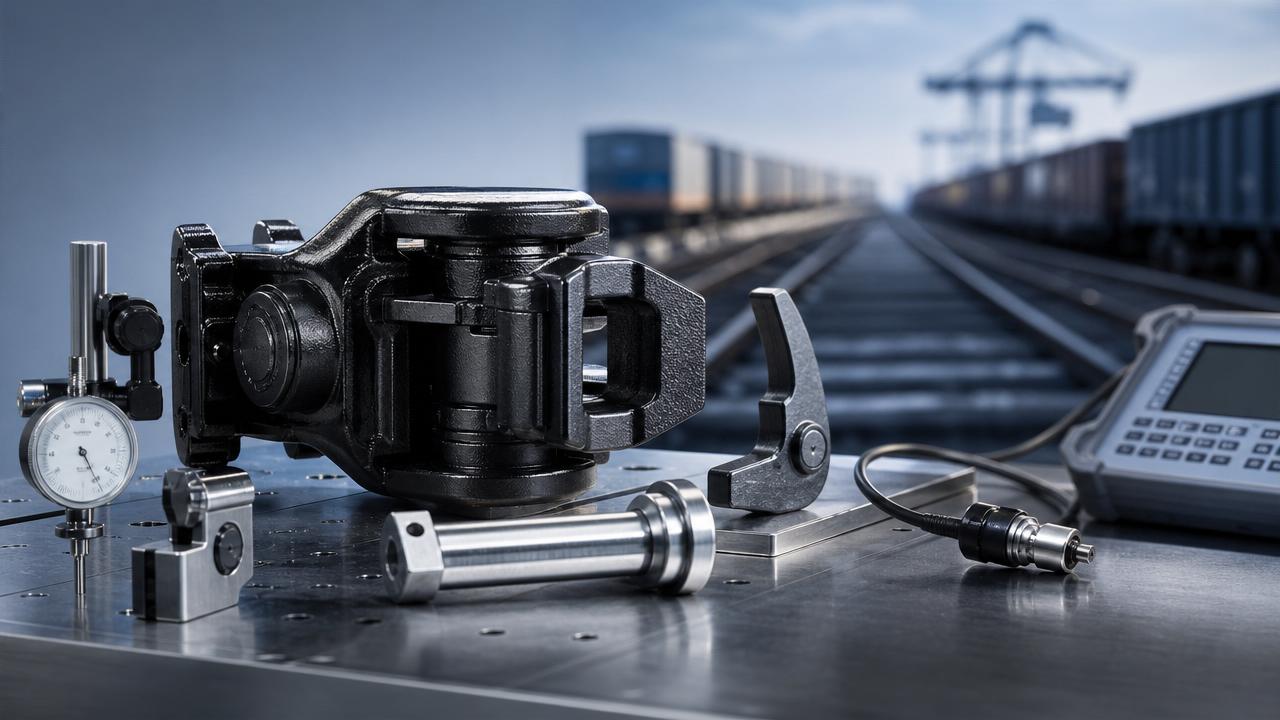
For rail sourcing programs, choosing an automatic coupler wholesale partner is not only about price. It is about verified safety, load performance, standards compliance, and long-term reliability across freight operations.
As rail networks demand higher capacity and lower downtime, every coupler batch must be evaluated against strict technical, material, and inspection criteria.
This guide highlights key quality checks before bulk orders, helping reduce sourcing risk and support modern heavy-haul and intermodal railway systems.
Automatic Coupler Wholesale in Modern Rail Supply
Automatic coupler wholesale refers to bulk sourcing of coupler assemblies, knuckles, yokes, draft gears, locks, pins, and related replacement components.
These parts connect rail vehicles and transmit longitudinal forces during traction, braking, shunting, and heavy-haul operation.
A coupler is not a simple metal fitting. It is a safety-critical interface between rolling stock, track dynamics, braking systems, and operating rules.
In automatic coupler wholesale, small defects may scale across an entire fleet. Therefore, batch consistency matters as much as individual product strength.
Reliable wholesale sourcing usually requires drawing control, material traceability, process validation, dimensional inspection, and documented testing before shipment.
Common product families include AAR-compatible couplers, UIC-oriented designs, heavy-duty freight couplers, locomotive couplers, and components for specialized wagons.
The correct selection depends on train load, curve radius, buffer arrangement, draft gear design, wagon type, and national railway requirements.
Industry Context Behind Coupler Quality Control
Global freight rail is moving toward heavier axle loads, longer train formations, higher utilization, and tighter maintenance windows.
These trends increase stress on coupling systems, especially in mining corridors, intermodal terminals, ports, and cross-border freight routes.
For automatic coupler wholesale, this creates a stronger need for evidence-based qualification rather than catalog-only selection.
Standards also shape buying decisions. AAR, UIC, EN, ISO, and national railway specifications may apply according to fleet region.
A credible automatic coupler wholesale program must align technical documents with the actual operating environment, not only a generic standard reference.
Material and Metallurgical Checks
Material verification is the first major quality checkpoint. Coupler bodies and knuckles typically require high-strength cast steel or forged steel.
Chemical composition should match approved specifications. Carbon, manganese, silicon, sulfur, phosphorus, chromium, and nickel limits must be controlled.
For automatic coupler wholesale, each heat number should be traceable from raw material to finished component.
Traceability helps isolate nonconforming batches and supports failure investigation if abnormal wear or cracking appears in service.
- Review mill certificates and heat treatment records.
- Check tensile strength, yield strength, elongation, and reduction of area.
- Confirm impact toughness at specified temperatures.
- Verify hardness range after heat treatment.
- Require microstructure reports when service conditions are severe.
Heat treatment is especially important. Improper quenching or tempering may create brittleness, low toughness, or inconsistent hardness.
In automatic coupler wholesale, random sampling alone is not enough for critical components. Process stability should be proven across repeated batches.
Dimensional Accuracy and Interchangeability
A coupler must fit correctly, rotate properly, lock securely, and maintain alignment under dynamic loads.
Dimensional errors can cause difficult coupling, abnormal wear, lock failure, or poor compatibility with existing rolling stock.
During automatic coupler wholesale evaluation, drawings should define tolerances for key contact surfaces, pin holes, lock pockets, and shank geometry.
Gauging is often more practical than measuring every surface manually. Dedicated go/no-go gauges help confirm interchangeability quickly.
Dimensional records should include calibrated instrument data and gauge verification status. Outdated gauges can hide repeat manufacturing errors.
A mature automatic coupler wholesale supplier should maintain gauge management, inspection frequency rules, and nonconformance procedures.
Load Performance and Functional Testing
Mechanical performance testing confirms that the coupler can withstand service forces with sufficient safety margin.
Static tensile tests, compression tests, fatigue checks, impact tests, and proof load tests may be required.
For automatic coupler wholesale, test reports should identify product model, batch number, standard reference, test method, and acceptance criteria.
Functional tests are equally important. The knuckle, lock, lifter, thrower, and pins must move without binding.
A coupler may pass a strength test yet fail practical operation if tolerances, machining, or assembly are poorly controlled.
- Confirm complete locking under normal coupling conditions.
- Check manual release effort and repeatability.
- Inspect free movement after coating or surface treatment.
- Verify compatibility with draft gear and follower plates.
- Review results after simulated impact or repeated cycling.
Reliable automatic coupler wholesale depends on repeatable testing, not single demonstration samples prepared only for approval.
Non-Destructive Testing and Surface Integrity
Casting defects, cracks, inclusions, shrinkage cavities, and hidden discontinuities can reduce fatigue life significantly.
Non-destructive testing provides evidence that critical areas are free from unacceptable defects before components enter service.
In automatic coupler wholesale, NDT requirements should be written into purchase specifications, not discussed after production.
- Magnetic particle testing detects surface and near-surface cracks.
- Ultrasonic testing identifies internal discontinuities in thick sections.
- Visual inspection checks casting finish, damage, and machining quality.
- Dye penetrant testing may support inspection of non-magnetic parts.
Surface condition also affects handling and service life. Sharp edges, poor grinding, and excessive repair welding should be reviewed carefully.
Coating quality matters when couplers move through humid ports, coastal terminals, tunnels, and long outdoor storage periods.
A strong automatic coupler wholesale checklist includes surface preparation grade, coating thickness, corrosion resistance, and packaging protection.
Standards Compliance and Documentation Review
Documentation is more than administrative paperwork. It proves that the ordered couplers match agreed technical, quality, and regulatory requirements.
For automatic coupler wholesale, documentation should be complete, consistent, and connected to traceable batch records.
Useful documents include approved drawings, material certificates, heat treatment charts, inspection reports, NDT records, test certificates, and packing lists.
Compliance claims should be checked against the latest standard revision. Older references may not satisfy current network approval requirements.
If documents appear generic or reused across multiple shipments, the automatic coupler wholesale risk level rises sharply.
Typical Application Categories
Different rail applications place different demands on coupler design, testing depth, spare parts planning, and approval documentation.
A structured automatic coupler wholesale decision should classify usage before confirming model, quantity, and inspection scope.
For cross-border corridors, compatibility becomes more complex. Couplers may need to align with regional rolling stock rules and maintenance practices.
This makes automatic coupler wholesale qualification more strategic, especially where mixed fleets and leased wagons operate together.
Practical Supplier Qualification Checklist
Supplier evaluation should combine factory capability, quality system discipline, engineering support, and after-sales response.
In automatic coupler wholesale, price comparison without technical verification can create hidden costs through failures, recalls, or delayed approval.
- Confirm experience with the required coupler type and railway standard.
- Review casting, forging, machining, heat treatment, and assembly controls.
- Check calibration records for gauges, fixtures, and test equipment.
- Require batch-specific inspection documents before final payment.
- Define packaging, marking, preservation, and spare part labeling.
- Clarify warranty terms and nonconformance handling procedures.
Third-party inspection may be valuable for large projects, new suppliers, or safety-critical fleet conversions.
A controlled automatic coupler wholesale process should include pre-production review, in-process checks, final inspection, and shipment release criteria.
Risk Points Often Missed in Bulk Orders
Several risks appear only after installation or early service. These issues are preventable through clearer specifications and acceptance rules.
One common issue is model similarity. Two couplers may look alike but differ in dimensions, lock design, or rated force.
Another risk is inconsistent replacement parts. Knuckles, locks, pins, and yokes should match the same approved system design.
For automatic coupler wholesale, mixing unverified components may compromise complete assembly performance.
Storage damage is also underestimated. Corrosion, coating scratches, and missing identification marks can delay installation and inspection.
Clear packing standards should protect machined faces, pin holes, locking surfaces, and shipment labels during long-distance transport.
A final risk involves undocumented repairs. Welding, grinding, or dimensional rework must follow approved procedures and remain traceable.
Action Steps for Reliable Sourcing
A reliable automatic coupler wholesale purchase starts with a technical specification, not a basic quotation request.
The specification should state standards, drawing revision, material grade, testing scope, inspection documents, marking rules, and packaging requirements.
Before mass production, confirm sample approval and document every accepted deviation. Small deviations can affect safety and interoperability.
During production, request milestone reporting for material arrival, heat treatment completion, NDT results, machining inspection, and final assembly.
Before shipment, check batch traceability, physical marking, packaging condition, and certificate consistency against the purchase order.
After delivery, maintain installation feedback and field performance records. These records strengthen the next automatic coupler wholesale evaluation cycle.
G-RFE supports engineering-driven rail sourcing by connecting hardware evaluation with standards intelligence, inspection logic, and freight corridor requirements.
For the next sourcing step, prepare the coupler model, operating load, applicable standard, fleet type, and target inspection level for technical review.
With disciplined checks, automatic coupler wholesale can support safer freight movement, lower downtime, and stronger long-term asset reliability.
Industry Briefing
Get the top 5 industry headlines delivered to your inbox every morning.