
Traction Inverter Power Density Trends in 2026 Locomotive Design

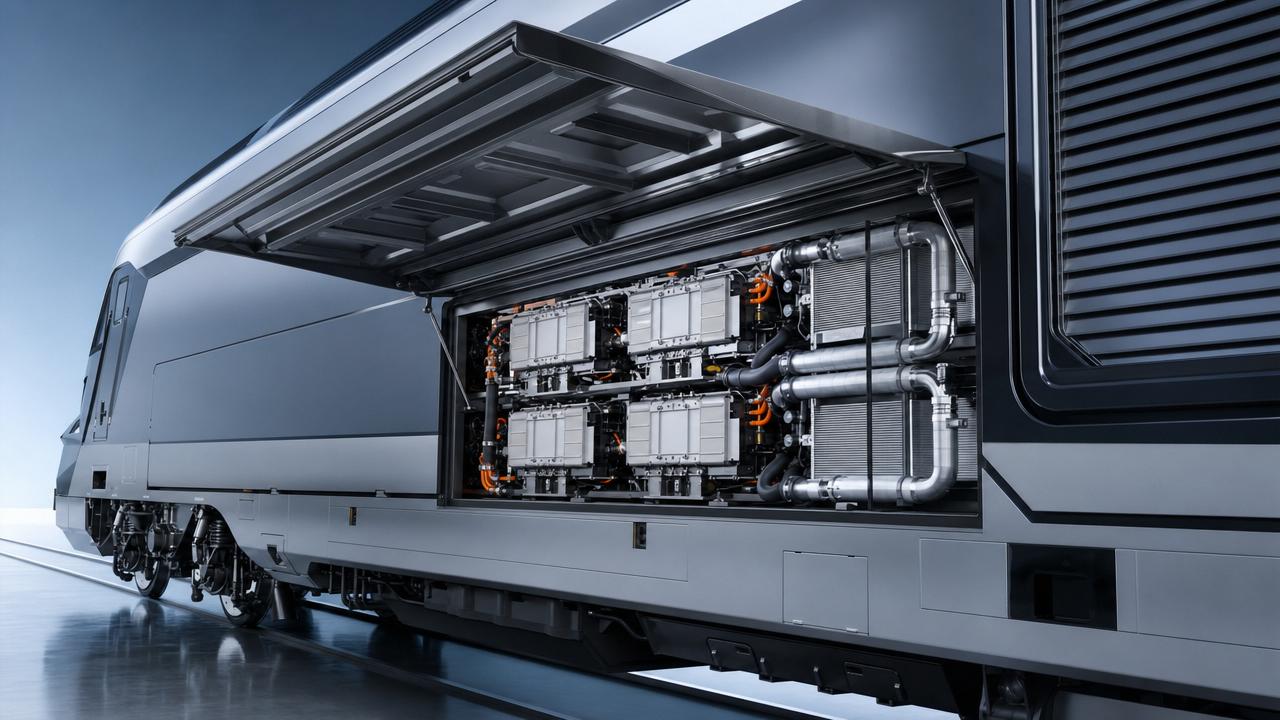
As locomotive platforms push for higher efficiency, lower weight, and tighter thermal envelopes, traction inverter power density is becoming a defining metric in 2026 design strategy. For railway decision-making, this trend shapes performance, lifecycle cost, cooling architecture, and overall platform integration across freight and heavy-haul fleets.
Traction Inverter Power Density in Locomotive Engineering
Traction inverter power density describes how much power an inverter delivers relative to its size or mass. In rail engineering, it is commonly expressed as kW/L or kW/kg.
This metric matters because locomotives operate under strict limits on enclosure space, axle load, thermal management, and reliability. A denser inverter can release room for cooling hardware, batteries, auxiliaries, or service access.
In simple terms, higher traction inverter power density means more usable traction capability from a smaller package. Yet density alone is not enough. The railway sector values durability, maintainability, and fault tolerance just as much.
For 2026 locomotive design, the discussion is moving beyond peak output. Engineers now compare continuous power, thermal cycling resistance, dielectric robustness, and performance under dust, vibration, and high ambient temperatures.
Why 2026 Is a Turning Point
Several technical and market forces are accelerating traction inverter power density targets. The result is a stronger push toward compact, efficient, modular converter systems across diesel-electric, electric, and hybrid locomotive platforms.
- Wide-bandgap semiconductors, especially SiC, are improving switching efficiency and reducing cooling burden.
- Heavy-haul railways are seeking more tractive effort without major vehicle mass growth.
- Hybrid and alternative-energy locomotives need underframe and rooftop space for batteries, hydrogen systems, or added auxiliaries.
- Global standards alignment increases pressure for better energy performance and lower maintenance downtime.
- Digital monitoring allows denser equipment to be managed through predictive diagnostics.
For institutions tracking UIC, EN, and AAR-aligned development, traction inverter power density is no longer a niche laboratory indicator. It is now a practical benchmark linked to corridor efficiency, fleet modernization, and long-term asset strategy.
Key Design Signals Seen in 2026 Programs
Core Technical Drivers Behind Higher Density
The rise in traction inverter power density is not caused by one breakthrough. It comes from improvements across power devices, packaging, thermal design, controls, and system integration.
Semiconductor Evolution
SiC modules are increasingly central to high-density traction converters. They reduce switching losses, support higher junction temperatures, and can shrink passive component requirements in selected architectures.
IGBT platforms remain important, especially where cost, field familiarity, and proven robustness dominate. In 2026, many locomotive projects use a mixed roadmap rather than a sudden full technology shift.
Thermal Management
Higher traction inverter power density increases heat flux. That makes cooling design a first-order engineering issue. Better cold plates, cleaner flow paths, improved interface materials, and smarter control algorithms all matter.
Liquid cooling is expanding in advanced locomotives, but air-cooled solutions still serve many duty cycles. The preferred approach depends on route temperature, contamination levels, maintainability, and depot capability.
Mechanical and Electrical Packaging
Compact busbar layouts, reduced parasitic inductance, and stronger electromagnetic compatibility design help support dense inverter assemblies. Packaging must also tolerate vibration, shock, humidity, and insulation aging over long rail service intervals.
Business Value Across the Rail Sector
The value of traction inverter power density extends beyond hardware specification. It influences vehicle economics, route flexibility, and maintenance strategy across the broader rail ecosystem.
- Lower equipment mass can improve axle-load allocation and reduce structural penalties.
- Smaller converter volume can simplify integration in dual-cab, export, or retrofit platforms.
- Higher efficiency can reduce fuel or electricity consumption over long-haul operations.
- Better thermal performance can extend component life when correctly managed.
- More available installation space can support digital systems, batteries, or redundancy features.
For a technical intelligence platform such as G-RFE, traction inverter power density is especially useful as a cross-functional indicator. It connects rolling stock design with infrastructure limits, energy policy, maintenance planning, and corridor performance objectives.
Typical Locomotive Applications and Evaluation Priorities
Not every locomotive class values traction inverter power density in the same way. Duty cycle, ambient conditions, train length, and maintenance structure shape the correct balance.
In retrofit projects, traction inverter power density can unlock value quickly because the vehicle envelope is already fixed. In new-build platforms, the metric supports broader architectural optimization from the start.
Practical Considerations Before Setting Density Targets
A higher traction inverter power density target should not be treated as an automatic design win. Dense systems can introduce hidden trade-offs if the evaluation framework is too narrow.
- Compare continuous, not only peak, power density under realistic ambient temperatures.
- Check cooling system parasitics, including pump or fan power.
- Review maintenance access for modules, sensors, and filters.
- Assess spare parts strategy for SiC, gate drivers, and thermal interfaces.
- Validate against route shock, dust, altitude, and humidity conditions.
- Confirm compliance with required railway safety, EMC, and insulation standards.
It is also important to assess density at subsystem level. An inverter may be smaller, but total system volume can rise if extra cooling or shielding hardware becomes necessary.
Recommended Evaluation Framework
A sound review method combines electrical efficiency, package size, thermal headroom, reliability data, and serviceability. This creates a more realistic picture than headline kW/L values alone.
For international corridor projects, density should also be checked against network interoperability goals, depot skills, and supply-chain resilience. That wider view reduces the risk of over-optimized but difficult-to-support platforms.
Next-Step Outlook for 2026 Fleet Planning
The direction of travel is clear: traction inverter power density will remain a leading indicator in locomotive modernization. However, the strongest outcomes will come from balanced engineering rather than maximum compaction alone.
A practical next step is to benchmark current inverter platforms against 2026 density ranges, cooling architecture, efficiency maps, and route-specific thermal margins. That comparison helps identify whether upgrade priorities should focus on semiconductor change, packaging redesign, or broader vehicle integration.
Within the G-RFE perspective, traction inverter power density should be tracked alongside standards compliance, heavy-haul duty validation, signaling compatibility, and infrastructure constraints. That integrated approach supports better technical decisions across rolling stock, corridor engineering, and long-term asset planning.
For 2026 locomotive design, the real question is not simply how dense the inverter can become. It is how effectively that density converts into reliable traction, lower lifecycle cost, and stronger operational resilience across demanding rail networks.
Industry Briefing
Get the top 5 industry headlines delivered to your inbox every morning.