
Resource-Efficient Environmental Equipment News

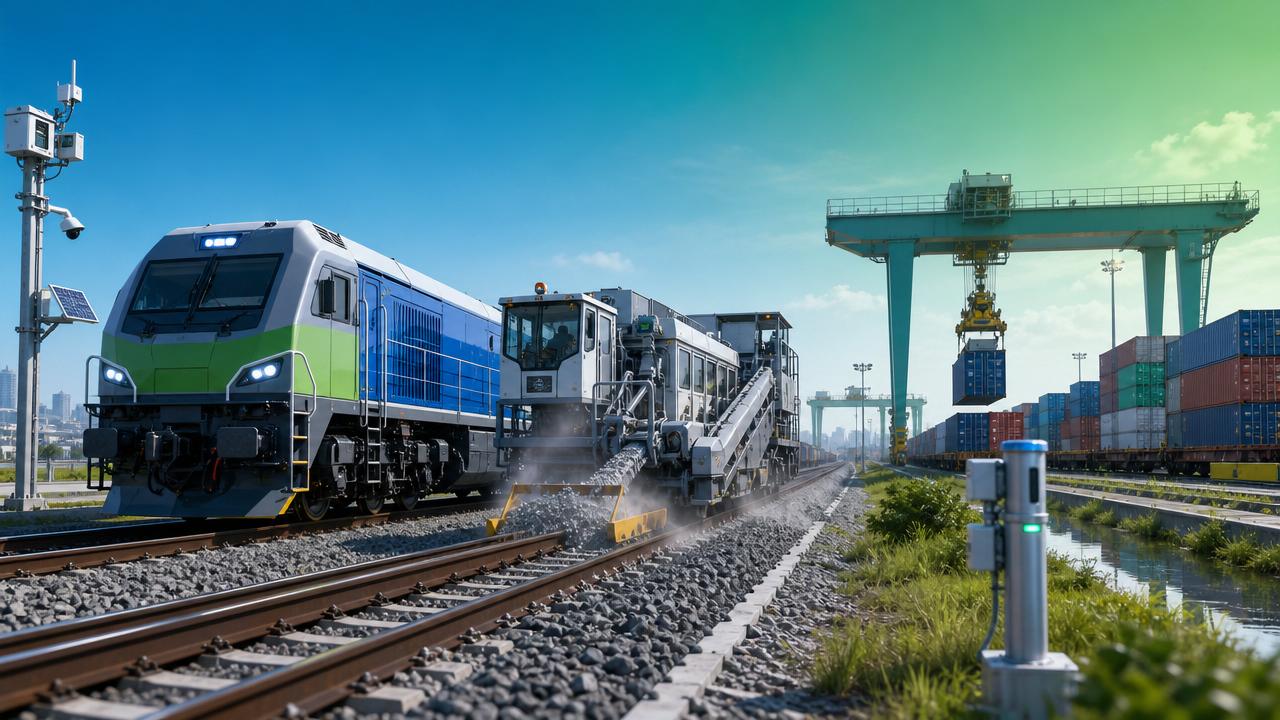
As global rail freight and engineering systems shift toward lower emissions, smarter infrastructure, and lifecycle-based asset planning, decision-makers need reliable environmental equipment news for resource efficiency. This update explores how resource-conscious technologies, from energy-saving maintenance machinery to cleaner intermodal support systems, are reshaping heavy transport networks. For information researchers tracking policy, procurement, and technical trends, it provides a concise entry point into the equipment innovations helping rail-linked industries reduce waste, optimize performance, and align with evolving sustainability standards.
Within the G-RFE intelligence framework, environmental equipment news for resource efficiency is not treated as a side topic. It is connected to locomotive productivity, track maintenance cycles, port-rail interfaces, signaling resilience, and EPC risk control.
Researchers comparing railway equipment markets now need more than emission claims. They require practical details on energy use, material recovery, maintenance intervals, interoperability, and compliance with UIC, EN, AAR, ETCS, and GSM-R related requirements.
Why Resource-Efficient Equipment Matters in Rail-Linked Industries
Rail freight is already a high-capacity transport mode, yet heavy-haul corridors can still consume significant diesel, electricity, ballast, lubricants, water, and replacement parts over a 20–40 year asset life.
For national railway authorities and EPC contractors, environmental equipment news for resource efficiency helps identify which technologies reduce waste without compromising axle-load capacity, safety margins, or corridor availability.
From emissions reduction to lifecycle efficiency
The most valuable updates now focus on lifecycle performance. A maintenance machine that cuts fuel by 8–15% but increases downtime may not support corridor efficiency.
By contrast, an automated tamping or ballast-cleaning system that reduces rework frequency from 6 visits to 3 visits per section can save labor, fuel, and track possession time.
Key research questions
- Does the equipment reduce energy, materials, water, or consumables over at least 3–5 operating cycles?
- Can the system work under heavy-haul loads such as 25–32.5 tonne axle-load applications?
- Are maintenance intervals, spare parts, and diagnostic records suitable for multi-country freight corridors?
- Does the solution align with signaling, safety, and operational rules already used by the network?
These questions convert environmental equipment news for resource efficiency into procurement intelligence. They also help researchers separate field-ready technologies from early-stage concepts.
Technology Areas Reshaping Environmental Equipment News for Resource Efficiency
The strongest equipment developments are appearing across 5 interconnected rail domains: locomotives, rolling stock, track machinery, intermodal terminals, and digital communication systems.
For G-RFE readers, the relevance lies in how these systems perform as a corridor portfolio rather than as isolated machines or supplier brochures.
Cleaner traction and energy management
Heavy-haul operators are reviewing hybrid shunting locomotives, battery-assisted yard equipment, regenerative braking, and optimized diesel-electric control for 3000hp–6000hp locomotive classes.
Environmental equipment news for resource efficiency often highlights traction control software, idle reduction systems, and auxiliary power upgrades that reduce unnecessary fuel burn during low-load operations.
Track maintenance machinery with lower resource demand
Automated tampers, rail grinding units, ballast cleaners, and track-laying machines are moving toward precision control, onboard diagnostics, and optimized hydraulic systems.
A typical procurement comparison may examine 3 indicators: liters of fuel per work hour, millimeters of alignment accuracy, and maintenance hours per 100 operating hours.
The following table summarizes equipment areas frequently covered in environmental equipment news for resource efficiency and the practical metrics researchers should track.
The table shows that efficiency is measurable only when equipment is linked to route conditions, maintenance strategy, and terminal design. Single-parameter comparisons rarely give reliable conclusions.
How Researchers Should Evaluate Equipment Updates
Information researchers often review supplier announcements, tender documents, regulatory notes, and engineering papers. The challenge is turning scattered updates into comparable procurement evidence.
A disciplined review method for environmental equipment news for resource efficiency should cover technical fit, standards alignment, operational reliability, data visibility, and total ownership cost.
A 5-step review framework
- Define the corridor duty cycle, including axle load, temperature range, annual tonnage, and track possession limits.
- Identify the primary resource target, such as fuel, electricity, ballast, lubricants, water, or spare parts.
- Check compatibility with UIC, EN, AAR, ETCS, CBTC, GSM-R, or local railway authority requirements.
- Compare field-service evidence, maintenance access, parts availability, and diagnostic reporting formats.
- Map savings against procurement cost, training time, and expected deployment period of 2–6 months.
This framework improves the quality of environmental equipment news for resource efficiency because each update is tested against real-world railway operating constraints.
Procurement indicators that deserve attention
Tender teams should avoid vague language such as “green technology” unless it is supported by measurable resource indicators and verifiable operating assumptions.
The table below provides a practical checklist for evaluating environmental equipment news for resource efficiency before it influences a specification or supplier shortlist.
A strong specification should translate these checks into acceptance criteria. That allows procurement teams to compare vendors without relying on marketing language alone.
Digital Systems and Data as Resource-Efficiency Enablers
Resource efficiency is increasingly dependent on data. Smart signaling, condition monitoring, and communication networks can reduce unnecessary braking, idle time, and reactive maintenance.
Environmental equipment news for resource efficiency therefore includes CBTC, ETCS, GSM-R, onboard diagnostics, wayside sensors, and predictive analytics platforms used across freight networks.
Why signaling affects environmental outcomes
In dense corridors, train control accuracy can influence speed profiles, headways, braking events, and power draw. Even small reductions in stop-start movement can improve corridor throughput.
For freight operators, a 2–5 minute reduction in dwell time per train may create measurable gains when multiplied across 20–60 daily movements.
Condition monitoring and predictive maintenance
Sensor-equipped wagons, bearing monitors, track geometry cars, and vibration analysis systems support better timing of repairs before failures consume additional materials and operating hours.
In environmental equipment news for resource efficiency, the most useful digital updates explain measurement frequency, alarm thresholds, data ownership, and integration with maintenance planning systems.
Useful data points to request
- Sensor sampling rate, such as every 1 second, 10 seconds, or per wheelset event.
- Accuracy tolerance, including geometry measurement limits such as ±0.5mm or supplier-stated ranges.
- Alert escalation workflow across 3 levels: observation, maintenance planning, and immediate intervention.
- Data retention period, commonly 12–36 months for trend analysis and warranty review.
These points turn digital claims into operational evidence. They also help compare whether a system supports sustainability reporting, maintenance optimization, or both.
Intermodal Rail-Port Systems and Cleaner Terminal Operations
Rail-port interfaces are critical because inefficiency at the terminal can offset gains achieved on the mainline. Containers, bulk cargo, and wagons require synchronized handling.
Environmental equipment news for resource efficiency now covers electric reach stackers, automated gate systems, low-emission yard tractors, shore power, dust suppression, and water recycling.
Terminal equipment selection priorities
A terminal handling 500–2000 containers per day may prioritize charging strategy, crane productivity, queue management, and energy demand peaks.
Equipment should be evaluated as part of a logistics system. A cleaner machine that slows wagon turnaround by 10% can create hidden emissions from congestion.
Practical terminal checks
- Charging windows must match shift patterns, with 1–3 planned charging periods where possible.
- Yard planning software should reduce empty movements and support train loading sequences.
- Dust and runoff controls should fit bulk cargo types, local climate, and drainage design.
- Emergency backup plans must protect cargo flow during grid outages or charger faults.
For researchers, the main point is system compatibility. Terminal sustainability depends on equipment, power supply, workflow design, and rail schedule discipline.
Common Risks in Reading Environmental Equipment News
Not every announcement has immediate procurement value. Some updates describe pilot projects, limited climate testing, or laboratory conditions that differ from heavy freight operations.
Environmental equipment news for resource efficiency should be checked for scope, baseline assumptions, operating environment, and whether the reported gains apply to similar corridors.
Avoiding specification errors
A common mistake is specifying a technology before confirming maintainability. For remote corridors, spare-part logistics may matter as much as energy performance.
Another risk is ignoring training. New digital maintenance systems may require 2–4 weeks of operator instruction and several months of data calibration.
Red flags for researchers
- No description of duty cycle, load level, ambient temperature, or route profile.
- Savings presented only as percentages without baseline fuel, power, or material consumption.
- No clarification of standards, inspection requirements, or railway authority approval path.
- Limited information on service network, software updates, and cybersecurity responsibilities.
A reliable research note should state what is proven, what is assumed, and what still requires field validation before procurement decisions are made.
How G-RFE Supports Smarter Research and B2B Decisions
G-RFE connects technical intelligence with procurement context across heavy-haul locomotives, rolling stock, infrastructure maintenance, signaling, intermodal systems, and specialized machinery.
For information researchers, this means environmental equipment news for resource efficiency can be interpreted alongside operating standards, safety protocols, and real corridor requirements.
Decision support for authorities, manufacturers, and EPC teams
A national railway authority may use structured intelligence to update tender language. A locomotive manufacturer may track component-level trends across 3 product generations.
An EPC contractor may need early visibility into equipment lead times, acceptance testing, training requirements, and interface risks across civil, mechanical, and digital packages.
Where research creates value
- Benchmarking equipment specifications before tender release or supplier negotiation.
- Screening environmental claims against measurable resource and lifecycle indicators.
- Mapping standards alignment across UIC, EN, AAR, ETCS, CBTC, and GSM-R environments.
- Identifying implementation risks before they affect schedule, cost, or corridor availability.
The practical value of environmental equipment news for resource efficiency lies in making complex technical information usable for planning, procurement, and long-term asset governance.
Moving from News Tracking to Implementation Readiness
The next phase for rail-linked industries is not simply collecting updates. It is building a repeatable method for evaluating equipment readiness and corridor impact.
Decision-makers should prioritize solutions that combine measurable resource savings, standards compatibility, maintainability, operator training, and clear integration with existing railway systems.
Recommended action path
- Create a shortlist of 4–6 resource targets most relevant to the corridor or terminal.
- Request comparable technical data from suppliers, including duty cycle, maintenance, and standards references.
- Run a cross-functional review with operations, safety, signaling, maintenance, and procurement teams.
- Define pilot acceptance criteria before field deployment, including time, cost, and performance thresholds.
- Convert verified results into tender specifications, asset plans, or corridor modernization programs.
Environmental equipment news for resource efficiency is most powerful when it leads to better questions, better specifications, and better field outcomes across the freight ecosystem.
G-RFE helps researchers and B2B decision-makers interpret these developments through a railway engineering lens, from 6000hp locomotives to automated maintenance and digital signaling frameworks.
To compare technologies, refine procurement criteria, or explore corridor-specific solutions, contact G-RFE to get a tailored research brief or learn more about practical implementation options.
Industry Briefing
Get the top 5 industry headlines delivered to your inbox every morning.