
Global Supply Chain Updates Supplier Risks in 2026

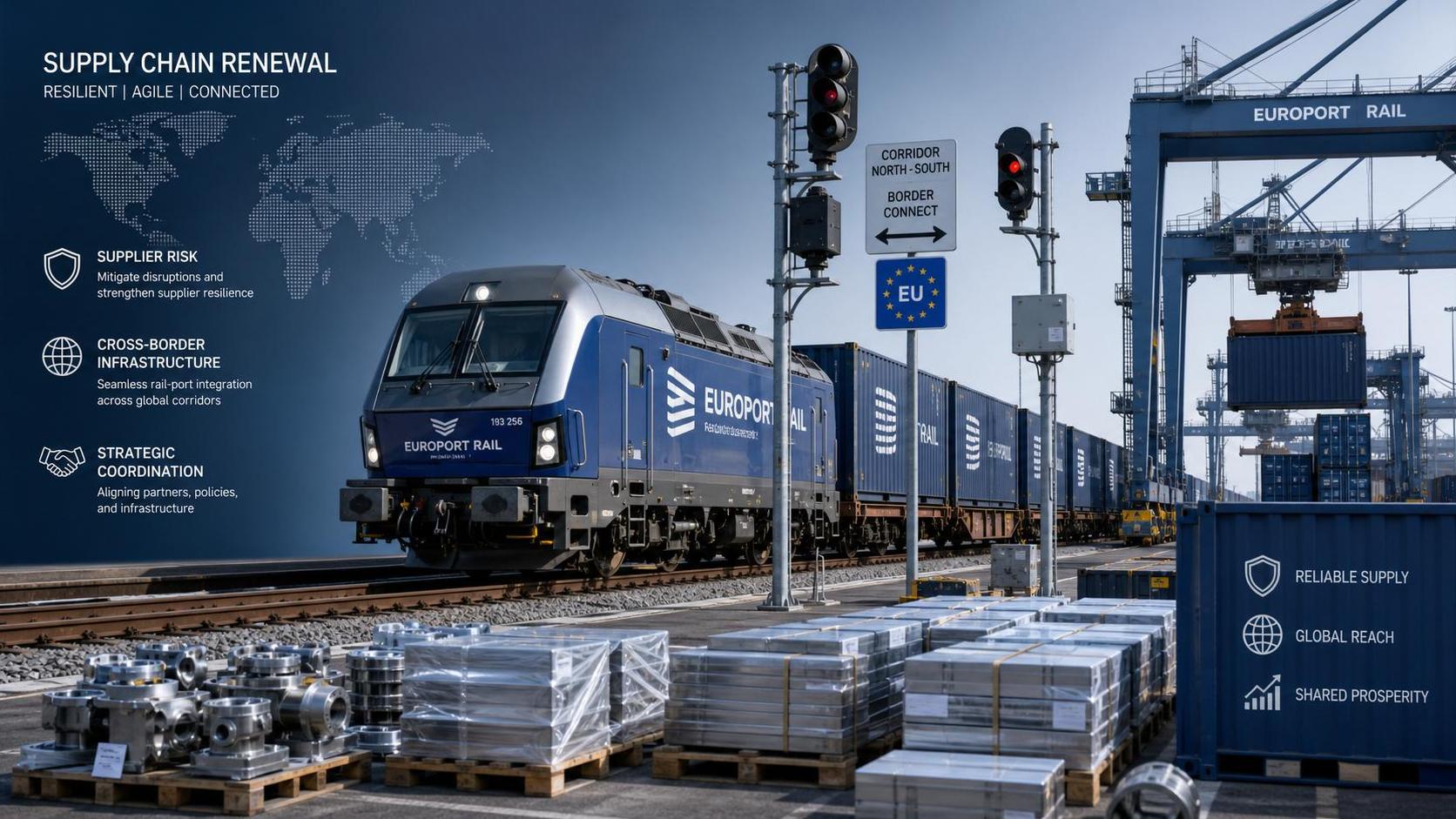
Global supply chain updates supplier risks are moving from an operational issue to a strategic one
In 2026, supply disruption is no longer defined only by freight delays or material shortages.
The sharper issue is supplier stability under changing trade routes, compliance pressure, and capital discipline.
That is why global supply chain updates supplier developments now sit closer to board agendas than quarterly logistics reviews.
For rail freight, engineering systems, and cross-border infrastructure, the stakes are unusually high.
A late casting, a missing signaling component, or an unverified electronics source can derail multi-year delivery schedules.
More importantly, the problem rarely starts at the final assembly point.
It begins deeper in the supplier network, where financing, certification, and geopolitical exposure now interact more tightly.
This shift matters across industries, but it is especially visible in railway-linked value chains.
Heavy-haul locomotives, track systems, CBTC or ETCS architectures, and intermodal rail-port assets depend on long qualification cycles.
When one qualified source weakens, replacement is slow, expensive, and technically sensitive.
Recent global supply chain updates supplier signals suggest this sensitivity will deepen before it eases.
The market signal is not just scarcity, but a more selective supply base
The visible story is diversification.
The less visible story is that supplier pools are becoming narrower in critical categories.
Several sources remain available on paper, yet only a small group can meet delivery, certification, and lifecycle obligations together.
This is one of the clearest global supply chain updates supplier patterns entering 2026.
In rail engineering, approved vendors must often align with UIC, EN, AAR, national safety rules, and operator-specific acceptance tests.
A supplier may have capacity, yet still fail the compliance threshold needed for project deployment.
The same applies to braking systems, axle components, onboard communication modules, and maintenance machinery subsystems.
From recent demand shifts, three signals stand out.
- Supplier qualification windows are lengthening, especially for electronics and safety-critical assemblies.
- Regional sourcing is rising, but regional redundancy is often overstated.
- Balance-sheet resilience is becoming as important as production capability.
That last point deserves more attention.
Many supplier failures in 2026 may not come from factory breakdowns.
They may come from cash-flow stress, insurance friction, sanctions exposure, or delayed recertification.
Why this change is becoming more visible now
Several forces are converging at the same time.
Trade corridors are being redrawn by security concerns, regional industrial policy, and energy transition priorities.
At the same moment, large infrastructure programs still require global sourcing for specialist equipment.
That creates a mismatch between political pressure for localization and technical reliance on international supply chains.
The global supply chain updates supplier conversation now includes several deeper drivers.
In practice, these drivers make disruption harder to predict with old scorecards.
A supplier can pass cost and quality reviews, yet still carry hidden route, finance, or certification risk.
The impact is spreading across more than one business layer
It is tempting to treat supplier risk as a procurement issue.
That view is too narrow for 2026.
Global supply chain updates supplier volatility is now affecting planning, engineering validation, contract structure, and asset lifecycle economics.
In rolling stock, unstable sourcing can delay homologation or force redesign around substitute components.
In rail infrastructure, missing fastening systems, rail steels, or tamping machine parts can shift installation seasons.
In signaling and communications, the risk profile is even sharper.
A delayed radio module or interface processor can block commissioning across a much larger network package.
Intermodal systems face a similar issue when cranes, sensors, and software updates depend on different regional suppliers.
This is where technical intelligence platforms such as G-RFE become useful in a non-promotional sense.
The value is not in broad commentary, but in comparing hardware readiness, standards alignment, and corridor-level constraints together.
That wider view helps identify where supplier fragility becomes system fragility.
What deserves closer attention before the next disruption becomes obvious
The most important signals are often indirect.
A supplier rarely announces strategic weakness in simple terms.
More often, the warning appears through smaller operational changes.
- Repeated requests to change incoterms or payment timing
- Longer response cycles on documentation, factory audits, or test reports
- Growing dependence on subcontractors for safety-critical modules
- Frequent design revisions linked to unavailable chips, alloys, or imported subassemblies
- Certification coverage that remains valid in one market but uncertain in another
Seen individually, these may look manageable.
Seen together, they form a meaningful global supply chain updates supplier risk pattern.
Another point is often underestimated.
Dual sourcing helps only when both sources are independently qualified, geographically differentiated, and contractually executable.
Many second-source strategies still rely on common sub-tier bottlenecks.
A stronger response starts with better supplier intelligence, not only more suppliers
The practical answer is not unlimited diversification.
That often adds cost without reducing technical dependence.
A better response is targeted visibility around failure points that matter most.
For complex engineering networks, that means linking supplier review to standards, routes, software dependencies, and service obligations.
Useful next steps usually include the following.
- Map critical components to single-source exposure, not just direct spend.
- Track which certifications, interface approvals, and test records would block substitution.
- Review corridor-level logistics assumptions for ports, inland rail hubs, and customs handoffs.
- Separate short-term delivery risk from long-term maintenance and spares risk.
- Build scenario triggers around financing stress, sanctions exposure, and regulatory changes.
This is also where benchmark-based monitoring matters.
In sectors covered by G-RFE, comparing assets and suppliers against UIC, EN, and AAR frameworks creates a more realistic resilience picture.
It helps distinguish between a temporary delay and a structurally weak source.
The next phase will reward earlier judgment, not faster reaction
The 2026 outlook does not suggest a simple return to stable global sourcing.
It suggests a more selective and compliance-heavy market where supplier risk becomes part of strategic timing.
That is the real meaning behind current global supply chain updates supplier discussions.
The question is no longer whether disruption exists.
The question is which weak link can quietly alter delivery confidence, technical integrity, or corridor competitiveness.
From here, the most useful move is disciplined observation.
Recheck supplier assumptions against standards exposure, route dependency, and subsystem complexity.
Compare where demand is concentrating and where qualified capacity is actually shrinking.
Then build a staged response plan before disruption becomes visible in contract performance.
In this cycle, earlier judgment is likely to protect more value than later escalation.
Industry Briefing
Get the top 5 industry headlines delivered to your inbox every morning.