
Global Supply Chain Updates for Smarter Risk Control

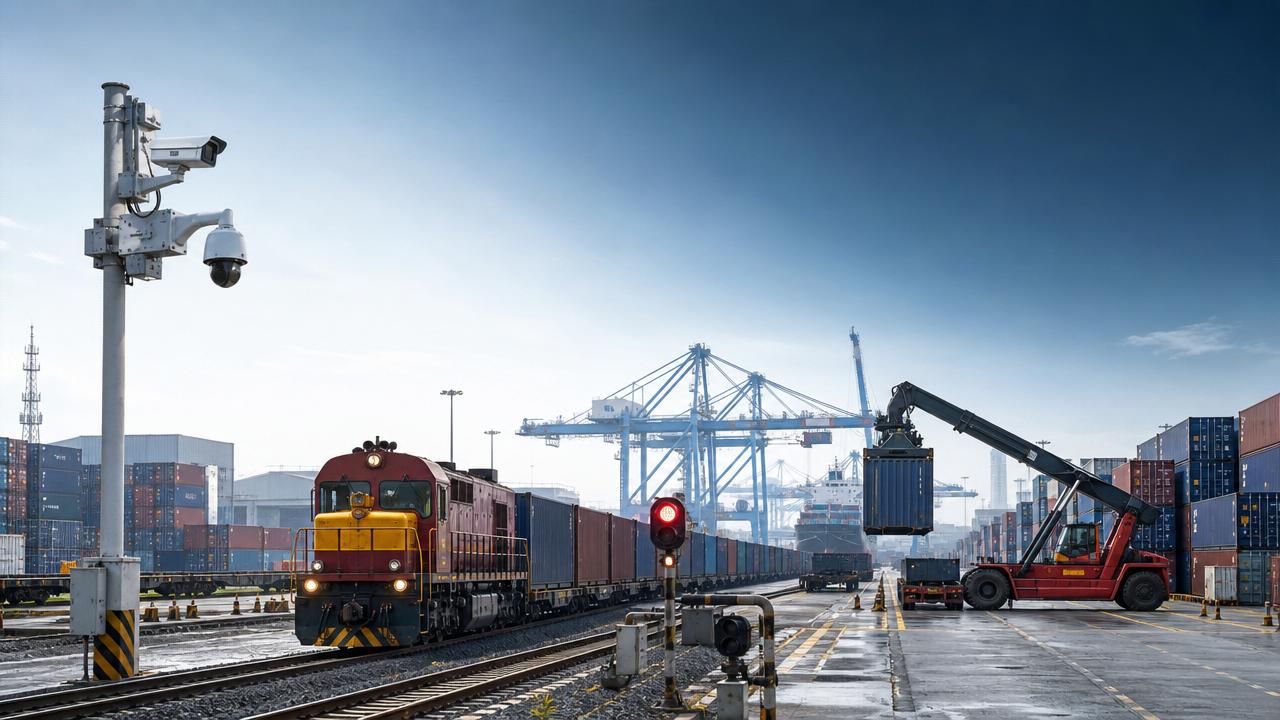
Global supply chain updates for risk management now shape delivery more than price alone
Global supply chain updates for risk management have moved from background noise to a board-level operating issue.
That shift is especially visible across railway freight, civil engineering, signaling, and intermodal infrastructure.
Schedules are no longer threatened only by late steel, slow ports, or container imbalance.
More often, delays begin with certification bottlenecks, digital component shortages, customs frictions, and policy-driven rerouting.
For organizations managing rail corridors and heavy engineering assets, global supply chain updates for risk management now inform technical planning as much as commercial planning.
This is where a data-led view matters.
Across the G-RFE landscape, the strongest signals come from five connected domains.
They include rolling stock, track systems, smart signaling, rail-port interfaces, and specialized machinery.
Each one is facing a different form of supply-side pressure, yet the risks increasingly converge inside one project schedule.
The market is not simply slowing or tightening; it is fragmenting
From recent market movement, the clearest change is fragmentation rather than one universal shortage pattern.
Heavy-haul locomotive components may be available, while brake electronics remain constrained.
Rail fastening systems may arrive on time, while turnout actuators face certification-related holdbacks.
In signaling, the issue is often not volume.
It is interoperability, firmware approval, and alignment with ETCS, CBTC, GSM-R, or national migration rules.
This makes global supply chain updates for risk management more complex than traditional supplier monitoring.
The real question is whether the delivered part is installable, certifiable, and accepted at the exact project stage required.
Where the pressure is showing up most clearly
- Longer lead times for power electronics, onboard control units, and signaling interfaces.
- Higher transport uncertainty for oversized machinery and rail construction equipment.
- Regional divergence in standards, testing windows, and documentation acceptance.
- Cost volatility shifting from raw materials toward logistics, insurance, and compliance.
- Lower tolerance for substitute parts in safety-critical rail applications.
That last point deserves extra attention.
In many industrial sectors, substitution can protect schedule.
In railway engineering, substitution without standards alignment can create a second wave of delay.
Why these changes are becoming more persistent
Several forces are reinforcing each other rather than fading.
That is why global supply chain updates for risk management now require a broader reading than monthly freight rates.
More importantly, these drivers interact across project boundaries.
A delay in telecom modules can affect signaling tests, which then shifts track possession windows and contractor mobilization.
That is why global supply chain updates for risk management need to be interpreted as system-level intelligence.
The impact is spreading well beyond procurement timelines
In actual delivery environments, supply chain shocks rarely remain isolated.
They move through engineering logic, construction sequencing, financing assumptions, and operational readiness.
Three areas where hidden exposure is growing
- Design freeze risk: teams lock specifications before supplier flexibility is fully understood.
- Interface risk: one delayed subsystem disrupts installation across civil, power, and control packages.
- Commissioning risk: equipment arrives, but testing cannot proceed due to approvals or software mismatch.
For heavy rail and freight corridors, intermodal nodes add another layer.
Port congestion may improve, yet terminal crane controls, wagon sensors, or customs digitization still create throughput losses.
So the latest global supply chain updates for risk management should be read together with network performance data, not in isolation.
What smarter monitoring looks like in rail and infrastructure programs
The old model relied on checking shipment dates and escalating overdue items.
That is now too late.
Smarter control starts earlier, at the point where technical dependency and market dependency intersect.
Within the G-RFE perspective, this means linking hardware intelligence with standards, route conditions, and commissioning realities.
Signals worth tracking continuously
- Availability of high-spec steel, castings, traction components, and axle assemblies.
- Lead-time changes for safety-certified electronics and communication hardware.
- Shifts in cross-border customs requirements for rail machinery and oversized cargo.
- Testing slot availability for ETCS, CBTC, and GSM-R related systems.
- Policy changes affecting corridor access, sanctions exposure, or local content thresholds.
These indicators are more useful when mapped against milestone sensitivity.
Not every delayed item deserves equal escalation.
A small certified interface card can carry more schedule risk than a large fabricated component.
Better decisions now depend on comparing standards risk with logistics risk
One noticeable pattern is the overemphasis on transport disruption while underestimating standards exposure.
In rail engineering, both need to be evaluated together.
A route diversion may add cost.
A non-compliant subsystem may stop energization, trial running, or final acceptance entirely.
This is where trusted technical intelligence becomes practical rather than academic.
Benchmarking components against UIC, EN, and AAR frameworks helps identify which substitutions are realistic and which are dangerous.
It also improves the quality of global supply chain updates for risk management by separating temporary noise from structural vulnerability.
What to do next while conditions remain fluid
Current conditions do not suggest a single crisis.
They suggest a prolonged period of uneven availability, selective compliance friction, and corridor-level uncertainty.
That makes disciplined review more valuable than reactive escalation.
- Re-rank critical items by installability and approval dependency, not purchase value alone.
- Stress-test schedules against certification delays, not just shipping delays.
- Review whether alternate suppliers meet the same signaling, safety, and interoperability requirements.
- Track corridor and border developments alongside supplier capacity updates.
- Build stage-based contingency plans for commissioning and handover.
The broader lesson is clear.
Global supply chain updates for risk management are no longer just a sourcing function.
They are part of engineering judgment, compliance planning, and network resilience.
The next advantage will come from connecting market signals with technical consequences early enough to act.
That means watching standards, components, routes, and interfaces as one moving system rather than four separate reports.
Industry Briefing
Get the top 5 industry headlines delivered to your inbox every morning.