
Food Processing Equipment Selection Risks in 2026

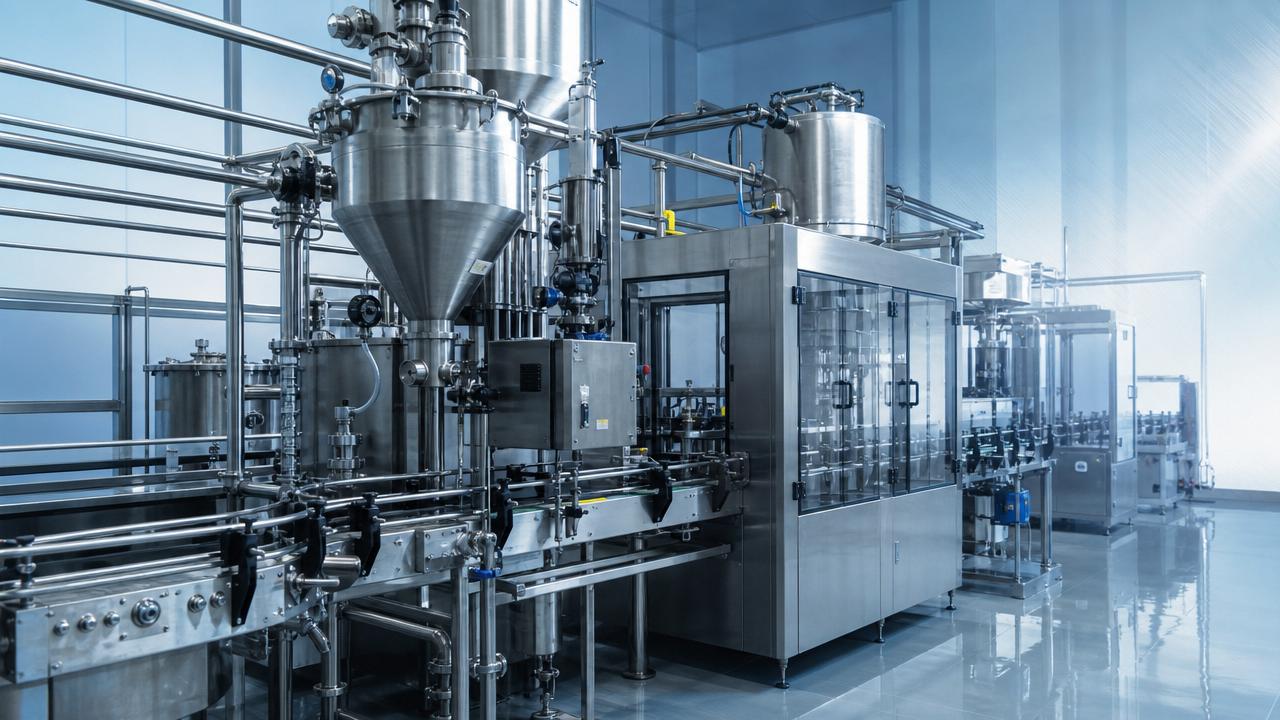
Food Processing Equipment Selection Risks in 2026
Selecting food processing equipment in 2026 is no longer just a matter of capacity, price, or delivery time.
The real risks sit inside compliance, automation fit, lifecycle cost, energy use, sanitation design, and supplier resilience.
Across global industries, equipment selection now resembles critical infrastructure procurement more than a simple factory purchase.
Every food processing equipment decision must balance technical performance, operational continuity, data readiness, and long-term return.
Why 2026 Selection Scenarios Carry Higher Operational Risk
Food plants are becoming more connected, regulated, and energy-sensitive.
A poor food processing equipment choice can affect product safety, labor planning, maintenance intervals, and export eligibility.
Different production scenarios require different levels of automation, cleanability, traceability, and tolerance control.
The same mixer, cutter, dryer, conveyor, or filling line may perform well in one plant and fail in another.
Scenario-based judgment reduces this risk before specifications, quotations, and supplier negotiations begin.
Scenario Logic Matters More Than Generic Equipment Lists
Food processing equipment should not be selected only from catalogs or benchmark factories.
Product viscosity, allergen exposure, cleaning frequency, packaging format, and local utilities can change the correct answer.
In 2026, selection risk increases when assumptions are copied from unrelated operating environments.
Scenario One: High-Volume Standardized Production
High-volume lines prioritize throughput, repeatability, uptime, and predictable maintenance.
In this scenario, food processing equipment must sustain long operating windows without frequent stoppages or quality drift.
Key risks include undersized motors, weak bearings, poor thermal control, and limited spare part availability.
Automation compatibility also matters because high-volume plants often rely on PLC, SCADA, MES, or OEE monitoring.
Equipment without stable communication protocols may create data gaps and hidden production losses.
Core Judgment Points
- Confirm rated capacity under real product conditions, not only water-based testing.
- Review fatigue performance for shafts, belts, pumps, seals, and gearboxes.
- Check integration with plant data systems and preventive maintenance tools.
- Validate energy consumption per finished unit, not only nameplate power.
Scenario Two: Flexible Multi-Product Production
Multi-product factories need changeover speed, recipe flexibility, modular layouts, and sanitation efficiency.
Food processing equipment in this scenario must handle different ingredients, textures, sizes, and packaging requirements.
The biggest risk is buying equipment optimized for one product family but marketed as universal.
Changeover losses can exceed the savings from a lower purchase price.
Cleaning validation, tool-free disassembly, and recipe memory become decisive selection factors.
Core Judgment Points
- Test equipment using the most difficult product, not the easiest sample.
- Calculate changeover time across a full weekly production schedule.
- Review hygienic design for allergen and cross-contamination control.
- Confirm whether future formats require only tooling changes or major retrofits.
Scenario Three: Export-Oriented and Regulated Production
Export-oriented plants face stricter documentation, traceability, material, and food safety expectations.
Food processing equipment must support compliance with relevant hygiene, electrical, safety, and material contact standards.
Risks appear when certificates are incomplete, outdated, or not linked to the delivered machine configuration.
Another risk is selecting equipment that meets local practice but fails destination-market inspection requirements.
In 2026, compliance data should be treated as part of the machine, not an optional document package.
Core Judgment Points
- Map target market requirements before finalizing food processing equipment specifications.
- Check stainless steel grades, surface finish, seals, lubricants, and contact materials.
- Require serial-number-specific documentation for safety and sanitation components.
- Verify traceability functions for batch records, alarms, deviations, and audit exports.
Scenario Four: Energy-Constrained or Sustainability-Focused Plants
Energy cost and carbon reporting increasingly influence equipment decisions.
Food processing equipment with poor thermal efficiency can create long-term losses beyond the initial budget.
This is critical for freezing, drying, baking, sterilization, evaporation, compressed air, and steam-intensive processes.
A low-price machine may consume more power, water, steam, or cleaning chemicals over its service life.
Lifecycle modeling should include utilities, peak demand, waste rate, heat recovery, and idle-mode consumption.
Core Judgment Points
- Compare energy consumption per kilogram, liter, batch, or packaged unit.
- Request performance data under partial load and startup conditions.
- Check compatibility with heat recovery, variable-speed drives, and smart metering.
- Include water, CIP chemicals, wastewater load, and rejected product in cost models.
Scenario Five: Remote, Distributed, or Rapidly Expanding Operations
Distributed plants need simple maintenance, robust components, remote support, and stable spare part logistics.
Food processing equipment may fail commercially if service access is weak, even when technical design looks strong.
Expansion scenarios also require repeatable layouts, scalable controls, and standardized operator interfaces.
Supplier reliability becomes a direct operational risk when parts, software keys, or technicians are unavailable.
Equipment should be assessed as part of a support ecosystem, not only as a mechanical asset.
Different Scenario Requirements for Food Processing Equipment
Scenario Adaptation Recommendations Before Final Selection
A disciplined selection process reduces the chance of hidden failure after commissioning.
Before approving food processing equipment, build a scenario file that links production reality to technical requirements.
- Define product ranges, batch sizes, packaging formats, and expected growth.
- Create a utility baseline for electricity, steam, water, air, and cooling.
- Request test results using real ingredients and difficult operating conditions.
- Evaluate cleanability through physical access, drainage, and residue control.
- Check integration with controls, sensors, production records, and cybersecurity policies.
- Compare total ownership cost over five to ten years.
Food processing equipment selection should also include a supplier stress test.
Review response time, installed base, parts warehouses, software support, and upgrade history.
Common Misjudgments That Create Selection Failure
The most common mistake is treating nominal capacity as real production capacity.
Food processing equipment may reach catalog output only under ideal feed, temperature, humidity, and operator conditions.
Another mistake is underestimating cleaning and changeover time.
A machine that runs fast but cleans slowly may reduce weekly output.
Compliance is also often reviewed too late.
If food processing equipment lacks suitable materials, guards, documentation, or traceability, retrofitting can be costly.
Digital lock-in is another growing risk.
Closed software, inaccessible data, and proprietary service tools can limit future optimization.
Finally, low upfront price can hide energy waste, weak service coverage, and short component life.
A Practical 2026 Decision Path
Food processing equipment decisions in 2026 should start with scenario risk, not supplier preference.
The better path is to define production conditions, compliance boundaries, data needs, and lifecycle cost assumptions first.
Then compare equipment against measurable acceptance criteria.
A strong evaluation matrix should include output stability, hygiene design, energy performance, maintainability, automation readiness, and supplier continuity.
This approach mirrors infrastructure-grade procurement principles used in complex industrial systems.
It protects productivity while reducing avoidable technical, financial, and regulatory exposure.
Action Guidance for the Next Purchase Step
Before committing to food processing equipment, build a shortlist based on operating scenarios and verified evidence.
Request documented trials, utility models, compliance files, spare part plans, and integration details.
Compare each option against the real plant environment, not only supplier claims.
The safest purchase is not always the cheapest or the most advanced.
It is the food processing equipment that fits the scenario, protects continuity, and remains supportable throughout its lifecycle.
Industry Briefing
Get the top 5 industry headlines delivered to your inbox every morning.