
Where Railway Safety Protocols Often Fail During Daily Operations

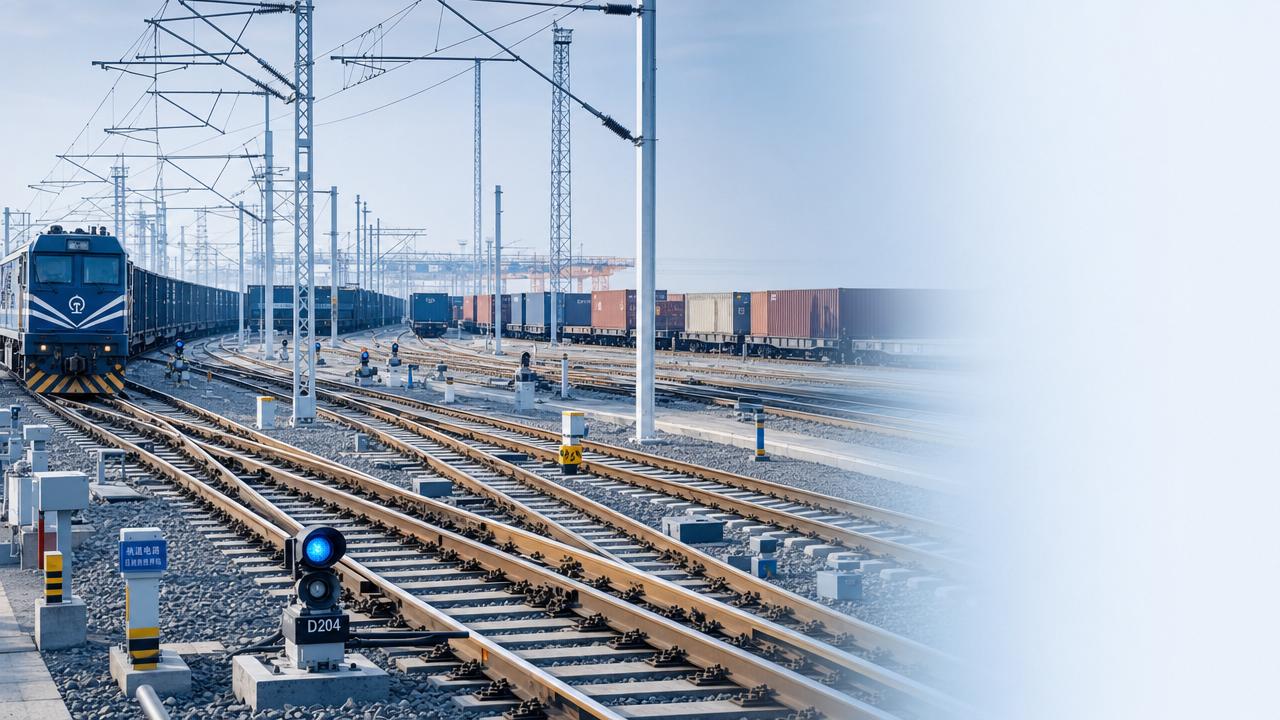
Even advanced rail systems face avoidable disruption when railway safety protocols weaken during routine work. Most failures emerge in ordinary inspections, dispatch handovers, yard movements, maintenance windows, and reporting discipline. For modern freight corridors, daily execution matters as much as engineering design, because small procedural gaps can quickly become operational risk, compliance exposure, and costly service interruption.
Daily operations are becoming the real stress test for railway safety protocols
Across global freight networks, operations are moving faster, becoming more data-driven, and spanning more interfaces. This shift increases the pressure on railway safety protocols during ordinary tasks rather than exceptional events.
Heavy-haul corridors, intermodal terminals, digital signaling layers, and mixed fleets now interact continuously. That complexity raises the chance that one missed control step can affect multiple downstream processes.
In many systems, serious incidents are not caused by dramatic technical collapse. They often begin with delayed defect logging, incomplete route confirmation, informal workarounds, or unclear authority during handoff.
This is why railway safety protocols must be judged by field consistency. Written rules may appear strong, yet everyday compliance may be drifting in quiet but measurable ways.
Several trend signals show where routine safety discipline is slipping
Rail operators and engineering teams are seeing repeat patterns. These patterns do not always trigger headline incidents, but they reveal weak points in railway safety protocols before major failures occur.
- More temporary speed restrictions remain open longer than planned.
- Minor signaling anomalies are reset locally without strong root-cause follow-up.
- Pre-departure checks are completed on paper, but field evidence is inconsistent.
- Track possession boundaries are understood differently across teams.
- Shift changes create gaps in defect ownership and escalation timing.
- Near-miss reporting rates decline even when operational pressure rises.
These signs matter because they reveal procedural drift. Once drift becomes normal, railway safety protocols remain visible in manuals but lose reliability in practice.
The drivers behind failure are usually operational, human, and organizational
The table below summarizes why railway safety protocols often fail during daily operations, especially in freight-heavy, multi-stakeholder environments.
These factors are common across broad industrial settings, but rail amplifies them. The network is linear, time-sensitive, and dependent on precise coordination under changing operating conditions.
Where railway safety protocols most often fail in routine execution
Shift handovers and control-room transitions
Many incidents begin when operational context is transferred poorly. Outstanding defects, route restrictions, and temporary arrangements may be recorded, yet not fully understood by the next shift.
Effective railway safety protocols require shared understanding, not just formal logs. Ambiguity around who owns the next action is a frequent weak point.
Track access, maintenance windows, and possession limits
Routine maintenance creates complex interfaces between infrastructure and operations. When time pressure grows, possession boundaries, protection arrangements, and return-to-service checks may lose rigor.
This is especially important on busy freight lines, where late-running trains and compressed work windows can undermine railway safety protocols designed for ideal timing.
Yard operations and low-speed movements
Yards are often treated as lower-risk environments because speeds are lower. In reality, dense movements, manual coupling, radio reliance, and visibility constraints create persistent exposure.
When railway safety protocols in yards become informal, minor contact events, fouling, and worker exposure rise quickly.
Inspection routines for rolling stock and braking systems
Pre-departure and in-service inspections are highly vulnerable to repetition bias. Teams that rarely find defects may start assuming asset condition rather than testing it.
That weakens railway safety protocols around brake continuity, wheel condition, load security, and fault isolation. Freight reliability then suffers alongside safety assurance.
Signaling irregularities and degraded-mode operations
Digital signaling improves control, but degraded mode is where discipline is tested. Manual authorities, temporary communications, and fallback procedures demand exact execution.
If teams rarely practice those scenarios, railway safety protocols can fail precisely when technical resilience is already reduced.
The operational impact reaches far beyond immediate safety incidents
Weak railway safety protocols affect more than injury prevention. They also influence network capacity, asset utilization, contractual performance, and regulatory confidence.
- Delayed trains due to late defect verification or movement authority confusion
- Higher maintenance cost from repeated temporary fixes
- Poor audit outcomes when field practice diverges from documented controls
- Reduced corridor confidence for intermodal and cross-border freight planning
- More exposure to insurance, claims, and reputational damage after near misses
For complex railway ecosystems, the quality of daily railway safety protocols shapes whether the network performs as a dependable logistics backbone or an unstable operational chain.
The most important controls now are visibility, verification, and behavioral consistency
Improving railway safety protocols does not always require major capital projects. It often starts with better operational clarity and stronger frontline feedback loops.
- Prioritize critical controls instead of expanding generic checklist volume.
- Digitize defect ownership so unresolved hazards cannot disappear during shift change.
- Audit work-as-done, not only work-as-written in formal procedures.
- Rehearse degraded-mode signaling and emergency communications routinely.
- Use near-miss analysis to detect drift before an incident confirms it.
- Standardize contractor interfaces for possessions, access, and site release.
- Track inspection quality indicators, not only inspection completion rates.
A practical response framework helps strengthen railway safety protocols
This approach supports both safety and throughput. Strong railway safety protocols protect people, assets, compliance, and network reliability at the same time.
The next step is to test whether documented rules match field reality
The most useful next move is a focused operational review of where railway safety protocols are most exposed during normal work. Start with handovers, possessions, yard movements, rolling stock checks, and degraded-mode response.
Measure variance between written procedure and actual execution. Review near misses, repeated temporary controls, and unresolved defect chains. Those patterns often reveal the real source of risk.
In a rail environment shaped by digital signaling, cross-border freight, and higher utilization demands, consistent railway safety protocols are no longer a compliance formality. They are a core operating capability that determines whether daily performance remains safe, predictable, and commercially reliable.
Industry Briefing
Get the top 5 industry headlines delivered to your inbox every morning.