
How to Vet EPC Contractors for Rail Projects

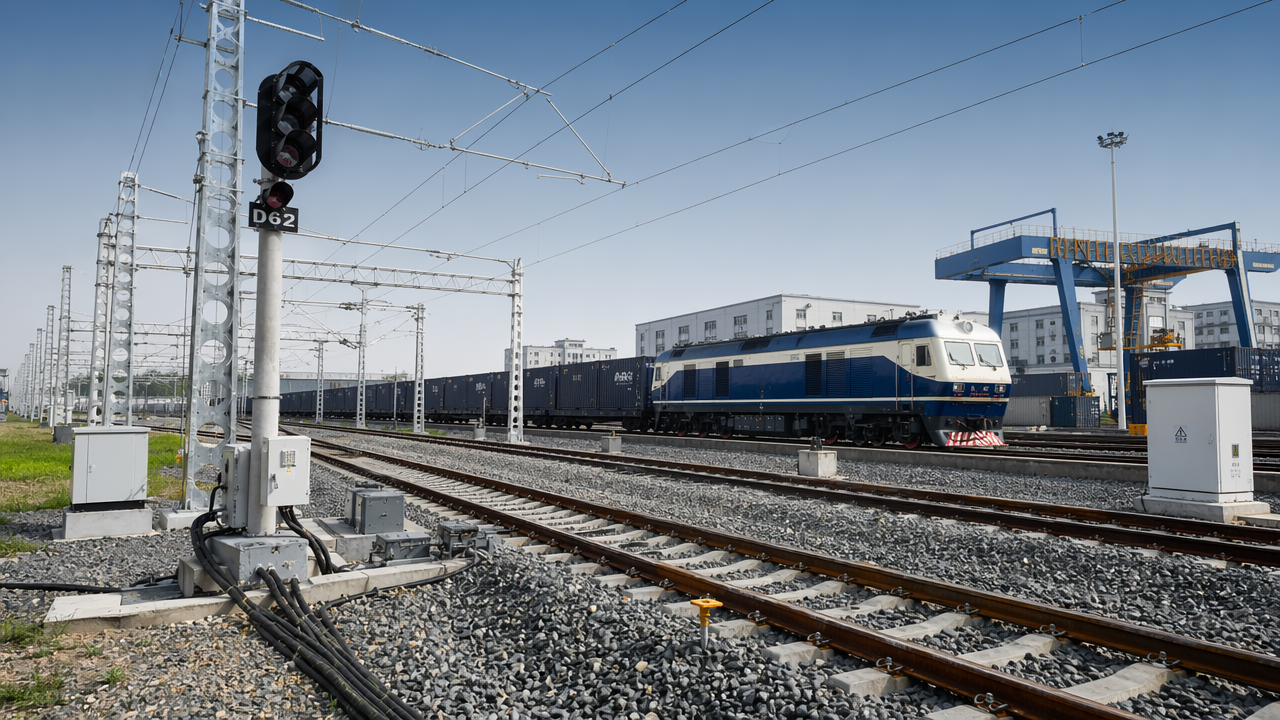
Selecting the right EPC contractors for rail projects requires more than checking credentials—it demands a clear view of railway standards, railway regulatory compliance, and proven railway technical intelligence. For stakeholders shaping rail freight systems, rail communication, and railway signaling across intercontinental freight corridors, this guide outlines how to assess contractors with confidence while aligning technical performance, safety, and railway policy expectations.
In large-scale rail programs, procurement mistakes often surface late, when design interfaces fail, testing schedules slip, or compliance gaps block approvals. That is why investor teams, engineering reviewers, safety managers, and project leaders need a structured vetting framework that goes beyond commercial bids. A credible EPC contractor must demonstrate delivery capability across civil works, traction power, signaling, communication, rolling stock interfaces, and long-term maintainability.
For organizations operating in freight corridors, intermodal rail-port systems, or cross-border railway modernization, the evaluation process should connect technical due diligence with policy and operational realities. Institutions such as G-RFE support this decision environment by linking hardware performance, standards benchmarking, and regulatory awareness across heavy-haul locomotives, smart signaling, track systems, and specialized railway engineering machinery.
Define the Contractor Scope Before You Compare Bidders
A rail EPC contractor can look impressive on paper and still be misaligned with your project scope. The first screening step is to define whether the contractor is expected to manage a full turnkey package, a package with nominated subsystem suppliers, or a hybrid model with owner-controlled interfaces. In rail projects, the difference between these 3 structures can materially affect design liability, interface risks, and commissioning time.
Scope clarity is especially important when a corridor includes 4 or more technical domains such as track, electrification, signaling, telecom, depots, and freight yard automation. A contractor that is strong in bridges, embankment, and stations may still lack sufficient experience in ETCS integration, GSM-R migration, or interlocking testing. Early scope mapping prevents false comparisons between civil-heavy contractors and rail-systems specialists.
Decision-makers should also identify whether the project is a greenfield railway, capacity expansion, brownfield renewal, or operational upgrade under live traffic conditions. Brownfield rail projects can be 20%–40% more complex from an interface and possession-planning perspective because work windows are shorter, legacy assets vary in condition, and safety controls are stricter. Vetting should therefore reflect the actual delivery environment, not only the contract value.
Another critical issue is geography. A contractor experienced in metro rail may not be fit for heavy-haul freight lines with axle loads above 25 tonnes, long passing loops, and harsh climate exposure. Rail freight projects often require different maintenance logic, higher asset availability targets, and more robust communication architecture than passenger-only lines. Technical fit must be checked against traffic density, train length, operating speed, and corridor reliability expectations.
Core scoping questions to answer before prequalification
- Will the EPC contractor carry single-point responsibility for design, procurement, construction, testing, and commissioning?
- Does the package include signaling, telecom, SCADA, power supply, depot systems, or only rail civil and track works?
- Is the project subject to UIC, EN, AAR, or mixed national railway standards?
- Will operations continue during construction, requiring staged cutovers and possession planning over 6–24 months?
- Are cross-border approvals, customs constraints, or multiple regulatory jurisdictions involved?
Minimum prequalification documents
Before inviting full proposals, ask for organization charts, subsystem references from the last 5–10 years, interface management procedures, testing methodology, HSE statistics, and a draft compliance matrix. This quickly separates general infrastructure contractors from rail-specific EPC firms with practical systems integration depth.
The table below helps procurement teams match project type with the type of EPC capability that matters most during early screening.
The key takeaway is simple: do not compare EPC contractors until the owner has defined delivery boundaries, railway standards, and operational constraints. A lower-priced offer can become more expensive if system interfaces are left unresolved or if the contractor must relearn rail-specific controls after award.
Test Technical Competence Against Railway Standards and Interfaces
The most reliable EPC contractors for rail projects can explain how they design, verify, and validate across standards, not just name the standards in a brochure. For freight and mixed-traffic projects, that often means demonstrating practical familiarity with UIC guidance, EN requirements, AAR-related practices where relevant, and national signaling, safety, and track codes. Contractors should show how these standards are translated into engineering workflows, review gates, and test documentation.
Technical competence must also be measured at interface level. Many rail projects fail not because one subsystem is poor, but because 6 or 7 subsystems do not align. Track geometry affects signaling placement, telecom routes affect power separations, and depot layouts affect rolling stock testing. Ask bidders for sample interface registers, clash management methods, and subsystem responsibility matrices. A contractor that cannot explain these tools in detail may struggle in real execution.
For signaling and communication packages, the evaluation should be deeper. Review whether the EPC team has in-house railway systems assurance resources, software test coordination capability, and experience with staged migration from legacy systems. If the project includes CBTC, ETCS, GSM-R, fiber backbone, or centralized traffic control, owners should verify not just installation experience but also evidence of integration, fail-safe logic management, and acceptance testing discipline.
Freight projects add another layer: high axle loads, vibration, long trains, remote segments, and temperature variation can affect cable performance, track components, and equipment shelters. A technically credible bidder should discuss design margins, redundancy logic, mean time to repair assumptions, spare parts strategy, and maintenance accessibility over a 15–30 year life cycle. This level of detail shows genuine railway technical intelligence rather than generic EPC marketing.
What to verify in design and systems engineering reviews
- Standards matrix covering civil, track, power, signaling, telecom, fire, EMC, and operational safety requirements.
- Design review stages such as 30%, 60%, 90%, and IFC with clear approval responsibilities.
- Interface control documents between track, OCS, signaling rooms, field devices, and depot facilities.
- Testing and commissioning logic including factory tests, site tests, trial running, and reliability demonstration periods.
- RAMS or equivalent reliability and maintainability methods where required by the employer or regulator.
Signs of weak technical depth
Watch for vague statements such as “fully compliant with all railway standards” without a discipline-by-discipline compliance matrix. Another warning sign is heavy reliance on subcontractors for every critical system, especially when no single engineering authority is accountable for final integration and safety validation.
The next table can be used by technical assessment teams to score the competence of EPC contractors in a more objective way.
A contractor does not need to be the strongest in every category, but weak scores in standards compliance, interface management, or signaling integration should trigger deeper due diligence. In rail EPC contracting, technical gaps rarely remain isolated; they usually cascade into safety, schedule, and cost exposure.
Assess Regulatory Compliance, Safety Governance, and Quality Control
Railway regulatory compliance is not a paperwork exercise. It determines whether design submissions are accepted, construction activities are permitted, test runs are authorized, and assets can enter service. A qualified EPC contractor should show a structured approval pathway from initial design through commissioning, including which documents are submitted at each stage, how comments are resolved, and how changes are controlled once field conditions evolve.
Safety governance deserves equal scrutiny. In rail projects, the owner should ask for incident reporting procedures, worksite segregation plans, possession controls, electrical isolation methods, subcontractor safety onboarding, and emergency response arrangements. For live railway environments, response windows may need to be within 15–30 minutes, while permit-to-work cycles may operate daily or weekly depending on traffic density. Contractors must prove they can function within that discipline.
Quality control should be evaluated both at factory level and on site. Freight lines, rail-port connectors, and track renewal programs depend on repeatable inspection methods for sleepers, rails, welds, turnouts, cable routes, signaling housings, and power systems. Ask how the EPC contractor handles inspection test plans, non-conformance reports, punch-list closure, and configuration control. A poor quality system usually becomes visible in rework rates, missed tolerances, and delayed handover packages.
For owners with cross-border or publicly funded rail projects, governance transparency is also important. Bid evaluation should include document traceability, vendor qualification controls, and audit readiness. A mature contractor can explain how design revisions are logged, how material approvals are tracked, and how site changes are linked back to as-built records. These controls become critical in projects lasting 18–48 months, where personnel and subcontractors may change over time.
Safety and quality questions to ask shortlisted EPC contractors
- How many approval gates are planned from concept review to final handover, and who signs each stage?
- What are the escalation timelines for safety incidents, major defects, and regulatory findings?
- How are welding, track geometry, cable insulation, relay room installation, and signaling tests recorded and released?
- What percentage of critical inspections must be witnessed by the owner, independent engineer, or authority?
- How is subcontractor quality performance monitored across 3, 5, or more work fronts?
Common compliance mistake in rail EPC procurement
One frequent error is assuming that general construction certification is enough for railway work. Rail projects require discipline-specific evidence. A contractor may hold robust civil credentials yet still lack reliable processes for railway signaling approvals, system safety validation, or configuration management during staged commissioning.
The best EPC contractors can show how safety, quality, and compliance interact. Instead of treating them as separate departments, they integrate these functions into design reviews, site execution, change control, and test readiness decisions. That integration often reduces dispute exposure and shortens the time needed to move from construction completion to operational acceptance.
Review Delivery Capacity, Supply Chain Resilience, and Commercial Risk
Even a technically strong EPC contractor can fail if delivery capacity is overstretched. Rail projects typically run across multi-year schedules, involve long-lead items, and depend on coordinated procurement of rails, fastening systems, points and crossings, power equipment, cables, signaling hardware, and communication devices. Owners should therefore examine resource loading, supplier dependency, and manufacturing lead times with the same rigor used for technical evaluation.
A practical review starts with the contractor’s delivery model. Ask how many rail projects are active in parallel, what percentage of key engineers are in-house, and how the contractor manages lead items with 20–40 week delivery cycles. For signaling, telecom, and power equipment, delays can occur if approvals are late or if nominated vendors are not aligned with interface requirements. The contractor must show procurement sequencing, not just a generic bar chart.
Commercial risk also needs disciplined review. Low bids can hide omissions in testing, commissioning staff, temporary works, training, or spare parts. In rail EPC contracts, such omissions often surface during the last 10% of the project, when recovery is expensive and schedule pressure is highest. Cost analysis should therefore compare not only base price but also provisional sums, exclusions, escalation assumptions, liquidated damages exposure, and warranty obligations.
For freight corridors and international projects, supply chain resilience matters even more. Border controls, local content rules, customs clearance, and specialized component availability can all affect schedule certainty. Contractors should identify alternate suppliers for critical items, warehouse strategy for spare equipment, and contingency logic for transport disruptions. A robust rail EPC bidder usually presents at least 2 levels of contingency: one for schedule and one for critical materials.
Commercial and execution review checklist
- Compare price with scope completeness, especially for testing, training, spares, and as-built documentation.
- Check long-lead procurement plans for items that commonly exceed 24 weeks.
- Review staffing histograms across design, site execution, system integration, and commissioning phases.
- Verify whether key subcontractors are already identified, qualified, and contractually aligned.
- Assess foreign exchange, customs, and logistics exposure for imported rail systems and components.
How to read bid pricing more carefully
If one bidder is 12%–18% lower than the competitive range, the first assumption should not be “best value.” Instead, test whether there are hidden gaps in interface work, commissioning windows, possession support, software licenses, or post-handover defect response. Rail projects are highly sensitive to such omissions.
The following table highlights common commercial review points and the operational consequences of missing them.
Strong vetting combines technical capability with real delivery resilience. In practice, the best rail EPC choice is often the contractor that offers the clearest execution logic and the lowest interface uncertainty, not simply the lowest tender sum.
Build a Practical Vetting Process for Selection, Award, and Post-Award Control
A disciplined vetting process helps owners move from broad market screening to a defensible award decision. For most rail projects, a 4-stage method works well: prequalification, technical review, commercial clarification, and final risk-adjusted scoring. This process is especially valuable when multiple packages, regulatory stakeholders, or multinational suppliers are involved. It improves transparency and reduces the chance of selecting a contractor based on incomplete impressions.
During prequalification, reduce the field to 3–5 serious bidders by testing rail relevance, standards exposure, safety governance, and execution scale. In technical review, require method statements, compliance matrices, interface plans, and sample commissioning documentation. In commercial clarification, challenge exclusions, assumptions, warranty terms, and supply chain risks. Final scoring should balance technical capability, schedule confidence, lifecycle support, and commercial robustness rather than using price alone as the primary decision factor.
Post-award control is just as important as pre-award vetting. Once the EPC contractor is selected, the employer should establish monthly or biweekly governance for design review, procurement tracking, interface resolution, and risk management. Early warning systems are essential. A 6-week delay in signaling design approval can quickly push back cable installation, dynamic testing, and trial operations. Owners should require measurable reporting rather than narrative updates only.
For organizations using technical intelligence platforms such as G-RFE, the advantage lies in connecting bid review with standards benchmarking, subsystem compatibility, and market awareness. That is particularly useful for heavy-haul locomotives, specialized rail engineering machinery, smart signaling, and intermodal systems where decisions depend on both hardware credibility and policy alignment. In high-value rail programs, better information at the vetting stage often prevents months of downstream friction.
Recommended 5-step EPC vetting workflow
- Define project scope, standards baseline, operating constraints, and acceptance criteria.
- Prequalify bidders using railway-specific evidence from the last 5–10 years.
- Score technical submissions using weighted criteria for interfaces, compliance, safety, and commissioning.
- Run commercial clarifications to expose exclusions, lead-time risks, and lifecycle support gaps.
- After award, implement structured governance with KPI tracking, document control, and change management.
FAQ: common questions from rail project teams
How many EPC contractors should be shortlisted?
In many rail tenders, 3 to 5 bidders is a practical range. Fewer than 3 can reduce competitive tension, while more than 5 often increases review workload without improving decision quality, especially when signaling, telecom, and systems integration evidence must be checked in detail.
What is the most overlooked selection factor?
Interface management is one of the most overlooked factors. A contractor may have strong civil and track capability but still underperform if system boundaries are not controlled between traction power, signaling, telecom, depots, and operations. This issue becomes more serious in brownfield or phased commissioning projects.
How long should technical due diligence take?
For a medium-complexity rail package, technical due diligence often takes 2–6 weeks depending on the number of subsystems and the quality of bidder documentation. Complex corridor programs with multiple regulatory interfaces can require longer, particularly if design assumptions must be clarified across several disciplines.
Should lowest price ever win?
Only if the lowest price also passes technical sufficiency, compliance confidence, execution realism, and lifecycle support review. In rail EPC contracting, small omissions can trigger disproportionately large downstream costs, so risk-adjusted value is usually a better decision basis than nominal price alone.
Vetting EPC contractors for rail projects is ultimately about reducing uncertainty before that uncertainty becomes cost, delay, or safety exposure. The strongest contractors combine standards literacy, railway technical intelligence, proven interface control, disciplined compliance management, and resilient delivery planning. If your team is evaluating rail freight corridors, signaling upgrades, intermodal systems, or heavy-haul infrastructure packages, G-RFE can support sharper benchmarking and more informed contractor assessment. Contact us to discuss your project scope, request a tailored evaluation framework, or explore more rail engineering solutions.
- rolling stock
- smart signaling
- CBTC
- ETCS
- intermodal rail-port
- rail engineering machinery
- GSM-R
- railway engineering
- railway policy
- EPC contractors
- intercontinental freight corridors
- railway signaling
- rail communication
- rail freight systems
- railway technical intelligence
- railway standards
- railway regulatory
Industry Briefing
Get the top 5 industry headlines delivered to your inbox every morning.
- rolling stock
- smart signaling
- CBTC
- ETCS
- intermodal rail-port
- rail engineering machinery
- GSM-R
- railway engineering
- railway policy
- EPC contractors
- intercontinental freight corridors
- railway signaling
- rail communication
- rail freight systems
- railway technical intelligence
- railway standards
- railway regulatory