
Heavy Equipment News Shaping Construction Project Timelines

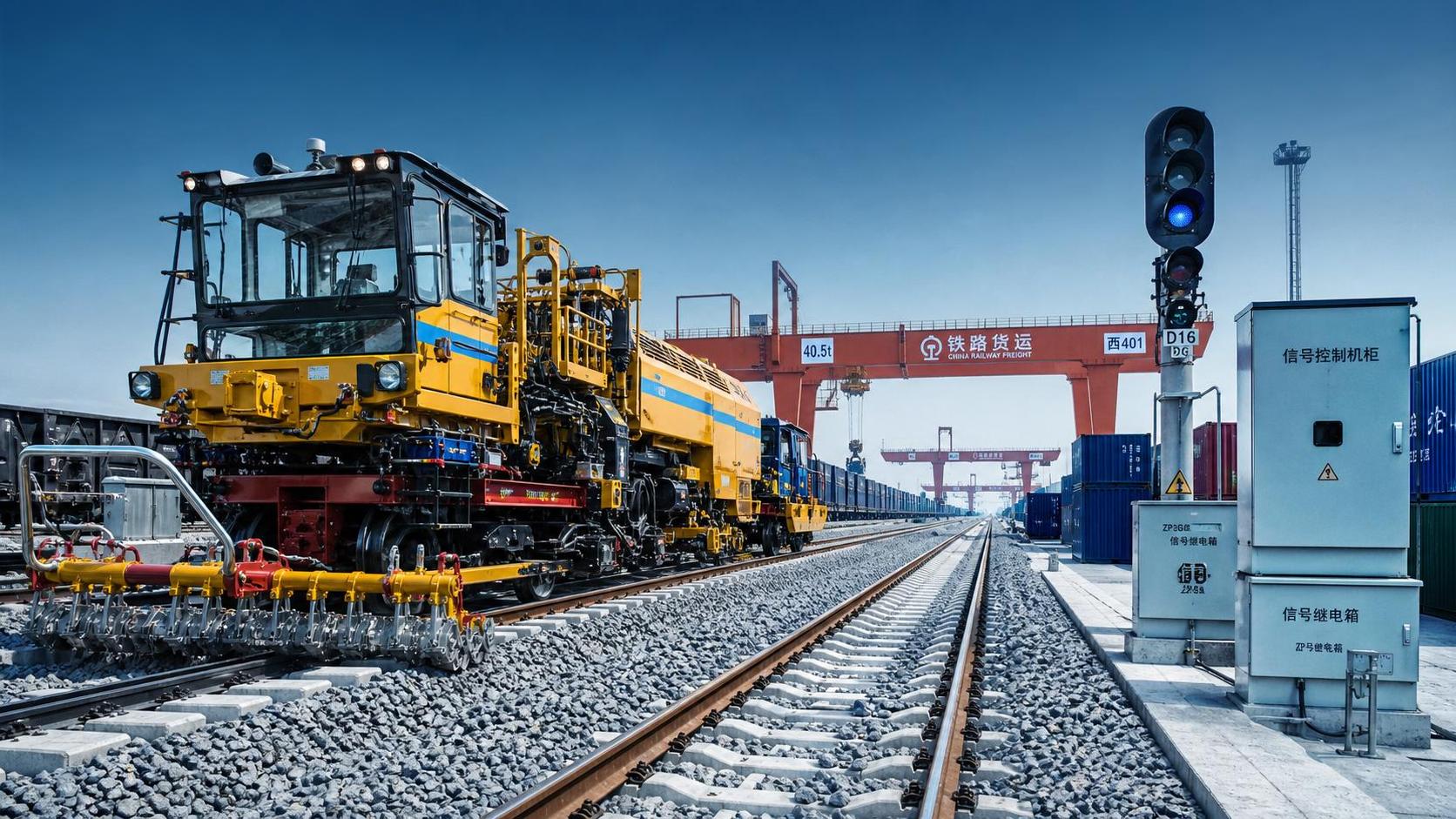
Heavy equipment news shaping construction project timelines is not a niche topic anymore. In rail, freight, and large civil programs, the latest equipment signals often determine when work can start, pause, or accelerate.
That is why heavy equipment news for construction projects matters well beyond headlines. It affects procurement windows, maintenance planning, operator readiness, compliance reviews, and the sequencing of interconnected site activities.
In railway infrastructure especially, machinery updates rarely stand alone. A new track-laying unit, ballast regulator, signaling platform, or freight terminal system can reshape timeline assumptions across the entire delivery chain.
Why equipment news now changes timeline decisions
Construction schedules used to depend mainly on labor, weather, and materials. Those variables still matter, but equipment availability and technical compatibility now create equally serious timing risks.
Heavy equipment news for construction projects often reveals early signals. These may include production delays, emissions rule changes, software updates, component shortages, or new certification requirements.
For freight corridor and rail engineering work, one delayed machine can affect several downstream packages. A postponed tamping machine delivery may push track testing, signaling validation, and handover milestones.
This is where a data-driven source becomes useful. G-RFE focuses on the link between heavy-duty railway hardware, signaling protocols, and international standards, which is exactly where timeline assumptions often break.
What counts as heavy equipment news for construction projects
The phrase covers more than new product launches. In practice, it includes technical bulletins, regulatory notices, fleet modernization updates, safety revisions, supplier expansions, and benchmark results.
For complex transport infrastructure, heavy equipment news for construction projects usually falls into several working categories.
- Machinery performance news, such as output rates, fuel efficiency, digital controls, or predictive maintenance features.
- Supply chain news, including factory lead times, export restrictions, and spare parts bottlenecks.
- Compliance news tied to UIC, EN, AAR, emissions, braking systems, or safety communication standards.
- Integration news covering CBTC, ETCS, GSM-R, or intermodal platform compatibility.
- Lifecycle news related to refurbishment, retrofit strategy, and service support capability.
Simple market awareness is not enough. The useful question is whether a news item changes schedule logic, cost exposure, or technical readiness for a live project.
Where the impact shows up on real projects
Timeline pressure appears differently across asset types. Rail projects, port-linked terminals, inland freight hubs, and linear civil works do not absorb equipment disruption in the same way.
Rail infrastructure and track maintenance
Track renewal depends on tightly sequenced machinery windows. News about automated track-laying machines, tampers, ballast cleaners, or welding units can alter possession planning almost immediately.
If updated equipment increases output per shift, the gain is not only faster installation. It may reduce weekend closures, lower interface conflicts, and improve final testing opportunities.
Smart signaling and communication systems
Heavy equipment news for construction projects also includes digital systems with physical deployment consequences. Signaling upgrades can delay commissioning if onboard, trackside, and communication assets are not synchronized.
A revised ETCS or GSM-R rollout plan may force resequencing of cable routes, equipment rooms, testing staff, and access windows. That timeline effect is operational, not theoretical.
Intermodal rail-port systems
At freight transfer nodes, crane systems, shunters, weighbridges, scanners, and yard automation tools must work as one chain. News from one equipment segment can affect berth planning and inland rail dispatch.
This is especially relevant when corridor projects target low-carbon, high-capacity transport. Schedule quality depends on how quickly physical assets and digital controls converge.
How G-RFE adds context to raw market updates
A useful news flow does more than report events. It explains how machinery, standards, and freight network design influence each other under real delivery conditions.
G-RFE is positioned around five industrial pillars: rolling stock, rail infrastructure, smart signaling, intermodal systems, and specialized rail engineering machinery. That structure mirrors how timelines actually behave.
For example, a locomotive upgrade may seem unrelated to construction progress. Yet axle load, braking performance, and signaling compatibility can affect test runs, route approvals, and temporary operating plans.
Benchmarking against UIC, EN, and AAR standards also matters. Heavy equipment news for construction projects becomes more actionable when equipment claims are viewed beside regulatory and interoperability expectations.
Signals worth tracking before schedules move
Not every update deserves the same reaction. Some headlines are commercially interesting but operationally minor. Others are early indicators of schedule risk.
The key is to connect each signal to one practical question: does this change the critical path, or does it only change a non-critical activity?
Turning news into a working decision framework
Heavy equipment news for construction projects becomes valuable when it is filtered through project controls, engineering interfaces, and supplier reliability.
A useful review process usually includes four checks.
- Map the affected asset to the current schedule baseline, not to a general equipment list.
- Assess whether the change creates a design issue, a logistics issue, or a commissioning issue.
- Separate temporary disruption from structural change in supplier capability or regulation.
- Check whether existing contingency plans still match the updated technical reality.
This approach is particularly important for large railway programs. Equipment, software, standards, and operations often sit under different contracts, yet the timeline fails as one system.
What to watch next
The next phase of heavy equipment news for construction projects will likely focus less on isolated machines and more on connected performance.
Expect greater attention on autonomous diagnostics, lower-emission fleets, digital twins, interoperable signaling, and multi-asset maintenance data. Each trend changes timeline reliability as much as equipment speed.
For corridor development, the strongest decisions will come from combining equipment intelligence with standards awareness and operational planning. That is where schedule resilience starts to improve.
A practical next step is to review current equipment dependencies, identify news sources tied to critical assets, and build a simple trigger list for schedule reassessment. That turns information into earlier, calmer decisions.
Industry Briefing
Get the top 5 industry headlines delivered to your inbox every morning.