
How to Vet a Track Construction Machinery Exporter

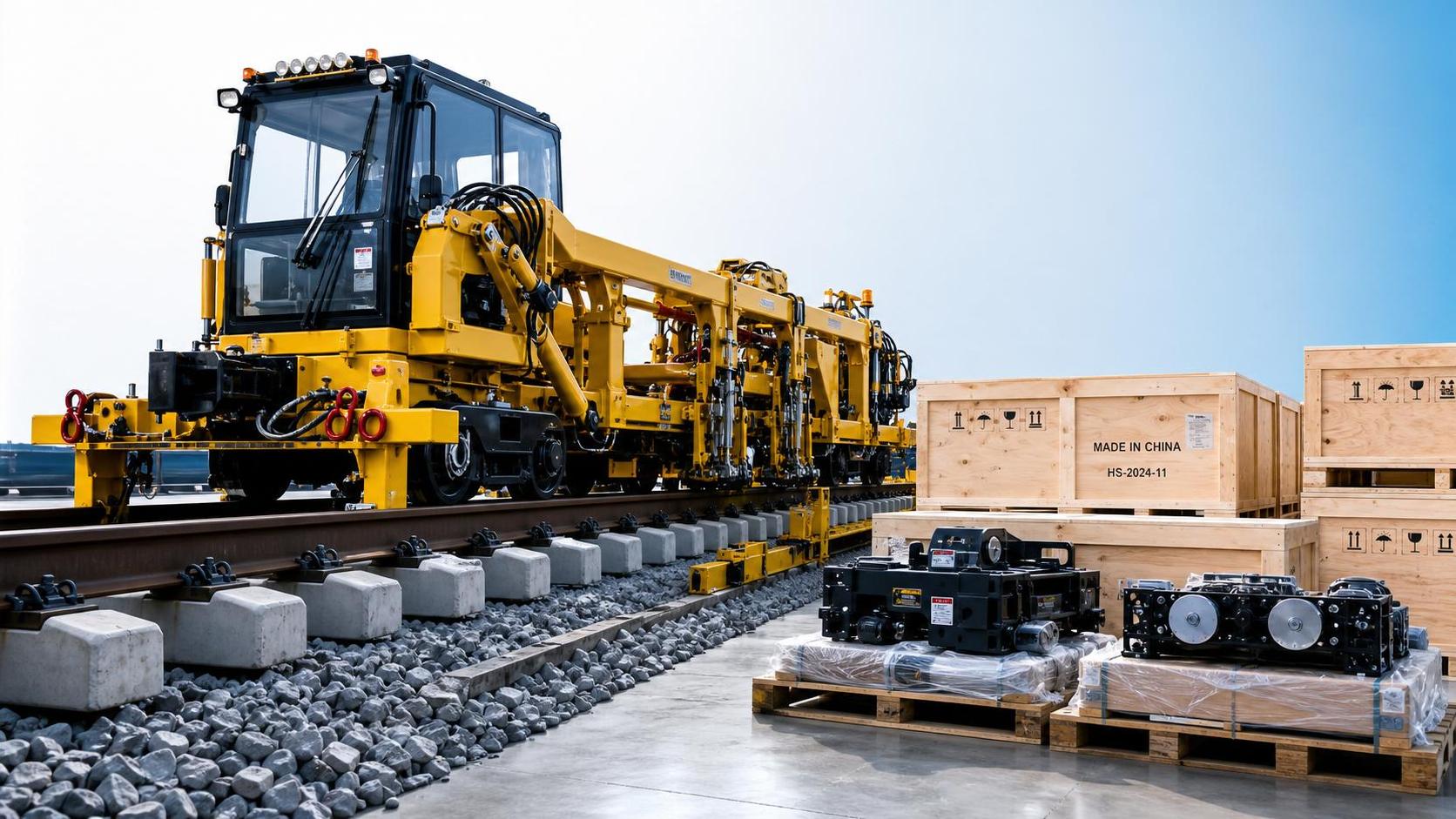
Choosing a track construction machinery exporter is rarely a simple sourcing exercise. In rail infrastructure projects, the exporter influences technical compliance, commissioning speed, maintenance continuity, and the credibility of the full delivery schedule.
That matters even more as freight corridors expand across borders and owners demand lower lifecycle cost, better safety records, and cleaner transport performance. A weak supplier can delay track possession windows, disrupt contractor coordination, and create costly spare parts gaps.
A sound review goes beyond brochures and price comparisons. It looks at manufacturing depth, export discipline, documentation quality, testing evidence, and how well the supplier understands the operational reality of railway work.
Why exporter quality now carries more weight
Track construction machinery sits at the intersection of heavy equipment, rail engineering, and strict project sequencing. Machines such as tampers, ballast regulators, rail threading equipment, sleepers handling systems, and track-laying units must perform reliably under narrow work windows.
In many projects, the exporter is not just shipping equipment. The same party may support factory inspection, packaging, customs documentation, operator training, commissioning advice, spare parts planning, and warranty handling.
This is why the right track construction machinery exporter becomes part of project risk management. Poor exporter capability can create issues even when the machine itself looks technically acceptable on paper.
Within the G-RFE view of global rail logistics, machinery assessment also connects to wider system performance. Track equipment must align with infrastructure standards, worksite safety protocols, and the long-term resilience expected across strategic freight corridors.
What a credible track construction machinery exporter should demonstrate
A credible exporter should be able to explain its role clearly. Some companies are original manufacturers. Others are trading firms, system integrators, or regional export partners. That distinction affects accountability.
The most reliable track construction machinery exporter will usually provide traceable evidence in five areas: technical suitability, production control, compliance, after-sales support, and export execution.
Start with technical fit, not catalog breadth
A large product list does not automatically indicate depth. What matters first is whether the exporter can match machine capability to the real operating context.
Track construction conditions vary widely. Mixed-traffic corridors, heavy-haul freight lines, urban rail extensions, and greenfield intermodal links impose different requirements on stability, output, tolerance, and maintenance access.
A dependable track construction machinery exporter should ask detailed questions before quoting. Gauge, rail section, sleeper type, ballast condition, altitude, climate, local fuel quality, and possession time all shape machinery selection.
If the supplier immediately moves to price without clarifying the work envelope, that is a weak signal. Technical alignment should come before commercial optimization.
Useful technical checkpoints
- Compatibility with local track gauge and loading profile
- Compliance with UIC, EN, AAR, or project-specific standards
- Performance output under realistic site conditions
- Availability of component brands with regional service support
- Diagnostic systems, software access, and fault reporting logic
Check whether manufacturing claims are verifiable
In this sector, polished presentations can hide shallow production control. Vetting should focus on what can be verified through documents, factory review, and sample records.
Ask for a plant layout, key process descriptions, welding certifications, inspection plans, and serial number traceability. A serious track construction machinery exporter should produce these materials without hesitation.
Factory acceptance testing is especially important. The issue is not only whether a test happens, but whether the procedure is repeatable, witnessed, recorded, and tied to contractual performance criteria.
It is also worth checking the source of critical subsystems. Engines, hydraulics, controls, braking elements, and sensors often come from third-party suppliers. Reliability depends on how well these are integrated and supported.
After-sales strength is part of the commercial case
Low acquisition cost can become expensive if spare parts are slow, manuals are incomplete, or troubleshooting requires repeated remote escalation. For rail work equipment, downtime often damages more than maintenance budgets.
A strong track construction machinery exporter should show a practical support model. That includes parts stocking logic, lead times for wear items, field service response, training depth, and update procedures for controls software.
Support quality is easier to judge through scenario questions than generic promises. Ask how the exporter would handle a hydraulic failure during commissioning, or how quickly it can dispatch a specialist for calibration issues.
Documentation should receive equal attention. Good manuals, wiring diagrams, parts books, and service bulletins reduce dependence on the supplier and improve asset availability over time.
Export performance can decide project success
Even technically strong suppliers can struggle with cross-border delivery. Rail machinery is large, heavy, and often shipped in partially assembled form. Export execution must be treated as a core capability.
Review packaging standards, corrosion protection, lifting points, route surveys, and disassembly instructions. The track construction machinery exporter should explain how equipment will arrive, be reassembled, and be preserved if site storage is delayed.
Customs accuracy matters as well. Errors in HS coding, certificates of origin, insurance terms, or inspection documents can hold expensive equipment at port while installation schedules slip.
This is where institutional, standards-led market intelligence becomes useful. G-RFE’s focus on rail infrastructure, signaling interfaces, and engineering benchmarks reflects the reality that machinery procurement is tied to the wider railway system, not isolated hardware alone.
Reference projects should be read carefully
Reference lists are helpful, but they need interpretation. A machine delivered to a light-duty maintenance contractor is not equivalent to deployment on a strategic heavy-haul corridor with demanding possession windows.
Look for projects that resemble the intended use case. Similar geography, climate, axle load, technical standards, and maintenance practices make references more meaningful.
It is also useful to separate delivered volume from delivered performance. Ten exported units may sound impressive, but the better question is whether those units remained serviceable, supportable, and contract-compliant after commissioning.
Signals that deserve closer review
- Inconsistent company identity across brochures, certificates, and contracts
- Reluctance to share testing records or factory inspection access
- Very broad technical claims with limited project evidence
- Unclear spare parts policy or missing lead-time commitments
- Quotations that omit commissioning scope or delivery assumptions
Build a practical vetting sequence
The strongest review process is structured but not bureaucratic. Start with a technical and commercial screening, narrow the field, then deepen the review where risk is highest.
A useful sequence often includes prequalification documents, clarification meetings, standards mapping, reference validation, factory inspection, FAT witness planning, and contract review tied to measurable acceptance points.
When comparing more than one track construction machinery exporter, score evidence quality, not only answer quality. Two suppliers may promise the same outcome, but only one may support it with records, procedures, and named responsibilities.
That approach creates a more defensible procurement decision. It also makes post-award management easier, because critical assumptions have already been tested before the order is placed.
Where to focus next
The best way to vet a track construction machinery exporter is to connect machinery choice with the realities of railway delivery: standards, work windows, support obligations, and cross-border execution.
A careful review should leave few blind spots. Technical fit, manufacturing control, lifecycle support, and export discipline all deserve equal weight when the equipment will operate on critical rail assets.
The next step is usually to turn these factors into a short evaluation matrix. From there, competing exporters can be compared against the same operational requirements, evidence thresholds, and acceptance risks.
Industry Briefing
Get the top 5 industry headlines delivered to your inbox every morning.