
Where global railway tender alerts 2026 reveal new openings

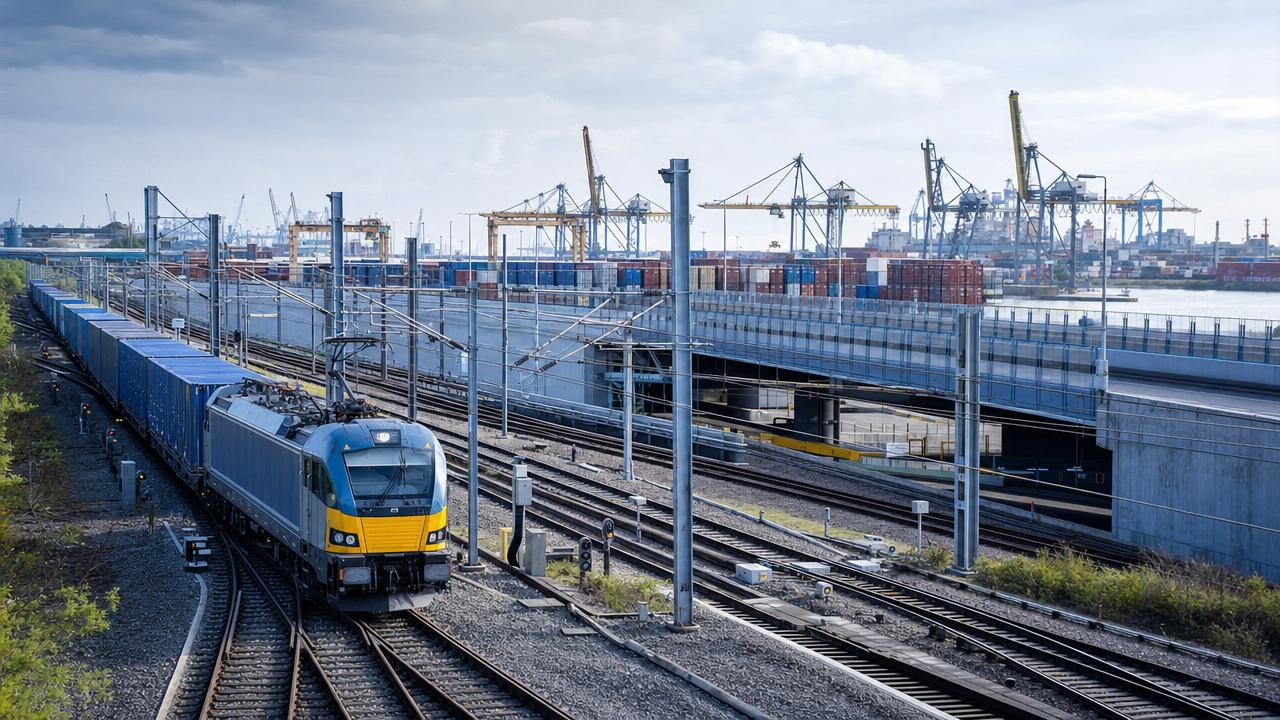
For distributors, agents, and channel partners tracking rail-sector demand, global railway tender alerts 2026 point to a wider pipeline of procurement opportunities across rolling stock, signaling, track systems, and intermodal infrastructure. As investment shifts toward higher-capacity, lower-carbon freight corridors, understanding where these tenders emerge can help you identify qualified leads earlier, align with technical standards, and position your portfolio for faster market entry.
For companies serving railway authorities, EPC contractors, freight operators, and infrastructure integrators, timing is no longer a secondary issue. In many rail projects, the difference between entering a bid cycle 3 months early and reacting after tender publication can determine whether a distributor is treated as a technical partner or just another price-driven supplier.
This is where a disciplined approach to global railway tender alerts 2026 becomes commercially valuable. Beyond identifying announcements, successful channel partners need to read demand signals across five linked domains: locomotives and rolling stock, rail infrastructure and maintenance, smart signaling, intermodal rail-port systems, and specialized engineering machinery. Each category carries different qualification rules, lead times, compliance burdens, and partner models.
Why global railway tender alerts 2026 matter more for channel partners
In the rail sector, tender visibility is not only about opportunity volume. It is about opportunity quality. A freight wagon package, an ETCS upgrade, a track maintenance framework, and a port-rail intermodal expansion may all appear under the same broad infrastructure narrative, yet they require very different channel strategies, local certifications, and after-sales capabilities.
For distributors and agents, early tender intelligence helps in 4 practical ways: pre-qualifying demand, matching local stock or manufacturing partners, preparing technical documents, and securing territory-based partnerships before competitors do. In many cases, pre-tender engagement windows can range from 6 to 18 months, especially where environmental review, financing approval, and standards alignment are involved.
What the 2026 pipeline is signaling
The strongest signals behind global railway tender alerts 2026 are tied to freight corridor modernization, port connectivity, regional logistics resilience, and digital safety upgrades. Demand is expanding not only for large-value hardware such as locomotives or wagons, but also for sub-systems with recurring replacement cycles, including braking assemblies, couplers, telecom components, rail fastenings, tamping tools, and condition-monitoring devices.
For G-RFE-oriented channel planning, these alerts are especially useful because technical eligibility often depends on international frameworks such as UIC, EN, and AAR references. A supplier may be commercially strong in one country but excluded elsewhere if axle-load specifications, communication protocols, fire safety requirements, or maintenance traceability do not fit local tender language.
Typical tender categories distributors should track
- Heavy-haul locomotives and freight rolling stock packages with 20–200 unit scopes
- Track renewal, fastening, turnout, and rail grinding contracts with 12–36 month execution periods
- CBTC, ETCS, GSM-R, and rail communication upgrades requiring software-hardware integration
- Intermodal rail-port terminal equipment and last-mile logistics interfaces
- Specialized rail engineering machinery, inspection vehicles, and automated maintenance assets
The table below shows how different tender types usually translate into channel opportunities, response speed, and distributor preparation needs.
The key takeaway is that global railway tender alerts 2026 should not be treated as a generic feed. Different project classes require different sales motions, documentation depth, and partner engagement timing. Channel partners who segment alerts by project maturity and technical threshold usually respond faster and with higher conversion quality.
Where new openings are likely to emerge across the rail value chain
Rail procurement in 2026 is expected to remain broad rather than concentrated in a single asset category. New openings are appearing where countries are trying to increase freight capacity, reduce diesel dependency in busy corridors, improve border interoperability, or link inland production zones to deep-water ports. For channel partners, this creates a wider mix of high-ticket and mid-volume opportunities.
Rolling stock and freight wagon demand
Many authorities and freight operators are focusing on capacity expansion through wagon renewal, higher axle-load acceptance, and longer train formations. That often drives tenders for bogies, braking systems, couplers, wheelsets, condition-monitoring modules, and refurbishment kits. Even when locomotive orders are limited to 10–40 units, wagon-related packages can extend into hundreds of vehicles over phased deliveries of 12–24 months.
Track systems and maintenance equipment
Track assets remain one of the most consistent sources within global railway tender alerts 2026 because maintenance cannot be postponed indefinitely. Rail replacement, ballast renewal, turnout upgrades, and geometry inspection programs create recurring demand for rail fastenings, sleepers, tamping support equipment, ultrasonic inspection tools, and track-laying machinery support components. Maintenance-oriented contracts are also easier for regional distributors to enter than full-line rolling stock bids.
Smart signaling and communications
Signaling upgrades are becoming more strategic as corridors seek safer headways, better traffic visibility, and stronger interoperability. Projects involving GSM-R, ETCS migration, axle counters, interlockings, and control center links often have longer sales cycles, but they offer stronger margin potential for technically capable channel partners. These opportunities usually require disciplined document control, interface mapping, and local support for testing and commissioning over 2 to 3 phases.
Intermodal and rail-port integration
As ports and inland logistics zones attempt to reduce truck dependency, rail-port connectivity is becoming a major procurement theme. This includes yard control systems, loading interfaces, terminal communication hardware, access control, and cargo-flow software support. For distributors, these projects are attractive because they combine civil, mechanical, and digital sub-packages, allowing multiple entry points instead of a single winner-takes-all supply structure.
How to prioritize the best-fit opportunities
- Score each alert by technical fit, local access, and after-sales capability.
- Separate framework contracts from one-off capital purchases.
- Review whether standards references point to UIC, EN, AAR, or mixed compliance environments.
- Estimate delivery pressure: 8 weeks, 16 weeks, or 6+ months can change partner choice.
- Check whether language, registration, or local entity rules create barriers for direct participation.
A practical scoring model using 5 criteria often gives better results than chasing every announcement equally. In rail markets, disciplined filtering is usually more profitable than maximum volume pursuit.
How distributors can qualify tenders faster and avoid weak leads
Not every alert is commercially useful. Some projects are too early, some are politically uncertain, and some require certifications or reference projects that cannot be assembled quickly. The real value of global railway tender alerts 2026 comes from qualifying opportunities before engineering and sales resources are consumed.
Five qualification checks before active pursuit
- Scope clarity: Is the tender for complete systems, sub-systems, or approved-brand equivalents?
- Technical compatibility: Do your products match axle load, gauge, voltage, signaling protocol, or interface requirements?
- Commercial timing: Can your supply chain meet 30-day, 90-day, or staged delivery obligations?
- Compliance readiness: Are type tests, inspection plans, and maintenance manuals available in the required format?
- Partner structure: Do you need a local EPC, installer, or certification representative to become eligible?
The following framework helps channel partners classify alerts into viable, conditional, and low-priority pursuits without losing speed.
Used consistently, this simple matrix reduces wasted bid effort and improves hit rate. It also helps sales teams explain internally why some alerts deserve immediate action while others should stay in a monitored pipeline for 60, 120, or 180 days.
Frequent mistakes in rail tender pursuit
One common mistake is assuming that a compliant industrial product is automatically rail-ready. In reality, rail buyers often require documented lifecycle performance, shock and vibration tolerance, fire behavior compliance, maintainability provisions, and traceable spare-part structures. Another mistake is waiting for full tender release before engaging technical partners. By then, reference brands and acceptable solution architectures may already be informally shaped.
A third error is underestimating after-sales expectations. In many freight and infrastructure projects, buyers expect response planning within 24–72 hours, spares availability over 2–5 years, and field support during commissioning or defect-liability periods. Distributors that prepare service models early are better positioned than those selling hardware alone.
Turning tender intelligence into market entry and revenue growth
Once alerts are qualified, the next step is conversion. That means building a repeatable process that links intelligence, technical review, partner selection, and customer engagement. In rail markets, a structured funnel usually outperforms reactive quoting because projects often involve 3 to 7 stakeholders, including operators, ministries, consultants, EPC firms, and maintenance units.
A practical 5-step response model
- Capture and classify the alert by asset type, geography, and buyer category.
- Run a technical gap review within 5 business days.
- Confirm local partner path, registration needs, and service obligations.
- Prepare a targeted capability package, not just a generic brochure.
- Track revision notices, clarification rounds, and adjacent sub-package tenders.
This process is especially relevant for organizations aligned with the G-RFE perspective, where heavy-duty railway hardware and digital signaling requirements increasingly intersect. A distributor supplying track components may now need to understand data capture interfaces. A rolling stock channel partner may need to support communication, safety, or maintenance analytics add-ons. Cross-domain awareness is becoming a competitive advantage.
What buyers respond to during early engagement
Buyers usually respond well to 3 things: documented fit, reduced risk, and implementation clarity. Instead of broad claims, strong partners present axle-load range, duty cycle assumptions, inspection intervals, spare-part logic, standards references, and support workflow. In many cases, this level of detail moves the discussion from vendor screening to technical shortlist consideration.
Recommended commercial assets for channel partners
- A 2-page tender-fit summary for each product family
- A standards cross-reference covering UIC, EN, AAR, or equivalent norms
- A lead-time matrix showing stock, assembly, and full production cycles
- A service commitment outline with commissioning and spare support scope
- A partner map showing installation, inspection, and warranty roles
Global railway tender alerts 2026 are more than notification tools. For distributors, agents, and channel partners, they are a route to earlier market positioning, better technical alignment, and stronger sales efficiency across rolling stock, infrastructure, signaling, and intermodal projects. The companies that benefit most will be those that filter alerts intelligently, prepare compliance evidence in advance, and build local execution pathways before the formal bid clock starts.
If your business is expanding into freight rail, engineering supply, or rail-port integration, G-RFE-aligned tender intelligence can help you identify workable openings faster and pursue them with more confidence. Contact us to discuss your target markets, request a tailored opportunity screening approach, or learn more solutions for turning rail-sector demand signals into qualified channel growth.
Industry Briefing
Get the top 5 industry headlines delivered to your inbox every morning.