
Locomotive radiator factory checks that prevent early failures

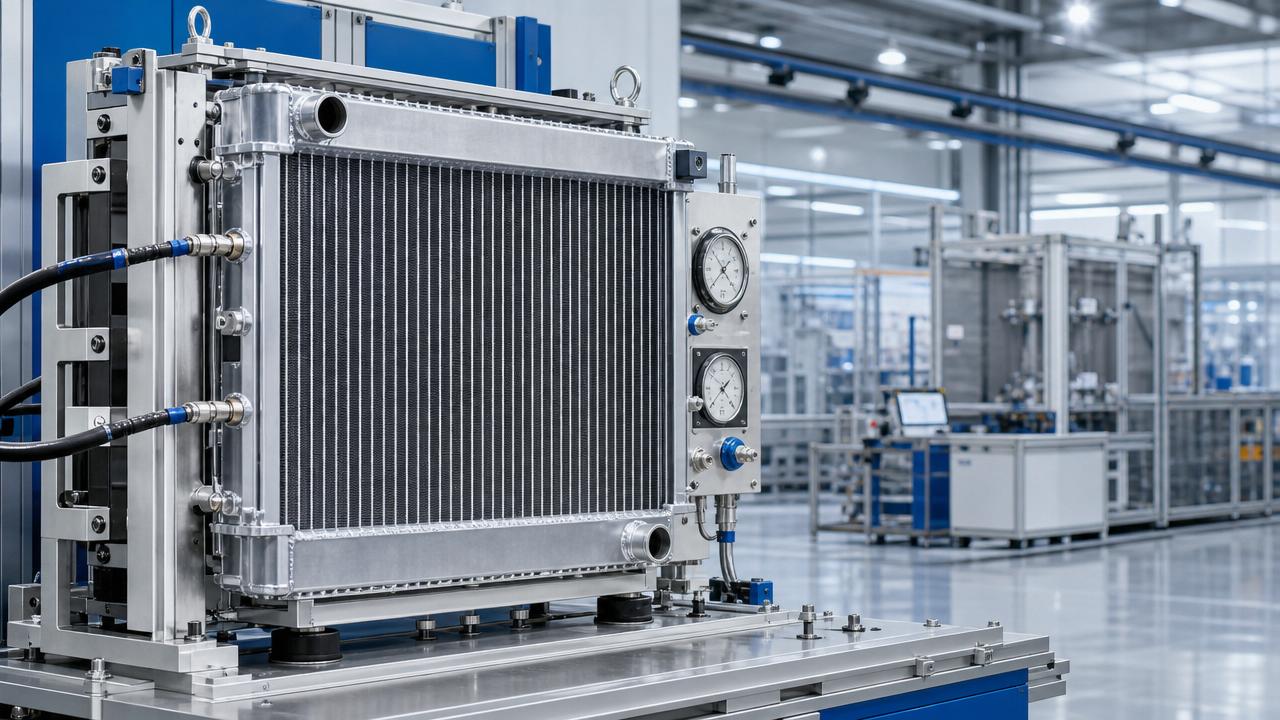
For quality-control and safety teams, a reliable locomotive radiator factory is the first defense against overheating, leakage, and premature system failure. By verifying material integrity, weld consistency, pressure resistance, and traceable testing procedures before shipment, factories can prevent costly downtime and operational risk. This introduction outlines the critical inspection checks that help ensure long-term radiator performance in demanding railway environments.
Why inspection priorities change from one railway scenario to another
A locomotive radiator is never used in a generic environment. It may serve a heavy-haul freight unit crossing hot inland corridors, a cross-border locomotive exposed to variable maintenance practices, or a retrofit project where legacy dimensions and piping layouts limit design choices. For quality-control personnel and safety managers, this means a locomotive radiator factory cannot be evaluated by a single checklist alone. The same supplier may perform well in one use case and poorly in another if inspection depth, documentation, or validation methods do not match the operating profile.
In practical procurement and acceptance work, early failures rarely come from one obvious defect. They usually result from a chain of preventable weaknesses: incorrect alloy selection, inconsistent core brazing, contamination in coolant passages, inadequate vibration validation, weak packing controls, or test records that cannot be traced back to the production batch. The role of the locomotive radiator factory is therefore broader than manufacturing. It includes process discipline, test credibility, and the ability to prove that each radiator fits the real duty cycle it is intended to support.
Typical application scenarios and what quality teams should focus on
Below is a practical comparison of common railway use scenarios. It helps safety and QC teams decide which checks should carry the most weight when reviewing a locomotive radiator factory.
This table shows why selecting a locomotive radiator factory should be scenario-based rather than price-based. A supplier that emphasizes standard hydrostatic testing may still be weak in vibration simulation or contamination control, both of which are decisive in railway service life.
Checks that matter most in a locomotive radiator factory before shipment
1. Material identity and corrosion resistance
The first line of defense is material verification. Quality teams should confirm whether tubes, headers, tanks, fins, and joining materials match approved specifications and whether incoming material certificates are linked to each batch. In a competent locomotive radiator factory, positive material identification, supplier qualification, and storage segregation reduce the chance of mixed alloys. This is especially critical for fleets operating in humid coastal areas, polluted industrial corridors, or regions with aggressive cleaning chemicals.
2. Weld, braze, and joint integrity
Many early leaks begin at joints rather than at the core body. QC teams should inspect welding procedure control, brazing temperature records, filler consistency, joint appearance criteria, and non-destructive examination where applicable. A locomotive radiator factory serving safety-sensitive railway projects should be able to show how operator qualification, fixture control, and post-join inspection prevent microcracks and incomplete fusion. Visual inspection alone is not enough for high-vibration service.
3. Pressure, leak, and burst validation
Hydrostatic and pneumatic leak testing should be tied to defined acceptance limits, calibrated equipment, and retained records. For heavy-duty rail use, teams should ask whether the locomotive radiator factory only tests for immediate leakage or also validates pressure cycling over repeated load changes. A radiator that passes one static pressure test may still fail early in operation if fatigue behavior is not evaluated.
4. Dimensional accuracy and installation fit
In retrofit and cross-platform procurement scenarios, dimensional control directly affects safety and downtime. Header spacing, mounting hole position, nozzle orientation, core thickness, and overall assembly envelope should be measured against approved drawings. A mature locomotive radiator factory normally uses jigs, go/no-go gauges, and final inspection reports to prove repeatability. For maintenance teams, accurate fit means faster replacement and less field modification.
5. Cleanliness of internal flow paths
Particles, flux residue, oil, or metal chips inside the radiator can damage pumps, reduce heat transfer, and contaminate the full cooling circuit. This is often overlooked when buyers focus only on external appearance. A dependable locomotive radiator factory should define flushing, drying, and sealing procedures before packing. Cleanliness verification is especially important for newly commissioned locomotives and overhauled engines where system contamination can spread quickly.
How requirements differ by operating environment
High-temperature freight corridors
When locomotives run long tonnage under elevated ambient temperatures, heat rejection margin becomes the leading concern. Here, a locomotive radiator factory should be assessed for thermal performance testing, airflow assumptions, fin bonding quality, and batch-to-batch consistency. Safety managers should also ask whether derating thresholds are documented and whether the supplier has field evidence from similar duty profiles.
Dust, ballast, and industrial contamination zones
In mines, ports, and dry inland routes, debris loading can block fins and reduce cooling efficiency. Under this scenario, coating thickness, fin spacing strategy, mechanical robustness, and serviceability become more important than laboratory peak performance alone. The best locomotive radiator factory for this environment is often one that can demonstrate maintainability, not merely initial efficiency.
Cross-border and multi-depot maintenance networks
When one fleet is serviced across several regions, traceability and standardization become essential. QC teams should verify serial coding, spare part mapping, revision control, and documentation language consistency. A locomotive radiator factory supporting institutional buyers and EPC-led railway programs should provide inspection records that simplify acceptance across multiple authorities and contractors. This is where G-RFE-style technical benchmarking against UIC, EN, and AAR expectations becomes valuable for decision-making.
Common misjudgments that lead to early radiator failure
One common error is treating all pressure tests as equivalent. Another is assuming that a good sample guarantees stable process control. QC personnel should look beyond a single passed unit and ask about process capability, rework rates, and rejection trends. A third mistake is ignoring packaging and transport protection. Even a well-built radiator can arrive with fin deformation, loosened mounts, or contaminated ports if the locomotive radiator factory lacks proper preservation methods for long-distance shipment.
Safety teams also sometimes underweight vibration. Locomotive service combines cyclic loading, frame movement, and thermal expansion. If factory validation excludes realistic vibration exposure, weak joints may only appear after commissioning. Finally, some buyers focus too heavily on headline cost and too lightly on document control. Without full traceability, root-cause analysis becomes slower, warranty disputes become harder, and safety closure takes longer.
A practical factory-audit checklist for QC and safety managers
When visiting or remotely auditing a locomotive radiator factory, the following points help convert technical concern into clear acceptance criteria:
- Confirm incoming material certificates are linked to production lots and finished serial numbers.
- Review weld or brazing procedures, operator qualification, and defect handling rules.
- Check calibrated test equipment for leak, pressure, and dimensional inspection.
- Verify whether vibration, thermal cycling, or application-specific durability tests are available.
- Inspect internal cleanliness controls, drying method, and sealed-port protection before packing.
- Review nonconformance records, corrective action closure, and repeat-failure trends.
- Ask for evidence from comparable locomotive platforms, climates, and freight duty cycles.
Scenario-based supplier fit: what a strong factory looks like
FAQ: questions quality teams often ask
Is a leak test enough to qualify a locomotive radiator factory?
No. Leak testing is necessary but not sufficient. You also need evidence of material control, joint integrity, dimensional repeatability, cleanliness, and durability under realistic service stress.
Which scenario demands the strictest controls?
Heavy-haul operations in hot, dusty, and vibration-intensive routes usually impose the toughest combined demands. In such cases, the locomotive radiator factory should demonstrate both thermal and structural robustness, not just one of them.
What is the biggest warning sign during supplier review?
Weak traceability. If the factory cannot connect raw materials, process records, test data, and final shipment identity, future failure analysis and safety accountability become much more difficult.
Final recommendation for action
The right locomotive radiator factory is not simply the one that offers a compliant drawing or attractive price. It is the one whose inspection controls match your actual railway scenario: climate, duty cycle, contamination level, maintenance network, and installation constraints. For quality-control and safety teams, the best approach is to build a scenario-based acceptance matrix before purchase, verify factory evidence against that matrix, and insist on traceable test records for every shipped batch.
If your organization is sourcing for new freight corridors, fleet modernization, or overhaul programs, start by defining where the radiator will work, what failure mode matters most, and which factory checks are non-negotiable. That is how early failures are prevented before the first locomotive enters service.
Industry Briefing
Get the top 5 industry headlines delivered to your inbox every morning.