
Locomotive engine components OEM options that reduce downtime later

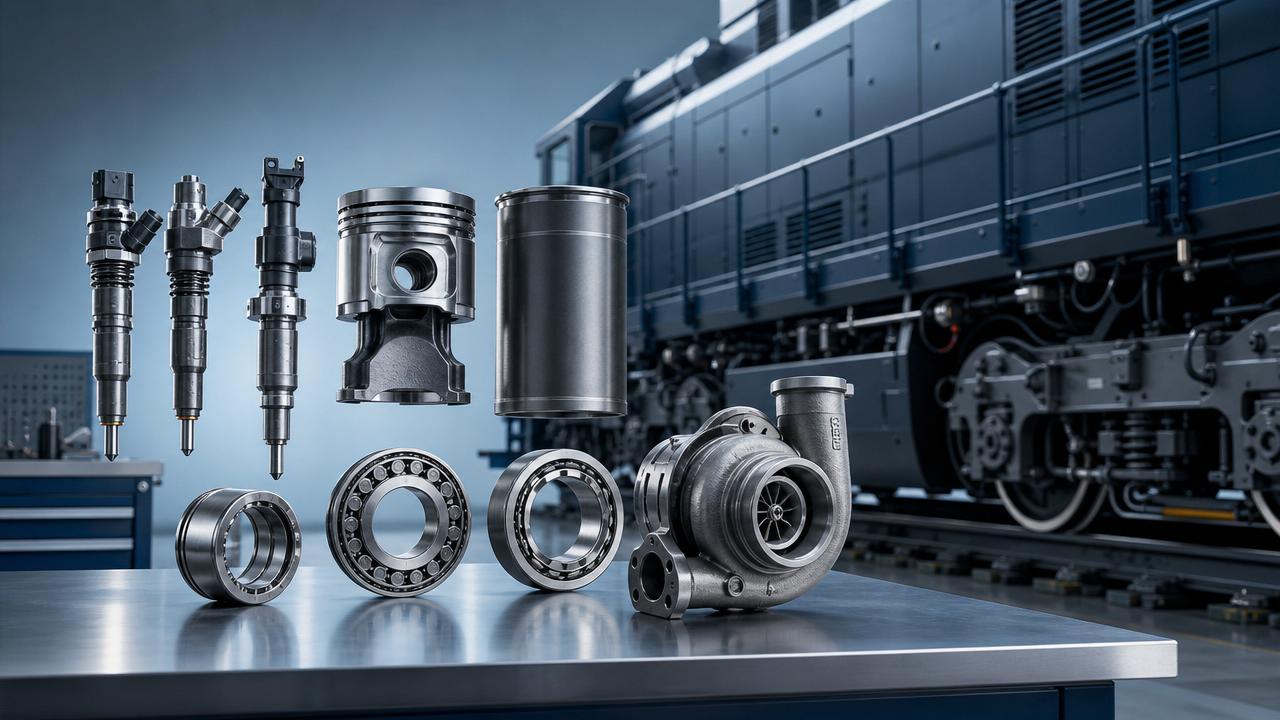
Choosing the right locomotive engine components OEM partner is not just about replacing parts—it is about preventing costly failures, protecting fleet availability, and keeping freight schedules on track. For operators and maintenance teams, understanding which OEM options deliver stronger durability, fit, and long-term service support can make a measurable difference in reducing downtime later.
Why OEM choices are becoming a bigger operational decision
Across freight rail, the discussion around locomotive engine components OEM sourcing has changed. In the past, many operators focused mainly on immediate replacement cost and basic availability. Today, the decision is being reshaped by tighter utilization targets, older fleets staying in service longer, stricter reliability expectations, and more pressure to avoid unscheduled maintenance windows. The practical question is no longer “Which part can be delivered fastest?” but “Which OEM option reduces future service interruption?”
This shift matters especially in heavy-haul and long-distance freight operations, where a single engine-related failure can affect train paths, crew assignments, yard throughput, and customer confidence. For operators, maintainers, and depot planners, the value of a well-selected locomotive engine components OEM partner now extends beyond component supply into lifecycle stability. Better fit, better metallurgy, stronger quality traceability, and dependable technical support all influence whether a locomotive returns to service on time or comes back for repeat work.
Current signals shaping the market for locomotive engine components OEM options
Several clear signals are changing buyer behavior. First, fleets in many regions are balancing modernization with continued operation of legacy diesel-electric platforms. That creates sustained demand for replacement engine parts, but with less tolerance for trial-and-error sourcing. Second, maintenance teams are being asked to do more predictive work and fewer emergency repairs, which increases interest in OEM suppliers that can support condition-based strategies. Third, procurement teams are under pressure to secure supply continuity amid global logistics volatility, making long-term OEM support capability more valuable than a low unit price alone.
Another important signal is the growing expectation for documented compatibility and compliance. Railway operators increasingly want confidence that pistons, liners, injectors, turbocharger elements, bearings, gaskets, and cooling-system parts will perform consistently under demanding load cycles. In this context, a locomotive engine components OEM decision becomes a reliability decision, not just a purchasing task.
Trend change table: what operators are watching
What is driving the move toward stronger OEM partnerships
The first driver is fleet age. As locomotives remain in service for longer cycles, component condition becomes less predictable. Engine blocks may still be serviceable, but supporting items such as valves, seals, pumps, injectors, and turbo-related parts require more precise replacement planning. In these situations, dependable locomotive engine components OEM support can reduce the chance of mismatch, premature wear, and repeat teardown.
The second driver is labor efficiency. Workshops are facing pressure to reduce rework and shorten turnaround time. A cheaper part that causes fitting problems, calibration delays, or early failure can consume technician hours far beyond its purchase price. That is why maintainers increasingly prefer OEM options with proven dimensional consistency, clear installation guidance, and after-sales engineering response.
The third driver is the changing economics of downtime. In freight corridors with dense scheduling or export-linked traffic, locomotive unavailability has a cascading effect. Missed departures can influence wagon utilization, terminal handling windows, and shipper commitments. Under these conditions, the best locomotive engine components OEM strategy is often the one that protects dispatch reliability rather than simply reducing invoice value.
How these changes affect operators, maintainers, and procurement teams
For operators, the main impact is on fleet readiness. OEM selection influences whether locomotives can sustain power output, thermal stability, fuel efficiency, and maintenance interval expectations. Even small variances in component quality can show up later as overheating events, oil contamination, vibration, or reduced combustion performance. That means operating teams are paying closer attention to the long-tail consequences of replacement decisions.
For maintenance teams, the change is more practical: they need parts that install correctly the first time, perform consistently under load, and come with reliable technical backing. This is where a capable locomotive engine components OEM supplier can create value through documentation, failure analysis support, and stable part revision control. These details may seem administrative, but they directly affect workshop productivity.
For procurement teams, the shift is toward cross-functional evaluation. Buyers are no longer judged only on price savings. They are increasingly asked to support uptime targets, spare-parts planning, and risk reduction. This creates demand for OEM partners that can discuss lead time, quality systems, interchangeability, field performance, and service responsiveness in one conversation.
Impact table by role
Which locomotive engine components OEM options are gaining attention
Not all engine parts carry the same downtime risk. Operators are giving greater scrutiny to failure-sensitive components that can trigger major secondary damage or force immediate removal from service. These commonly include fuel injection components, turbocharger assemblies and sub-parts, cylinder kits, bearings, pumps, filtration elements, and high-temperature sealing items. For these categories, an OEM that offers stable manufacturing quality and clear material control can have a larger uptime impact than one focused only on broad catalog range.
There is also more interest in OEM suppliers that can support mixed fleet realities. Many operators run locomotives of different ages, rebuild histories, and duty profiles. A useful locomotive engine components OEM partner is therefore one that understands interchange issues, retrofit implications, and maintenance planning across several operating environments, from heavy-haul corridors to regional freight service.
Key signals that an OEM choice may reduce downtime later
The most reliable signals are usually practical rather than promotional. First, look for consistent part traceability. When a supplier can identify batch history, material records, and revision changes, operators have a better basis for root-cause analysis if a failure occurs. Second, check whether the OEM can provide technical support beyond sales documentation. Fast answers on fitment, tolerances, torque data, or service bulletins often prevent installation errors.
Third, evaluate supply resilience. A strong locomotive engine components OEM option should be able to discuss stocking plans, replenishment cycles, and priority support for critical parts. Fourth, consider field reputation in comparable duty cycles. A component that performs well in low-utilization service may behave differently in heavy freight operations with long idle periods, high ambient temperatures, or sustained tractive effort demands.
- Stable fit and dimensional consistency across repeat orders
- Clear installation and maintenance guidance
- Responsive failure analysis and warranty handling
- Support for preventive and predictive maintenance planning
- Demonstrated understanding of rail duty conditions rather than generic engine use
How to judge OEM options in the next procurement cycle
The best response to current market change is to evaluate OEM choices through a downtime lens. Instead of asking only whether a supplier meets specification, ask how the supplier supports continuity after installation. Can it help identify recurring failure patterns? Can it align with planned overhaul intervals? Can it secure critical components before demand spikes? These questions make the locomotive engine components OEM discussion more operational and less transactional.
It is also useful to separate components into risk tiers. High-consequence parts deserve a stricter OEM review process than routine consumables. For example, injector systems or cylinder-related parts may justify deeper technical qualification, while lower-risk items can remain more flexible. This risk-based approach helps operators control cost without exposing the fleet to avoidable service disruption.
Evaluation guide for the next stage
The next direction: fewer emergency buys, more planned OEM strategy
The broader direction in rail maintenance is clear: operators are trying to move from emergency purchasing to structured reliability planning. That means the strongest locomotive engine components OEM relationships will likely be those built on data sharing, recurring review, critical-spares planning, and consistent field feedback. As freight corridors become more integrated and performance expectations rise, reactive sourcing becomes harder to justify.
For users and operators, the practical takeaway is simple. If the same engine-related issues keep appearing after overhaul or scheduled service, the problem may not be maintenance effort alone. It may be an OEM selection issue involving fit, material durability, application understanding, or after-sales response. Reviewing that pattern early can prevent larger availability losses later.
What to confirm now before the next downtime event arrives
If your organization wants to judge how current trends affect its own fleet, focus on a few questions. Which engine components create the highest service interruption risk? Which part categories generate repeat maintenance or early replacement? Which suppliers can provide dependable technical evidence, not only commercial claims? And where does the cost of one delayed locomotive exceed the savings from a lower-priced part?
Answering those questions turns the locomotive engine components OEM decision into a fleet performance decision. In a market where uptime, schedule integrity, and maintenance efficiency matter more each year, that is the direction worth watching—and acting on now.
Industry Briefing
Get the top 5 industry headlines delivered to your inbox every morning.