
Industrial Equipment Downtime: Cost Checks Before Repair

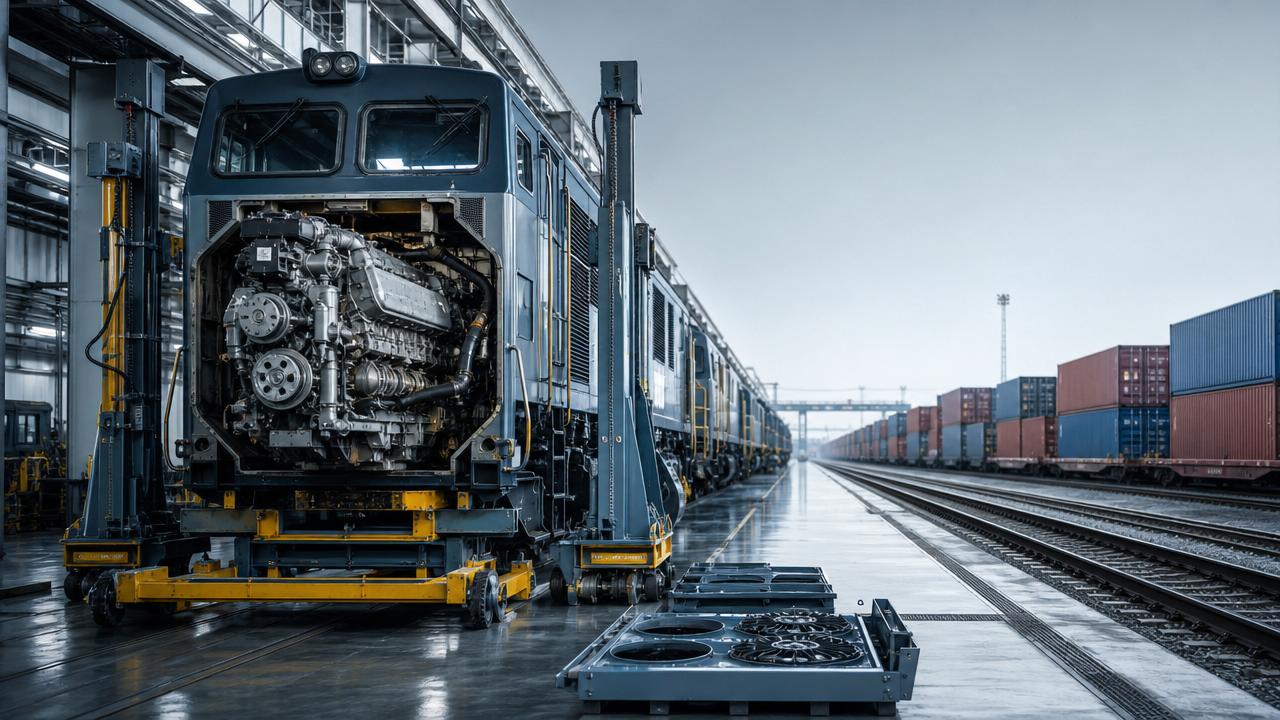
When industrial equipment stops, the repair quote is only the first number finance teams should question. For railway freight operators, EPC contractors, and asset-heavy engineering organizations, downtime can trigger cascading costs across labor, logistics, safety compliance, capacity loss, and contractual penalties. Before approving any repair, financial decision-makers need a disciplined cost check that separates urgent spending from avoidable expense, while protecting long-term asset reliability and corridor performance.
In heavy-haul rail and engineering environments, industrial equipment is rarely an isolated asset. A failed locomotive subsystem, track maintenance machine, intermodal crane interface, or signaling support unit can disrupt a corridor, delay wagons, and consume scarce technical labor within hours.
For finance leaders, the central question is not simply whether the repair is affordable. The better question is whether the approved action produces the lowest risk-adjusted cost over the next 6, 12, and 36 months.
The Real Cost Stack Behind Industrial Equipment Downtime
The visible repair quotation may represent only 20%–40% of the financial exposure when industrial equipment is tied to freight capacity, crew rosters, inspection windows, and contracted delivery slots.
In railway freight operations, downtime can begin as a component fault but quickly become a network problem. A 6-hour delay on a loading path may require re-sequencing wagons, reallocating locomotives, and extending yard labor.
Cost categories finance should separate
Before approving any industrial equipment repair, finance teams should split downtime exposure into direct, indirect, and strategic costs. Each category has a different approval logic and evidence requirement.
- Direct cost: parts, labor, diagnostics, transport, workshop fees, and external specialist support.
- Operational cost: idle crews, delayed wagons, missed maintenance windows, temporary rentals, and rescheduled inspections.
- Commercial cost: demurrage, service credits, contractual penalties, and lost train paths.
- Risk cost: safety exposure, compliance findings, repeat failure probability, and accelerated asset degradation.
The table below gives finance approvers a practical first-pass structure for classifying costs before releasing a purchase order or emergency repair budget.
The key conclusion is simple: a lower repair quote is not always a lower-cost decision. For industrial equipment supporting freight corridors, capacity and compliance impacts often outweigh the workshop invoice.
Why railway-linked assets need a stricter view
A factory machine may interrupt one production cell, but railway industrial equipment can affect a chain of network events. One unavailable track-laying unit can delay multiple shifts and compress the next possession window.
Finance teams should therefore ask for corridor impact notes, not only technician comments. The repair decision should reflect asset criticality, route dependency, spare availability, and the cost of another failure within 30 days.
A 6-Point Cost Check Before Approving Repairs
A disciplined approval process does not slow urgent repairs when designed correctly. It gives finance, maintenance, and operations a shared 6-point framework for deciding within 2–6 hours when downtime is critical.
The objective is to classify the industrial equipment event by urgency, financial exposure, and asset strategy. A standard template reduces emotional emergency spending and improves auditability.
1. Confirm the asset criticality level
Classify the stopped equipment as critical, important, or substitutable. A critical item may have no backup within 12 hours and may block contracted freight movement or safety compliance.
2. Validate the failure mode
Finance does not need to become engineering. However, approval should require a clear failure mode: electrical, hydraulic, mechanical, software, structural, sensor, or communications-related.
3. Separate emergency stabilization from full repair
Some industrial equipment events require a temporary safe-state action within 4 hours, followed by a planned repair in 7–15 days. Combining both budgets can hide avoidable cost.
4. Compare repair, replacement, and rental options
For high-value railway machinery, a repair quote should be benchmarked against component exchange, short-term rental, cannibalization from standby assets, or planned replacement in the next budget cycle.
5. Check compliance and acceptance requirements
If industrial equipment interacts with track, braking, signaling, lifting, or rolling stock safety systems, repair approval should include inspection records, calibration proof, and acceptance test criteria.
6. Require post-repair performance evidence
A completed invoice is not enough. Finance should request operating hours after repair, vibration or temperature readings where relevant, and a 30-day recurrence review for major failures.
Approval thresholds that reduce dispute
Many organizations use tiered approval bands. For example, repairs below a defined low threshold may need maintenance sign-off only, while larger downtime events require operations and finance validation.
- Low-risk repair: routine component replacement, no safety interface, downtime below 8 hours.
- Controlled repair: asset unavailable for 1–3 days, moderate capacity impact, standard parts available.
- Strategic repair: high-value industrial equipment, repeat failure, safety interface, or corridor-level disruption.
This hierarchy helps finance approve speed where speed matters, while still challenging repairs that could become recurring cost traps across a fleet or project portfolio.
Repair, Replace, or Redesign: Choosing the Financially Safer Option
The hardest downtime decisions occur when industrial equipment is repairable but no longer economically reliable. A repair can be technically successful yet financially weak if it extends an obsolete failure pattern.
For assets supporting heavy-haul locomotives, rail infrastructure works, intermodal terminals, or specialized engineering machinery, finance should evaluate at least 3 scenarios before committing capital.
Decision matrix for finance approval
The following matrix helps compare common options when downtime pressure is high but the long-term asset decision remains uncertain.
The strongest decision is often a hybrid: stabilize the industrial equipment safely, protect the next operational window, then approve a deeper replacement or redesign after evidence review.
When repair becomes false economy
Finance teams should challenge repairs when the asset has exceeded planned service life, when spares require long lead times, or when downtime has repeated more than twice in 6 months.
Another warning sign is poor data quality. If maintenance cannot provide running hours, failure history, component age, or acceptance criteria, the organization may be funding symptoms instead of causes.
Lifecycle questions to ask
- Will this repair restore at least 12 months of dependable service under expected duty cycles?
- Is the industrial equipment still aligned with current UIC, EN, AAR, or internal engineering requirements?
- Are spare parts available within the normal procurement cycle, or only through emergency sourcing?
- Could a retrofit reduce recurring downtime by simplifying inspection, diagnostics, or component access?
Data Inputs Finance Should Request from Operations
Good downtime decisions depend on reliable evidence. Finance approvers should not rely on verbal urgency alone, especially when industrial equipment supports multi-party rail projects or freight commitments.
A practical downtime file can be assembled in 5 sections: asset identity, fault description, operational impact, repair recommendation, and commercial exposure. This creates a defensible approval trail.
Minimum evidence for a repair file
- Asset number, location, operating hours, last major service date, and assigned project or corridor.
- Failure symptoms, alarms, inspection photos, diagnostic readings, and safety classification.
- Estimated downtime duration under 3 options: repair now, defer safely, or substitute asset.
- Repair quote breakdown by labor hours, components, transport, testing, and standby charges.
- Acceptance test plan, responsible engineer, and post-repair monitoring period, typically 7–30 days.
How G-RFE supports more objective approvals
Global Railway-Freight & Engineering focuses on the technical intelligence behind the “steel arteries” of global trade. That perspective is valuable when finance must challenge or validate industrial equipment decisions.
By benchmarking heavy-haul locomotives, rolling stock, rail infrastructure machinery, signaling systems, and intermodal assets against recognized engineering standards, G-RFE helps decision-makers frame cost as a performance and compliance issue.
For national railway authorities, Tier-1 manufacturers, EPC contractors, and asset-heavy operators, this reduces one common weakness: approving repairs without knowing whether the equipment remains fit for future corridor requirements.
Useful benchmarks for finance review
Finance teams do not need every engineering detail. They need decision-grade benchmarks such as acceptable downtime, recurring fault thresholds, inspection intervals, and asset utilization rates.
- Downtime tolerance: define whether 4 hours, 24 hours, or 7 days changes contractual exposure.
- Utilization level: assets above 70% scheduled use usually require faster replacement or standby planning.
- Failure recurrence: two similar faults within 90 days should trigger root cause review before full approval.
- Parts lead time: anything above 4 weeks may justify strategic inventory or alternate sourcing.
Common Approval Mistakes That Increase Downtime Cost
The pressure to restart industrial equipment can make organizations spend quickly but not wisely. The most expensive decisions often look efficient during the first 24 hours.
Finance should recognize patterns that signal poor cost control, especially in organizations with dispersed rail projects, multiple contractors, and mixed fleets of legacy and modern assets.
Mistake 1: Approving repairs without a failure history
If the same industrial equipment has a recurring defect, a repair-only decision may reset the invoice cycle without reducing risk. Require at least 12 months of maintenance history where available.
Mistake 2: Ignoring logistics and mobilization costs
Remote corridor projects can make transport, craneage, site access, and technician travel more costly than the component itself. A quotation should show these items separately.
Mistake 3: Treating safety-critical equipment like routine machinery
Industrial equipment connected to lifting, braking, track geometry, signaling, or high-energy systems needs stricter acceptance. Saving 1 day on paperwork can create larger compliance exposure later.
Mistake 4: Measuring only the purchase order value
A repair worth a modest amount may still protect a train path, a possession window, or a milestone payment. Conversely, a costly repair may be unjustified for a low-utilization standby asset.
Controls that improve governance
- Use a downtime approval form with mandatory cost, safety, and operational fields.
- Create a 3-person review path for strategic repairs: maintenance, operations, and finance.
- Track repeat failures monthly and escalate assets with more than 2 major events per quarter.
- Link major industrial equipment repairs to future capex planning, not only current opex control.
Turning Downtime Checks into Better Capital Decisions
Downtime cost checks should not be used only during emergencies. Over 6–12 months, the same data can guide fleet renewal, strategic spares, maintenance contracts, and equipment standardization.
For finance approvals, the best repair governance creates a bridge between immediate availability and long-term resilience. That is especially important as freight corridors move toward higher capacity and lower-carbon operations.
A practical implementation roadmap
- Map the top 20 industrial equipment assets by revenue dependency, safety interface, and replacement lead time.
- Define approval bands for emergency repair, controlled repair, and strategic asset intervention.
- Build a downtime ledger that captures operating hours lost, direct repair spend, and recurrence within 30 days.
- Review high-impact failures quarterly with engineering, procurement, operations, and finance together.
- Convert recurring downtime patterns into replacement plans, retrofit priorities, or supplier performance reviews.
Where expert technical intelligence adds value
Finance teams are strongest when supported by structured technical evidence. G-RFE’s railway-freight and engineering focus helps organizations interpret industrial equipment risk across hardware, standards, signaling, and corridor performance.
This matters when a repair decision touches 6000hp locomotive availability, automated track maintenance schedules, GSM-R communication reliability, or intermodal rail-port throughput. Each case needs both financial discipline and engineering context.
The goal is not to delay necessary work. The goal is to approve the right work, with the right evidence, at the right point in the asset lifecycle.
Industrial equipment downtime is a finance issue, an operations issue, and a strategic asset issue at the same time. Repair approval should account for direct spend, lost capacity, safety acceptance, contractual exposure, and future reliability.
For railway freight operators, EPC contractors, and engineering organizations managing critical land transport assets, a disciplined cost check can prevent short-term urgency from becoming long-term waste.
If your team needs a structured framework for evaluating industrial equipment downtime, repair governance, or asset renewal decisions, contact G-RFE to explore tailored technical intelligence and corridor-focused decision support.
Industry Briefing
Get the top 5 industry headlines delivered to your inbox every morning.