
Global Freight Rail Industry Insights for Capacity Planning

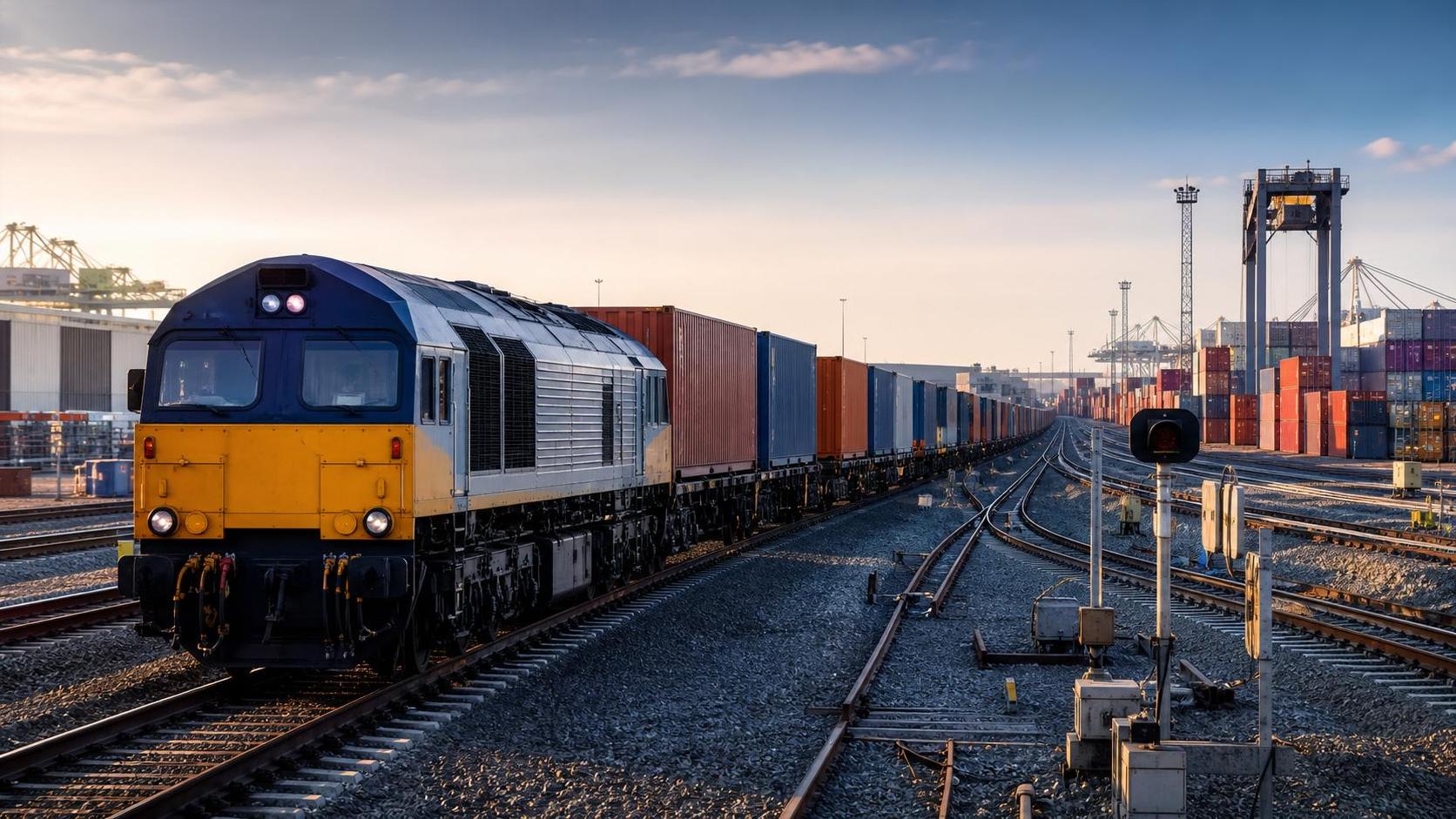
Global freight rail industry insights now sit at the center of capacity planning. Rail networks face uneven trade flows, tighter emissions rules, and rising pressure to move more volume with fewer disruptions.
That makes planning more than a timetable exercise. It requires a connected view of locomotives, wagons, track condition, signaling logic, terminal interfaces, and the policy frameworks shaping cross-border freight corridors.
In this context, the value of a technical platform such as G-RFE becomes clear. By linking engineering benchmarks, operational realities, and international standards, it helps turn fragmented rail data into decisions that support resilient, scalable freight capacity.
Why capacity planning has become a strategic rail issue
Rail freight capacity used to be measured mainly in train paths and tonnage. That view is now too narrow for global corridors that must balance reliability, safety, carbon intensity, and asset productivity.
A corridor may appear to have spare room on paper, yet still underperform. The reason often lies in hidden constraints such as axle load limits, outdated signaling blocks, slow terminal transfer cycles, or inconsistent maintenance windows.
Global freight rail industry insights matter because they reveal where theoretical capacity differs from usable capacity. That gap determines whether an expansion plan delivers throughput or simply adds cost.
This is especially relevant for regions investing in land-based alternatives to congested maritime and road routes. Rail is increasingly expected to absorb heavier cargo, longer distances, and stricter service expectations at the same time.
What global freight rail industry insights really include
The phrase goes beyond market commentary. Useful global freight rail industry insights combine engineering, operations, regulation, and corridor economics into one planning lens.
At a practical level, this means understanding five linked areas. G-RFE reflects that structure through heavy-haul rolling stock, infrastructure maintenance, smart signaling, intermodal systems, and specialized engineering machinery.
These pillars should not be assessed in isolation. A stronger locomotive fleet can be underused on weak track. A modern signaling layer can still fail to unlock capacity if yard handling remains slow.
Capacity planning improves when each pillar is tested against the others. That is where standards such as UIC, EN, and AAR become useful. They create a common language for benchmarking performance and compliance.
Core dimensions behind reliable planning
Current pressure points across freight corridors
Several shifts are changing how capacity should be evaluated. One is the move toward longer and heavier trains, which improves economics but increases stress on track, power systems, and braking performance.
Another is the rise of low-carbon transport targets. Rail often benefits from this shift, yet extra demand can expose weak links that were manageable at lower volumes.
Cross-border corridors add another layer. Different signaling regimes, maintenance standards, and certification rules can create delay even when physical infrastructure is adequate.
Global freight rail industry insights are useful here because they connect local bottlenecks to wider system behavior. A terminal queue, for example, may be rooted in wagon mismatch, not port demand alone.
Signals that capacity risk is being underestimated
- Frequent timetable revisions without measurable throughput gains
- High locomotive power paired with low corridor speeds
- Stable annual tonnage but rising dwell time at yards or ports
- Maintenance backlogs that force recurring temporary speed restrictions
- Digital signaling investments that do not reduce headways in practice
Where business value is created
The strongest capacity plans do not focus only on expansion. They improve asset use before committing to large capital programs, and they clarify where expansion will create the best corridor-wide return.
For instance, better wagon utilization may unlock capacity faster than fleet growth. In another case, signaling upgrades may outperform track expansion if the main constraint is train spacing rather than line strength.
This is where a data-driven technical repository is valuable. G-RFE’s engineering and policy perspective helps compare hardware choices and operating models against real compliance and interoperability requirements.
Global freight rail industry insights also support risk reduction. When investment decisions are benchmarked against proven asset classes and accepted standards, procurement and implementation become easier to defend.
Common value areas
- Higher throughput from existing infrastructure
- Lower disruption during maintenance and renewal cycles
- More consistent cross-border operating performance
- Stronger alignment between emissions goals and freight growth
- Clearer justification for phased capital deployment
Applying insights to real planning decisions
In actual business planning, broad rail intelligence needs to become corridor-specific judgment. The most useful approach is to map capacity decisions across the full freight chain rather than inside a single asset category.
Start with the service objective. That may be heavier bulk trains, faster intermodal rotations, or more reliable inland-port links. The target determines which metrics matter most.
Then test the weakest connection. It may be locomotives, but often it is terminal dwell, maintenance access, communication interoperability, or the inability to sustain standards across borders.
Global freight rail industry insights become practical when they guide scenario comparison rather than only trend observation. Decision quality improves when each option is tied to operating constraints and standard-based benchmarks.
A workable evaluation sequence
- Define the corridor’s target throughput and service reliability
- Check whether rolling stock and infrastructure are load-matched
- Review signaling, communications, and border interoperability
- Measure dwell time across yards, depots, and intermodal nodes
- Prioritize upgrades by system impact, not equipment visibility
What deserves closer attention next
The next phase of capacity planning will likely be shaped by digital supervision, predictive maintenance, and more disciplined corridor benchmarking. Yet technology alone will not solve planning gaps.
What matters more is the ability to connect technical evidence with investment timing. That is why global freight rail industry insights should be treated as an operating discipline, not just a market report category.
A useful next step is to review one corridor or asset program against the five G-RFE pillars. That exercise often reveals whether the real issue is equipment scale, maintenance strategy, signaling architecture, or intermodal coordination.
From there, planning becomes more concrete. Compare assumptions with UIC, EN, and AAR benchmarks, test where usable capacity is lost, and build a phased roadmap that reflects operational reality before major expansion decisions are locked in.
Industry Briefing
Get the top 5 industry headlines delivered to your inbox every morning.