
Tank Wagon UIC Standards Explained: Key Design and Compliance Checks

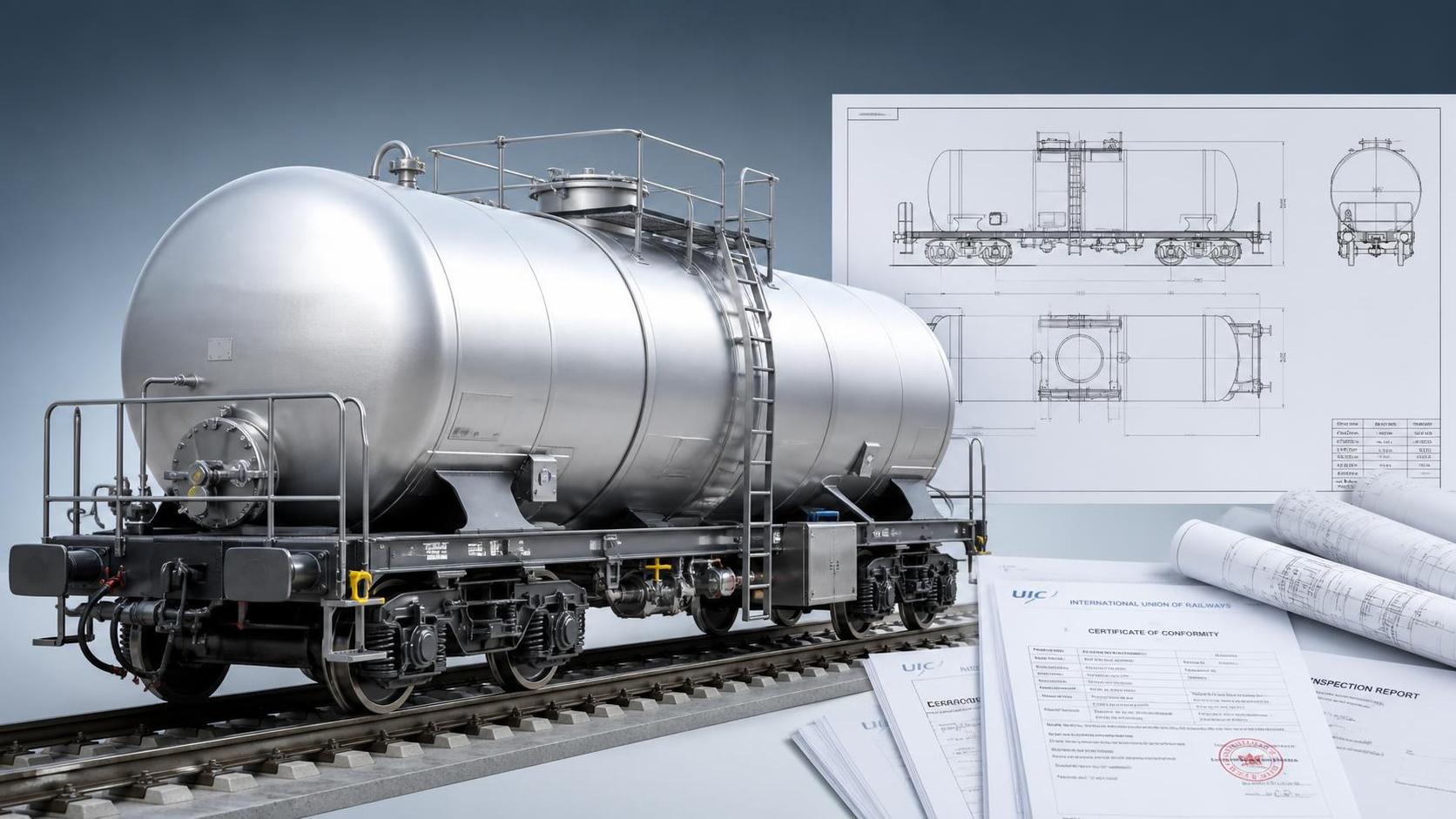
Tank Wagon UIC Standards Explained: Key Design and Compliance Checks
If you are evaluating a tank wagon for procurement, certification, or cross-border operation, the real question is not whether the wagon “mentions UIC compliance” in a brochure. The question is whether its design, documentation, and operating limits actually align with the tank wagon UIC standards that govern safe running, loading integrity, braking performance, and interoperability on international rail networks. That is where many technical reviews become messy. A wagon can look acceptable on paper, yet still fail on details such as tank shell protection, bogie compatibility, marking logic, or maintenance traceability.
For technical evaluators, UIC review is less about reading one standard in isolation and more about checking whether the wagon behaves as a complete railway asset. The tank, underframe, running gear, brake system, loading arrangement, and operating file all have to agree with each other.
In practical terms, a compliant tank wagon should do three things well: contain the intended product safely, run within the infrastructure and train parameters of the target network, and remain inspectable over its working life. That sounds obvious, but many assessment errors happen because teams focus too heavily on nominal capacity or axle load and not enough on the interfaces between design, operation, and maintenance.
What technical evaluators are really checking under tank wagon UIC standards
When people search for tank wagon UIC standards, they are usually trying to answer one of four operational questions:
- Can this wagon be accepted for use on the target railway network?
- Is the design suitable for the cargo class and loading method?
- Do the technical documents prove compliance, or do they only describe intent?
- What hidden issues could create certification delays or service restrictions later?
That last point matters more than many buyers expect. A tank wagon is not just a pressure-containing body on wheels. It is a regulated transport system with structural, dynamic, and safety dependencies. A small mismatch in one area can affect acceptance in another. For example, an otherwise robust tank may still face operational limitations if braking configuration, gauge profile, or route load assumptions are not aligned with the actual corridor.
Start with the design envelope, not the sales specification
A common mistake is to begin evaluation from payload, volume, or commodity name alone. Start instead with the wagon’s design envelope: loading gauge, axle load, tare mass, permitted speed, brake regime, coupler arrangement, bogie type, and intended interoperability zone.
This gives you the first filter. If the wagon’s baseline geometry and running characteristics do not fit the target network, deeper compliance work may not be worth the time. In UIC-based assessments, physical compatibility is not a secondary issue. It is the entry ticket.
Look closely at these points:
- Maximum gross laden weight versus route category
- Axle load distribution under full and partial filling conditions
- Gauge and kinematic envelope compatibility
- Permitted operating speed in loaded and empty conditions
- Bogie and wheelset arrangement in relation to track quality and maintenance expectations
Partial filling deserves special attention. For some liquid cargos, surge effects and dynamic behavior can change the practical operating condition, especially if the internal configuration and filling ratios are not well matched to service reality.
Tank integrity is more than shell thickness
Less experienced reviewers often reduce tank assessment to material grade and nominal wall thickness. That is too narrow. Under tank wagon UIC standards, tank integrity should be reviewed as a system that includes the shell, heads, weld quality, protective devices, fittings, heating or insulation arrangements where applicable, and the way the tank is supported on the wagon frame.
The key question is simple: can the tank safely contain its intended product through filling, transit, braking, thermal variation, and unloading without creating unacceptable structural or leakage risk?
That means checking:
- Tank material compatibility with the cargo
- Corrosion allowance where relevant
- Welding procedures, inspection records, and non-destructive testing evidence
- Protection of bottom outlets, valves, and top fittings
- Crash or impact-related protective features around vulnerable components
- Support saddle or frame connection design and stress concentration management
For hazardous goods service, do not treat general UIC conformity as a substitute for dangerous goods compliance. The wagon may also need alignment with RID and related national implementation requirements. In real projects, this is where technical teams sometimes assume “UIC compliant” means “ready for any liquid cargo.” It does not.
Braking and running gear checks often decide network acceptance
Tank containment gets most of the attention, but braking and running stability are often what determine whether a wagon is accepted without restrictions. On international freight corridors, brake performance has to match train composition rules, route gradients, operational speed, and maintenance capability.
Review the brake system in its full configuration: brake mode, components, response characteristics, hand brake arrangement, parking security, and compatibility with the fleet environment it will join. A wagon that meets an isolated component requirement may still be awkward in mixed consists if brake behavior or maintenance parts are non-standard for the operator.
The same goes for bogies and wheelsets. Evaluators should verify not only nominal compliance, but also whether the selected running gear has a credible service record under similar axle loads, track conditions, and maintenance cycles. A design that works well in one network may become expensive or unreliable in another if spare parts, inspection intervals, or workshop familiarity are poor.
A short rule of thumb: if the supplier cannot clearly explain how the brake and running gear package supports the wagon’s intended corridor, you probably do not have a finished compliance case yet.
Loading, unloading, and access details are compliance issues too
Many technical assessments become overly structural and forget the human interface. Yet ladders, walkways, dome arrangements, valves, discharge devices, and access points can all affect both compliance and operational risk.
Ask whether the loading and unloading arrangement matches the consignee’s real process. Top loading versus bottom loading, valve protection, sealing positions, grounding practices, and drainage behavior all matter. Poor arrangement here may not always block formal acceptance, but it can create recurring safety events, product loss, or maintenance damage.
This is especially relevant for fleets intended for multi-country service. Terminal practices vary. A tank wagon that is theoretically compliant but awkward to operate in common terminal conditions will cause trouble early.
Documentation is where many “compliant” wagons fall apart
Technical evaluators know this already, but it is still worth stating plainly: a wagon is not validated by the manufacturer’s claim. It is validated by the consistency and completeness of its technical file.
For tank wagon UIC standards, the documentation package should be reviewed with the same seriousness as the hardware. You are looking for internal consistency across drawings, calculations, test records, certificates, marking schedules, maintenance instructions, and operational limitations.
The most useful compliance file usually includes:
- General arrangement drawings and key dimensional data
- Tank and frame design calculations
- Material certificates and traceability records
- Welding qualifications and inspection results
- Brake system specifications and test evidence
- Bogie and wheelset technical data
- Marking and identification details
- Maintenance manual and inspection intervals
- Any applicable conformity assessment or authority acceptance records
What matters is not just presence, but coherence. If the drawing revision says one thing, the test report another, and the maintenance instruction a third, that is not a minor editorial problem. It is a lifecycle risk.
Common evaluation mistakes that create expensive delays
One recurring mistake is treating standards review as a checkbox exercise at the end of procurement. By that stage, major design choices are already fixed, and any non-compliance becomes costly to correct.
Another is relying too heavily on legacy platform assumptions. Just because a wagon family has operated elsewhere does not mean the exact submitted configuration is acceptable for your network, cargo, or certification route. Variant differences in fittings, braking, shell design, or route classification can change the conclusion.
A third mistake is ignoring maintainability. Technical evaluators sometimes approve a wagon that is sound in design but poorly supported in service. If spare parts, inspection access, workshop procedures, or periodic testing requirements are unclear, the compliance case is incomplete from an operational standpoint.
This is where an engineering intelligence platform such as Global Railway-Freight & Engineering (G-RFE) can be useful as a reference layer rather than a sales pitch. For teams comparing rolling stock against UIC, EN, and AAR frameworks, having a structured benchmark view helps separate true interoperability readiness from generic product positioning.
A practical review sequence for procurement or certification
If you need a working method, use this order. It keeps the review disciplined and usually surfaces fatal issues early:
- Confirm intended service: cargo type, network, route class, speed, loading method, climate, and maintenance model.
- Check the wagon envelope: gauge, axle load, gross mass, tare, speed rating, and train integration basics.
- Review tank design and protective features against cargo risks and operating conditions.
- Verify braking, bogies, wheelsets, and dynamic suitability for the target corridor.
- Assess loading and unloading arrangements for practical terminal use.
- Audit the technical file for consistency, revision control, and traceability.
- Map all gaps to acceptance risk: immediate rejection, conditional acceptance, or manageable clarification.
That sequence is more useful than reading standards clause by clause without a decision context. Standards matter, but evaluators are paid to reach an operational judgment.
Where experience changes the conclusion
Two wagons can both appear compliant and still differ sharply in real-world value. The more experienced review tends to ask: which one is easier to certify, easier to maintain, less likely to be restricted, and less likely to generate hidden cost over twenty or thirty years?
That is why the best technical evaluations do not stop at “meets standard.” They ask whether the wagon is robust under actual service conditions. A tank wagon operating refined chemicals on a tightly controlled corridor is a different proposition from one moving varied industrial liquids across multiple borders with uneven terminal infrastructure.
In other words, compliance is the floor. Suitability is the decision.
When you are reviewing tank wagon UIC standards in a live project, keep the focus on interfaces: tank to frame, wagon to network, brake system to train operations, and technical file to certification body. Most serious problems show up at those interfaces long before they show up in headline specifications.
FAQ
Is UIC compliance alone enough for a tank wagon carrying hazardous liquids?
No. UIC alignment is important, but hazardous goods service may also require compliance with RID and any network-specific or national rules. The cargo class changes the review depth.
What is the fastest way to identify a weak tank wagon submission?
Check the consistency between drawings, calculations, certificates, and maintenance instructions. Weak submissions usually break down in the technical file before they fail in the hardware description.
Can a proven wagon platform still fail a new UIC-based assessment?
Yes. A known platform can still be unsuitable if the configuration, route, brake regime, loading gauge, or tank fittings differ from the previously accepted version.
Which area is most often underestimated by procurement teams?
Maintainability. Spare parts support, inspection access, periodic testing, and workshop compatibility often receive less attention than tank volume or purchase price, but they shape lifecycle cost.
Should technical evaluators prioritize structural design or operational compatibility?
Both, but start with operational compatibility. If the wagon cannot run on the target network within route and train constraints, a strong tank design will not rescue the project.
For anyone responsible for approval or supplier comparison, the phrase tank wagon UIC standards should trigger a structured review, not a document collection exercise. The strongest evaluations combine standard knowledge with engineering judgment, corridor awareness, and a hard look at service reality.
- Anchor text: UIC freight wagon compliance checklist - suggested link to a standards guidance page
- Anchor text: rail wagon braking system evaluation - suggested link to a technical analysis page
- Anchor text: tank wagon design review for hazardous goods - suggested link to a cargo-specific engineering page
- Anchor text: freight bogie and wheelset selection criteria - suggested link to a rolling stock component page
- Anchor text: cross-border rail interoperability requirements - suggested link to an international operations page
- External source direction: UIC official technical documentation and member publications
- External source direction: National railway safety authority or interoperability regulator pages
- External source direction: Official manufacturer technical manuals and conformity documentation for tank wagons and bogies
Industry Briefing
Get the top 5 industry headlines delivered to your inbox every morning.