
Agricultural Trade Trends Shaping Rail Freight in 2026

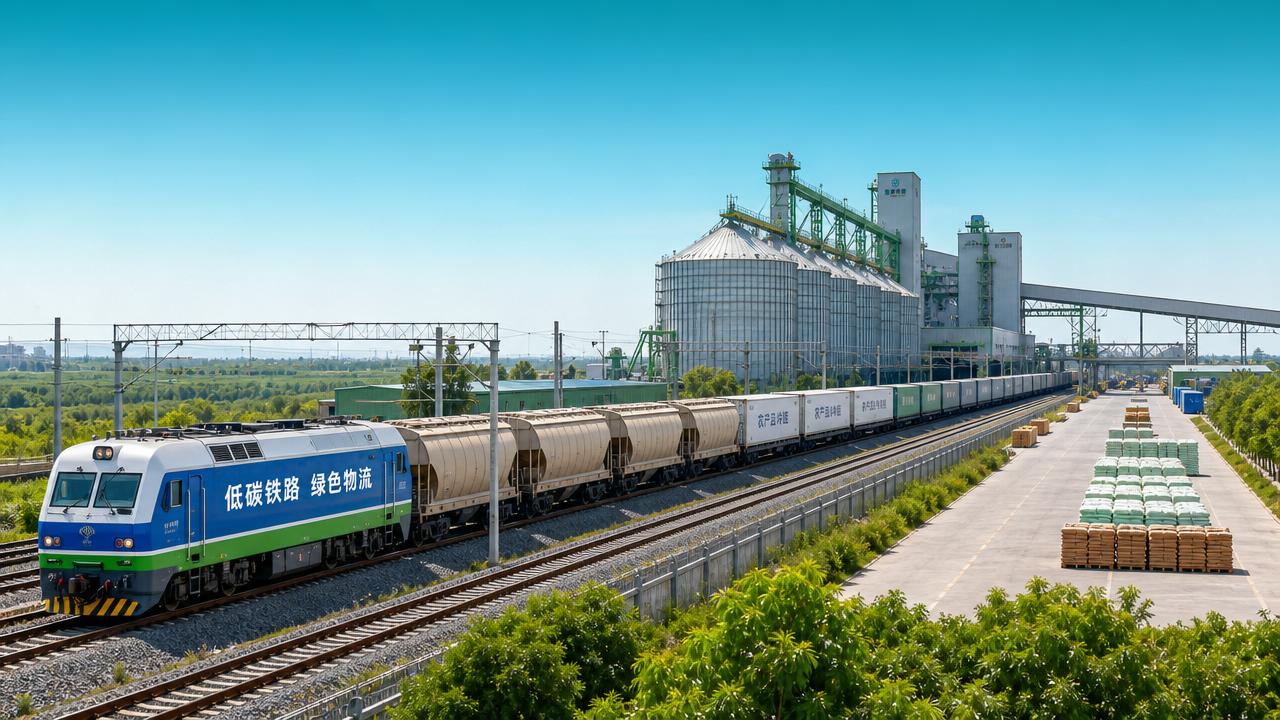
As Agricultural Trade enters 2026 under pressure from climate volatility, shifting tariff regimes, and rising demand for low-carbon logistics, rail freight is becoming a strategic lever for cost control and supply-chain resilience.
Grain, oilseed, fertilizer, and refrigerated commodity flows are reshaping corridor capacity, wagon utilization, terminal planning, and intermodal rail-port investment.
For railway authorities, EPC contractors, and freight network planners, Agricultural Trade now provides early signals for infrastructure priorities and operating risk.
Agricultural Trade Is Moving From Seasonal Volume To Strategic Rail Demand
Agricultural Trade has traditionally created seasonal surges around harvest, export windows, and fertilizer application cycles.
In 2026, these flows are becoming less predictable, more corridor-sensitive, and more dependent on multimodal resilience.
Drought, flooding, port congestion, and policy changes are pushing shippers toward inland rail corridors with better redundancy.
This shift favors heavy-haul routes, grain terminals, refrigerated rail interfaces, and rail-port systems with faster transloading capability.
Agricultural Trade also influences empty wagon repositioning, because loaded exports and inbound inputs rarely balance perfectly.
Networks that previously optimized for coal, minerals, or containers must now model crop-driven volatility more precisely.
Trend Signals Reshaping 2026 Rail Freight Planning
Several signals suggest Agricultural Trade will have a stronger influence on rail freight economics in 2026.
First, global food security concerns are increasing strategic stockpiling, which changes storage locations and inland movement patterns.
Second, fertilizer supply chains remain exposed to energy prices, sanctions, and regional production constraints.
Third, low-carbon procurement rules are making rail more attractive than long-distance trucking for bulk commodities.
Fourth, port authorities are investing in rail-linked terminals to reduce congestion and improve export reliability.
These signals connect Agricultural Trade directly with locomotive allocation, track access planning, siding length, and terminal automation.
The strongest signals are visible in bulk and temperature-sensitive flows
- Grain corridors need higher train-path certainty during compressed export windows.
- Oilseed movements require flexible access to crushers, ports, and inland storage hubs.
- Fertilizer flows need safer handling, regulatory compliance, and better wagon availability.
- Refrigerated commodities require reliable intermodal transfer and energy-managed cold-chain interfaces.
Why Agricultural Trade Is Becoming A Rail Freight Catalyst
The 2026 outlook is not driven by one factor. Agricultural Trade is being reshaped by several converging forces.
These forces make Agricultural Trade a practical forecasting input, not only a market category.
Rail plans that ignore crop geography and export policy risk underused assets or severe peak-season bottlenecks.
Corridor Capacity Will Be Tested By Uneven Export Windows
Agricultural Trade rarely moves evenly across the year. Weather disruptions can compress shipments into shorter periods.
This creates pressure on passing loops, loading tracks, marshalling yards, and port approach lines.
A corridor may appear sufficient on annual tonnage, yet fail during a concentrated grain export cycle.
In 2026, reliable Agricultural Trade corridors will require dynamic capacity allocation rather than static yearly assumptions.
Priority rules must balance agricultural cargo, container traffic, minerals, energy products, and passenger operations where networks are shared.
Digital train control, predictive maintenance, and yard automation can reduce friction during sudden traffic surges.
Capacity risk indicators to monitor
- Queue time at grain elevators and export terminals.
- Loaded-to-empty wagon cycle duration by corridor.
- Port dwell time for bulk agricultural cargo.
- Track possession conflicts during harvest-driven peaks.
- Locomotive availability during simultaneous commodity surges.
Wagon Utilization Is Becoming A Competitive Differentiator
The economics of Agricultural Trade rail movement depend heavily on wagon productivity.
Covered hoppers, tank wagons, refrigerated units, and container platforms each face different utilization constraints.
A delayed unloading slot can reduce asset productivity across the entire network.
For fertilizer, safety inspections and contamination controls can lengthen turnaround times if processes are poorly coordinated.
For grain, loading accuracy and moisture-sensitive handling affect both commercial value and railcar cleaning requirements.
Agricultural Trade therefore rewards networks that integrate cargo data, wagon status, terminal readiness, and maintenance planning.
Intermodal Rail-Port Systems Will Carry More Strategic Weight
Rail-port systems are becoming decisive in Agricultural Trade because export reliability depends on synchronized inland and maritime operations.
When vessels arrive before rail cargo, demurrage rises. When trains arrive too early, storage becomes congested.
The strongest terminals will combine bulk loading, containerized agricultural exports, digital slot booking, and real-time inventory visibility.
This is especially important where Agricultural Trade includes pulses, frozen meat, dairy ingredients, fruit, and processed foods.
Cold-chain rail interfaces need stable power, monitored transfer zones, and reliable dwell-time control.
Port rail planning should also consider sanitary inspection areas, fumigation procedures, and customs documentation workflows.
Impacts Across Infrastructure, Operations, And Commercial Strategy
Agricultural Trade affects more than freight volume. It changes how railway assets are specified, scheduled, and justified.
Infrastructure teams must evaluate axle load, siding length, bridge capacity, and loading infrastructure against heavier seasonal patterns.
Operations teams must improve dispatching discipline, wagon tracking, and disruption response across mixed-traffic networks.
Commercial teams must price reliability, not only distance, because agricultural cargo often loses value when delayed.
- Track maintenance windows must avoid peak harvest movement periods.
- Locomotive fleets should be staged near expected export corridors.
- Terminal contracts should include performance metrics for dwell and loading time.
- Digital systems should connect cargo forecasts with rail capacity planning.
These impacts show why Agricultural Trade belongs inside rail infrastructure strategy, not only logistics procurement.
Technology Priorities For More Resilient Agricultural Trade Corridors
Technology investment should target the highest-friction points in Agricultural Trade movement.
Predictive analytics can connect crop forecasts, export bookings, and rail asset availability before congestion emerges.
Smart signaling, including ETCS and digital communication systems, can increase safe throughput on constrained routes.
Condition monitoring helps protect tracks, switches, and bridges from sudden heavy-haul intensity during peak export cycles.
Automated loading systems reduce variability, improve documentation, and support faster departure from agricultural terminals.
For refrigerated Agricultural Trade, sensor-based monitoring can protect temperature integrity across rail and port interfaces.
Core focus areas for 2026 investment
- Corridor-level demand forecasting linked to crop and tariff scenarios.
- Wagon telemetry for location, load status, temperature, and maintenance condition.
- Digital slot management at silos, ports, and intermodal terminals.
- Asset health monitoring for tracks supporting concentrated heavy-haul cycles.
- Carbon reporting tools for rail-based agricultural supply chains.
Scenario Planning Should Replace Single-Forecast Assumptions
Agricultural Trade in 2026 will reward railway systems that plan through scenarios rather than fixed demand forecasts.
A normal harvest, drought-shifted harvest, tariff shock, or fertilizer shortage can produce very different traffic patterns.
Scenario planning should include commodity volume, route selection, port preference, wagon demand, and terminal processing speed.
This approach turns Agricultural Trade uncertainty into structured decision-making for rail investment and operations.
What To Watch Closely Through 2026
Several indicators will help determine whether Agricultural Trade becomes a growth engine or a congestion risk.
- Regional crop forecasts and harvest timing changes.
- Export licensing, tariff updates, and sanitary border rules.
- Fertilizer production, import demand, and energy-cost exposure.
- Port congestion levels and vessel schedule reliability.
- Rail carbon disclosure requirements in agricultural contracts.
- Investment in silos, inland terminals, and refrigerated transfer assets.
Monitoring these signals helps align railway engineering decisions with commercial reality before capital becomes misallocated.
A Practical Response Framework For Rail Freight Stakeholders
The most effective response is not simply adding capacity. It is adding the right capacity at the right nodes.
Agricultural Trade requires coordinated planning across track infrastructure, rolling stock, terminals, signaling, and commercial contracts.
- Map commodity flows by season, corridor, port, and processing location.
- Identify bottlenecks where delays reduce commodity value or export reliability.
- Benchmark locomotive, wagon, and terminal performance against international operating standards.
- Use digital tools to forecast disruption and optimize wagon repositioning.
- Prioritize rail-port integration where Agricultural Trade volumes are growing fastest.
G-RFE’s technical intelligence perspective emphasizes the link between heavy-duty railway hardware and operational control systems.
That link is critical as Agricultural Trade becomes more volatile, more regulated, and more sustainability-driven.
The 2026 Advantage Will Come From Anticipation
Rail freight competitiveness in 2026 will depend on anticipating Agricultural Trade shifts before they appear as congestion.
The strongest networks will combine resilient infrastructure, flexible operating plans, smart signaling, and data-backed commercial coordination.
Agricultural Trade will remain exposed to climate, policy, and demand shocks, but rail can convert volatility into strategic value.
The next step is to assess corridor readiness, terminal constraints, wagon cycles, and digital visibility against expected 2026 commodity flows.
A structured rail freight review can reveal where investment, scheduling, or intermodal coordination will deliver the greatest resilience.
Industry Briefing
Get the top 5 industry headlines delivered to your inbox every morning.