
Why traction motor efficiency benchmarks often mislead upgrades

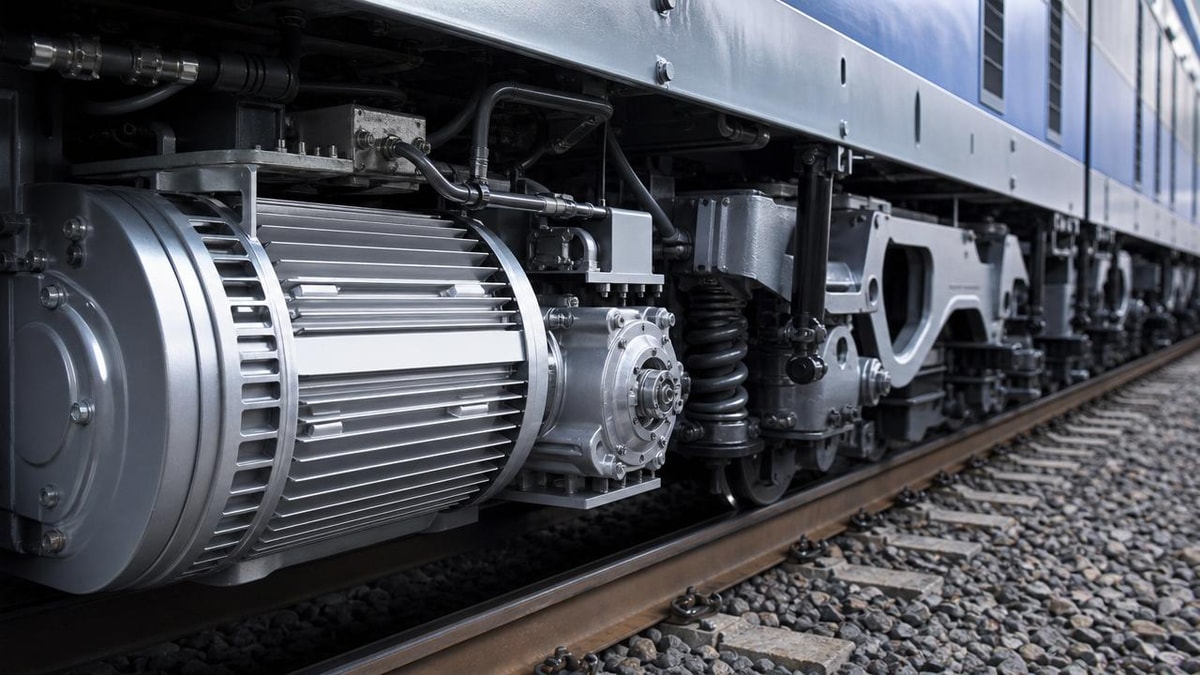
Many upgrade programs rely on traction motor efficiency benchmarks as if they were universally comparable, yet project outcomes often fall short once duty cycles, thermal limits, adhesion conditions, and system integration are considered. For project managers and engineering leads, understanding why these benchmarks can distort investment decisions is essential to selecting upgrades that improve real-world freight performance, reliability, and lifecycle value.
Why do traction motor efficiency benchmarks attract so much attention in upgrade planning?
In rail freight and heavy engineering programs, traction motor efficiency benchmarks are attractive because they appear to offer a clean, numerical shortcut. A higher percentage seems to suggest lower losses, lower energy consumption, and better return on capital. For project leaders managing fleet modernization, these benchmarks can simplify early screening when comparing motor technologies, suppliers, or retrofit pathways.
The problem is not that the benchmark is useless. The problem is that many benchmark figures are taken from different test conditions, different cooling assumptions, or different operating ranges. A motor that performs extremely well at one load point in a laboratory may deliver less impressive gains on a long freight corridor with steep gradients, repeated starts, poor rail conditions, and high ambient temperature. In other words, traction motor efficiency benchmarks often measure a slice of performance, while project outcomes depend on the full operating envelope.
This matters especially in heavy-haul and intermodal railway systems, where locomotive utilization, timetable robustness, axle load, and maintenance windows affect commercial performance as much as nameplate efficiency. For organizations such as railway authorities, locomotive OEMs, and EPC teams, the benchmark should therefore be treated as one input within a system-level engineering assessment, not as a standalone decision rule.
What exactly makes traction motor efficiency benchmarks misleading?
Several factors make direct comparison risky. First, efficiency is highly dependent on speed and torque. A benchmark may reflect peak efficiency at a narrow operating point, while freight locomotives spend much of their time outside that sweet spot. Yard movements, low-speed haulage, regenerative events, and repeated acceleration can all shift the actual loss profile.
Second, thermal behavior changes the story. A traction motor may look excellent when cool, but performance can degrade as winding temperature rises and cooling systems approach their limits. In long-haul rail operations, thermal saturation is not a theoretical issue; it affects tractive effort continuity, insulation life, and unplanned downtime. A benchmark that does not show temperature sensitivity can overstate real operational benefit.
Third, adhesion and wheel-rail interaction influence how much of the motor’s electrical performance becomes usable traction. If the locomotive cannot maintain stable adhesion under wet, contaminated, or uneven track conditions, the system may never convert benchmark efficiency into better hauling performance. Slip control quality, inverter response, bogie design, and axle load distribution can matter as much as the motor itself.
Fourth, many published or quoted values exclude losses elsewhere in the propulsion chain. Project teams may focus on motor efficiency while underestimating converter losses, gearbox losses, auxiliary power draw, harmonics, cooling energy, or software tuning impacts. This creates a classic procurement trap: the motor looks better on paper, but the train-level energy balance shows only marginal gains.
Which real-world conditions should project managers check before trusting benchmark claims?
Project managers should ask whether the benchmark reflects the actual duty cycle of the targeted fleet. A locomotive used for long-distance mineral freight behaves differently from one used in mixed freight service with frequent stops. If the benchmark is based on light-load or idealized cycles, it may not support the intended business case.
Ambient and environmental conditions also deserve attention. Dust ingress, altitude, tunnel operations, humidity, and seasonal temperature extremes can alter cooling effectiveness and component aging. On international freight corridors, operating environments may vary dramatically across regions, which means a single benchmark figure may fail to represent route-wide exposure.
Integration maturity is another critical checkpoint. Traction motor efficiency benchmarks should never be separated from inverter compatibility, control logic, existing traction transformers or rectification systems, and maintenance capability at depots. Even a technically superior motor can underperform if software calibration is weak or if workshop teams lack the tools to preserve alignment, insulation quality, and bearing condition.
Finally, managers should verify whether benchmark claims are tied to recognized standards and transparent test protocols. Alignment with UIC, EN, AAR, or equivalent procedures does not eliminate all risk, but it improves comparability. The key question is not simply “What is the efficiency number?” but “Under what exact conditions was the number achieved, and how close are those conditions to our corridor reality?”
How can you compare benchmark data with operational reality more effectively?
A useful approach is to translate traction motor efficiency benchmarks into corridor-specific scenarios. Instead of relying on a single percentage, build a comparison around load spectrum, route gradient, train mass, stop frequency, ambient range, and annual utilization. This makes the evaluation more relevant to lifecycle planning and less dependent on sales-driven headline numbers.
Project teams should also separate peak efficiency from weighted efficiency. Weighted efficiency estimates performance across the expected operating profile rather than at one ideal point. For freight operators, that often produces a more honest picture of probable energy savings and thermal stress. When possible, ask suppliers for efficiency maps, loss breakdowns, and derating curves rather than a single best-case figure.
Another practical method is to conduct a pilot retrofit or route-limited validation. Even a small field program can reveal whether traction motor efficiency benchmarks translate into measurable changes in kilowatt-hour per gross tonne-kilometer, wheel-slip events, maintenance intervals, and locomotive availability. Pilot evidence is especially valuable when a fleet includes mixed ages, variable mechanical condition, or different onboard control architectures.
What are the most common upgrade mistakes when using traction motor efficiency benchmarks?
One common mistake is treating efficiency as the primary upgrade objective instead of a subordinate metric linked to broader outcomes. In many freight projects, availability, thermal resilience, maintainability, and compatibility with signaling-safe electrical behavior can create more value than a small gain in benchmark efficiency. A motor that saves modest energy but increases downtime risk is rarely a successful upgrade.
A second mistake is underestimating retrofit complexity. Mechanical interfaces, axle-hung mass effects, cabling changes, protection settings, EMC considerations, and software retuning can all affect cost and schedule. Project managers may approve an upgrade based on favorable traction motor efficiency benchmarks only to discover that integration labor, certification requirements, and service disruption reduce the business case.
A third mistake is ignoring maintenance economics. Advanced motors may need different spare strategies, diagnostic tools, bearing management practices, or technician training. If depots are not prepared, theoretical efficiency gains can be absorbed by longer repair cycles or higher parts cost. This is particularly relevant in geographically dispersed freight networks where workshop standardization is difficult.
A fourth mistake is accepting benchmark data without asking how degradation evolves over time. New equipment often performs well at commissioning, but contamination, insulation aging, vibration, and cooling degradation can narrow the advantage. Lifecycle value depends on sustained performance, not just initial efficiency.
If benchmarks are limited, what should decision-makers prioritize instead?
Decision-makers should prioritize outcome-based indicators that reflect network and fleet objectives. These may include energy use per transport unit, locomotive availability, failure rate under heavy-haul duty, wheel-slip stability, overhaul interval, and total cost of ownership. In a mature procurement process, traction motor efficiency benchmarks support these indicators rather than replace them.
They should also look for evidence of interoperability and engineering fit. In complex railway systems, an upgrade is valuable only if it works with existing control architecture, safety practices, depot capability, and corridor operating patterns. Suppliers that can explain integration risks clearly are often more reliable partners than those that emphasize only headline benchmark performance.
For major programs, a staged evaluation model is often best. Start with benchmark screening, move to simulation against actual duty cycles, then require field validation and lifecycle sensitivity analysis. This sequence helps teams avoid both overconfidence and unnecessary conservatism. It turns traction motor efficiency benchmarks into a useful filter while protecting the project from simplified assumptions.
What should you ask suppliers or internal engineering teams before approving an upgrade?
The most productive conversations are specific. Ask for the full efficiency map, not a brochure figure. Ask how the motor performs after sustained thermal loading. Ask what route types were assumed in the savings calculation. Ask which losses are included and excluded. Ask what changes are required in converters, software, cooling systems, bogies, and maintenance procedures. Ask how the supplier will support commissioning, training, spares, and post-deployment diagnostics.
Internal teams should be asked to quantify risk in schedule, certification, depot readiness, and fleet availability during transition. They should also test whether the business case remains acceptable under conservative assumptions, such as lower-than-promised efficiency gain or higher retrofit downtime. That kind of stress test is often more valuable than another round of optimistic benchmark comparison.
In practical terms, traction motor efficiency benchmarks are most useful when they trigger better questions. They become misleading only when they are mistaken for complete truth. For project managers and engineering leads in railway freight modernization, the real task is not to chase the highest benchmark, but to select the upgrade that performs best across duty cycle reality, system integration, and long-term asset value.
What is the key takeaway for project managers and engineering leads?
The key takeaway is simple: traction motor efficiency benchmarks can inform a decision, but they should never dominate it. Benchmarks become misleading when they are detached from route profile, thermal limits, adhesion conditions, converter behavior, maintenance capability, and lifecycle economics. In freight rail engineering, the most successful upgrades are rarely the ones with the most impressive isolated metric; they are the ones that deliver predictable, repeatable performance across the real operating environment.
If you need to confirm a specific upgrade path, budget direction, implementation schedule, or supplier comparison, start by clarifying five points: the actual duty cycle, the system boundary of the efficiency claim, the thermal and adhesion assumptions, the retrofit and certification workload, and the expected lifecycle support model. Those questions will do far more to protect project value than relying on traction motor efficiency benchmarks alone.
Industry Briefing
Get the top 5 industry headlines delivered to your inbox every morning.