How OEM locomotive cab equipment affects driver safety

For quality control and safety managers, understanding how locomotive cab equipment OEM decisions shape driver protection is essential to reducing operational risk. From ergonomic layouts and visibility systems to fire safety, vibration control, and interface reliability, the right cab configuration directly influences alertness, response time, and compliance. This article explores how OEM design standards and component quality affect driver safety across modern railway freight operations.
When buyers search for information on locomotive cab equipment OEM, they are rarely looking for a simple product overview. Their core intent is practical: they want to know which OEM design choices materially improve driver safety, how to evaluate those choices during procurement or inspection, and where poor cab equipment quality creates hidden operational risk. For quality control and safety managers, the answer is clear: OEM cab equipment affects safety not at the margins, but at the level of daily human performance, emergency response, and regulatory defensibility.
The most important point is that driver safety is shaped by the cab as a system, not by one isolated component. A high-performance seat cannot compensate for poor sightlines. A modern display cannot offset confusing alarm logic. Fire-resistant materials lose value if ventilation, wiring, and emergency egress are poorly integrated. Because of this, OEM decisions should be assessed through a whole-cab safety framework that combines ergonomics, visibility, controls, environmental protection, crashworthiness, maintainability, and standards compliance.
Why OEM cab equipment matters more than many safety programs assume
In freight rail operations, driver safety is often discussed in terms of signaling, route protection, crew training, and operating discipline. Those are critical controls, but the physical cab environment directly determines how effectively a driver can use them. If the operator is fatigued by vibration, distracted by glare, slowed by awkward controls, or overloaded by inconsistent interfaces, the safety margin narrows long before a reportable event occurs.
For safety managers, this means the OEM cab package should be treated as an operational risk control, not simply as a comfort feature or procurement line item. Cab equipment influences reaction time, situational awareness, communication clarity, and sustained alertness over long-haul duty cycles. In cross-border freight corridors and heavy-haul networks, where shifts can be long and conditions variable, those factors become especially significant.
For quality teams, OEM selection also affects consistency. Reputable suppliers tend to provide validated component integration, documented testing, controlled manufacturing tolerances, and traceable materials. That consistency reduces variation across fleets, which in turn supports safer maintenance, better driver familiarization, and stronger incident investigation outcomes.
Which cab equipment elements have the biggest impact on driver safety?
Not every feature contributes equally to safety. The highest-value areas are those that shape visibility, control accuracy, physical endurance, and emergency survivability. These should receive the most attention during specification review, factory acceptance, and in-service audits.
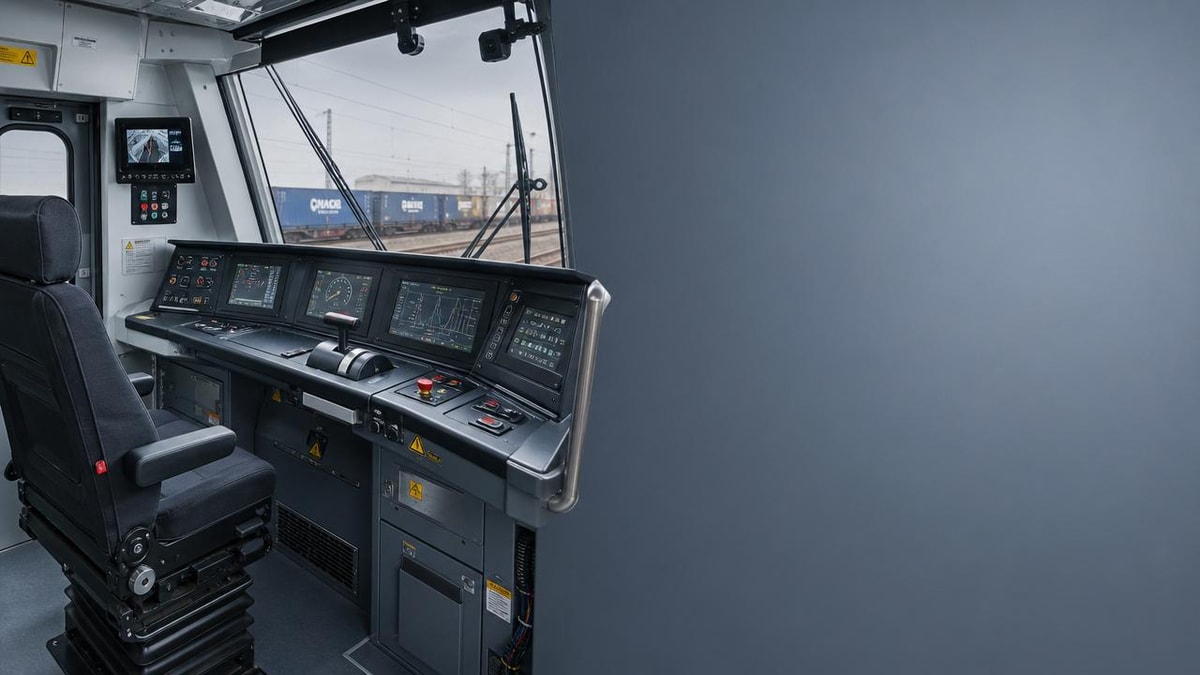
1. Ergonomic seating and posture support. The driver seat is not a convenience item. It is a fatigue-management tool. OEM seat quality affects spinal load, vibration transfer, posture stability, and reach to controls. Adjustable lumbar support, fore-aft travel, suspension tuning, arm support, and stable locking mechanisms all help drivers maintain consistent control inputs and remain alert over long distances.
2. Visibility systems and sightlines. Windshield geometry, pillar placement, demisting performance, wiper coverage, mirror arrangement, camera integration, and glare control all shape what the driver can see and how quickly hazards are recognized. Poor visibility design increases workload in yards, terminals, adverse weather, tunnels, and nighttime operations.
3. Human-machine interface reliability. Displays, switches, indicators, acknowledgment buttons, radio controls, event alerts, and brake interfaces must be intuitive and logically grouped. A locomotive cab equipment OEM with strong human factors capability will minimize unnecessary head movement, reduce ambiguity between normal and abnormal conditions, and standardize control behavior across operating modes.
4. Vibration, noise, and thermal control. Cab climate and ride environment directly affect concentration. Excessive noise can mask alarms and increase stress. Poor insulation and HVAC performance can degrade alertness and decision quality. In hot, cold, dusty, or humid freight environments, OEM attention to sealing, air filtration, acoustic treatment, and thermal stability is a genuine safety requirement.
5. Fire safety and emergency egress. Material flame performance, wiring protection, equipment placement, smoke behavior, extinguisher access, and exit design all matter. A safe cab should allow a driver to detect danger early, access suppression tools quickly, and evacuate without confusion if required.
How poor OEM design creates hidden operational risk
Some safety failures are dramatic, but many begin as low-visibility design weaknesses. A safety manager may not see an incident immediately tied to cab layout, yet the cab may still be contributing to degraded performance every day. The risk is cumulative and often underreported.
One common issue is interface inconsistency. If different locomotives in a fleet use different switch locations, alarm tones, or display logic, drivers must spend more cognitive effort orienting themselves. That increases workload during transitions, fault conditions, or emergency braking events. Standardization across the fleet is therefore both a training benefit and a safety control.
Another hidden risk is poor maintainability. A well-designed cab allows safety-critical equipment to be inspected, replaced, and calibrated without creating new defects. If access panels are awkward, connectors are fragile, or documentation is weak, maintenance quality declines over time. For quality personnel, this is where OEM engineering discipline becomes measurable in the field.
There is also the issue of false confidence. Some cabs look modern because they include digital displays or premium finishes, but appearance does not equal safety performance. Unless the OEM can demonstrate compliance testing, environmental endurance, ergonomic validation, and service reliability, apparent sophistication may conceal weak design integration.
What quality control and safety managers should evaluate before approving a cab configuration
The best procurement and acceptance decisions are made with a structured checklist rather than subjective impressions. For the target audience, the key question is not “Does this cab look advanced?” but “Can this OEM prove that the cab reduces risk under real operating conditions?”
Start with standards and evidence. Ask which international or regional standards the cab and its subcomponents are designed to meet. Depending on the market and project, relevant references may include UIC, EN, AAR, fire safety requirements, crashworthiness requirements, EMC standards, and operator-specific ergonomic criteria. Compliance claims should be backed by test reports, not sales language.
Review human factors validation. Ask whether the OEM conducted operator reach studies, line-of-sight analysis, glare assessment, seat vibration testing, and control usability trials. Cab design should reflect the realities of long-duty operation, not only static engineering assumptions. If the OEM cannot explain how drivers were considered in the design process, that is a warning sign.
Examine environmental robustness. Freight corridors expose cabs to dust, temperature swings, rain ingress, vibration, voltage variation, and continuous use. Safety equipment that performs well in a demonstration may fail in service if connectors loosen, seals degrade, or displays wash out under sunlight. Environmental qualification is therefore part of safety qualification.
Assess failure behavior. Safety-critical cab systems should fail in predictable, controlled ways. Consider what happens if a display loses power, a fan stops working, an audio alarm degrades, or a communication module becomes intermittent. The OEM should define fault handling, redundancy where appropriate, and maintenance alerts that prevent unsafe continued operation.
Check documentation quality. Good OEMs provide clear installation drawings, parts traceability, maintenance intervals, diagnostic procedures, and change-control records. For quality managers, documentation is not administrative overhead. It is the foundation for repeatable inspections, root-cause analysis, and safe lifecycle management.
How ergonomics and fatigue control translate into measurable safety outcomes
Among all cab design issues, ergonomics is often undervalued because its effects appear gradual rather than immediate. Yet in locomotive operation, fatigue-related performance loss can influence braking precision, signal recognition, vigilance, and communication discipline. That makes ergonomic quality a leading safety variable, not a secondary one.
Seat suspension matched to vibration conditions can reduce musculoskeletal strain and support steadier control during long runs. Proper pedal and console reach reduce awkward posture and repetitive stress. Clear instrument placement minimizes unnecessary scanning time. Low-glare displays reduce visual fatigue, especially in mixed daylight and night operation.
For safety managers, the practical value is that good ergonomics supports stable human performance over an entire shift, not only at the start. For quality managers, ergonomics should be verified through measurable criteria such as adjustment range, vibration attenuation, sightline angles, and display readability under varied lighting conditions.
A strong locomotive cab equipment OEM will also understand driver diversity. Cab equipment should accommodate different body sizes, seating preferences, and operating tasks without forcing unsafe workarounds. The more adaptable the cab is to real operator variation, the lower the risk of fatigue, distraction, and control error.
Why visibility, alarms, and interface logic deserve top priority
In many operating scenarios, safety depends on how quickly the driver can detect, interpret, and respond to a changing condition. That chain is only as strong as the visibility system and interface logic supporting it. A well-designed cab reduces the time from perception to correct action.
Visibility should be evaluated in forward operation, shunting, yard movement, adverse weather, and low-light conditions. Windshield framing should not create unnecessary blind areas. Demisting and defrosting performance should restore visibility quickly. Wipers should cover the critical field of view. If cameras are used, screen placement and image latency should be considered part of the safety case.
Alarm systems must also be disciplined. Too many non-prioritized alarms create nuisance loading and desensitize operators. Too little distinction between advisory and critical conditions increases confusion. The best OEMs use consistent visual and audible hierarchy so that the driver immediately understands severity, location, and expected response.
Interface logic matters just as much. If emergency actions require complex menu navigation or if similar controls perform different functions under different modes without clear cues, the risk of delay rises. Safety managers should press OEMs to demonstrate mode awareness, intuitive labeling, and error-resistant control design.
Fire protection, crashworthiness, and survivability in the cab
While day-to-day usability often dominates discussion, survivability features remain essential. A locomotive cab must protect the driver not only during routine operation but also in high-consequence events such as electrical fire, collision, smoke ingress, or severe equipment failure.
Fire safety starts with material selection and wiring discipline. Interior panels, insulation, cable routing, and seals should limit flame spread and smoke toxicity. Equipment generating heat should be located and ventilated properly. Detection and suppression provisions should be accessible, legible, and maintainable. For quality teams, material certification and installation quality should be checked together, because compliant materials can still be undermined by poor assembly.
Crashworthiness and structural integrity are equally important. Cab framing, impact zones, glazing performance, and secure mounting of internal equipment all influence injury risk during collision or derailment conditions. Loose consoles, poorly mounted monitors, or brittle fittings can become hazards even if the main structure remains intact.
Emergency egress should be easy to understand under stress. Drivers should not need to interpret complicated mechanisms while dealing with smoke, heat, or loss of lighting. OEMs that treat escape design as a simple compliance item rather than a human survival issue may pass a checklist yet still deliver a weaker safety outcome.
How to compare OEMs beyond price and headline specifications
For many organizations, the challenge is not understanding that safety matters, but distinguishing between suppliers that make similar claims. A practical comparison framework can prevent decisions based solely on upfront cost or cosmetic features.
First, compare integration maturity. Does the OEM supply a coherent cab package with validated compatibility between seat, console, display, HVAC, wiring, and safety devices? Or is the cab a loose collection of sourced parts? Better integration usually means fewer interface failures, cleaner maintenance, and stronger safety consistency.
Second, compare lifecycle support. Ask about spare parts availability, obsolescence management, retrofit pathways, software update control, and field failure response. Safety depends on sustained performance, not only on delivery condition. An OEM with weak after-sales engineering can create long-term exposure even if the initial product appears acceptable.
Third, compare data transparency. The strongest suppliers can provide reliability records, test histories, design revision control, and evidence from comparable rail environments. If an OEM cannot explain how its cab equipment has performed in similar freight applications, procurement teams should be cautious.
Finally, compare alignment with operational context. Heavy-haul freight, desert routes, cold-climate corridors, and cross-border intermodal operations do not stress the cab in the same way. The right locomotive cab equipment OEM is the one whose design assumptions match your actual service profile.
A practical decision framework for QC and safety teams
To turn these principles into action, quality control and safety managers can use a five-step review model. This helps move evaluation from general discussion to evidence-based approval.
1. Define the operational hazard profile. Identify duty cycles, environmental exposure, visibility challenges, crew duration, route complexity, and emergency scenarios. Safety requirements should come from real service conditions, not generic templates.
2. Map safety-critical cab functions. Prioritize the equipment that affects perception, control, communication, endurance, and evacuation. This creates a clear basis for supplier comparison and inspection planning.
3. Verify OEM evidence. Request test results, compliance certificates, human factors studies, maintenance documents, and reliability data. If evidence is incomplete, classify the gap as a risk, not merely a missing attachment.
4. Conduct scenario-based review. Assess how the cab performs during night operation, rain, smoke, alarm overload, HVAC degradation, radio failure, and emergency stopping. Scenario thinking often reveals weaknesses hidden by normal-condition demonstrations.
5. Feed in-service data back into procurement. Driver feedback, defect history, near misses, and maintenance trends should influence future OEM selection and specification refinement. The best safety organizations close the loop between field experience and purchasing standards.
Conclusion: OEM cab decisions are safety decisions
For quality control and safety managers, the central takeaway is straightforward: locomotive cab equipment is not a peripheral procurement topic. It is a direct driver safety variable that affects alertness, visibility, control accuracy, survivability, maintenance quality, and compliance confidence. In modern freight rail operations, every OEM decision inside the cab can either strengthen or weaken the human layer of the safety system.
That is why evaluating a locomotive cab equipment OEM should go beyond catalog features and price comparisons. The right approach is to examine ergonomic design, visibility performance, interface logic, environmental durability, fire protection, emergency egress, maintainability, and evidence of standards-based validation. Suppliers that perform well in these areas are more likely to support safer operations across the full asset lifecycle.
Ultimately, better cab equipment does not just make the workplace more comfortable. It helps drivers stay alert longer, interpret conditions faster, respond more accurately, and remain better protected when conditions deteriorate. For organizations responsible for freight rail safety, that makes OEM cab quality a strategic risk-control decision, not an optional upgrade.
Industry Briefing
Get the top 5 industry headlines delivered to your inbox every morning.