Locomotive Lighting System OEM Options That Improve Night Safety

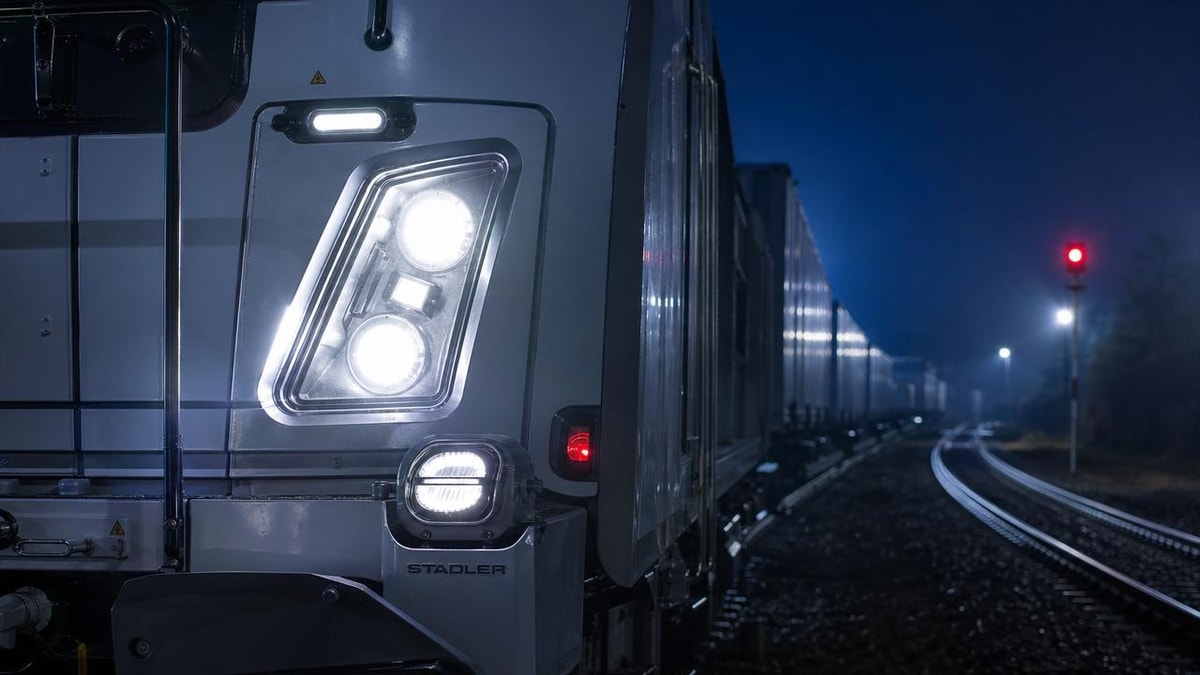
For quality control and safety managers, choosing the right locomotive lighting system OEM is not just a procurement decision—it directly affects night visibility, crew awareness, and corridor safety compliance. This article explores OEM options that improve nighttime performance, reduce failure risks, and align with demanding railway standards for freight and engineering operations.
What a Locomotive Lighting System OEM Covers
In railway operations, a locomotive lighting system OEM refers to the original equipment manufacturer responsible for designing, validating, and supplying lighting assemblies or integrated lighting architectures for locomotives and related rolling stock. This scope usually goes beyond headlights. It can include auxiliary front lamps, ditch lights, marker lights, cab lighting, instrument illumination, step lights, rear visibility lights, diagnostic interfaces, wiring harnesses, control modules, housings, optics, and environmental sealing.
For safety and quality teams, the OEM question is not simply who can supply a lamp. The practical issue is which supplier can deliver stable beam performance, electrical compatibility, rugged durability, traceable quality control, and documented compliance with railway operating conditions. In freight corridors, mining lines, port links, mountain routes, and engineering service tracks, the lighting system must remain reliable under vibration, dust, rain, thermal cycling, and long duty hours.
A well-qualified locomotive lighting system OEM therefore acts as both a component provider and a systems partner. This matters because night safety depends on the interaction between optics, power supply, mounting geometry, control logic, and maintenance accessibility—not on brightness alone.
Why the Railway Sector Is Paying More Attention to Night Lighting Performance
Across global railway-freight and engineering networks, operational expectations are rising. Longer freight corridors, mixed-traffic sections, higher axle loads, low-carbon transport expansion, and tighter regulatory oversight all increase the importance of visibility systems. As infrastructure managers and locomotive builders benchmark against UIC, EN, and AAR frameworks, lighting performance is being assessed as part of a larger safety and reliability ecosystem.
Several industry trends explain this increased focus. First, more traffic is moving through night windows to improve asset utilization. Second, modern safety programs place stronger emphasis on driver perception, track worker awareness, and obstacle recognition in degraded weather. Third, energy and maintenance strategies now favor longer-life LED systems over legacy halogen or discharge solutions, but only if those LED systems are engineered for railway vibration and electrical transients. Fourth, procurement teams increasingly require data-backed service life, ingress protection, and failure reporting rather than generic catalog claims.
For institutions such as railway authorities, EPC contractors, and locomotive integrators, the right locomotive lighting system OEM supports both frontline operations and broader asset governance. It helps align rolling stock with fleet standardization, maintenance planning, and corridor safety objectives.
Core Safety Value for Quality Control and Safety Management Teams
Night safety is influenced by many subsystems, but lighting has a direct operational role that quality and safety personnel can measure. A robust locomotive lighting system OEM contributes value in five practical ways.
Improved forward visibility: Proper beam distribution helps crews detect curves, signals, level crossings, equipment, and unexpected obstructions earlier. This is especially important on freight routes with long stopping distances.
Better conspicuity: Ditch lights, marker lights, and correctly configured front lighting help other rail users, road users, and trackside staff identify locomotive approach and direction.
Lower failure risk: OEM-grade thermal management, sealed housings, vibration-resistant connectors, and tested drivers reduce intermittent faults that can create hidden hazards.
Consistency across fleets: Standardized lighting output and maintenance parts simplify inspections, troubleshooting, and crew expectations across locomotive classes.
Compliance support: Documented testing, traceability, and design verification help operators satisfy internal audits and external regulatory reviews.
A Practical Overview of OEM Option Categories
Not every locomotive lighting system OEM offers the same depth of capability. Some supply standalone fixtures, while others provide engineered assemblies integrated with vehicle controls, communication interfaces, and maintenance diagnostics. The table below summarizes common option types and their relevance.
Technical Factors That Actually Improve Night Safety
When evaluating a locomotive lighting system OEM, safety managers should look beyond lumen claims. Night performance depends on system behavior in the field.
Optical distribution: A strong beam must also be usable. Good optical design balances distance penetration, lateral spread, glare control, and foreground illumination. On curves, yards, and maintenance zones, side visibility can be as important as centerline intensity.
Color temperature and contrast: Very cool light may look bright but can increase glare or fatigue in some environments. OEMs should justify color characteristics based on operational conditions, not marketing preference.
Vibration resistance: Heavy-haul and engineering locomotives expose lighting modules to sustained mechanical stress. Mountings, solder joints, connectors, and internal heat sinks must be validated accordingly.
Ingress and contamination control: Water, brake dust, ballast debris, insects, and cleaning chemicals can quickly degrade light output. Sealing quality and lens material selection strongly influence long-term visibility.
Thermal management: LED life is highly sensitive to heat. A competent locomotive lighting system OEM designs for ambient extremes and enclosure heat buildup to avoid rapid lumen depreciation or driver failure.
Electrical robustness: Railway power environments can involve voltage variation, surge events, and electromagnetic compatibility challenges. Lighting should remain stable without flicker, nuisance trips, or interference with control systems.
Typical Application Contexts Across Freight and Engineering Rail Operations
Different operations require different lighting priorities. A useful locomotive lighting system OEM should understand these duty profiles rather than offering a one-size-fits-all package.
How to Assess OEM Quality Beyond Product Brochures
For quality control teams, the strongest assessment method combines technical review, production assurance, and service evidence. Ask whether the locomotive lighting system OEM can provide documented validation for vibration, ingress protection, temperature endurance, photometric performance, EMC behavior, and lifecycle testing. Traceability of LEDs, drivers, seals, lenses, and connectors also matters, especially for fleet-critical components.
Factory process discipline is equally important. Review incoming inspection controls, calibration practice, burn-in or functional testing, nonconformance handling, and change management. A small design change in a driver board or sealing gasket can alter field performance significantly. Safety managers should therefore prefer OEMs with formal engineering change notification procedures and clear spare-part continuity policies.
After-sales capability should not be treated as secondary. In railway service, downtime costs often exceed the purchase price difference between suppliers. An OEM that can support root-cause analysis, replacement lead times, and retrofit compatibility creates measurable operational resilience.
Common Risks When OEM Selection Is Too Narrow
One common mistake is selecting by brightness alone. A lamp with poor optics, weak sealing, or unstable electronics may appear attractive in demonstrations yet underperform in rain, dust, or vibration. Another risk is ignoring system integration. Even a strong lamp can fail to deliver safe results if mounting position, wiring protection, switching logic, and maintenance access are poorly addressed.
Some operators also underestimate environmental aging. Lens yellowing, condensation, connector corrosion, and thermal stress can reduce output gradually, creating a hidden safety decline. This is why a locomotive lighting system OEM should be evaluated on sustained performance over time, not only initial acceptance tests. For mixed fleets, fragmented sourcing is another concern. Too many incompatible lighting variants complicate inspections, spares inventory, training, and fault diagnosis.
Practical Recommendations for Implementation
A structured implementation approach helps quality and safety managers convert OEM selection into real nighttime safety improvement. Start by defining the operating profile: speed range, corridor geometry, weather exposure, maintenance intervals, and regulatory obligations. Then map lighting functions by risk priority, separating forward detection needs from conspicuity and crew-support functions.
Next, request application-specific evidence from each locomotive lighting system OEM. Test reports should align with your duty conditions, not generic transport claims. If possible, include pilot installations and night runs with structured feedback from drivers, maintainers, and safety auditors. Field validation often reveals issues in glare, beam angle, contamination sensitivity, or connector resilience that lab documents alone do not capture.
Finally, make lifecycle governance part of the decision. Establish inspection criteria for lens condition, intensity degradation, seal failure, and electrical faults. Define replacement thresholds, spare stocking rules, and failure reporting loops. This turns the OEM relationship into a controlled safety program rather than a one-time hardware purchase.
Conclusion and Next-Step Focus
A capable locomotive lighting system OEM can materially improve night safety by combining dependable optics, railway-grade durability, electrical stability, and documented compliance support. For quality control and safety management professionals, the best choice is usually the OEM that understands operating reality across freight and engineering rail environments, not simply the one offering the brightest specification sheet.
As rail networks expand capacity and demand higher reliability, lighting should be reviewed as a strategic safety subsystem. If your organization is assessing new locomotives, retrofit programs, or corridor standardization, start with a technical requirement set that links visibility performance to real operating risks. That is the most effective way to identify a locomotive lighting system OEM that will support safer nighttime operations over the full asset lifecycle.
Industry Briefing
Get the top 5 industry headlines delivered to your inbox every morning.