Is Railway Technical Intelligence Worth the Cost?

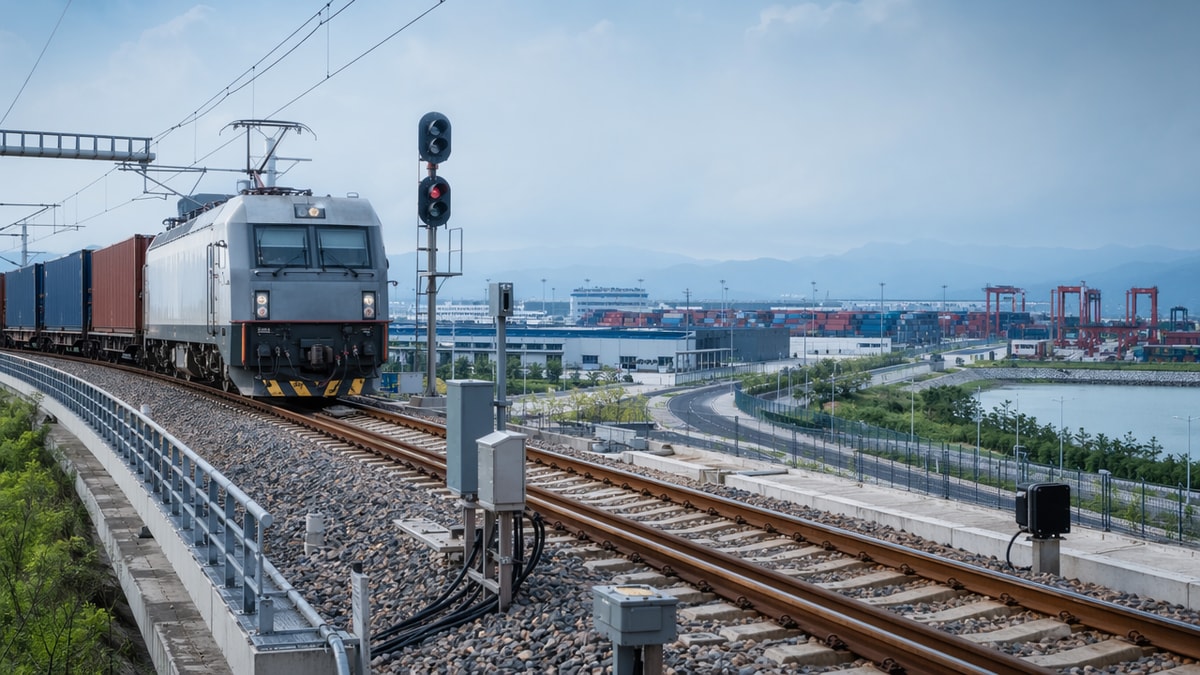
As rail networks expand across intercontinental freight corridors, the value of railway technical intelligence goes far beyond data collection. For EPC contractors, locomotive manufacturers, and decision-makers, it supports safer rail freight systems, stronger railway signaling and rail communication, and clearer alignment with railway standards, railway regulatory requirements, and railway policy—turning complex technical evaluation into more confident investment and operational decisions.
What are you really paying for in railway technical intelligence?
For many buyers, the first reaction to railway technical intelligence is to compare subscription or consulting fees with a visible line item in the project budget. That view is too narrow. In rail freight and engineering, the real cost question is whether decision-makers can reduce specification errors, avoid compliance gaps, and shorten evaluation cycles from 8–12 weeks to a more manageable 3–6 weeks.
Railway technical intelligence becomes valuable when a project involves multiple systems at once: heavy-haul locomotives, rolling stock, track maintenance equipment, CBTC or ETCS interfaces, GSM-R communication, and port-rail integration. In that environment, fragmented data creates expensive blind spots. A low-cost information source that omits regulatory context may lead to higher lifecycle cost than a more complete intelligence platform.
G-RFE is positioned for this exact problem. Its value is not limited to raw specifications. It connects hardware benchmarks, railway signaling logic, rail communication architecture, and international standards such as UIC, EN, and AAR. For technical assessment personnel and project leaders, that integrated view helps turn scattered documents into usable procurement intelligence.
The cost of missing context is often higher than the price of insight
A locomotive data sheet may look complete, yet still fail to answer whether axle load, braking interface, train control compatibility, or maintenance windows fit the target corridor. In rail projects, one unresolved interface issue can delay engineering review by 2–4 weeks. One misunderstood compliance requirement can trigger redesign, resubmission, or supplier replacement during tender evaluation.
This is why railway technical intelligence should be assessed as a risk-control tool rather than a content purchase. Information researchers need trustworthy references. Technical evaluators need cross-standard interpretation. Quality and safety managers need traceable criteria. Enterprise decision-makers need to know whether the intelligence will materially improve project confidence before CAPEX is locked.
- It reduces time spent comparing inconsistent supplier claims across 3–5 bidding packages.
- It clarifies which railway standards and railway regulatory requirements apply by corridor, asset type, and interface level.
- It supports earlier identification of safety, maintenance, and interoperability risks before procurement is finalized.
When does railway technical intelligence clearly justify the budget?
Not every rail project requires the same depth of intelligence support. A straightforward component replacement may only need limited specification validation. But multi-country freight corridor development, signaling upgrades, locomotive fleet assessment, or intermodal rail-port planning usually demand much deeper analysis. The more interfaces, compliance layers, and lifecycle variables involved, the stronger the business case becomes.
G-RFE’s five-pillar structure is useful because it mirrors how railway investment decisions are actually made. Procurement teams rarely evaluate locomotives in isolation. They also need to understand track maintenance constraints, signaling compatibility, rail communication frameworks, and the performance expectations of intermodal operations. That broad scope matters when projects run across 2–3 technical jurisdictions or several contractor packages.
For quality control and safety management teams, railway technical intelligence becomes especially worthwhile when the project involves safety-critical systems. Reviewing a rolling stock procurement without understanding train control interfaces, braking logic, or corridor operating standards can expose the project to preventable acceptance disputes during factory testing, site commissioning, or early operation.
Typical situations where the return is strongest
The table below shows where technical intelligence usually has the highest decision value. The point is not to generalize every project, but to show how complexity, compliance pressure, and integration risk influence whether the cost is justified.
In practice, the strongest return appears where procurement mistakes are expensive to reverse. If your project includes 4 system interfaces, multiple approval stages, and a delivery window of 6–12 months, better railway technical intelligence can save more value in avoided rework and delay than it costs in direct fees.
A simple decision test
If your team must answer at least 3 of these 5 questions, investing in railway technical intelligence is usually justified: Which standards apply? Which supplier claims are comparable? Which interfaces create compliance risk? What maintenance assumptions drive lifecycle cost? What policy or corridor requirements could affect acceptance?
How to compare cost versus operational value before you commit
The right evaluation method is not “cheap versus expensive.” It is “visible cost versus prevented loss.” Railway technical intelligence may look discretionary in early budgeting, but it often protects much larger cost centers: engineering redesign, tender ambiguity, spare-parts mismatch, late-stage compliance correction, and training gaps. For project managers, this comparison should be made before the RFQ is finalized, not after problems appear.
A practical review should separate short-term spending from medium-term operating impact. Some intelligence inputs support immediate supplier screening within 7–15 days. Others shape fleet strategy, signaling roadmap, or maintenance planning over 12–36 months. Treating all intelligence as a one-time document cost misses its planning value.
The following comparison helps decision-makers judge whether railway technical intelligence is worth the cost in their own procurement environment. It is especially useful for enterprises balancing budget pressure, tight implementation schedules, and strict railway regulatory requirements.
The operational value is usually highest when intelligence helps a team avoid one of four common losses: delayed approval, wrong configuration, low maintainability, or non-aligned signaling and communication architecture. Even where direct savings are hard to quantify in advance, the reduction of uncertainty is often decisive in large freight and engineering programs.
Three questions procurement teams should ask
- Does the intelligence source compare technical parameters in a way that supports real tender decisions, not just generic industry reading?
- Does it connect railway standards, railway policy, and asset performance, or does it treat them as separate topics?
- Can it help different stakeholders—engineering, procurement, safety, and management—work from the same decision framework within 2–3 review rounds?
What should technical evaluators and decision-makers check before buying?
Before paying for any railway technical intelligence resource, buyers should review five areas: coverage scope, standards depth, update frequency, usability for decision-making, and relevance to the project stage. A platform may be rich in data but weak in engineering interpretation. Another may explain standards well but lack practical benchmark comparisons for locomotives, wagons, maintenance machinery, or rail-port systems.
G-RFE’s advantage is that it addresses both technical hardware and system-level context. Its coverage across locomotives, rolling stock, track maintenance, signaling, communication, and intermodal operations is especially relevant when teams need more than a catalog view. For enterprise decision-makers, that means fewer handoff losses between research, evaluation, and project execution functions.
A disciplined procurement review should define the use case first. Are you screening suppliers in 10 business days? Preparing a feasibility package over 4–8 weeks? Or building a long-range technology map for future corridor investment? The answer changes what “worth the cost” means. A good intelligence partner should be useful across at least 3 decision layers: planning, technical comparison, and compliance review.
Procurement checklist for railway technical intelligence
- Confirm whether the source covers your asset category in depth, such as heavy-haul locomotives, ETCS-related systems, or specialized rail engineering machinery.
- Check if benchmark references are tied to recognized frameworks such as UIC, EN, and AAR, rather than broad marketing claims.
- Review how the platform handles railway signaling, rail communication, and safety interfaces, especially if your project spans several contractors.
- Ask whether outputs can support technical memos, tender clarification, vendor comparison, and management reporting in a practical format.
- Evaluate update cadence. In policy-sensitive or cross-border rail projects, even a 1–2 quarter delay in standards interpretation can weaken decisions.
Common buying mistakes
One common mistake is choosing based only on price per report or access fee. Another is assuming any railway database can answer engineering and compliance questions equally well. A third is buying too late, after the shortlist has been fixed. In most rail procurement workflows, the best time to use technical intelligence is during scope definition, prequalification, and technical bid comparison.
How do standards, compliance, and lifecycle risk affect the value?
In railway projects, cost is never just about purchase price. Compliance effort, certification pathways, interoperability checks, training burden, maintenance planning, and spare strategy all influence the true economic picture. This is why railway technical intelligence often matters most in environments with heavy regulatory review or mixed legacy systems.
For quality control and safety managers, the biggest concern is often traceability. Which requirement came from operator rules? Which came from UIC, EN, or AAR references? Which came from corridor-specific railway policy? Without a structured intelligence source, teams may spend 2–5 review cycles reconciling these layers manually, increasing delay risk and document inconsistency.
Lifecycle risk is equally important. A lower-cost locomotive or signaling component may appear attractive until maintenance intervals, training complexity, software compatibility, or track condition sensitivity are considered. Railway technical intelligence helps evaluate whether the selected option remains workable over 5–15 years of operation, not just at purchase.
Where intelligence supports compliance and lifecycle control
The value is strongest when teams must balance at least four dimensions at once: technical fit, standards alignment, maintenance practicality, and implementation timing. G-RFE’s integrated structure is relevant here because it connects high-performance railway assets with the signaling and safety protocols that shape real-world acceptance and operation.
- For rolling stock projects, it helps match performance claims with route conditions, maintenance assumptions, and corridor operating rules.
- For signaling and communication projects, it helps clarify interoperability constraints, data exchange expectations, and phased migration issues.
- For EPC delivery teams, it supports clearer coordination across civil, track, systems, and operations stakeholders during multi-stage review.
A practical rule for high-stakes projects
If the project must pass more than 3 approval gates, involves more than 1 safety-critical interface, or requires coordination between national operator rules and international standards, the probability that structured railway technical intelligence will pay back its cost rises significantly. In these cases, uncertainty itself becomes a budget risk.
FAQ: common questions before investing in railway technical intelligence
Is railway technical intelligence only useful for large cross-border projects?
No. Cross-border freight corridors often show the clearest return because standards and policy alignment are more complex, but domestic projects can benefit as well. Even a single-country locomotive, signaling, or track maintenance project may involve 3–4 competing suppliers, several maintenance assumptions, and strict safety review. In those cases, reliable technical intelligence still improves comparison quality.
What is the most important buying criterion?
The most important criterion is decision usefulness. Ask whether the resource helps your team make better choices about railway standards, rail communication, interoperability, maintenance, and procurement timing. A lower-cost source is not better if it leaves engineering, quality, and management teams using different assumptions during the same evaluation cycle.
How quickly should teams use technical intelligence in a project?
As early as possible. The best window is usually before prequalification or during early scope definition. If teams wait until contract negotiation or late technical clarification, many assumptions are already fixed. Early use within the first 2–4 weeks of project planning usually creates the strongest leverage on specification quality and supplier screening.
Can it help with both procurement and quality assurance?
Yes, if the intelligence source connects specifications with standards and acceptance logic. Procurement teams need comparison clarity. Quality and safety teams need traceable requirements and inspection criteria. A strong platform can support both by translating complex technical data into consistent evaluation points for tender review, FAT preparation, and implementation governance.
Why choose us for railway technical intelligence and next-step support?
G-RFE is built for organizations that cannot afford fragmented rail market intelligence. Our focus goes beyond isolated asset data. We help connect heavy-haul locomotives and rolling stock, rail infrastructure and track maintenance, smart signaling and communication, intermodal rail-port systems, and specialized engineering machinery into a practical decision framework shaped by UIC, EN, and AAR references.
This matters for information researchers who need credible technical context, for evaluators comparing complex supplier offers, for project managers handling schedule pressure, and for safety or quality leaders reviewing compliance and interface risk. Instead of forcing teams to merge separate technical, regulatory, and market inputs on their own, we support a more coherent basis for action.
If you are assessing whether railway technical intelligence is worth the cost for your next project, contact us with your target application and review scope. We can support parameter confirmation, product and system selection, comparison of locomotive or signaling options, expected delivery-cycle considerations, standards and certification requirements, corridor-specific compliance questions, and tailored intelligence support for tender preparation or internal decision review.
- Request support for parameter validation across rolling stock, signaling, communication, or maintenance equipment.
- Discuss selection logic for projects with 2–3 competing technical routes or mixed-standard environments.
- Ask about delivery planning, standards interpretation, documentation scope, and quotation alignment before formal procurement begins.
A useful conversation starts with specifics. Share your project phase, asset category, standards concerns, and decision deadline. We can help you determine whether structured railway technical intelligence will reduce uncertainty, improve procurement confidence, and better align your engineering choices with operational and regulatory reality.
- rolling stock
- rail infrastructure
- track maintenance
- smart signaling
- CBTC
- ETCS
- intermodal rail-port
- rail engineering machinery
- GSM-R
- railway policy
- locomotive manufacturers
- EPC contractors
- intercontinental freight corridors
- railway signaling
- rail communication
- rail freight systems
- railway technical intelligence
- railway standards
- railway regulatory
Industry Briefing
Get the top 5 industry headlines delivered to your inbox every morning.
- rolling stock
- rail infrastructure
- track maintenance
- smart signaling
- CBTC
- ETCS
- intermodal rail-port
- rail engineering machinery
- GSM-R
- railway policy
- locomotive manufacturers
- EPC contractors
- intercontinental freight corridors
- railway signaling
- rail communication
- rail freight systems
- railway technical intelligence
- railway standards
- railway regulatory