What Railway Signaling Gaps Cause Safety Delays?

Across intercontinental freight corridors, safety delays often trace back to gaps in railway signaling, rail communication, and uneven railway standards. For decision-makers, EPC contractors, and locomotive manufacturers, understanding how railway regulatory frameworks and railway policy shape rail freight systems is essential. This introduction draws on railway technical intelligence to reveal where signaling failures emerge and why they continue to disrupt operational safety and network efficiency.
In heavy-haul and cross-border rail freight, a signaling gap is rarely a single hardware defect. More often, it is a systems-level mismatch between interlocking logic, train protection architecture, communication reliability, maintenance discipline, and operating rules across multiple jurisdictions. Even a delay of 20 to 40 minutes at one control boundary can cascade into terminal congestion, wagon imbalance, crew rescheduling, and lower corridor throughput.
For technical evaluators, safety managers, and project leaders, the practical question is not whether signaling matters, but which signaling gaps produce the highest safety risk and the most operational delay. This article maps the most common failure points, explains how standards and policy affect them, and outlines how organizations can reduce risk through better engineering, integration planning, and verification.
Where Safety Delays Begin in Modern Railway Signaling
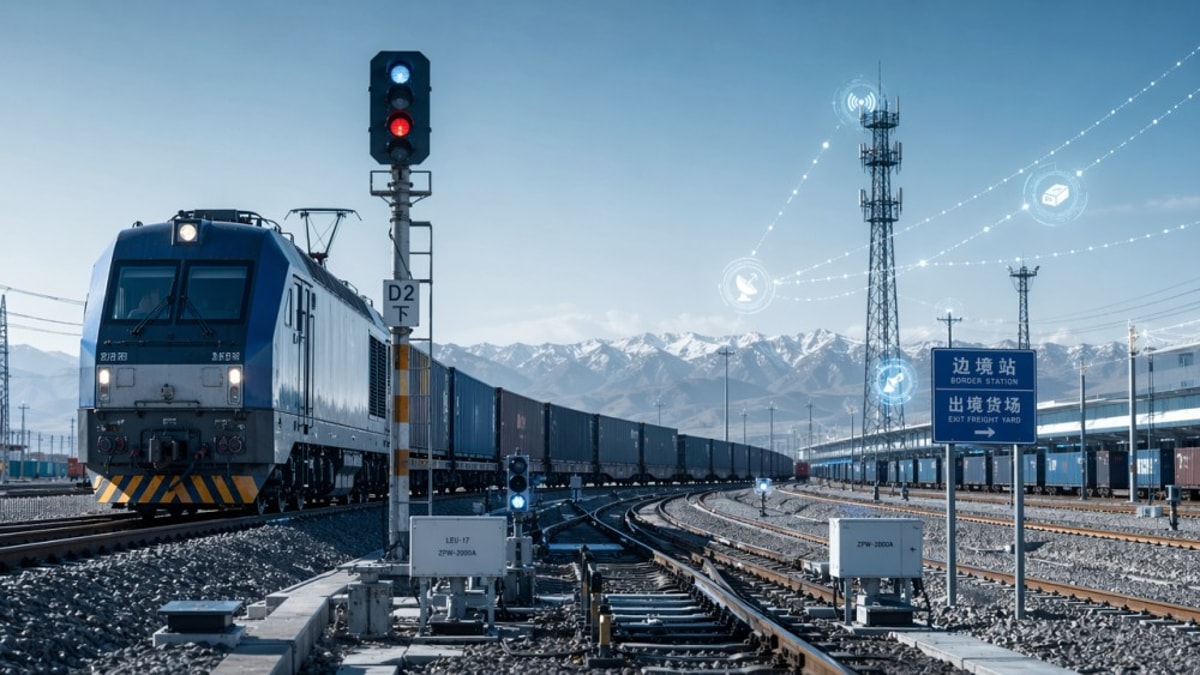
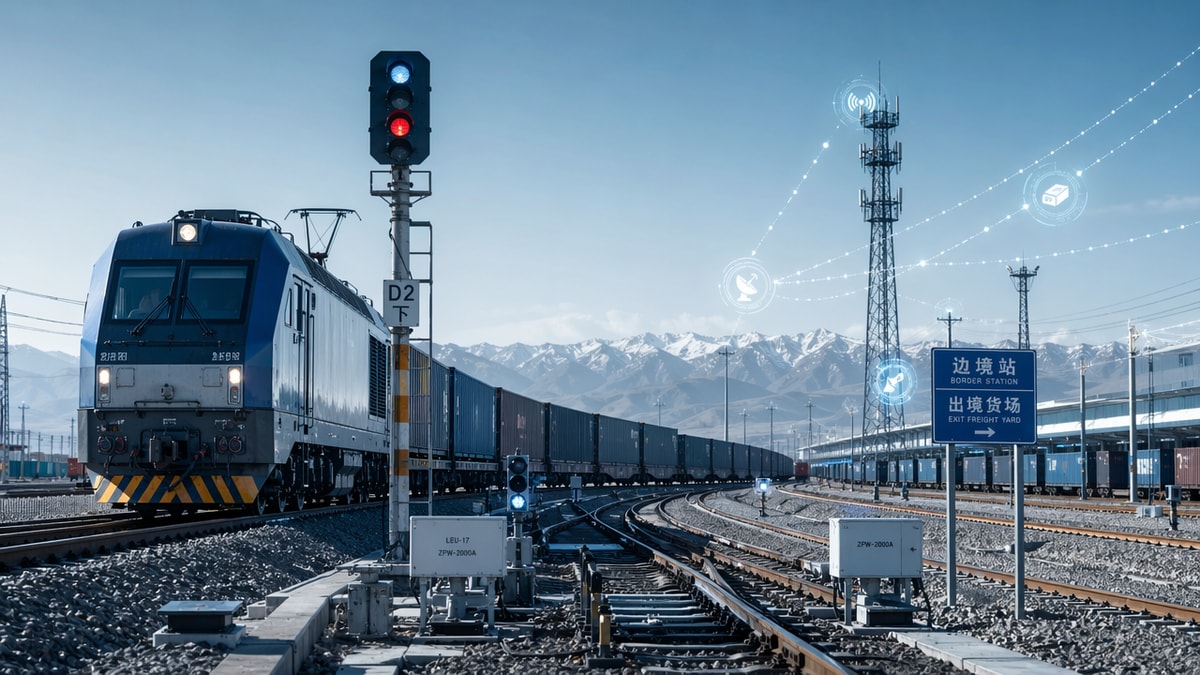
In freight rail operations, signaling delays often begin at interfaces rather than at standalone assets. A line may use ETCS-compatible onboard systems, but if legacy interlockings, axle counters, radio links, or dispatching software are not fully synchronized, trains may receive restrictive movement authorities more often than necessary. On mixed-traffic corridors, that can reduce average line speed by 10% to 25% during peak operating windows.
Another common source is degraded communication between train and wayside systems. In corridors that rely on GSM-R or equivalent digital rail communication, intermittent signal loss, delayed packet exchange, or coverage shadow zones in tunnels and mountain sections can trigger fallback rules. These fallback rules are designed for safety, but they often impose lower speeds, longer headways, and manual confirmation steps that slow dispatching.
Trackside equipment condition is equally important. Signal heads, point machines, balises, track circuits, and axle counters do not fail at the same rate, but reliability gaps appear when inspection cycles exceed normal thresholds. In many networks, preventive inspections are scheduled every 30, 60, or 90 days depending on asset criticality. When these cycles slip, false occupancy detection and point position uncertainty become more likely, both of which generate immediate safety delays.
Cross-border freight makes the issue more complex. Different national rules for braking curves, train integrity verification, and degraded mode operation can force locomotives and dispatch centers into conservative operating modes. The delay may look small at one border section, yet over a 1,500 km to 3,000 km corridor, repeated signaling handovers can materially reduce slot reliability.
Typical signaling gaps that trigger delay events
- Incomplete interface integration between interlocking, traffic management, and onboard train protection.
- Radio communication dead zones or unstable data transmission on long-haul freight sections.
- Asset condition drift caused by inspection intervals extending beyond planned 30–90 day maintenance windows.
- Different operational rules between adjacent infrastructure managers, especially at border transfer points.
Why these gaps affect freight more than passenger services
Freight trains typically operate with greater mass, longer braking distances, and wider variation in wagon composition. A 1,800 m heavy-haul consist behaves very differently from a regional passenger unit. When signaling logic is conservative or train data are incomplete, dispatchers must add headway buffers. In practical terms, a corridor designed for 12 trains per hour may fall to 8 or 9 under degraded signaling conditions.
Freight also depends heavily on timetable adherence at ports, inland terminals, and intermodal yards. A single signaling-related hold can miss a crane window, locomotive exchange, or customs slot. That is why B2B operators increasingly assess signaling performance not only by safety integrity, but also by delay minutes per 100 train-km and recovery time after communication failure.
The Most Critical Technical Gaps Across Infrastructure, Rolling Stock, and Control Systems
Not all signaling weaknesses have the same operational impact. For decision-makers, prioritization matters. The most critical gaps usually appear in four layers: field equipment reliability, communication continuity, onboard-to-wayside compatibility, and software validation. If any one layer is weak, safety margins increase while network fluidity declines.
The table below summarizes the main technical gaps that frequently lead to safety delays in rail freight systems, especially on intercontinental and mixed-standard corridors.
The key takeaway is that most delay-causing signaling problems are integrative rather than isolated. Replacing one asset without validating adjacent systems often produces only partial improvement. For freight corridors moving high axle loads and mixed consist types, end-to-end validation delivers better results than component-by-component replacement.
H4-level review areas for project teams
1. Field asset performance thresholds
Project teams should define acceptable failure and response thresholds for critical equipment. For example, point machine fault response times may need to stay within 15 to 30 minutes on trunk sections, while fault confirmation data should be visible in centralized maintenance systems in near real time. Without threshold discipline, minor anomalies become recurring service delays.
2. Communication resilience under freight operating conditions
Long, heavy trains produce different dynamics for radio continuity, braking supervision, and route occupation timing. Testing must reflect actual freight conditions, including tunnel sections, port approaches, and marshalling zones. A system validated only under lighter traffic or shorter train profiles may pass formal checks but fail under operational stress.
3. Software and configuration consistency
A seemingly small software version mismatch between onboard units and lineside logic can trigger authority rejection or restrictive movement. Configuration management should include version control, route data verification, and a documented rollback path. For major corridor upgrades, many operators use a phased validation plan over 3 stages: lab simulation, pilot section testing, and live supervised commissioning.
How Regulatory Frameworks and Uneven Standards Create Hidden Delay Risk
Engineering gaps do not exist in isolation from railway policy. Regulatory frameworks define interoperability obligations, testing depth, acceptance procedures, maintenance documentation, and degraded mode operating rules. When neighboring networks apply different interpretations of standards such as UIC guidance, EN requirements, or national safety rules, freight operators face hidden delay risk even when the hardware appears compliant.
A common example is cross-acceptance. A locomotive or onboard signaling package may be technically suitable for several networks, yet administrative acceptance can still take 6 to 18 months if route-specific validation, software documentation, language requirements, or operational rulebooks differ. During that period, operators may need additional locomotive swaps, pilot staff, or speed restrictions, all of which reduce corridor efficiency.
Maintenance standards can also vary. One infrastructure manager may require tighter inspection intervals on axle counters and signal power supply, while another allows longer cycles based on lower density. When a freight service crosses both networks, the operational baseline is often set by the more restrictive rule set. That is appropriate for safety, but it can expose weak asset management on the less demanding side.
For EPC contractors and procurement leaders, the policy lesson is clear: signaling investment should be evaluated against the regulatory envelope of the whole corridor, not just one national segment. A technically advanced subsystem brings limited value if approval workflows, fallback rules, and maintenance governance are not aligned across the route.
Comparison of policy-related delay drivers
The following comparison helps identify why compliant projects still experience safety delays after commissioning.
The practical conclusion is that regulation is not merely an approval topic. It directly affects operating speed, headway recovery, and maintainability. Institutions such as G-RFE add value by connecting engineering intelligence with standards interpretation, allowing project teams to anticipate delay risks before they appear in service.
A Practical Evaluation Framework for Buyers, Safety Teams, and Project Managers
When organizations assess railway signaling for new corridors, retrofits, or fleet expansion, they need a practical framework that links technical specifications to operational outcomes. In B2B procurement, the wrong question is often “Which signaling product is best?” The right question is “Which signaling architecture best controls delay risk across our route, train type, and regulatory environment?”
A useful evaluation model includes at least five dimensions: interoperability, reliability, maintainability, degraded mode performance, and lifecycle governance. Each dimension should have measurable review points. For instance, communication availability targets, fault response times, software update procedures, and spare-part lead times should all be reviewed before award, not after installation.
Technical assessment teams should also classify lines by operational stress. A mining export corridor with 25-tonne axle loads and long blocks requires different signaling resilience than a mixed regional network. Likewise, an intermodal route with dense terminal interfaces may prioritize route-setting speed and data integration over absolute top speed. One template cannot fit all rail freight systems.
The checklist below can help structure early-stage screening and supplier dialogue.
Five-point procurement and safety checklist
- Confirm interoperability scope: define which onboard systems, interlockings, radio platforms, and control centers must exchange data without manual workaround.
- Review reliability assumptions: check design availability targets, maintenance intervals, redundancy logic, and fault isolation behavior under real freight duty cycles.
- Test degraded mode procedures: verify how the system behaves during radio loss, point failure, balise error, or occupancy ambiguity, and how long recovery normally takes.
- Assess lifecycle support: examine spare inventory strategy, remote diagnostics, software patch governance, and technician training over a 5–15 year horizon.
- Map corridor compliance: align technical design with the operating rules, approval requirements, and maintenance records expected by each infrastructure authority.
H4-level implementation guidance
Start with corridor segmentation
Break the route into logical segments such as port access, mountain sections, urban bottlenecks, border handover zones, and heavy-haul trunk stretches. Each segment has different signaling stress factors. This segmentation improves risk budgeting and avoids under-engineering the most delay-sensitive parts of the network.
Use pilot validation before full deployment
A 10 km to 50 km pilot section can reveal integration issues that are not visible in factory tests. Pilot operation should include real locomotive classes, actual wagon formations, and at least several weeks of monitored traffic. For decision-makers, this reduces the probability of expensive late-stage reconfiguration.
Set service-level metrics early
Contracts and project plans should define measurable service criteria such as response time to critical failures, acceptable communication outage duration, and maximum backlog for software issue closure. Clear metrics convert signaling quality from an abstract engineering concept into a manageable commercial requirement.
Implementation Priorities to Reduce Delay Risk and Improve Corridor Safety
Reducing signaling-related safety delays requires more than capital expenditure. The strongest results usually come from coordinated action across engineering, operations, maintenance, and governance. For large freight corridors, organizations typically see the best improvement when they combine infrastructure upgrades with operating rule harmonization and digital fault visibility.
The first priority is targeted modernization rather than blanket replacement. If data show that 70% of delay minutes concentrate in 15% of route sections, investment should focus on those bottlenecks first. Typical high-risk zones include junctions, terminal approaches, border stations, tunnels, and areas with repeated communication dropouts.
The second priority is predictive maintenance. By collecting fault logs, condition data, and recurrence patterns for points, axle counters, power supply units, and radio equipment, infrastructure managers can intervene before safety delays occur. Even a basic condition ranking model with 3 asset criticality levels can improve planning and reduce emergency callouts.
The third priority is operational rehearsal. Degraded mode performance depends not only on technology, but also on staff readiness. Dispatcher and maintenance drills every 6 months, combined with cross-border operating simulations, can shorten recovery time and reduce procedural confusion during real incidents.
Recommended implementation sequence
- Phase 1, 0–3 months: collect delay logs, identify top fault categories, and map corridor signaling interfaces.
- Phase 2, 3–9 months: address communication weak zones, high-failure field assets, and software configuration inconsistencies.
- Phase 3, 9–18 months: expand predictive maintenance, harmonize degraded mode procedures, and validate cross-border acceptance pathways.
- Phase 4, ongoing: monitor KPIs such as delay minutes per 100 train-km, mean time to recovery, and recurring fault concentration by section.
FAQ for technical and procurement teams
How can buyers tell whether a signaling issue is a product problem or an integration problem?
Look at fault location and repeatability. If failures cluster around interface boundaries, software transitions, or specific route segments, integration is often the root cause. If the same device type fails across multiple locations under similar conditions, a component-level issue is more likely. Both require different corrective actions and contract structures.
What is a realistic review cycle for signaling maintenance in freight corridors?
There is no single cycle for all assets, but critical components are commonly reviewed on 30-day, 60-day, or 90-day intervals, with condition-based checks in between. High-stress environments such as port entrances, dusty mining routes, and extreme-weather sections usually need tighter monitoring.
Which metrics matter most for decision-makers?
Three useful metrics are delay minutes linked to signaling faults, mean time to recover from critical signaling failures, and percentage of route operating time under restrictive mode. These indicators connect safety engineering with commercial performance and are easier to compare across projects than isolated equipment specifications.
Railway signaling gaps cause safety delays when communication, standards, asset condition, and operating rules fail to work as one coordinated system. For freight corridors carrying long, heavy, and time-sensitive traffic, the greatest risks usually appear at interfaces: between onboard and wayside systems, between neighboring regulatory regimes, and between maintenance planning and actual asset behavior.
Organizations that want fewer disruptions should evaluate signaling through a corridor-wide lens, combining technical audits, regulatory mapping, phased validation, and measurable service criteria. G-RFE supports this approach by connecting railway technical intelligence with practical decision support across rolling stock, infrastructure, smart signaling, and cross-border freight operations.
If you are planning a retrofit, corridor upgrade, fleet compatibility review, or signaling risk assessment, now is the right time to build a more resilient evaluation framework. Contact us to discuss your project conditions, request a tailored technical review, or explore more railway signaling and safety solutions for high-performance freight networks.
Industry Briefing
Get the top 5 industry headlines delivered to your inbox every morning.