
Industrial environmental news: what manufacturers must track

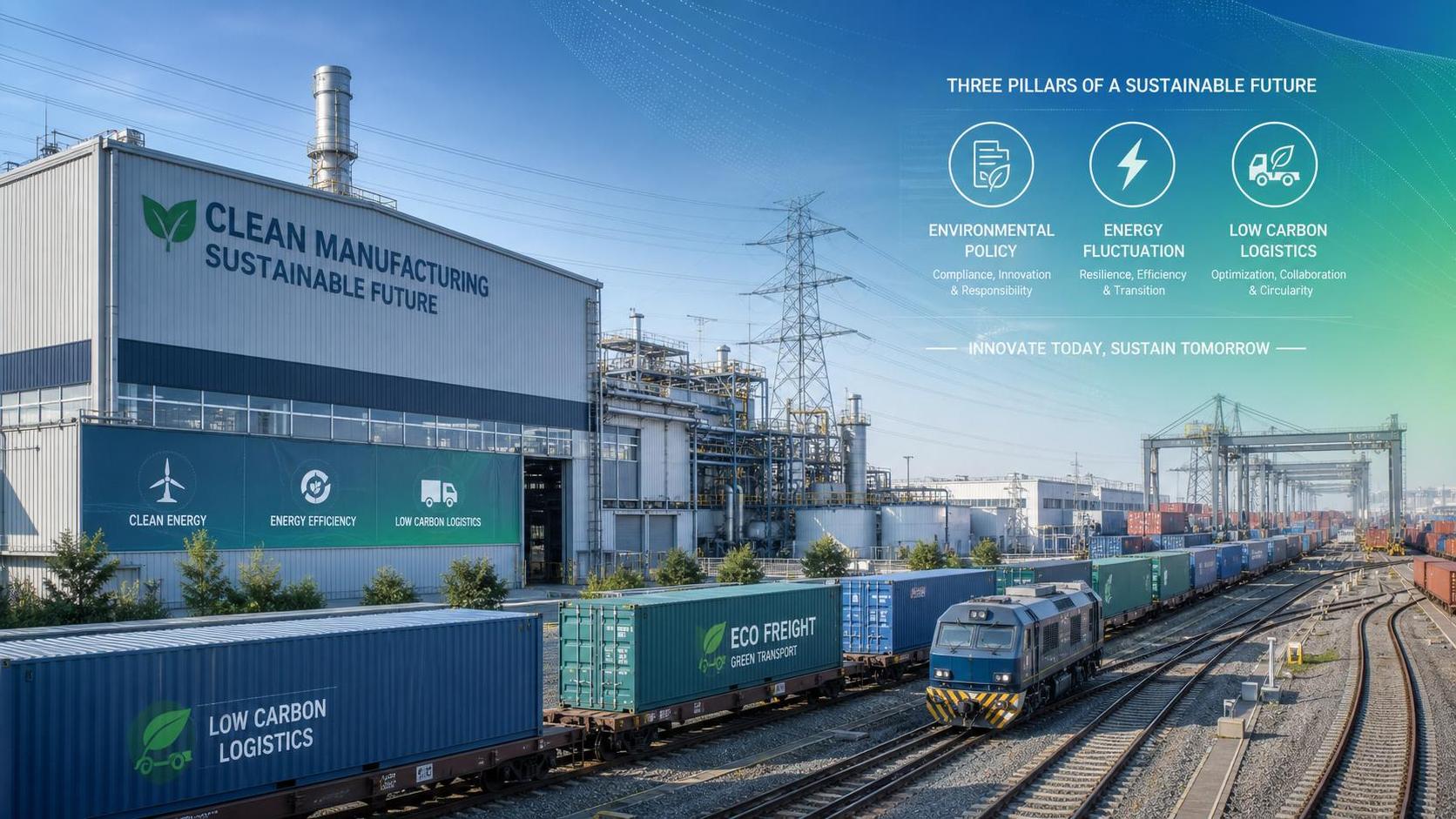
Industrial environmental news is moving from compliance topic to operating signal
Industrial environmental news for manufacturing industry now shapes operating decisions far beyond basic permit management.
Recent policy updates, carbon reporting rules, water constraints, and energy volatility are changing how industrial assets are evaluated.
That shift matters across heavy industry, transport equipment, process manufacturing, and infrastructure-linked supply chains.
For organizations tracking long-cycle assets, industrial environmental news for manufacturing industry is now an early warning system.
It helps reveal where compliance costs may rise, where procurement standards may tighten, and where logistics models may need to adjust.
This is especially visible in rail-linked manufacturing ecosystems, where emissions policy, land transport planning, and engineering standards increasingly intersect.
Within that context, the G-RFE perspective is useful because it connects freight hardware, signaling systems, infrastructure performance, and regulatory change in one frame.
The result is a clearer view of why environmental developments are no longer peripheral news items.
The signals are becoming clearer across policy, energy, and logistics
From recent market movement, the most important change is not one single regulation.
It is the accumulation of smaller environmental signals that are starting to reinforce each other.
Industrial environmental news for manufacturing industry increasingly centers on five connected developments.
- Carbon disclosure is moving deeper into supply chains, not stopping at direct plant emissions.
- Electricity pricing and grid constraints are affecting production planning and equipment choices.
- Water stress is becoming a site-selection issue in several industrial regions.
- Air-quality rules are tightening around industrial corridors and freight interfaces.
- Rail and intermodal decarbonization policies are influencing freight routing and infrastructure investment.
These shifts do not remain inside environmental departments.
They reach capital expenditure models, supplier qualification, maintenance cycles, and even contract language.
In industrial corridors served by rail, the interaction is sharper.
Lower-carbon freight policies can improve long-haul efficiency, yet they also raise new performance and reporting expectations.
Why this change is accelerating now
The drivers behind industrial environmental news for manufacturing industry are practical, not abstract.
Governments are under pressure to align industrial output with climate targets and trade competitiveness.
At the same time, operators want stable energy costs and more resilient transport networks.
That combination is pushing environmental expectations into day-to-day operating frameworks.
More notably, the change is reinforced by technical standardization.
In rail engineering and freight systems, benchmarks tied to UIC, EN, and AAR increasingly sit beside environmental performance expectations.
That creates a stronger link between engineering decisions and environmental exposure.
The impact is spreading beyond the factory gate
Industrial environmental news for manufacturing industry now affects several business layers at once.
The obvious impact is compliance cost, but the more durable effect is operational redesign.
Asset planning is becoming more conditional
Equipment with long service lives faces a new question: will it still fit future emissions and energy rules?
That is highly relevant for locomotives, rolling stock, maintenance machinery, and industrial power systems.
A lower upfront cost can become misleading if retrofit obligations arrive earlier than expected.
Supply chains are being judged on traceability
Environmental scrutiny is moving toward data credibility.
Material origin, transport mode, fuel intensity, and maintenance records can influence qualification outcomes.
For intermodal systems, that means rail-port interfaces are no longer just throughput questions.
They also become carbon-accounting nodes.
Network resilience is now part of environmental assessment
Extreme weather, heat stress, water restrictions, and grid instability are entering environmental reporting conversations.
This matters because disruption often appears first as a technical issue, then becomes a compliance or disclosure issue later.
Rail-linked industries are seeing a distinct version of the shift
The rail sector offers a useful lens for reading industrial environmental news for manufacturing industry.
It sits at the intersection of heavy engineering, public infrastructure, cross-border logistics, and energy transition.
That is why G-RFE’s five-pillar framework reflects broader industrial change so well.
- Heavy-haul locomotives face pressure around fuel efficiency, lifecycle emissions, and upgrade paths.
- Track infrastructure planning increasingly includes climate durability and lower-impact maintenance methods.
- Smart signaling supports traffic optimization, which can reduce idle time and energy waste.
- Intermodal rail-port systems gain relevance where road congestion and carbon exposure are rising.
- Specialized engineering machinery is being assessed for emissions, noise, and resource efficiency.
What stands out here is not just greener technology.
It is the growing expectation that environmental performance should be measurable, comparable, and linked to recognized standards.
That same expectation is spreading into adjacent manufacturing sectors.
What deserves closer monitoring over the next planning cycle
Not every headline in industrial environmental news for manufacturing industry carries the same decision value.
The stronger signals usually share one feature: they can alter cost, access, timing, or technical specification.
The following areas are worth tracking more closely.
- Updates to carbon border rules and product-level emissions reporting requirements
- Regional electricity market reform that changes operating-hour economics
- Water-use restrictions affecting industrial parks, metal processing, and cooling-intensive facilities
- Freight decarbonization incentives that shift volume toward rail or intermodal corridors
- Standard revisions that connect environmental metrics with equipment certification or tender eligibility
In practical terms, this means environmental monitoring should sit closer to technical intelligence.
A policy note becomes more valuable when it is read together with asset specifications, route design, and maintenance data.
A useful response is to connect policy watching with engineering choices
The best response to industrial environmental news for manufacturing industry is rarely a standalone sustainability initiative.
A more effective approach is to build a decision process that links environmental updates to actual operating levers.
That process can remain practical and phased.
- Map which environmental rules affect assets, suppliers, freight routes, and project approvals.
- Check where current equipment specifications may conflict with future energy or emissions thresholds.
- Review whether transport mode assumptions still match low-carbon corridor development.
- Compare standards-based engineering data with emerging disclosure obligations.
- Set a periodic watchlist for environmental signals that can trigger design or sourcing changes.
From there, the next step is disciplined prioritization.
Some changes call for immediate adjustment, while others only require scenario tracking.
That distinction prevents reactive spending while still protecting long-term competitiveness.
The stronger advantage will come from reading environmental news early
Industrial environmental news for manufacturing industry is no longer just about avoiding penalties.
It increasingly reveals where industrial cost structures, logistics preferences, and technical standards are heading next.
That is why early interpretation matters more than passive monitoring.
Where policy, infrastructure, and engineering are tightly connected, delayed response becomes expensive.
A more grounded approach is to keep watching the signals that affect assets, corridors, and reporting requirements together.
The most useful next move is to compare current business assumptions against changing environmental rules, transport pathways, and applicable standards.
That is where industrial environmental news for manufacturing industry turns from background information into strategic insight.
Industry Briefing
Get the top 5 industry headlines delivered to your inbox every morning.