
When does ballast wagon wholesale make better business sense

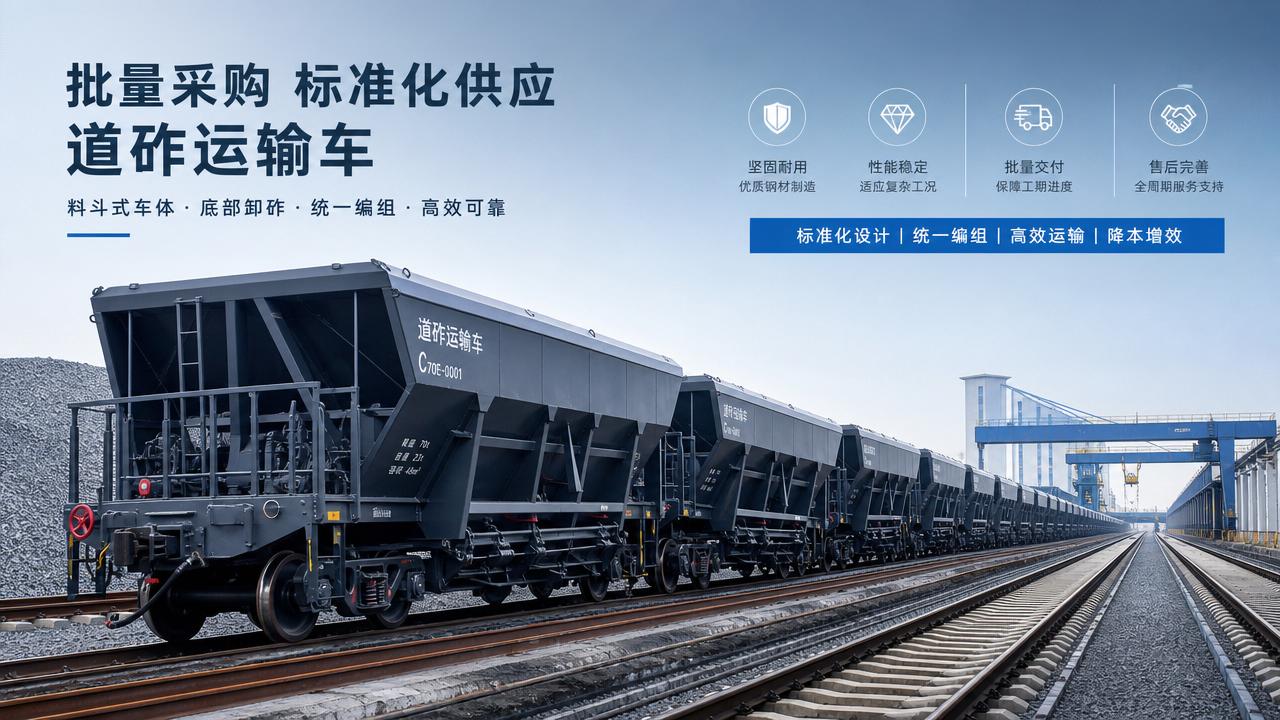
For distributors, agents, and regional dealers serving rail infrastructure projects, ballast wagon wholesale often delivers stronger margins, steadier supply, and better bidding competitiveness than single-unit sourcing. As demand grows for reliable track maintenance equipment across large-scale freight corridors, understanding when bulk procurement aligns with project cycles, compliance needs, and after-sales expectations can turn a routine purchase into a strategic commercial advantage.
Understanding ballast wagon wholesale in project supply chains
Ballast wagon wholesale refers to multi-unit sourcing of wagons used for ballast transport, discharge, and track maintenance support across railway infrastructure programs.
These wagons move crushed stone for new track formation, renewal works, shoulder replenishment, and corridor rehabilitation on freight and mixed-use lines.
In commercial terms, ballast wagon wholesale is not only about volume discounts. It also affects lead time, documentation consistency, spare parts planning, and fleet standardization.
For rail-focused supply businesses, bulk sourcing becomes attractive when projects demand repeatable specifications across multiple sites or phased contracts.
Within the broader transport engineering sector, this purchasing model supports better coordination between rolling stock, maintenance machinery, and corridor delivery schedules.
Core technical scope
- Hopper or bottom-discharge configurations for controlled ballast release
- Compatibility with target axle loads, gauges, and brake systems
- Material durability for abrasive aggregates and harsh climates
- Alignment with UIC, EN, AAR, or local railway authority requirements
Market conditions that favor ballast wagon wholesale
Ballast wagon wholesale makes better business sense when market conditions reward readiness, cost control, and specification stability across several projects.
Current rail investment patterns show stronger demand from heavy-haul corridor upgrades, port-rail connectivity, and network resilience programs.
Where demand is intermittent and project sizes are small, unit sourcing may remain practical. However, repeated infrastructure packages usually shift the balance toward ballast wagon wholesale.
Commercial advantages beyond the unit price
The strongest case for ballast wagon wholesale often comes from total commercial performance rather than the headline purchase price alone.
Margin protection
Batch procurement usually improves ex-works pricing, packaging efficiency, inspection planning, and shipping consolidation. That can preserve margin even when tender competition is aggressive.
Supply continuity
Rail projects rarely tolerate equipment gaps. Ballast wagon wholesale helps secure production slots, reducing the risk of fragmented deliveries from multiple sources.
Stronger bid positioning
Many infrastructure tenders favor coherent technical packages. Offering a standardized ballast wagon wholesale solution can improve confidence in delivery capability and after-sales support.
Lower support complexity
Unified parts lists, shared maintenance procedures, and common training materials reduce service burden after handover, especially in geographically dispersed rail networks.
Operational scenarios where bulk sourcing is most effective
Not every rail project needs a wholesale approach. The decision becomes clearer when operational realities require fleet consistency and repeat deployment.
In these settings, ballast wagon wholesale supports planning discipline. It also creates a clearer basis for inventory forecasting and replacement part stocking.
Technical and compliance factors that influence the decision
A good wholesale decision depends on technical fit. Bulk buying the wrong specification can magnify cost, delay approvals, and weaken asset performance.
Key checks before committing
- Track gauge, loading gauge, and route axle load limits
- Brake standards, coupler compatibility, and discharge control systems
- Corrosion protection for coastal, desert, or tropical environments
- Welding quality, steel grade, and wear resistance in ballast contact zones
- Inspection records, test certificates, and documentation traceability
For internationally deployed wagons, alignment with recognized frameworks such as UIC, EN, and AAR improves acceptance and simplifies technical evaluation.
G-RFE’s sector perspective highlights another point. Rolling stock decisions increasingly connect with digital maintenance planning and corridor-level asset governance.
That means ballast wagon wholesale should be assessed alongside spares, training, inspection intervals, and service data integration, not as an isolated product buy.
Risk controls and practical sourcing guidance
Ballast wagon wholesale creates value when risk controls are built into the sourcing process from the beginning.
- Match order size to confirmed project pipeline, not optimistic projections.
- Lock technical specifications before production to avoid expensive mid-batch changes.
- Request sample documentation, inspection plans, and warranty terms early.
- Plan spare parts kits and consumables with the same batch logic.
- Review logistics routes for port handling, inland transport, and unloading constraints.
- Set clear acceptance criteria for coating, dimensions, braking, and discharge performance.
Commercial discipline matters as much as engineering discipline. Payment terms, batch release milestones, and penalty clauses should reflect real production and project risks.
Where local regulations differ by region, a phased ballast wagon wholesale program may work better than a single large shipment. That approach protects flexibility while retaining scale benefits.
When ballast wagon wholesale makes the most business sense
Ballast wagon wholesale makes the most sense when demand is recurring, specifications are stable, and project timing rewards supply certainty.
It becomes especially effective when several contracts share similar wagon requirements, service expectations, and compliance frameworks across a region or corridor.
If the objective is to improve bid competitiveness, protect margin, and reduce post-delivery complexity, ballast wagon wholesale usually offers a stronger operating model than fragmented sourcing.
The next practical step is to compare forecast project volume, technical commonality, and service obligations against batch procurement options and staged delivery plans.
With that evaluation in place, ballast wagon wholesale moves from a price decision to a structured growth strategy for rail infrastructure supply.
Industry Briefing
Get the top 5 industry headlines delivered to your inbox every morning.