
Ballast wagon wholesale: where maintenance costs usually get overlooked

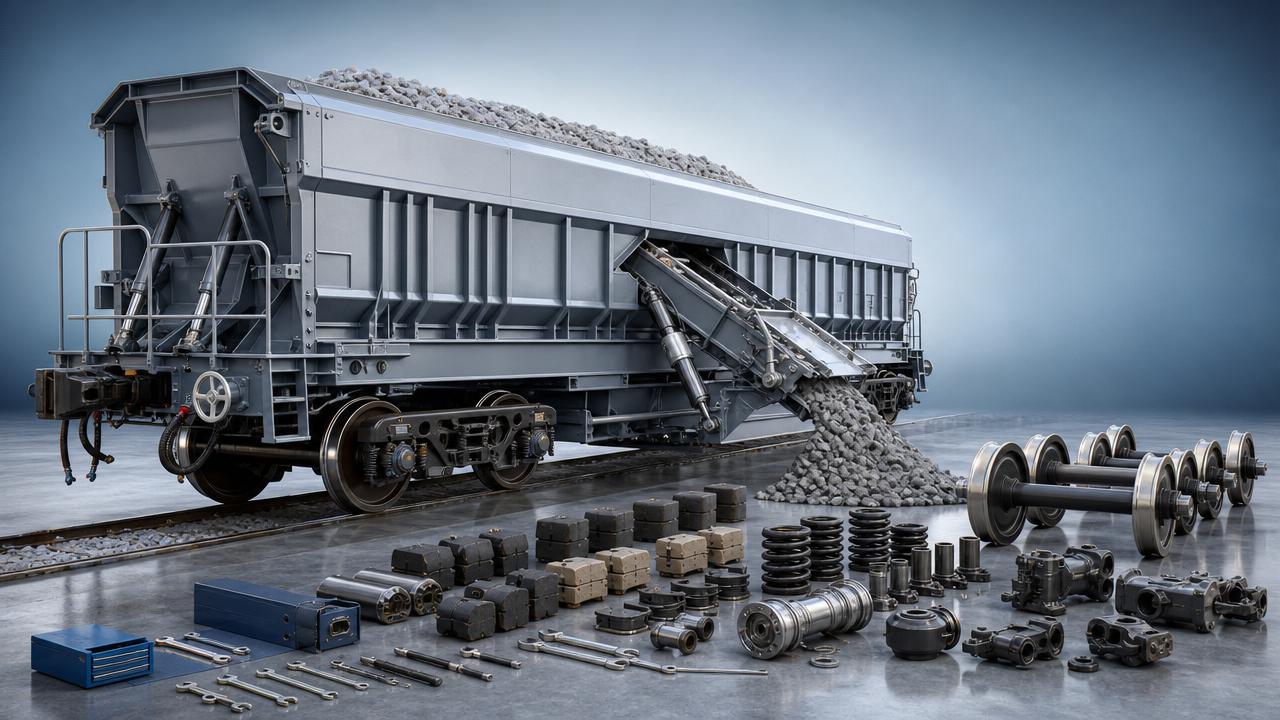
In ballast wagon wholesale, purchase price often dominates negotiations, while long-term maintenance costs remain underestimated until projects face downtime, spare-part delays, or rising lifecycle expenses. For project managers and engineering leads, understanding where these hidden costs typically emerge is essential to protecting budget, fleet availability, and track maintenance efficiency from the very beginning.
Why a checklist approach is the safest way to assess ballast wagon wholesale
For railway infrastructure programs, a ballast wagon is not just a transport asset. It directly affects track renewal rhythm, possession time, maintenance planning, and contractor productivity. That is why ballast wagon wholesale decisions should not be evaluated only through unit price, payload, or delivery lead time. A structured checklist helps project leaders identify hidden maintenance exposure before contracts are signed.
This is especially important in institutional and cross-border procurement environments where fleets must comply with UIC, EN, or AAR-aligned expectations, interface with existing maintenance systems, and remain serviceable for years under harsh operating conditions. In practice, the biggest lifecycle cost overruns often come from overlooked details: discharge mechanisms that are difficult to service, non-standard bogie components, weak corrosion protection, or poor documentation for troubleshooting.
If your team is evaluating ballast wagon wholesale offers, the most effective method is to review each proposal against a maintenance-oriented checklist, compare supplier support depth, and calculate total ownership impact rather than purchase cost alone.
First review: the maintenance cost areas most often underestimated
Before comparing suppliers, confirm where maintenance costs usually hide. These are the areas that frequently look acceptable in technical brochures but generate real operational expense later.
- Discharge system complexity: Ballast wagons depend on gates, chutes, cylinders, linkages, and control arrangements. If access points are poor or wear components are difficult to replace, every maintenance intervention takes longer and costs more.
- Bogie and running gear parts commonality: Non-standard bearings, brake components, suspension items, or wheelset specifications can create long spare-part lead times and increase inventory burden.
- Corrosion and abrasion exposure: Ballast handling creates repeated impact, dust, moisture retention, and coating damage. Low-grade surface treatment can accelerate structural repair needs.
- Hydraulic or pneumatic reliability: Even a robust wagon body becomes costly if actuators, hoses, seals, or valve blocks fail frequently under field conditions.
- Inspection accessibility: If technicians cannot easily inspect brake lines, locking points, hinges, and discharge assemblies, preventive maintenance quality declines.
- Documentation gaps: In ballast wagon wholesale projects, missing parts catalogs, maintenance intervals, torque standards, and troubleshooting guides turn basic service tasks into expensive delays.
- Supplier support limitations: A low initial price may hide weak after-sales engineering, poor spare stock planning, or no field-service response during commissioning.
Core checklist for evaluating hidden maintenance exposure in ballast wagon wholesale
1. Check component standardization before checking price
Ask whether the wagon uses standard bogies, braking systems, couplers, bearings, and fastening elements already familiar to your maintenance base or regional suppliers. A ballast wagon wholesale project becomes much easier to sustain when consumables and critical spares overlap with the existing fleet. If the design uses proprietary parts, confirm stock commitments, replacement timelines, and approved alternatives.
2. Review discharge mechanism maintainability in detail
The discharge system is one of the most maintenance-sensitive sections. Project teams should verify hinge wear resistance, actuator protection, jamming risk under wet ballast conditions, chute alignment stability, lubrication points, and failure recovery procedures. A supplier may quote strong unloading performance, but if maintenance staff need excessive disassembly for routine servicing, total cost rises quickly.
3. Validate coating, steel grade, and structural protection strategy
Ballast wagons operate in abrasive and often corrosive environments. Confirm the steel specification, anti-corrosion treatment, coating thickness, weld quality assurance, drainage design, and protection of cavities where water and fines accumulate. Hidden corrosion is a classic area where ballast wagon wholesale buyers underestimate future cost, especially in coastal, humid, or high-rainfall corridors.
4. Audit spare-parts planning, not only spare-parts availability
Many suppliers say spare parts are available, but project managers should go further. Ask for the recommended two-year spare list, critical failure parts list, expected consumption rates, storage conditions, and lead times by component category. A practical ballast wagon wholesale package should separate fast-moving consumables from high-risk downtime parts and provide ordering logic linked to fleet size.
5. Compare preventive maintenance intervals with real work cycles
Maintenance intervals on paper may not reflect real track maintenance intensity. Review service schedules against your actual ballast distribution frequency, route conditions, axle loads, and climate. If the supplier’s recommended intervals are too short for your operations, labor demand and workshop occupation will increase beyond the original budget model.
6. Confirm field-service access and training scope
In ballast wagon wholesale, post-delivery support can determine whether a fleet stabilizes quickly or enters repeated outage cycles. Confirm commissioning assistance, technician training hours, multilingual manuals, troubleshooting escalation procedures, and response times for technical claims. Strong support reduces maintenance mistakes during the first year, which is often when hidden weaknesses appear.
Decision table: what to check before approving a ballast wagon wholesale supplier
Use the following table as a fast screening tool during technical and commercial evaluation.
Different project scenarios require different maintenance checks
For new railway construction programs
When fleets are procured for new infrastructure delivery, buyers often focus on commissioning deadlines. In this case, ballast wagon wholesale evaluations should prioritize startup spare kits, training for newly formed maintenance teams, and compatibility with temporary or developing depots. New-build projects are vulnerable to documentation gaps because operating practices are still maturing.
For established maintenance-of-way fleets
If the wagons will join an existing maintenance fleet, commonality matters even more. Review coupler interfaces, braking compatibility, inspection routines, workshop tooling, and software or record-keeping alignment. The hidden cost here is not only spare parts but the operational friction caused by adding a one-off sub-fleet.
For export or cross-border operations
Cross-border deployment requires closer attention to standards compliance, axle load restrictions, brake certification, and regional supply support. In ballast wagon wholesale for multinational corridors, maintenance cost can climb sharply if the wagon is technically acceptable but difficult to support outside the origin country.
The most common items procurement teams overlook
- Labor hours per maintenance event: Teams compare part prices but ignore technician time, lifting needs, or disassembly complexity.
- Consumable turnover: Seals, hoses, bushings, coatings, and wear plates can add significant annual cost when replacement cycles are short.
- Failure recovery in the field: A wagon may be repairable in the depot but difficult to isolate or secure during line-side incidents.
- Cleaning requirements: Ballast dust and residue affect moving parts and inspection quality; difficult-to-clean designs increase downtime.
- Data quality from the supplier: Without a full bill of materials and maintenance logic, long-term planning remains reactive.
- Warranty boundaries: Some contracts cover defective parts but not labor, transport, or project delay impacts.
Practical execution advice for project managers handling ballast wagon wholesale
To improve procurement quality, convert maintenance concerns into tender requirements rather than post-award discussions. Request a maintainability dossier, spare-parts matrix, preventive maintenance schedule, corrosion protection specification, and evidence of component standardization. During technical clarification, ask suppliers to explain not only how the wagon performs, but how it is inspected, repaired, and returned to service.
It is also advisable to involve maintenance engineers in bid evaluation alongside procurement and operations staff. This cross-functional review reduces the chance that ballast wagon wholesale decisions are driven by acquisition cost alone. If possible, require reference cases from comparable freight or track-maintenance environments and ask for actual service feedback, not only factory claims.
Another strong practice is to build a lifecycle comparison model with at least five variables: expected annual mileage or work cycle, routine service labor, wear-part consumption, critical spare lead time, and average downtime cost. Even a simple model often reveals that the cheapest offer becomes the most expensive once service support and reliability are included.
FAQ: quick answers for ballast wagon wholesale evaluation
Is lower purchase price usually a false economy?
Not always, but it often is when the lower-cost offer depends on proprietary parts, weaker coating systems, limited technical documentation, or minimal after-sales support.
Which subsystem creates the most hidden maintenance cost?
In many ballast wagon wholesale projects, the discharge mechanism creates the most unexpected servicing burden because it combines wear, contamination, moving parts, and field-use variability.
What documents should buyers request before contract award?
Request maintenance manuals, spare-parts catalog, recommended stock list, inspection intervals, warranty terms, welding and coating specifications, and reference fleet performance data.
Final action checklist before moving forward
Before finalizing any ballast wagon wholesale decision, project leaders should prepare a short but disciplined review pack: operating scenario, fleet size, standards requirements, depot capability, target spare stock level, expected service intensity, and downtime cost assumptions. Then compare suppliers against maintainability, support responsiveness, and parts commonality—not just against purchase price.
If you need to move from initial sourcing to technical confirmation, the best next step is to discuss wagon configuration, discharge system design, spare-parts strategy, standards compliance, training scope, delivery schedule, and lifecycle budget assumptions in one consolidated review. That is the most reliable way to ensure ballast wagon wholesale supports long-term track maintenance performance rather than creating hidden cost pressure after delivery.
Industry Briefing
Get the top 5 industry headlines delivered to your inbox every morning.