
What railway suspension damping data says about ride stability

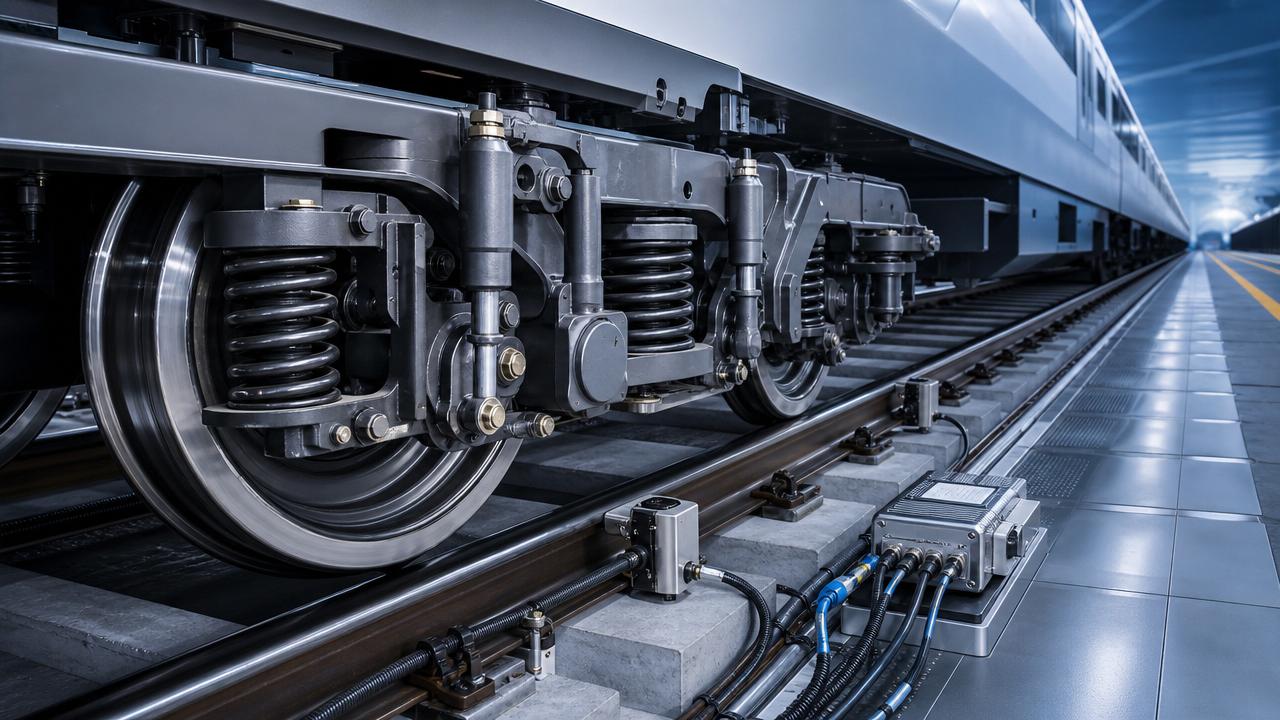
For quality and safety teams, railway suspension damping data offers an evidence-based view of how vehicles respond to vibration, load shifts, and track irregularities. More than a maintenance metric, it reveals early signs of instability, component fatigue, and ride performance risks. Understanding what this data says about ride stability helps operators strengthen inspection standards, reduce safety exposure, and support more reliable freight operations.
Why does railway suspension damping data matter so much for ride stability?
In freight rail, ride stability is not only a comfort issue. It affects wheel-rail contact, braking consistency, cargo protection, component life, and the safety margin of the whole trainset.
That is why railway suspension damping data has become a practical decision tool for quality control personnel and safety managers. It translates dynamic behavior into measurable indicators that can be trended, compared, and audited.
When damping performance drifts, the vehicle may still pass a basic visual inspection. Yet the data often shows a different story: higher oscillation amplitude, slower vibration decay, uneven axle response, or worsening stability at specific speeds.
- It helps identify hidden instability before it becomes a reportable failure or operational restriction.
- It supports condition-based inspection planning instead of relying only on fixed maintenance intervals.
- It improves traceability when investigating derailment risk factors, abnormal wear, or cargo damage complaints.
- It gives procurement and engineering teams a common language for supplier evaluation and acceptance testing.
For organizations operating across heavy-haul, intermodal, and cross-border corridors, G-RFE’s value lies in connecting rolling stock behavior with track conditions, signaling environments, and international engineering benchmarks such as UIC, EN, and AAR reference frameworks.
What the data usually reflects
In simple terms, damping data shows how quickly and evenly the suspension system controls motion after a disturbance. A stable vehicle settles quickly. An unstable one continues to bounce, sway, or pitch longer than it should.
Which signals in railway suspension damping data indicate rising safety risk?
Quality and safety teams usually do not act on one number alone. They look for patterns across speed ranges, load states, axle positions, and route sections. The table below summarizes common indicators and what they may suggest.
The important lesson is that railway suspension damping data should be interpreted in context. A value that looks acceptable in a workshop can become problematic on a high-capacity corridor with mixed loading, tight turnaround, and rougher track sections.
Warning patterns that are often missed
- Trend drift over several months, even when no single test breaches a hard limit.
- Good unloaded results but poor loaded behavior, especially on long freight consists.
- Passing average values that conceal one problematic axle or one problematic route segment.
- Data inconsistency between different depots because test methods are not normalized.
How should quality and safety teams read damping data in real operating scenarios?
Railway suspension damping data becomes more useful when it is tied to operating conditions rather than reviewed as an isolated lab output. Different corridors and vehicle roles create different stability priorities.
The following comparison helps teams evaluate which scenario demands stricter interpretation and faster corrective action.
This scenario-based view is especially relevant for G-RFE users. The platform’s cross-pillar approach helps teams connect rolling stock damping behavior with track maintenance, signaling discipline, and freight corridor performance rather than treating each function separately.
A practical reading sequence
- Start with baseline values from accepted vehicles or previous healthy periods.
- Compare unloaded and loaded response to reveal hidden weakness under true freight conditions.
- Check left-right and axle-to-axle consistency before looking at fleet averages.
- Overlay speed band and route section information to detect resonance or localized excitation.
- Trigger targeted inspection on dampers, springs, bushings, mounting points, and wheel condition.
What should buyers and safety managers check before selecting a monitoring or evaluation solution?
Many teams can collect data, but not all systems deliver decision-grade railway suspension damping data. Procurement mistakes often happen when the focus stays on sensor count or headline features instead of verification quality and operational usability.
The table below can be used as a supplier screening checklist for projects involving ride stability monitoring, acceptance testing, or fleet-level suspension assessment.
For procurement teams under budget pressure, a lower-cost tool may seem attractive. However, if it cannot normalize route condition, load state, and vehicle type, it may generate weak evidence and higher downstream investigation cost.
Common procurement mistakes
- Buying for data collection without defining the acceptance or alarm logic first.
- Using one threshold for all wagon types, load cases, and corridor conditions.
- Ignoring calibration governance, which undermines auditability.
- Separating suspension data review from track maintenance and vehicle engineering records.
How do standards, compliance, and engineering context affect damping decisions?
Railway suspension damping data does not exist in a regulatory vacuum. Safety managers must show that inspection methods, acceptance logic, and corrective decisions are technically defensible and suitable for the operating environment.
In practice, compliance means more than naming a standard. Teams should define test conditions, trace measurement changes, record maintenance interventions, and align interpretations with the fleet’s duty cycle.
Useful compliance checkpoints
- Use documented test procedures for speed range, loading condition, sensor placement, and pass-fail logic.
- Retain historical damping records to support trend-based safety decisions and root cause analysis.
- Link damping anomalies to maintenance findings such as damper leakage, bushing wear, spring settlement, or wheel defects.
- Review corridor-specific factors including track stiffness variation, turnout frequency, curvature, and braking pattern.
This is where G-RFE provides a strategic advantage. Because its coverage spans rolling stock, track maintenance, signaling systems, and specialized machinery, quality teams can evaluate damping data inside the full operating system rather than in isolation.
FAQ: what do teams often ask about railway suspension damping data?
How often should railway suspension damping data be reviewed?
The answer depends on fleet criticality, route severity, and maintenance philosophy. High-utilization freight fleets usually benefit from review at defined inspection intervals plus event-driven review after abnormal vibration, wheel defects, cargo damage claims, or track incidents.
Can damping data replace physical inspection?
No. Railway suspension damping data is strongest when used as a screening and prioritization tool. It helps direct physical inspection toward the most likely fault locations, but it does not eliminate the need to verify mechanical condition and installation integrity.
What is the biggest mistake in ride stability assessment?
One of the biggest mistakes is evaluating data without load context. A wagon may appear stable when empty yet show problematic vertical or lateral response when fully loaded. For freight operations, loaded behavior often carries the more important safety meaning.
Which teams should be involved in interpretation?
The best results usually come from joint review by quality control, safety management, rolling stock engineering, maintenance planning, and where relevant, track infrastructure specialists. Ride stability problems often have more than one cause.
Why choose us for data-led railway ride stability decisions?
G-RFE supports institutional buyers and technical decision-makers who need more than scattered product information. Our strength is the ability to place railway suspension damping data inside a broader engineering, regulatory, and corridor-performance framework.
If your team is evaluating ride stability risk, planning a fleet inspection strategy, or comparing monitoring approaches, we can support practical discussions on the points that matter most to quality and safety outcomes.
- Parameter confirmation for damping evaluation scope, test conditions, and decision thresholds.
- Solution selection support for fleet monitoring, acceptance testing, and maintenance integration.
- Discussion of delivery timing, implementation sequence, and inspection workflow alignment.
- Guidance on custom evaluation frameworks for heavy-haul, intermodal, or cross-border operations.
- Reference mapping to applicable UIC, EN, and AAR-oriented documentation needs.
- Quotation communication for project-based technical intelligence, benchmarking, or procurement support.
When railway suspension damping data starts to show instability, delay is expensive. Early interpretation helps prevent wider maintenance cost, cargo disruption, and safety exposure. Contact G-RFE to review your parameters, compare solution paths, and build a more defensible ride stability strategy for freight operations.
Industry Briefing
Get the top 5 industry headlines delivered to your inbox every morning.