
How Raw Materials Change Wagon Costs and Budget Accuracy

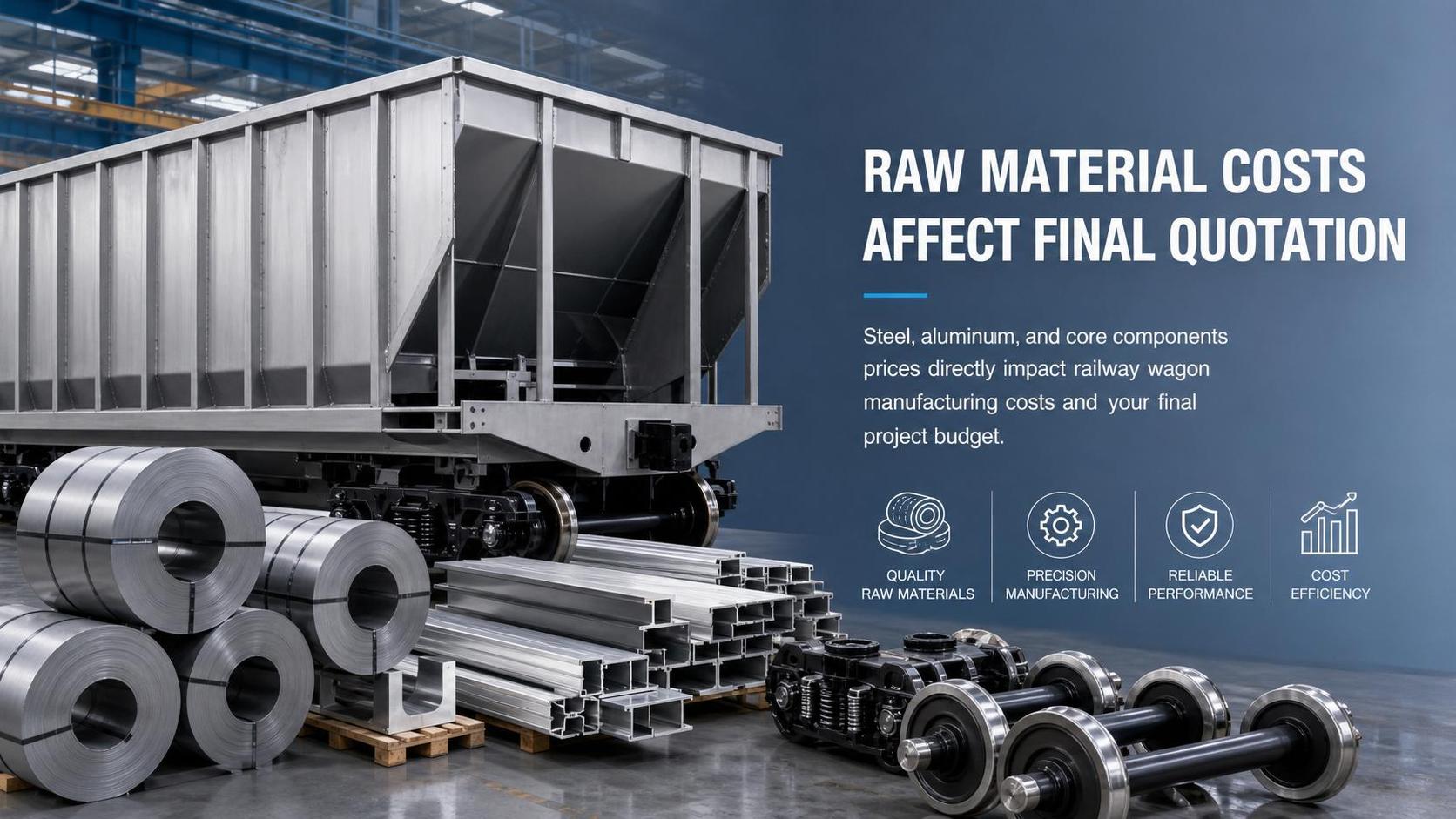
For finance approvers evaluating rail asset investments, the impact of raw material on wagon costs directly affects both capital planning and budget reliability. Fluctuations in steel, aluminum, and component input prices can quickly shift procurement totals, distort forecasts, and weaken approval confidence. This article outlines how material trends influence wagon pricing and what decision-makers should track to improve budget accuracy and control financial risk.
The core search intent behind this topic is practical, not academic. Readers want to understand why wagon quotations move, how strongly raw materials influence total project cost, and what financial controls can reduce forecasting errors before approval decisions are made.
For finance teams, the key judgment is straightforward: raw material volatility does not just change unit price. It changes timing assumptions, supplier behavior, contingency needs, and the credibility of the entire investment case.
Why Raw Material Trends Matter More Than Many Budget Models Assume
In wagon procurement, raw materials are not a small background variable. They are one of the largest drivers of manufacturing cost, especially for freight wagons built around steel-intensive structures, fabricated assemblies, and sourced braking or bogie systems.
When finance approvers review a wagon budget, they often see a consolidated supplier price. What matters underneath that figure is the exposure to steel plate, profiles, castings, forgings, aluminum parts, wheelsets, and energy-linked industrial inputs.
The impact of raw material on wagon costs becomes more serious when projects involve multi-month tendering, technical clarification, staged production, and delivery across several quarters. In that environment, quoted prices can become outdated faster than internal approval cycles expect.
This is why budget accuracy often weakens even when procurement teams follow standard process. The issue is not poor discipline alone. It is that the cost base itself can move materially between specification, quotation, approval, and final contract award.
Which Raw Materials Have the Biggest Influence on Wagon Cost
Carbon steel is usually the dominant factor. Wagon bodies, underframes, side walls, cross members, and structural supports consume large volumes of processed steel, so shifts in steel index prices often have the clearest effect on base manufacturing cost.
Specialty steel grades can raise exposure further. If a wagon design requires higher strength, wear resistance, or fatigue performance, the procurement team may be buying into narrower supply markets with less pricing flexibility and longer lead-time risk.
Aluminum matters most in designs where weight reduction supports payload efficiency, axle-load optimization, or lifecycle energy savings. Although aluminum may represent a smaller share of mass than steel, its price movement can still meaningfully affect premium wagon configurations.
Other materials also matter indirectly. Copper, rubber, plastics, coatings, and industrial chemicals influence wiring, hoses, seals, corrosion protection, and finishing systems. These inputs may not dominate the bill of materials, but they can compound cost pressure.
Finance approvers should also watch components whose pricing reflects raw material content. Bogies, couplers, brake systems, wheels, axles, bearings, and draft gear are purchased assemblies, yet their prices often rise because suppliers face the same materials inflation.
How Raw Material Volatility Distorts Budget Accuracy
Budget inaccuracy usually begins with timing mismatch. A project team may build its capex estimate using historic benchmark data, while suppliers quote based on current or forward material conditions that differ sharply from the internal baseline.
A second problem is incomplete cost translation. Internal models may assume that a 10 percent steel increase creates a 10 percent wagon increase. In reality, the pass-through depends on fabrication intensity, inventory coverage, supplier contracts, and margin protection strategies.
A third distortion comes from specification change. If operators request higher payload, longer service life, corrosion resistance, or interoperability with multiple rail standards, the wagon may require more expensive material grades than first assumed.
Currency exposure can amplify all of this. Even if global raw material prices stabilize, exchange-rate movement can raise imported component costs or change the landed price of steel and assemblies, reducing the reliability of previously approved budgets.
The result is a familiar finance problem: a project that looked acceptable at concept stage later requires reapproval, scope reduction, or contingency drawdown. That delays decisions and weakens confidence in both procurement and project governance.
What Finance Approvers Should Examine in Every Wagon Quote
Finance reviewers should first test how much of the quoted price is material-sensitive. Not every supplier discloses this directly, but decision-makers can request a structured cost breakdown covering structure, running gear, braking, finishing, engineering, and overhead.
Second, ask whether the quote is fixed price, indexed price, or partially adjustable. A fixed-price offer may appear safer, but it can already include a supplier risk premium. An indexed mechanism may be more transparent if the formula is clear and auditable.
Third, review the quote validity period. A technically compliant wagon offer with a short validity window can create hidden approval pressure. If internal governance is slow, the financial team should assume repricing risk rather than treat the quote as stable.
Fourth, examine production and delivery schedule assumptions. Long delivery horizons increase exposure to material market changes, especially if the supplier has not yet secured steel allocations, key castings, or long-lead assemblies at the time of bid submission.
Fifth, check whether optional items are likely to become mandatory later. Corrosion upgrades, braking variants, onboard monitoring, or certification requirements can shift material content and cost after initial approval if they were not fully included upfront.
How to Build a More Reliable Wagon Budget Before Approval
Better budget accuracy starts with separating base cost from volatility cost. Finance teams should not rely on a single all-in number. They should model a baseline price, a material-risk range, and a contingency logic tied to contract timing.
A practical method is to create three approval cases: current market case, moderate escalation case, and stressed procurement case. This gives decision-makers a range of financial outcomes instead of a false impression of precision.
It also helps to align cost assumptions with recognized external indicators. Steel indices, energy cost trends, freight surcharges, and exchange-rate assumptions can all be referenced in internal budget notes to make approval logic more defensible.
Another effective step is to use should-cost thinking. Even without full manufacturing detail, buyers can estimate which portion of a wagon price is most exposed to material changes and test whether supplier adjustments are proportionate or excessive.
Where fleet size is large, phased procurement can improve control. Approving all wagons at once may lock in poor timing. Structured call-off arrangements or batch ordering can balance supply security with the flexibility to manage changing material conditions.
How Procurement Strategy Changes Financial Risk
Commercial structure matters as much as engineering specification. Two wagon programs with similar technical scope can produce very different financial outcomes depending on whether raw material risk sits with the supplier, the buyer, or a shared index formula.
A fully fixed-price contract offers visibility, but only if suppliers are financially strong enough to absorb volatility without cutting quality, delaying delivery, or forcing change claims later. Finance teams should evaluate that trade-off carefully.
Indexed contracts can work well when the material reference, reset frequency, and ceiling logic are clearly defined. They are often preferable in volatile markets because they reduce hidden premiums and make cost movement easier to explain internally.
Framework agreements may also support budget control for repeat purchases. They do not eliminate the impact of raw material on wagon costs, but they can reduce transaction delay, improve planning discipline, and strengthen supplier commitment.
Supplier diversification is another financial lever. Overreliance on one geography or one production base can increase exposure to local steel shortages, energy shocks, or logistics bottlenecks that ultimately affect wagon pricing and delivery certainty.
What Signals Suggest a Wagon Budget Is Too Optimistic
A budget is likely too optimistic when it is based on old benchmark purchases without adjustment for current material conditions. Historic prices are useful references, but they should never be treated as approval-grade evidence in a fast-moving input market.
Another warning sign is a very narrow contingency on a technically complex fleet. If the project includes custom loading systems, interoperability demands, harsh-environment protection, or special certification, material and fabrication risk are rarely minimal.
Approvers should also be cautious when supplier bids vary widely. A large pricing spread may indicate inconsistent assumptions about raw material timing, scope inclusion, or commercial risk. The lowest bid is not always the most financeable option.
Unclear escalation clauses are another red flag. If the contract language does not define what triggers adjustment, which indices apply, and what evidence is required, the project can face disputes that undermine both budget accuracy and delivery schedule.
Finally, if internal teams cannot explain which cost elements are commodity-driven and which are design-driven, the approval case is not yet mature. Finance confidence depends on that distinction because mitigation tools differ for each type of risk.
How Finance Teams Can Improve Approval Confidence
Approval confidence rises when finance, engineering, and procurement work from the same cost logic. Wagon projects often fail in budgeting because each function sees a different version of risk, leading to fragmented assumptions and late surprises.
Finance teams should require a short material exposure memo with every major wagon submission. That memo should identify sensitive inputs, quote validity, escalation terms, currency assumptions, and the financial effect of likely specification changes.
It is also useful to define approval thresholds in advance. For example, if steel indices move beyond a set band before contract award, the business case should automatically be refreshed rather than pushed through under outdated assumptions.
Post-award monitoring matters too. Good budget governance does not end once the supplier is selected. Material-linked contracts should be tracked against index movement, drawdown assumptions, and delivery milestones to avoid slow accumulation of variance.
In large rail investment programs, these disciplines create value beyond one project. They improve forecasting quality, reduce emergency approvals, and help institutions compare competing fleet investments with more confidence and consistency.
Conclusion
For financial approvers, understanding the impact of raw material on wagon costs is essential to making credible investment decisions. The biggest mistake is to view material volatility as a supplier issue rather than a budget-accuracy issue.
Steel, aluminum, and material-linked components can materially change wagon pricing across the approval timeline. The real financial challenge is not only higher cost, but weaker forecast reliability, delayed approvals, and avoidable pressure on contingency.
The strongest approach is disciplined and practical: request better cost visibility, test pricing mechanisms, model multiple market scenarios, and align approval timing with quote validity and supply conditions. That is how budget control becomes more realistic.
When finance teams treat material exposure as a core approval variable, not a background assumption, wagon procurement decisions become more resilient, more transparent, and more defensible in front of management, auditors, and long-term capital planners.
Industry Briefing
Get the top 5 industry headlines delivered to your inbox every morning.