
Automatic Railway Coupler Europe: Compliance and Retrofit Costs

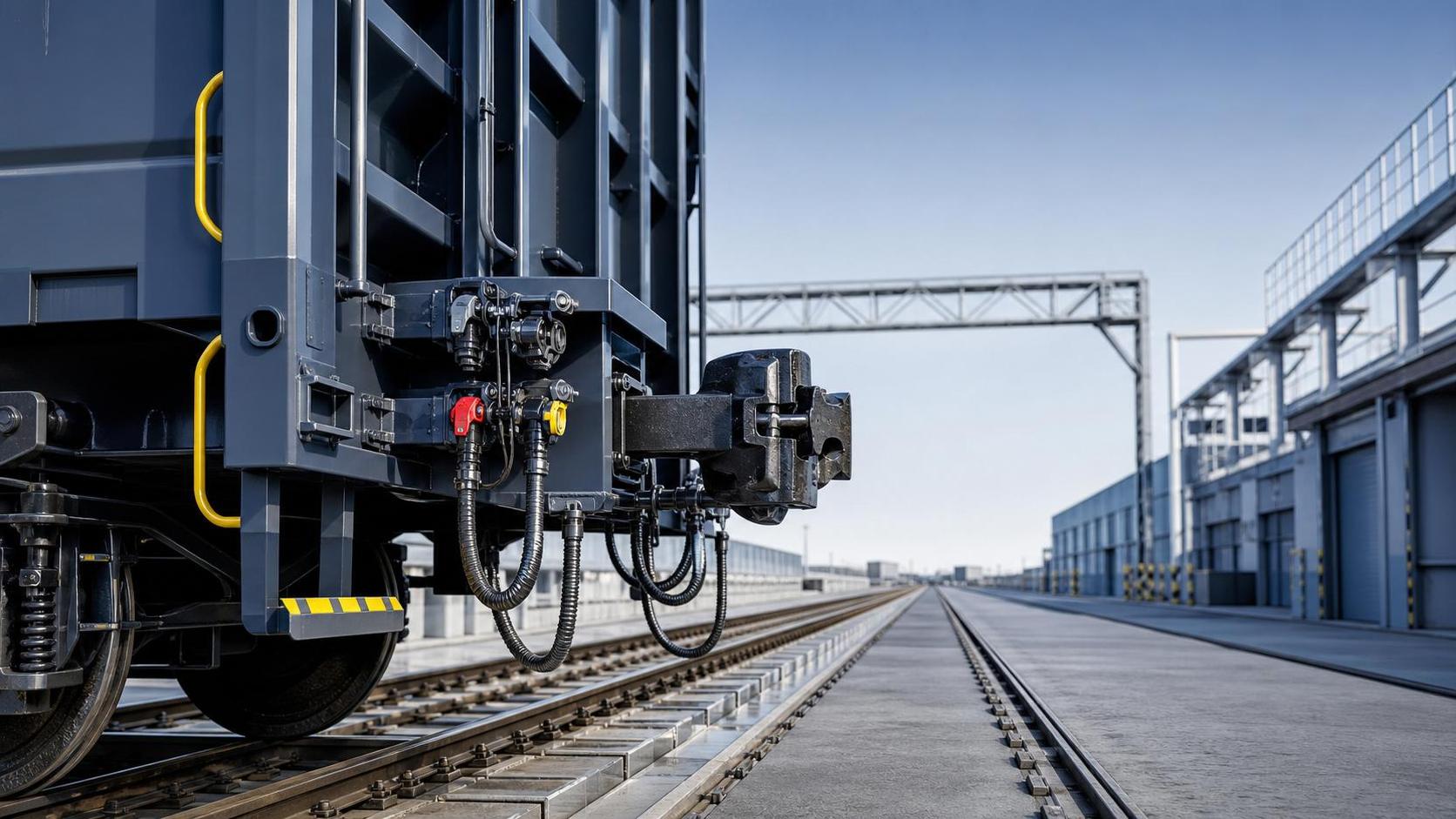
Why is automatic railway coupler Europe becoming a live procurement issue now?
Automatic railway coupler Europe is no longer a distant innovation topic. It now sits inside fleet renewal, labor safety, and corridor interoperability decisions across the freight rail market.
The pressure comes from several directions at once. Manual coupling raises safety exposure. Cross-border freight demands better consistency. Decarbonized rail growth also pushes operators to improve train handling speed and reliability.
In practical terms, the question is not simply whether automatic couplers are technically attractive. The real question is whether compliance, retrofit complexity, and whole-life cost justify the transition.
That is why automatic railway coupler Europe searches often focus on standards, wagon compatibility, and budget risk. A coupler decision touches rolling stock, maintenance planning, depots, and operating rules at the same time.
Within the G-RFE engineering view, this is a systems issue rather than a single component purchase. Coupler hardware must align with UIC and EN expectations, but also with braking, train integrity, and future digital freight operations.
What does compliance really mean for automatic railway coupler Europe projects?
Compliance is often misunderstood as a document check. In reality, it covers interface fit, crash behavior, load paths, braking continuity, electrical connections, and maintenance traceability.
For automatic railway coupler Europe deployments, the first filter is usually compatibility with UIC practices and relevant EN requirements. The exact route depends on vehicle type, network rules, and approval scope.
Need to confirm a retrofit? Then look beyond the coupler head. Draft gear, mounting geometry, end structure reinforcement, and train control interfaces may require redesign or recertification.
A useful way to frame compliance is to separate three layers:
- Vehicle-level conformity: structural fit, braking and pneumatic continuity, electrical integration.
- Network acceptance: route approval, national safety authority expectations, cross-border operational conditions.
- Lifecycle evidence: inspection routines, spare parts control, maintenance documentation, and failure reporting.
More common problems appear when buyers assume a coupler certified on one wagon family will transfer cleanly to another. That assumption can distort cost estimates very quickly.
How much do retrofit costs usually depend on the existing wagon fleet?
A lot. Retrofit cost in automatic railway coupler Europe programs is driven less by the coupler price alone and more by the fleet condition around it.
Older wagons with mixed coupling systems usually create the highest uncertainty. Structural modifications, buffer arrangement changes, and workshop downtime can outweigh the hardware line item.
Newer wagons are not automatically simple either. If the train architecture includes digital diagnostics, ETCS-related interface planning, or automated brake testing, integration scope expands.
In actual projects, retrofit cost typically falls into five buckets:
- Coupler hardware, draft gear, and mechanical adapters.
- Vehicle engineering, calculations, and approval documentation.
- Workshop labor, lifting equipment, and installation tooling.
- Downtime, traffic disruption, and phased fleet withdrawal.
- Training, spare inventory, and revised maintenance procedures.
The table below helps translate broad budget concerns into concrete review points before asking for firm offers.
A low headline unit price can therefore be misleading. For automatic railway coupler Europe investments, total installed cost is usually the more reliable comparison metric.
Is newbuild procurement easier than retrofit, or does that depend on the corridor?
Newbuild programs are generally cleaner, but not always easier. They avoid many legacy constraints, yet they still depend on the operating corridor and the rest of the trainset strategy.
If wagons will circulate in mixed fleets for years, a technically advanced coupler may create transitional complexity. That can affect marshalling, rescue procedures, and interoperability at border terminals.
By contrast, closed-loop heavy freight routes may justify faster adoption. Predictable train composition, stable maintenance bases, and repeatable load profiles usually reduce implementation risk.
A practical evaluation often compares three scenarios:
- Full retrofit of an existing fleet.
- Automatic couplers on new wagons only, with transitional adapters.
- Route-based pilot deployment before larger fleet conversion.
The best answer usually comes from traffic patterns, not from catalog claims. G-RFE analysis consistently shows that corridor design and asset standardization shape value more than marketing specifications.
Where do buyers misread the economics of automatic railway coupler Europe?
The biggest mistake is treating the coupler as a one-time capex item. That narrows the picture too much and hides operational effects that may either justify or weaken the business case.
Labor safety gains matter, but they should be translated into measurable outcomes. Injury exposure, coupling time, train preparation labor, and yard throughput all need baseline numbers.
Another common error is underestimating transition costs. Mixed fleets often need dual procedures, adapter stock, extra training, and temporary maintenance duplication.
Less visible costs can also shape the return:
- Spare parts commonality across depots.
- Failure rates in winter service or dusty bulk corridors.
- Time needed for inspection after impact events.
- Vendor support depth for Europe-based certification and field service.
When automatic railway coupler Europe projects are modeled over fifteen to twenty years, maintenance intervals and operational disruption often influence payback as much as purchase price.
How should an evaluation shortlist be built before requesting final quotations?
A strong shortlist starts with fleet facts, not supplier brochures. Gather wagon families, route types, annual coupling cycles, depot capability, and any mandatory UIC or EN references first.
Then ask each supplier to respond against the same technical and commercial matrix. That keeps automatic railway coupler Europe offers comparable and reduces hidden exclusions.
The most useful shortlist questions are usually these:
- Which wagon types can use the same retrofit package without redesign?
- What approvals already exist, and what remains project-specific?
- How many workshop hours are assumed per vehicle?
- What spare parts are required for the first three years?
- What service evidence exists from comparable European freight conditions?
It also helps to request one pilot conversion schedule with actual milestones. That reveals whether timeline claims are realistic or merely commercial placeholders.
For teams using G-RFE-style benchmarking, the next step is straightforward: map compliance pathway, installed cost, corridor fit, and maintenance burden on one decision sheet. That creates a cleaner basis for comparing retrofit against phased adoption.
What is the sensible next move if automatic railway coupler Europe is under review?
Start with a narrow technical baseline. Define fleet segments, coupling frequency, cross-border exposure, and depot limitations before discussing price targets.
After that, test the business case against one pilot route or wagon family. A phased approach often exposes compliance gaps and retrofit costs earlier, when corrections are still manageable.
Automatic railway coupler Europe decisions rarely fail because the technology is irrelevant. They fail when approval scope, integration effort, or transitional operating rules were priced too lightly.
A disciplined review should therefore combine regulatory checks, fleet engineering, installation time, and lifecycle maintenance into one procurement model. That is usually the clearest path to a decision that remains defensible after implementation begins.
Industry Briefing
Get the top 5 industry headlines delivered to your inbox every morning.