
When railway wheelset wholesale saves cost and adds risk

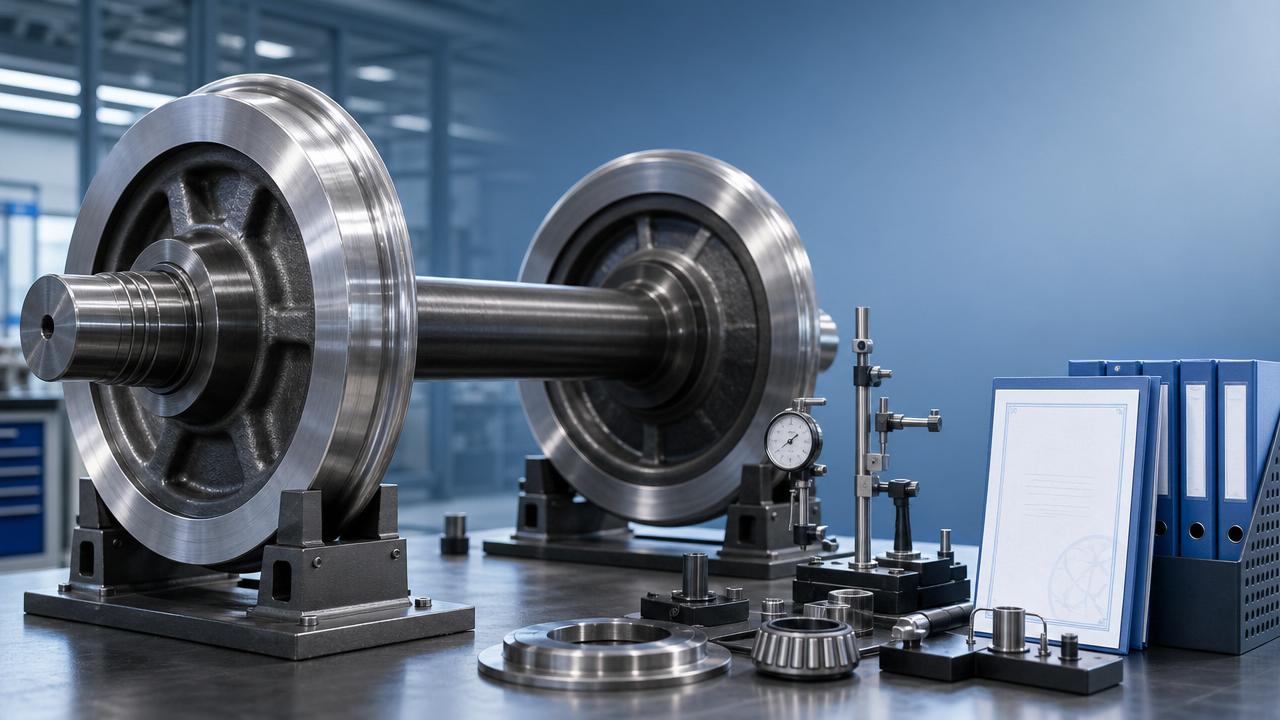
Choosing railway wheelset wholesale can reduce unit cost, but for quality and safety teams, the bigger issue is whether lower price introduces unacceptable operational risk.
In most cases, wholesale sourcing is not inherently unsafe. The risk appears when procurement scale moves faster than verification, traceability, fatigue control, and supplier discipline.
For railway operators, wagon builders, and maintenance organizations, a wheelset is not a simple commodity. It is a safety-critical assembly that sits directly at the intersection of load, speed, braking, and track interaction.
That is why quality and safety managers do not evaluate bulk supply only by quote comparison. They must judge whether the supplier can consistently meet material, dimensional, metallurgical, and documentation requirements.
This article examines where wholesale buying creates real savings, where it can quietly add exposure, and how to build a sourcing framework that protects both budget and operational safety.
What quality and safety managers are really searching for
When professionals search for railway wheelset wholesale, they are rarely looking only for a cheaper vendor list. They are usually trying to answer a more practical decision question.
Can bulk purchasing lower lifecycle cost without increasing derailment risk, premature wear, audit failure, warranty disputes, or maintenance disruption? That is the core search intent behind this topic.
For quality control personnel, the key concern is repeatability. One acceptable sample means little if the next batch shows hardness drift, machining inconsistency, or incomplete heat-treatment records.
For safety managers, the focus is failure consequence. A defect in axle metallurgy, press-fit quality, or wheel geometry does not remain a paperwork issue. It can become an operational event.
So the most useful discussion is not “wholesale versus non-wholesale.” It is how to separate legitimate scale efficiency from hidden technical and compliance risk.
Where railway wheelset wholesale really saves cost
Bulk sourcing can create genuine financial advantages, especially for fleets with stable specifications, planned overhauls, and predictable replenishment cycles. The savings are not limited to unit price alone.
First, larger orders usually improve supplier production planning. When machining, forging, heat treatment, inspection, and packaging are scheduled in longer runs, the manufacturer can reduce setup loss and pass part of that benefit downstream.
Second, wholesale contracts often reduce logistics cost per wheelset. Consolidated shipment, optimized packaging, and fewer urgent deliveries can significantly lower landed cost, especially across international freight corridors.
Third, larger framework agreements can improve stock availability. For maintenance planners, fewer emergency purchases mean less downtime, less premium freight, and fewer compromises in technical specification.
Fourth, a structured volume relationship can justify deeper supplier support. Buyers may gain better documentation access, production visibility, failure analysis response, and more stable after-sales handling.
These are real advantages. However, they only remain advantages if the supplied wheelsets perform consistently across service life, not just at incoming inspection.
Why low upfront price can become high total risk
The biggest mistake in railway wheelset wholesale decisions is treating the assembly as a standard industrial part with limited safety consequence. In reality, wheelset failure cost multiplies quickly.
A lower purchase price can be erased by accelerated wheel reprofiling, axle rejection, bearing interface problems, track damage, or wagon unavailability. One field issue can consume the savings of a large batch.
More importantly, some risks remain invisible during basic receiving checks. Surface finish may look acceptable while subsurface inclusions, improper heat treatment, or residual stress issues remain undetected.
There is also a systemic risk in bulk procurement itself. If a hidden defect exists in a large production lot, the same problem may be distributed across many vehicles before it is discovered.
That concentration effect matters to safety teams. Instead of isolated component failure, they may face serial defects, network-wide inspection campaigns, and urgent operational restrictions.
In other words, wholesale buying increases leverage in both directions. It can amplify savings, but it can also amplify the consequences of weak quality assurance.
Which technical risks deserve the closest scrutiny
Not every concern carries equal weight. Quality and safety managers should focus first on the technical failure modes most likely to affect service reliability and accident exposure.
Material traceability is foundational. Every wheel, axle, and critical process step should be traceable to heat number, batch, inspection records, and manufacturing date. Gaps here weaken every later investigation.
Metallurgical integrity is equally critical. Steel cleanliness, grain structure, hardness distribution, and heat-treatment consistency directly influence fatigue resistance, wear behavior, and crack initiation risk.
Press-fit quality between wheel and axle deserves close review. Incorrect interference, poor surface preparation, or process variation can undermine torque transmission and long-term assembly stability.
Dimensional accuracy must be controlled beyond headline tolerances. Wheel profile, back-to-back distance, axle journal dimensions, runout, and concentricity affect track interaction, bearing fit, and dynamic behavior.
Fatigue performance should never be assumed from certificate language alone. The buyer needs confidence that design, material, and process capability support the intended axle load, speed, braking regime, and route conditions.
Protective handling and storage also matter more than many buyers expect. Corrosion, impact damage, and poor preservation during transport can degrade otherwise acceptable products before installation.
Why standards compliance is necessary but not sufficient
Suppliers often state conformity with UIC, EN, or AAR requirements, and that is essential. But for safety-critical components, compliance claims should be treated as the start of evaluation, not the end.
A certificate can confirm that a product was tested or manufactured within a recognized framework. It does not automatically prove stable process control across every batch in a wholesale agreement.
Quality teams should ask practical questions. Which specific standard version applies? Does the approval cover the exact wheelset configuration? Were tests type-based, batch-based, or process-based?
They should also verify whether independent audits, witness inspections, or third-party laboratory reports support the documentation. A strong supplier is usually willing to provide structured evidence.
Safety managers should look beyond nominal compliance to application fit. A wheelset acceptable for one operating environment may not be suitable for another with higher axle loads, harsher curves, or different braking intensity.
The key lesson is simple: standards alignment reduces uncertainty, but it does not replace technical due diligence, especially when order volume magnifies exposure.
How to assess a wholesale supplier beyond the sales quotation
A reliable evaluation process should combine commercial review with manufacturing, engineering, and quality-system assessment. Price comparison alone is too narrow for wheelset procurement.
Start with process capability. Buyers should understand how the supplier controls forging, machining, heat treatment, non-destructive testing, press-fitting, final inspection, and release documentation.
Then review equipment and calibration discipline. Critical dimensions and material properties are only trustworthy when inspection tools, test rigs, and temperature controls are maintained and traceable.
Next, examine non-conformance handling. A mature supplier can show how defects are identified, quarantined, root-caused, corrected, and prevented from recurring in future lots.
Ask for evidence of batch consistency, not just qualification samples. Historical rejection rates, repeat-order performance, and customer complaint data reveal more than polished brochures.
Also assess sub-supplier control. If axles, wheels, bearings, or raw steel come from different sources, the main vendor should have a robust qualification and surveillance system.
Finally, review responsiveness under field conditions. If an in-service anomaly appears, how quickly can the supplier trace the batch, support analysis, and provide containment actions?
What incoming inspection should never miss
Even when sourcing from approved vendors, incoming inspection remains a critical barrier. It should be designed to detect both obvious defects and patterns that suggest process drift.
At minimum, teams should verify marking legibility, traceability linkage, dimensions, wheel profile, axle seat accuracy, surface condition, corrosion status, and transport damage.
Documentation review should confirm material certificates, heat-treatment records, dimensional reports, non-destructive test results, assembly records, and any required standard-specific declarations.
Sampling strategy matters. For safety-critical wholesale orders, simple random checks may be inadequate if the process history is weak or a new supplier is involved.
Where risk justifies it, buyers should use enhanced inspection plans, witness testing, hardness verification, ultrasonic review, or independent laboratory validation on selected batches.
Just as important, incoming data should be trended. A single batch may pass while still showing subtle movement toward tolerance limits or process instability.
Good quality control does not only accept or reject. It learns from patterns early enough to prevent a future failure campaign.
How bulk sourcing changes the risk model for safety management
From a safety perspective, wholesale supply changes exposure in three ways: scale, commonality, and detection delay. All three need explicit control measures.
Scale means more vehicles can be affected before a defect is discovered. If the lot is large, the operational impact of containment actions grows immediately.
Commonality means identical defects may repeat across the same production batch. This increases the chance of serial incidents rather than isolated technical events.
Detection delay occurs because some fatigue or metallurgical issues emerge only after service accumulation. By the time symptoms appear, many wheelsets may already be installed.
Because of this, safety teams should require risk segmentation. Do not release every unit from a large order into critical service at once if the supplier or process history is not fully proven.
Phased deployment, early-service monitoring, and tighter inspection intervals for initial batches can reduce consequence while preserving the commercial value of the contract.
A practical decision framework: when wholesale makes sense and when it does not
Railway wheelset wholesale usually makes sense when specifications are stable, service conditions are well understood, supplier capability is proven, and traceability systems are strong.
It is especially attractive for large freight fleets, scheduled maintenance programs, and organizations that can integrate procurement, engineering, and inspection into one controlled process.
It makes less sense when the buyer is using a new supplier without sufficient audit depth, when service conditions are severe but poorly documented, or when internal receiving control is weak.
It is also risky when procurement teams chase short-term savings while quality and safety functions are brought in too late. In that scenario, volume becomes a multiplier of uncertainty.
A useful rule is this: buy wholesale only when your technical control grows at least as fast as your purchase volume. If control lags behind volume, risk is being accumulated.
Questions quality and safety teams should ask before approval
Before approving a wholesale contract, cross-functional teams should challenge the supplier and their own internal process with disciplined, evidence-based questions.
Can every wheelset be traced to raw material heat, process route, inspections, and shipment batch? Are those records quickly retrievable during an incident investigation?
Which standards apply to this exact design, and how is compliance demonstrated in production, not only in type approval? What independent verification exists?
What are the supplier’s recent rejection rates, field claims, and corrective action records for similar wheelsets? How do they manage process drift before it reaches the customer?
What non-destructive tests are performed, at what stage, and with what acceptance criteria? How is press-fit quality verified and documented?
If a defect is found after delivery, what is the containment protocol? Can affected units in fleet service be identified immediately and isolated without broad operational disruption?
These questions do more than screen vendors. They reveal whether the buyer’s own governance is mature enough to handle bulk safety-critical procurement.
Conclusion: cost savings are real, but only under controlled conditions
The central answer is clear. Railway wheelset wholesale can save money, but only when the buying organization controls traceability, standards compliance, process verification, and in-service risk.
For quality control managers, the priority is not finding the lowest price. It is proving that batch consistency, material integrity, and documentation discipline are strong enough at scale.
For safety managers, the priority is preventing one procurement decision from becoming a multi-vehicle exposure event. Bulk buying increases consequence when verification is weak.
The best wholesale strategy is therefore selective, evidence-driven, and phased. It combines commercial efficiency with supplier audits, rigorous incoming inspection, and early operational monitoring.
When those controls are in place, wholesale procurement can support both cost performance and fleet reliability. When they are missing, the apparent savings are often temporary and dangerously misleading.
Industry Briefing
Get the top 5 industry headlines delivered to your inbox every morning.