
How to compare a locomotive pantograph factory fairly

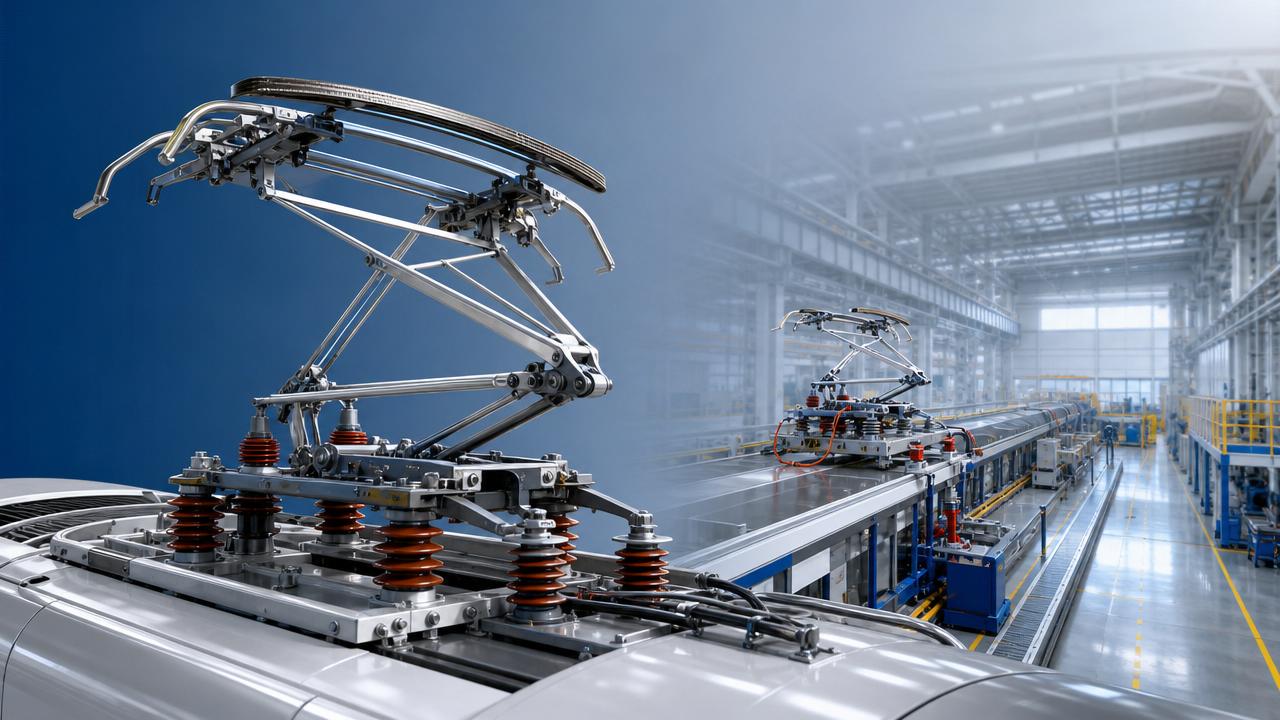
Choosing a locomotive pantograph factory is not only a sourcing exercise. It is a technical judgment tied to current collection stability, safety margins, certification evidence, and fleet lifecycle performance.
In railway systems, the pantograph links rolling stock to overhead power. Small design differences can affect arcing, strip wear, contact force, and service reliability across freight corridors.
A fair comparison therefore needs objective criteria. Catalog photos and low quotations matter less than engineering discipline, test transparency, and the ability to support demanding operating conditions.
This guide explains how to compare a locomotive pantograph factory fairly, using measurable checkpoints aligned with international railway expectations and practical project evaluation.
Technical meaning of a locomotive pantograph factory
A locomotive pantograph factory designs and manufactures roof-mounted current collection systems for electric locomotives and related rail vehicles. Its work extends beyond metal fabrication.
Core capability includes aerodynamic structure design, articulation geometry, spring or pneumatic control, head assembly precision, carbon strip integration, insulation coordination, and fatigue-resistant materials.
A competent factory also manages validation. That includes static force checks, uplift consistency, dynamic interaction analysis, endurance testing, and documentation linked to UIC, EN, or project specifications.
When comparing suppliers, the question is simple. Can the factory deliver stable power collection under real speed, climate, vibration, and maintenance conditions, not just under workshop assumptions?
What fair comparison should measure
- Design suitability for voltage system, speed band, and roof envelope
- Compliance evidence for UIC, EN, and customer technical standards
- Manufacturing consistency across batches and replacement parts
- Testing depth, traceability, and failure analysis capability
- Lifecycle support, lead time stability, and spare availability
Industry context and current evaluation priorities
Rail electrification is expanding across freight and mixed-traffic corridors. At the same time, operators expect lower maintenance cost, higher availability, and compatibility with stricter safety frameworks.
That makes the choice of a locomotive pantograph factory more sensitive than before. Factories are now judged by lifecycle data, not just initial delivery speed.
In this environment, fair assessment means understanding both engineering depth and organizational discipline. A strong locomotive pantograph factory should perform well in both dimensions.
Core criteria for comparing a locomotive pantograph factory
1. Standards and certification alignment
Start with standard coverage. Ask which UIC, EN, IEC, or national rail requirements the factory designs against, tests against, and certifies against.
A trustworthy locomotive pantograph factory should provide a compliance matrix. It should link each requirement to drawings, material records, tests, and change-control documents.
2. Engineering design maturity
Review the design architecture. Key points include head geometry, contact force stability, frame stiffness, aerodynamic behavior, insulation layout, and ease of maintenance access.
Request design history if possible. Repeated field iterations often reveal whether the factory solves root causes or only modifies visible components.
3. Material and component quality
Material quality directly affects fatigue life and current collection stability. Check structural alloys, fasteners, bearings, springs, insulators, pneumatic parts, and carbon strips.
A fair review of a locomotive pantograph factory includes supplier traceability. Approved sub-suppliers and incoming inspection records reduce hidden variation between production lots.
4. Testing capability and data transparency
Testing separates engineering confidence from brochure language. Ask for static tests, dynamic simulation, endurance cycles, contact force curves, insulation tests, and environmental validation.
The best factories explain failures clearly. A credible locomotive pantograph factory will show corrective actions, retest results, and controlled engineering updates.
5. Production consistency
Prototype quality alone is insufficient. Evaluate welding quality control, assembly jigs, torque management, dimensional inspection, and final acceptance procedures.
Consistency matters especially for fleet-scale orders. The same contact behavior should be reproducible unit after unit, with minimal adjustment during installation.
6. Service and spare support
Even a strong design needs stable support. Compare spare packages, lead times, field troubleshooting response, retrofit capability, and engineering assistance for life extension programs.
Practical business value of an objective factory assessment
A careful comparison of a locomotive pantograph factory improves more than component selection. It protects timetable reliability, maintenance planning, and corridor electrification investments.
- Reduces risk of unstable contact and wire damage
- Improves interoperability across mixed standards environments
- Supports realistic lifecycle cost forecasting
- Strengthens audit readiness for regulated rail projects
- Limits downtime caused by weak spare planning
Within global rail engineering, these outcomes influence freight network capacity and technical resilience. That is why factory evaluation should be evidence-based from the beginning.
Typical comparison scenarios and factory fit
These scenarios show why a single ranking can be misleading. The best locomotive pantograph factory for one project may not be best for another.
A fair evaluation method that avoids common bias
Fair comparison requires a weighted framework. Price should be one factor, not the controlling factor, especially when downtime or infrastructure damage carries high downstream cost.
Recommended scoring structure
- 25% standards compliance and certification depth
- 20% engineering design maturity
- 20% testing capability and data transparency
- 15% production quality assurance
- 10% lifecycle support and spare readiness
- 10% commercial terms and lead time stability
Use the same request package for every candidate locomotive pantograph factory. Uneven information requests create distorted conclusions and reward presentation quality over technical substance.
Common comparison mistakes
- Comparing drawings without checking test evidence
- Accepting generic certificates unrelated to the actual model
- Ignoring sub-supplier control for carbon strips and insulators
- Treating prototype success as proof of serial reliability
- Underestimating after-sales engineering support
Implementation steps for the next comparison cycle
Begin with a technical checklist tailored to voltage system, operational speed, climate exposure, and maintenance philosophy. Then request matching evidence from each locomotive pantograph factory.
Review factory test records before commercial negotiation. If possible, add an audit covering assembly flow, inspection discipline, document traceability, and nonconformance handling.
Where fleet performance data exists, compare mean time between intervention, strip wear patterns, and field modification frequency. Operational evidence often reveals the true strength of a factory.
For organizations tracking global freight and engineering benchmarks, this structured approach aligns supplier selection with broader reliability, compliance, and corridor performance goals.
The most reliable result comes from balanced judgment. A fair locomotive pantograph factory comparison should combine standards review, technical proof, lifecycle thinking, and measured commercial analysis.
- Benchmarking Railway Equipment Suppliers in Southeast Asia: A Procurement FrameworkTime : Oct 04, 2026
- How Locomotive Auxiliary Systems Monitoring Detects Cooling and Compressor FaultsTime : Oct 02, 2026
- Global Supply Chain Updates for Cold Storage Equipment: What Buyers Should TrackTime : Oct 01, 2026
Industry Briefing
Get the top 5 industry headlines delivered to your inbox every morning.