
What Documents Are Required for Rolling Stock Acceptance?

What Documents Are Required for Rolling Stock Acceptance?
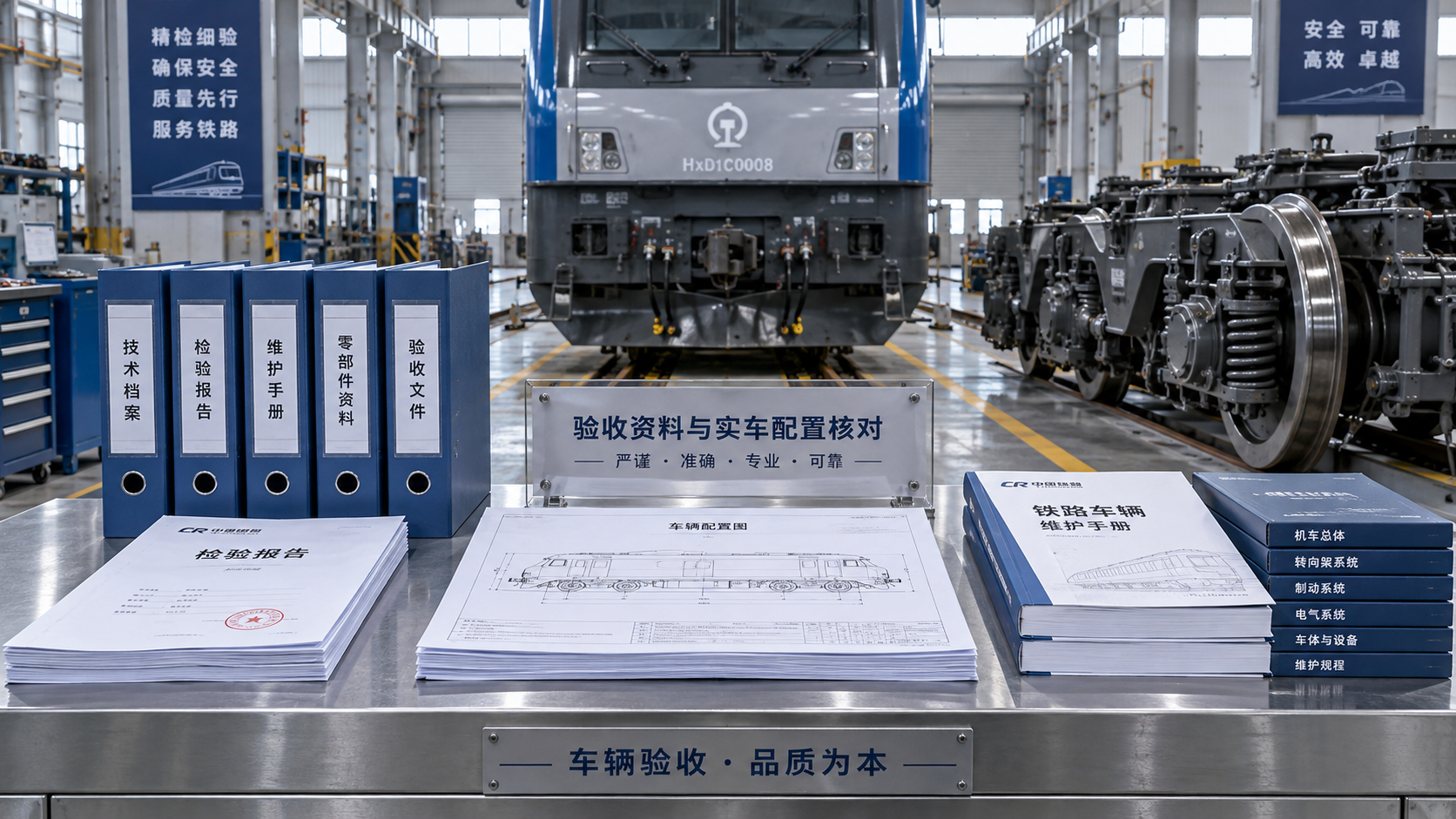
What rolling stock documents are needed for acceptance? For railway authorities, manufacturers, and EPC contractors, the answer extends beyond a delivery certificate. Acceptance typically requires technical specifications, inspection and test reports, applicable compliance evidence, maintenance manuals, and configuration records that demonstrate contractual conformity and support safe operation. Missing or inconsistent documentation can delay handover and disrupt fleet deployment.
The difficulty is not simply collecting enough files. It is proving that the documents describe the vehicles actually delivered, address the intended operating conditions, and satisfy the right decision-makers. A locomotive can pass a factory test yet still lack evidence needed for network access. A freight wagon can meet its dimensional specification while its maintenance instructions remain incomplete.
A useful acceptance dossier connects three things: the agreed requirements, the delivered configuration, and the evidence supporting release.
Define the acceptance boundary before requesting documents
“Acceptance” can refer to factory release, receipt at the delivery location, contractual handover, regulatory authorization, or readiness to enter service. These are related milestones, not interchangeable decisions. The contract should identify which milestone each certificate records, who can sign it, and what remains outstanding afterward.
Factory acceptance normally checks manufacturing conformity and agreed tests before shipment. Site acceptance may cover transport damage, reassembly, commissioning, and interfaces with local infrastructure. Regulatory authorization follows the applicable legal process. Operational readiness additionally depends on maintenance arrangements, competent personnel, and route compatibility.
Build a document requirements matrix around these boundaries. For every deliverable, record its contractual or regulatory basis, responsible supplier, reviewer, required revision, applicable vehicle numbers, and acceptance milestone. This exposes missing responsibilities early, particularly when onboard signaling equipment, traction packages, or bogies come from separate suppliers.
The core documents in a rolling stock acceptance dossier
Technical baseline and vehicle identification
Start with the approved technical specification, contractual schedules, agreed deviations, and final configuration definition. Together, these establish what the purchaser ordered and what the manufacturer is delivering.
The technical file normally includes general arrangement drawings, key interface drawings, vehicle mass information, axle loads, dimensional envelopes, braking characteristics, coupler arrangements, and electrical or pneumatic schematics where relevant. Locomotive files also need traction-system and onboard-control details. Freight wagon files require particular attention to loading limits, load distribution, running gear, and cargo-related interfaces.
Vehicle and component identification must be consistent throughout. Serial numbers, fleet numbers, equipment variants, and software versions should agree with physical markings and delivery records. A certificate for an approved design does not, by itself, establish that every delivered vehicle matches that design.
Inspection, manufacturing quality, and test evidence
The dossier should contain the approved inspection and test plan, completed inspection records, factory acceptance results, and any required site or commissioning reports. Supporting records may include material certificates, welding documentation, non-destructive examination reports, dimensional inspections, and calibration evidence for relevant measuring equipment. Their required scope depends on the contract and applicable technical rules.
Distinguish design validation from vehicle-specific checks. Type tests demonstrate characteristics of a representative design under defined conditions. Routine tests demonstrate conformity or functionality of individual vehicles. Both can be necessary, but they answer different questions.
A usable test report identifies the procedure, tested configuration, conditions, acceptance criteria, results, deviations, and approving parties. For braking or running-dynamics evidence, operating speed, vehicle loading, and relevant track conditions can determine whether the result supports the intended duty. A summary marked “passed” is insufficient when the underlying conditions are unclear.
Compliance and authorization evidence
Depending on the market, required evidence can include declarations of conformity, assessment reports, vehicle authorization documentation, and records demonstrating compliance with applicable technical rules. The dossier should identify the standards and regulatory provisions used, including their editions and any approved departures.
Avoid treating UIC publications, EN standards, and AAR requirements as interchangeable certification systems. Their relevance differs by technical subject, network, jurisdiction, and contract. Compliance with one referenced standard does not automatically establish permission to operate elsewhere.
For projects subject to the EU railway interoperability framework, evidence may involve applicable Technical Specifications for Interoperability, notified-body documentation, national-rule assessments where required, and vehicle authorization through the competent process. Other markets may rely on different authority approvals, railroad requirements, or interchange rules. Confirm the project-specific route before agreeing the acceptance checklist.
Operation, maintenance, and support information
Operating manuals, maintenance instructions, troubleshooting guides, illustrated parts information, and servicing requirements translate the engineering design into daily railway work. They should reflect the delivered configuration rather than an earlier product variant.
Review whether these documents specify inspection intervals, wear limits, safety precautions, lifting and recovery arrangements, consumables, and special tools. For safety-critical maintenance tasks, personnel need actionable limits and procedures—not a general instruction to “inspect regularly.” Maintenance intervals should have an identified technical basis and any stated operating assumptions.
Training records, spare-parts deliveries, diagnostic access, and software-support arrangements may also be contractual handover requirements. Warranty terms and supplier escalation contacts belong in the support package, although they do not replace technical compliance evidence.
Show how the evidence applies to each delivered vehicle
Traceability is where otherwise substantial dossiers can fail. A drawing is revised after testing, a component is substituted during production, or software is updated before shipment. Unless the dossier explains the change and its assessment, reviewers cannot tell whether earlier evidence still applies.
Maintain a clear evidence chain: requirement → approved design → inspection or test → delivered vehicle → release decision. A vehicle-level configuration register should connect serial numbers to relevant drawings, installed equipment, software baselines, test records, and accepted deviations. Shared type-level evidence can be referenced rather than duplicated, provided its applicability is explicit.
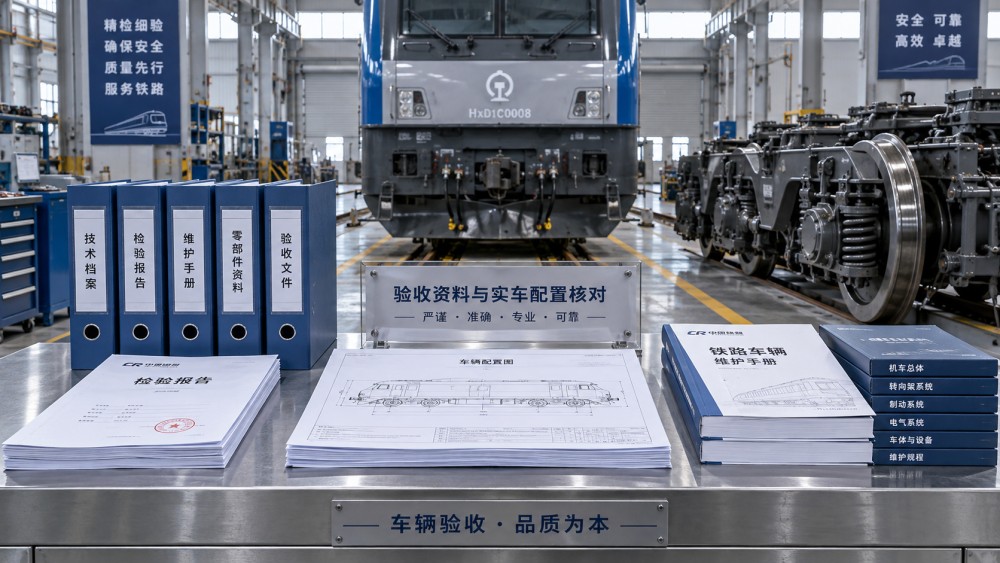
Change records should explain why the change was made, which vehicles are affected, and whether additional testing or assessment is necessary. “Equivalent component” is not an adequate justification on its own. Equivalence must be assessed against relevant interfaces, performance, safety, and maintenance requirements.
Check the operating environment, not just the vehicle
Acceptance evidence becomes more demanding when vehicles cross networks or enter an unfamiliar corridor. Track gauge alone does not establish compatibility. Loading gauge, axle-load limits, braking arrangements, coupler interfaces, train-detection compatibility, power supply, and signaling requirements can all affect deployment.
For locomotives equipped with ETCS or other train-protection systems, relevant configuration and integration evidence should be included where required. Radio equipment and operating communication arrangements also need confirmation against the intended network. Freight wagons may have fewer onboard systems, but their loading restrictions, brake equipment, and interchange conditions remain consequential.
This cross-interface view aligns with Global Railway-Freight & Engineering’s technical intelligence focus. G-RFE connects rolling stock engineering with infrastructure, signaling, intermodal operations, and specialized railway machinery, using UIC, EN, and AAR references where applicable. For acceptance planning, the practical value is identifying interface questions that a vehicle-only checklist can overlook—not substituting technical benchmarking for a formal approval.
Handle open items without weakening the release decision
Not every outstanding issue has the same consequence. A missing translated appendix, an unresolved brake-test result, and an incomplete spare-parts shipment should not be placed in one undifferentiated punch list.
Classify open items by their effect on safety, regulatory compliance, contractual conformity, and maintainability. Then define the release consequences:
- Blocking items: issues that prevent the relevant acceptance or operational release until resolved.
- Conditionally acceptable items: issues allowed to remain open only through a documented decision by the authorized parties, with restrictions and closure dates where appropriate.
- Administrative or support items: outstanding deliverables that still require ownership and follow-up but may not prevent the specified milestone.
A purchaser’s commercial concession cannot waive a mandatory legal requirement. Likewise, provisional acceptance does not automatically permit operation. The signed certificate should state the milestone achieved, the covered vehicles, agreed exclusions, and any remaining conditions.
Review the dossier before the handover meeting
The final review should test usability as well as completeness. Can a maintainer find the correct wheelset limits? Can an assessor trace a test result to the installed brake configuration? Can the operator distinguish approved operating restrictions from unresolved supplier comments?
Check document revisions, signatures, language requirements, access permissions, and file formats. Confirm that referenced annexes are present and that essential information is not available only through a supplier portal with uncertain long-term access. Controlled updates are useful; an unstable baseline is not.
For a fleet delivery, verify that the dossier covers every unit and identifies differences between production batches. Do not assume that acceptance of the first vehicle closes the documentation obligations for later units.
The next step is to reconcile the contract, intended network, and applicable approval route in one requirements matrix. Agree the evidence, reviewers, and release conditions before delivery pressure builds. Rolling stock acceptance is defensible when the signed decision can be traced back to the actual vehicle and its intended service—not merely to a folder marked “complete.”
- Sizing a Narrow-Gauge Locomotive for Tunnel Muck Haulage CyclesTime : Oct 31, 2026
- Battery vs Diesel Tunnel Locomotives: Ventilation and Operating Trade-OffsTime : Oct 31, 2026
- Choosing a Narrow-Gauge Tunnel Locomotive: Clearance, Grade and PayloadTime : Oct 31, 2026
Industry Briefing
Get the top 5 industry headlines delivered to your inbox every morning.