
Is Rolling Stock Compatibility Checked Before Commissioning?

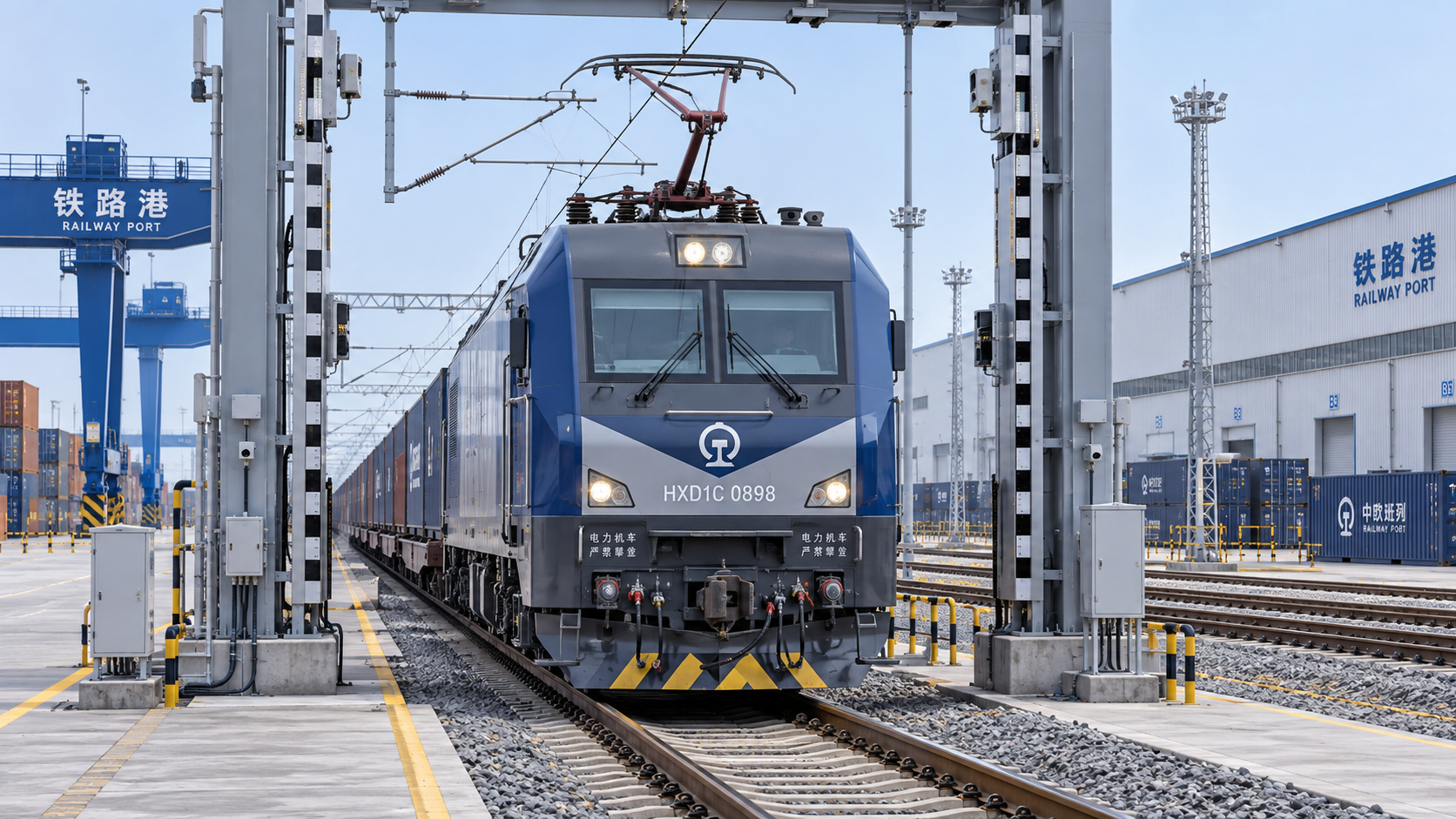
Is Rolling Stock Compatibility Checked Before Commissioning?
Yes—before entering service, locomotives and wagons generally undergo compatibility assessments against their intended infrastructure, operating conditions, and applicable approval requirements. These checks help prevent failures involving loading gauge, axle loads, braking performance, power supply, and signaling interfaces. But “before commissioning” needs some care: controlled test movements may be part of the commissioning process, while unrestricted commercial operation requires the relevant approvals and operating checks to be complete.
The practical question is not simply whether a vehicle has passed inspection. It is whether the intended train can operate over the intended route, in its actual configuration, under defined conditions. A locomotive accepted on one network is not automatically suitable for another. A wagon that fits the main line may still encounter a clearance problem inside a port terminal.
For railway authorities, manufacturers, and EPC contractors, the safest approach is to separate vehicle conformity, infrastructure compatibility, and operational readiness. They overlap, but none replaces the others.
Vehicle authorization is not a route-wide permission slip
Vehicle authorization or acceptance establishes that a vehicle meets the requirements applicable to its approved configuration and intended area of use. Route compatibility examines whether that vehicle—or the train assembled from it—matches the characteristics of the route it will actually take.
In the European Union framework, vehicle authorization and the railway undertaking’s checks before use are distinct processes. Elsewhere, the terminology and allocation of duties differ. Infrastructure managers, railway operators, national authorities, and vehicle owners may each hold part of the responsibility. The governing rules must therefore be identified at the start of the project, rather than inferred from a supplier’s previous delivery.
This distinction becomes especially important when a project includes both new rolling stock and upgraded infrastructure. Acceptance of the locomotive does not establish that every bridge can carry it. Completion of a signaling installation does not establish that every onboard software configuration will communicate correctly with it.
A useful procurement question is: Who demonstrates compatibility, using which evidence, for which routes and configurations? If the contract only says “compliant with applicable standards,” important interface responsibilities may remain unresolved.
The checks that decide whether the train can run
Clearance involves more than vehicle width
Track gauge is an obvious starting point, but matching the distance between the rails does not establish clearance. Assessors also consider the vehicle’s swept envelope, suspension movement, curve overthrow, track tolerances, and relevant infrastructure margins. For freight wagons, the load can be the controlling factor: a container, machinery shipment, or other consignment may extend beyond the permitted loading envelope even when the wagon itself is acceptable.
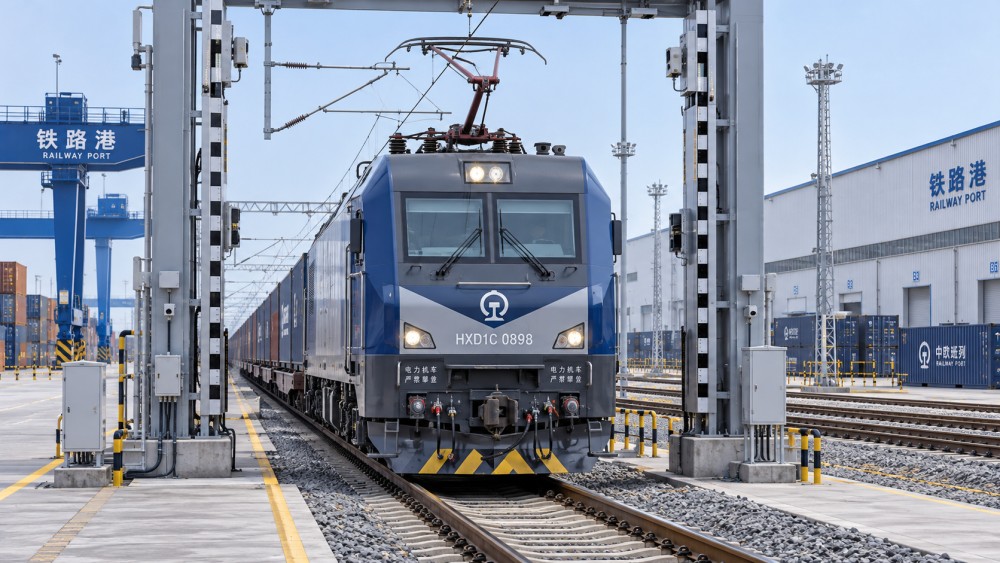
Port sidings, depot entrances, tight curves, and older structures deserve attention early. They can impose constraints not apparent from a corridor’s headline loading-gauge classification. The assessment needs to include access tracks and terminal movements, not just the main line between origin and destination.
Axle load alone does not settle infrastructure capacity
Vehicle mass, axle spacing, load distribution, speed, and dynamic behavior all affect the infrastructure assessment. A route classification is useful, but bridge capacity cannot always be reduced to a single axle-load figure. Particular structures may require additional engineering review or operating restrictions.
Running behavior also matters. Wheel profiles, suspension characteristics, track geometry, and wheel–rail interaction influence stability and forces transmitted to the track. Evidence from testing on one set of conditions needs to be checked for applicability to the proposed service. An empty wagon and a fully loaded wagon may represent materially different assessment conditions.
Braking must be assessed at train level
A successful individual vehicle brake test does not prove that an assembled freight train can meet the route’s operating requirements. Train mass, length, brake arrangement, brake propagation, gradients, available adhesion, and operating speed influence stopping performance and train handling.
On sustained descents, the question extends beyond a single stopping-distance calculation. Brake thermal capacity, locomotive dynamic braking where available, and degraded-mode procedures may need consideration. Couplers and draft gear also require review where long trains, mixed equipment, or steep gradients create significant longitudinal forces. Mechanical connection is only one part of compatibility.
Electrical and digital interfaces need their own evidence
For electric locomotives, nominal voltage is only the beginning. Supply frequency where relevant, pantograph geometry, overhead contact-line interaction, current demand, regenerative-braking acceptance, and electrical protection arrangements may all affect operation. A locomotive capable of returning energy to the supply cannot assume that every network permits or supports that operating mode.
Signaling compatibility is similarly specific. Installing ETCS equipment does not, by itself, demonstrate compatibility with every ETCS deployment. Applicable system versions, national functions, trackside implementation, radio arrangements, and compatibility evidence must be examined. Train detection also needs attention: wheelset characteristics and electromagnetic emissions can affect interactions with track circuits or axle counters.
GSM-R communication, where used, should be assessed against the actual network and operating requirements. CBTC belongs to a different deployment context and should not be treated as interchangeable with mainline freight signaling. The relevant question is which system governs the proposed operation—not which technology appears most advanced in a brochure.
What UIC, EN, and AAR references can—and cannot—prove
Standards provide assessment methods and technical requirements, but there is no single universal “rolling stock compatibility certificate.” Their applicability depends on jurisdiction, network rules, vehicle type, contractual requirements, and the editions referenced.
For example, the EN 15273 series addresses railway gauging, EN 14363 addresses testing and simulation for acceptance of vehicle running characteristics, and EN 15528 addresses line categories for managing the interface between vehicle load limits and infrastructure. EN 50367 addresses technical criteria for pantograph and overhead contact-line interaction. These references support particular parts of an assessment; none establishes complete route compatibility on its own.
UIC publications may inform technical specifications and interoperability assessments where adopted or referenced. In North American freight practice, relevant AAR standards and interchange requirements can be central to equipment acceptance. However, meeting an AAR requirement does not remove the need to establish compatibility with the receiving railroad’s infrastructure and operating rules.
For a cross-border project, ask for a requirements matrix showing the applicable reference, edition, evidence, and acceptance party. A list of standard numbers without that mapping is not a dependable acceptance plan.
Start the assessment before the vehicle arrives
Leaving compatibility work until delivery creates avoidable pressure. By then, changing bogies, onboard equipment, pantographs, or brake arrangements may be difficult. Even a relatively small interface change can affect documentation, validation, spares, and training.
A workable sequence begins with a route and service definition: where the train will run, its expected formations, loading conditions, speeds, and operating modes. Infrastructure information is then compared with vehicle data, with uncertain or missing parameters recorded as open issues. Design reviews and analysis should resolve what they can before physical testing is scheduled.
The remaining evidence may require static checks, controlled dynamic tests, signaling integration tests, or trial operations. Not every parameter must be retested if valid existing evidence covers the application. Equally, a previous test report should not be reused merely because the vehicle model name is unchanged.
Testing itself requires suitable permissions, risk controls, and agreed limits. A restricted test movement is not evidence that commercial operation has already been approved. Its purpose may be to collect the evidence needed for that decision.
Handle incomplete evidence without hiding the restriction
Sometimes compatibility can only be demonstrated for a narrower operating envelope. A wagon may be acceptable below a specified loading condition, or a locomotive may be restricted to certain routes or speeds. Whether such restrictions are permissible depends on the applicable approval framework and the engineering basis.
The restriction must also be enforceable. A speed limit recorded only in an engineering report is not enough if dispatchers, drivers, and train planners cannot reliably apply it. Conditions need to reach the operating documentation and the systems used to plan and control movements.
Before release, the acceptance record should make four things clear:
- Which vehicle configuration, software versions, and train formations the evidence covers.
- Which routes, terminals, and operating conditions have been assessed.
- Which limitations remain, who controls them, and how compliance is monitored.
- Which changes trigger a review, such as equipment modifications, different loads, route changes, or revised infrastructure.
This is configuration management, not paperwork for its own sake. Without it, an acceptable tested configuration can gradually become an unassessed operating configuration.
Treat compatibility as an interface decision
The cross-disciplinary perspective behind Global Railway-Freight & Engineering (G-RFE) is useful here: heavy-haul rolling stock, infrastructure, signaling, rail-port interfaces, and specialized engineering equipment cannot be assessed in isolation. Technical intelligence can help identify the relevant standards and interface questions, but project-specific evidence and responsible acceptance decisions still determine readiness.
So, is rolling stock compatibility checked before commissioning? Yes, although some demonstrations occur during controlled commissioning activities. Before commercial service, the stronger question is whether compatibility has been demonstrated for the actual operation—not just for the vehicle as delivered.
Request the route-specific compatibility record, its configuration baseline, and its unresolved conditions. If those documents cannot identify the final terminal access, the intended train formation, or the applicable signaling configuration, the release decision needs further work.
- Sizing a Narrow-Gauge Locomotive for Tunnel Muck Haulage CyclesTime : Oct 31, 2026
- Battery vs Diesel Tunnel Locomotives: Ventilation and Operating Trade-OffsTime : Oct 31, 2026
- Choosing a Narrow-Gauge Tunnel Locomotive: Clearance, Grade and PayloadTime : Oct 31, 2026
Industry Briefing
Get the top 5 industry headlines delivered to your inbox every morning.