
Waste Recycling Equipment News: 5 Trends Shaping 2026 Upgrades

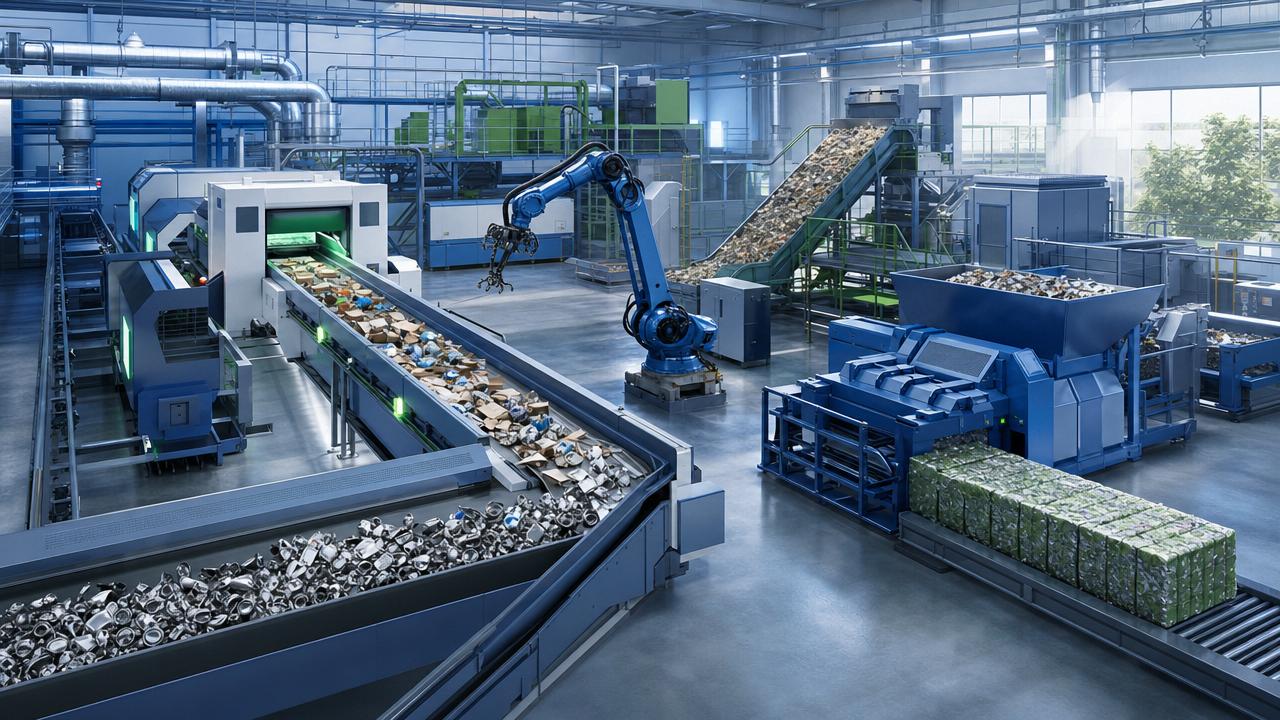
Waste Recycling Equipment News: 5 Trends Shaping 2026 Upgrades reflects a broader industrial shift. Waste recovery is no longer judged only by throughput. It is now measured by data quality, compliance resilience, energy performance, and system interoperability.
That is why environmental equipment news for waste recycling matters beyond the recycling sector itself. Logistics hubs, rail-connected industrial parks, ports, engineering contractors, and public infrastructure operators are all watching the same signals.
In 2026, upgrade decisions will be shaped by smarter automation, tighter reporting obligations, and pressure to connect heavy-duty assets into more transparent operating models. The result is a market where equipment strategy increasingly overlaps with transport efficiency, carbon control, and asset lifecycle planning.
Why waste recycling upgrades now sit in a wider industrial context
The latest environmental equipment news for waste recycling shows that recovery plants are becoming infrastructure nodes, not isolated facilities. They process material streams linked to manufacturing, construction, municipalities, ports, and inland freight corridors.
That wider view matters for organizations following G-RFE intelligence. Railway-freight and engineering networks depend on efficient movement of scrap metals, recovered aggregates, packaging waste, and industrial residues.
When recovery equipment becomes more precise and more connected, downstream rail and intermodal systems gain better load predictability, cleaner commodity segregation, and fewer handling disruptions.
In practical terms, a waste sorting line upgrade can influence wagon loading consistency, terminal turnaround, contamination claims, and reporting against low-carbon transport targets.
Trend 1: Intelligent sorting is moving from optional to operationally central
The first major theme in environmental equipment news for waste recycling is the expansion of sensor-based sorting. AI vision, near-infrared systems, robotic picking, and adaptive recognition software are maturing quickly.
This is not only about labor substitution. It is about improving material purity at a time when buyers are less willing to accept mixed streams and undocumented quality variation.
For mixed commercial waste, construction debris, and metal-rich streams, intelligent sorting reduces rework and improves revenue certainty. It also supports traceability, which increasingly affects contract terms.
Facilities linked to rail-port systems benefit especially. Better sort accuracy means fewer rejected outbound loads and more stable feedstock definitions for long-distance movement.
What to examine in sorting upgrades
- Recognition accuracy across dirty, wet, or irregular materials
- Integration with conveyors, balers, shredders, and control software
- Data output for quality audits and customer reporting
- Maintenance requirements for sensors in abrasive conditions
Trend 2: Energy optimization is becoming a board-level equipment issue
Another strong thread in environmental equipment news for waste recycling is energy intensity. Shredding, separation, crushing, screening, and dust control all consume meaningful power.
In 2026, upgrades are increasingly evaluated through total energy behavior rather than nameplate efficiency alone. Variable-speed drives, load-responsive motors, regenerative systems, and smarter power management are now central.
This matters because waste recovery margins can be damaged by volatile electricity pricing. It also matters because industrial clients are asking for more transparent carbon data across logistics and processing chains.
The connection to G-RFE’s landscape is clear. Low-carbon freight corridors work best when adjacent industrial assets also reduce energy waste. Recovery plants near railheads or inland terminals are increasingly part of that equation.
Trend 3: Compliance is shifting from paperwork to real-time proof
Environmental equipment news for waste recycling increasingly focuses on digital compliance. Operators are expected to show not just intentions, but auditable evidence on emissions, contamination, handling safety, and material destinations.
That pushes equipment design toward embedded monitoring. Dust suppression systems, fire detection, load monitoring, material tracking, and emissions-related controls are being specified earlier in procurement.
For heavy-duty environments, this trend resembles what happened in rail engineering years ago. Safety and performance moved from isolated hardware checks toward integrated system assurance aligned with recognized standards.
The most useful upgrades are those that produce reliable operating evidence without creating reporting overload. Clean dashboards, event logs, and interoperable data structures now carry strategic value.
Common compliance pain points
- Limited proof of material origin and destination
- Weak documentation of contamination thresholds
- Inconsistent incident records for dust, heat, or fire risk
- Disconnected systems across processing and transport
Trend 4: Connected heavy-duty systems are replacing isolated machines
A major takeaway from environmental equipment news for waste recycling is that standalone equipment is losing ground. Upgrades now favor connected machine environments with shared controls, condition monitoring, and remote diagnostics.
This is especially relevant where facilities handle bulky scrap, rail-served industrial waste, demolition material, or export-bound recyclables. Downtime in one machine can disrupt transport schedules and contract commitments across the chain.
Borrowing lessons from signaling and engineering platforms, connected equipment architectures help operators anticipate faults earlier. They also support more disciplined maintenance planning and spare-parts forecasting.
In other words, the upgrade decision is no longer only mechanical. It is partly digital infrastructure planning.
Where connectivity delivers the clearest value
Facilities with multi-shift operations gain immediate value from predictive maintenance. Sites feeding intermodal or rail export flows gain value from synchronized dispatch and cleaner inventory visibility.
Sites with mixed legacy assets should pay close attention to interface compatibility. A modern sorter adds less value if baling, weighing, or dispatch data still stays trapped in separate systems.
Trend 5: Upgrade planning is becoming more scenario-based
The fifth shift in environmental equipment news for waste recycling is methodological. Capital planning is becoming less generic and more scenario-led.
Rather than asking which machine is most advanced, operators are asking which configuration fits expected waste composition, outbound logistics model, reporting obligations, and utility constraints.
A municipal transfer station has different priorities from a rail-linked metals processor. A construction and demolition recycler faces different wear patterns from a packaging recovery line.
That is why comparison should happen across scenarios, not brochures.
How to read equipment signals more effectively
Not every headline in environmental equipment news for waste recycling deserves the same weight. The more useful signals usually connect technical change with commercial or regulatory consequences.
A practical review framework should include process fit, data fit, logistics fit, and standards fit. That mirrors how complex engineering sectors already assess mission-critical assets.
- Process fit: match equipment to actual material variability
- Data fit: confirm usable outputs, not just available sensors
- Logistics fit: test compatibility with road, rail, or port workflows
- Standards fit: review safety, reporting, and interoperability expectations
This approach is particularly relevant where waste recovery interacts with freight infrastructure. G-RFE’s perspective shows that engineering value often appears at system boundaries, where handling, movement, and compliance meet.
What should shape the next decision cycle
The most useful lesson from current environmental equipment news for waste recycling is simple. 2026 upgrades should be judged as operating systems, not isolated purchases.
A stronger decision process starts with material flow mapping, energy baseline review, compliance gaps, and transport interface checks. From there, upgrade priorities become easier to rank.
Where rail, port, or heavy engineering environments are involved, the best outcomes usually come from aligning recovery equipment with broader infrastructure logic. That includes safety discipline, lifecycle planning, and reliable data exchange.
The next step is not to chase every innovation. It is to build a sharper comparison framework, test it against real site conditions, and follow environmental equipment news for waste recycling with a clear view of operational fit.
Industry Briefing
Get the top 5 industry headlines delivered to your inbox every morning.