
Traction Motor Efficiency Benchmarks That Affect Lifecycle Cost

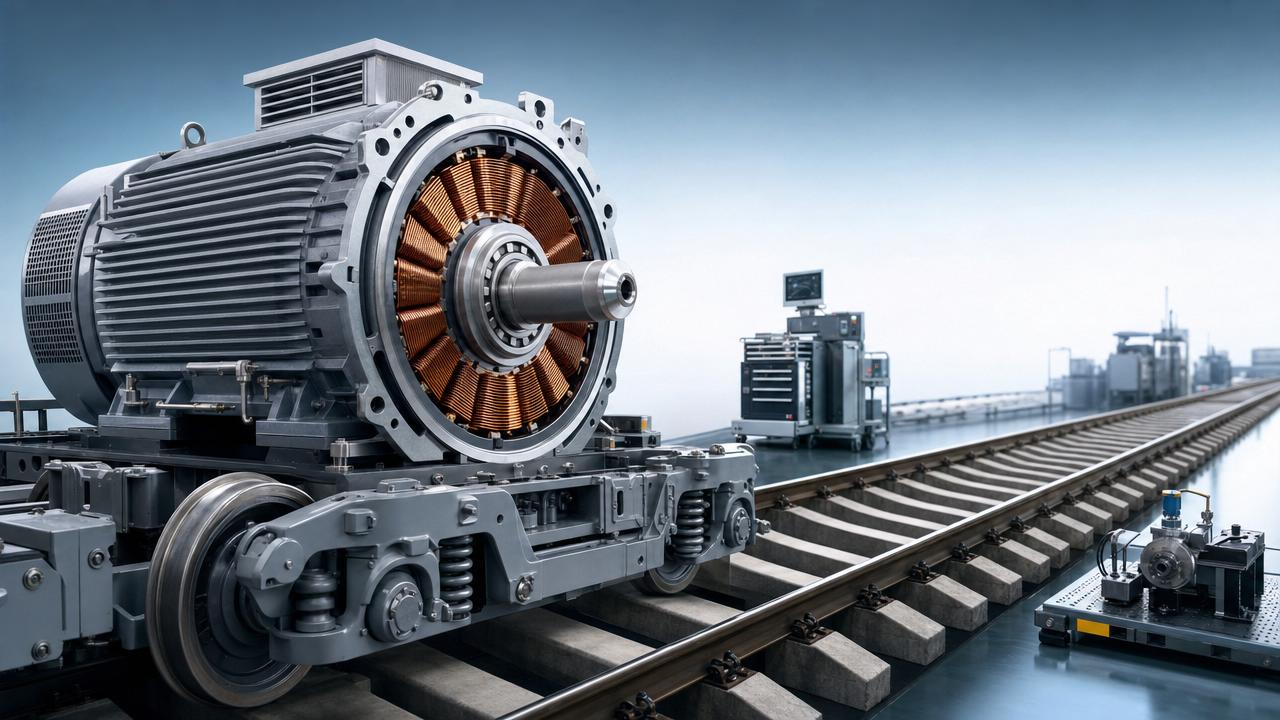
For financial approvers evaluating rail asset investments, traction motor efficiency benchmarks are more than a technical metric—they directly shape energy spend, maintenance cycles, and total lifecycle cost.
In heavy-haul and freight operations, efficiency performance influences electricity demand, thermal loading, overhaul timing, and asset availability across long duty cycles.
Well-defined traction motor efficiency benchmarks help align engineering claims with commercial assumptions, reducing uncertainty in capital planning and long-term operating forecasts.
Within global railway systems, benchmark discipline also supports comparison across suppliers, standards, route profiles, and mixed fleet modernization programs.
Understanding traction motor efficiency benchmarks
Traction motor efficiency benchmarks describe how effectively a motor converts electrical input into usable mechanical output under specified operating conditions.
These benchmarks are not a single nameplate number. They should reflect speed range, torque demand, cooling method, altitude, ambient temperature, and duty cycle.
In railway applications, benchmark quality depends on measured performance at starting, continuous, and intermediate load points rather than peak laboratory values alone.
For lifecycle analysis, traction motor efficiency benchmarks matter most when paired with route energy models, adhesion conditions, and fleet utilization assumptions.
Core efficiency components
- Copper losses driven by current and thermal stress.
- Iron losses affected by magnetic design and switching behavior.
- Mechanical losses from bearings, seals, and ventilation.
- Stray load losses appearing under dynamic traction conditions.
A credible benchmark should show where losses occur, how they rise over time, and what maintenance actions are needed to preserve efficiency.
Why the rail sector is focusing more closely on benchmark quality
Rail freight networks are under pressure to move more tonnage with tighter energy budgets and stricter reliability targets.
That pressure makes traction motor efficiency benchmarks central to locomotive procurement, repowering studies, and corridor electrification planning.
Interest is also rising because digital monitoring now exposes real operating variance between tested efficiency and field performance.
For institutions comparing suppliers, benchmark quality also affects confidence in compliance with UIC, EN, and AAR-aligned technical frameworks.
How traction motor efficiency benchmarks affect lifecycle cost
The commercial impact of traction motor efficiency benchmarks appears across energy consumption, maintenance burden, downtime exposure, and residual asset value.
A motor that is only slightly more efficient can generate substantial savings when haul cycles are frequent and train mass is high.
However, a strong benchmark must remain stable after contamination, vibration, insulation aging, and repeated thermal cycling.
Key lifecycle cost channels
- Energy spend over annual operating hours.
- Cooling system load and related auxiliary demand.
- Bearing, insulation, and winding degradation rates.
- Workshop intervals and spare motor inventory needs.
- Train availability penalties from unscheduled failures.
When traction motor efficiency benchmarks are reviewed only at purchase stage, hidden lifetime costs often remain understated.
A better approach evaluates benchmark retention over years, not just factory acceptance testing.
Illustrative decision lens
Typical benchmark scenarios across rail applications
Not all traction motor efficiency benchmarks should be judged by the same operating profile.
Benchmark relevance changes with route geometry, axle load, braking pattern, and network electrification architecture.
This is why traction motor efficiency benchmarks should always be mapped against the actual service envelope, not generic catalog claims.
Practical evaluation points for benchmark review
A disciplined review process helps separate durable efficiency performance from optimistic presentation.
The following points improve consistency when comparing technical submissions or internal upgrade cases.
- Request efficiency curves, not only peak percentages.
- Check test conditions for temperature, altitude, cooling mode, and inverter settings.
- Review benchmark performance at the most common operating load band.
- Assess degradation risk from dust, moisture, vibration, and start-stop frequency.
- Compare overhaul intervals with expected efficiency retention.
- Validate field data where available from similar route conditions.
It is also useful to connect traction motor efficiency benchmarks with digital monitoring indicators such as winding temperature, current imbalance, and bearing condition.
That link strengthens lifecycle cost models by replacing assumptions with operational evidence.
Common benchmark interpretation risks
Several errors can distort the value of traction motor efficiency benchmarks during project evaluation.
- Assuming one benchmark applies equally to every freight corridor.
- Ignoring inverter-motor interaction in final efficiency outcomes.
- Using ideal test results without accounting for maintenance realities.
- Overlooking the cost of downtime caused by thermal or insulation issues.
- Valuing first-year savings more than retained long-term performance.
In institutional rail planning, these mistakes can misstate total ownership cost even when the motor appears technically advanced.
A structured next step for investment-grade analysis
The most useful traction motor efficiency benchmarks are those translated into route-based financial scenarios.
Start with corridor duty cycles, annual haul volume, ambient profile, and maintenance strategy.
Then compare candidate benchmark sets against energy cost, overhaul timing, spare requirements, and availability sensitivity.
Where possible, align the analysis with UIC, EN, and AAR reference practices and verify compatibility with signaling, traction, and fleet integration constraints.
For complex freight programs, a benchmark review should become a standing part of asset intelligence, not a one-time procurement checklist.
That approach turns traction motor efficiency benchmarks into a practical tool for reducing lifecycle cost, supporting resilient railway investment, and improving long-horizon capital discipline.
Industry Briefing
Get the top 5 industry headlines delivered to your inbox every morning.