
Locomotive Lighting System OEM Upgrades for Night Operations

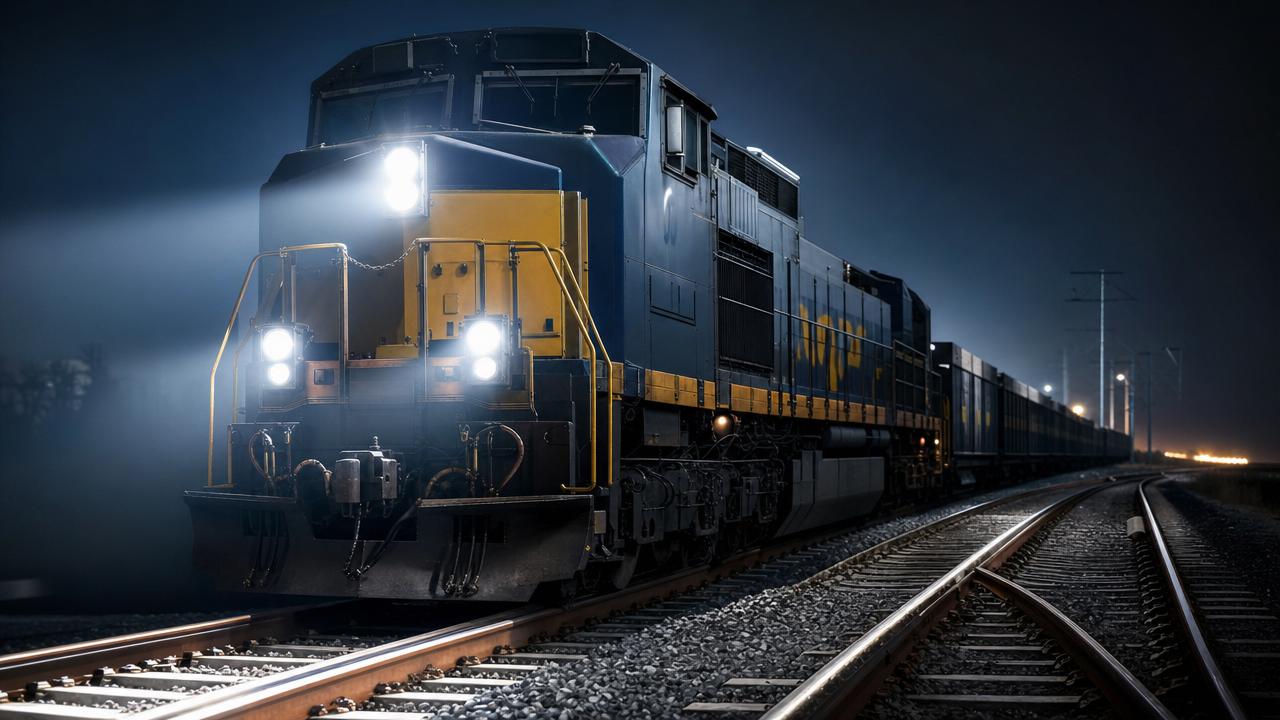
For aftermarket maintenance teams, a reliable locomotive lighting system OEM upgrade is essential to safer, more efficient night operations. From headlight output and beam consistency to rugged housings and standards compliance, the right retrofit can reduce downtime, improve visibility, and support fleet performance under demanding rail conditions. This guide highlights the key upgrade factors that matter most in real-world maintenance planning.
In freight corridors where locomotives operate 8 to 16 hours after dusk, lighting is not just a visibility component. It is a safety system tied to driver confidence, route recognition, inspection efficiency, and maintenance planning. For maintenance teams supporting mixed fleets, the right locomotive lighting system OEM solution must balance technical fit, service life, compliance, and retrofit practicality.
Within the G-RFE technical perspective, lighting upgrades should be evaluated the same way other rail-critical assets are assessed: against operating duty cycles, infrastructure conditions, environmental exposure, and international alignment with UIC, EN, and AAR practices. That approach helps maintenance planners avoid short-term fixes that later create wiring issues, housing failures, or non-compliant beam performance.
Why OEM Lighting Upgrades Matter in Night Freight Operations
A locomotive lighting system OEM upgrade is typically considered when the existing unit shows 1 of 4 common symptoms: reduced output, unstable beam pattern, water ingress, or repeated connector failure. In heavy-haul and intermodal service, these issues tend to appear faster on routes with high vibration, fine dust, frequent tunnel entry, and temperature swings from below 0°C to above 45°C.
For aftermarket maintenance personnel, lighting performance affects more than forward visibility. Poor beam control can slow night inspections, increase false reflections on trackside signage, and make obstacle recognition less consistent at medium range. Even a 10 to 15 minute delay per locomotive during troubleshooting becomes costly when a depot is processing 20 to 50 units per week.
Operational risks linked to outdated lighting assemblies
Many legacy halogen or early-generation sealed units were designed around older electrical architectures. When these systems remain in service beyond their expected cycle, maintenance teams often see rising failure frequency, uneven current draw, and higher replacement demand. In practical terms, the issue is not only lamp failure, but total assembly instability under real rail shock loads.
- Reduced night visibility on curves, crossings, and yard approaches
- Higher replacement frequency, sometimes every 6 to 12 months in harsh duty
- Increased labor time for repeated alignment and sealing checks
- Greater risk of mismatch with cab controls or auxiliary power configurations
What maintenance teams should expect from an OEM-grade retrofit
An OEM-grade retrofit should deliver stable illumination, predictable beam spread, mechanical durability, and compatibility with locomotive electrical systems. It should also reduce intervention frequency. In well-matched upgrades, service intervals can often be extended from frequent visual replacement cycles to scheduled inspection windows of 12, 18, or even 24 months, depending on route severity and enclosure rating.
The table below outlines the difference between common legacy lighting setups and a more robust locomotive lighting system OEM upgrade path for aftermarket planning.
The key takeaway is that maintenance savings usually come from assembly reliability, not just higher brightness. A lighting upgrade that lowers rework by even 20% to 30% can be more valuable than a marginal increase in lumen output that does not improve fit or environmental resistance.
Core Technical Criteria for Selecting a Locomotive Lighting System OEM
When evaluating a locomotive lighting system OEM supplier or retrofit package, maintenance teams should use a structured checklist rather than relying on catalog claims alone. Night freight operations impose combined mechanical, electrical, and environmental demands that can expose weak points within the first 3 to 6 months if the specification is not correct.
1. Beam performance and visibility control
Brightness matters, but controlled projection matters more. Maintenance teams should review not only output rating but also beam distribution, hotspot concentration, edge spread, glare behavior, and consistency after installation. On mainline freight locomotives, poorly shaped beams can create reflective wash on rails or trackside metalwork, reducing practical sight quality.
A useful evaluation method is to compare the unit across 3 distances: near-field yard work, mid-range route identification, and longer-range forward detection. If the beam is overly narrow, crews may gain reach but lose peripheral awareness. If it is too diffuse, visibility at operational speed may degrade.
Recommended review points
- Uniform beam spread without major dark zones
- Stable illumination after 30 to 60 minutes of continuous operation
- Low glare rebound from track hardware and wet surfaces
- Repeatable aiming tolerance during replacement cycles
2. Mechanical durability under rail vibration
Locomotive front-end lighting assemblies face repetitive vibration, shock, particulate impact, and washdown exposure. That makes the housing, bracket, lens, and connector quality just as important as optical design. In aftermarket retrofits, failures often begin at the mounting interface or cable entry point rather than inside the light source itself.
For routes with rough track transitions, ore corridors, or heavy yard coupling activity, teams should prioritize enclosures with strong sealing and verified resistance to dust and water intrusion. A practical target is consistent field performance through multiple seasonal cycles, not just clean-room bench output.
3. Electrical integration and retrofit simplicity
A locomotive lighting system OEM upgrade must match the locomotive’s voltage characteristics, current profile, switching logic, and connector format. Common retrofit complications include polarity mismatches, surge sensitivity, inadequate harness length, and heat concentration around legacy mounting points. Each one can add 1 to 3 hours to installation and fault tracing per unit.
The best retrofit packages reduce field improvisation. That means documented wiring references, mounting compatibility, spare parts continuity, and clear instructions for alignment, sealing, and post-install testing. For depots handling mixed diesel-electric fleets, standardizing these steps can significantly improve service consistency.
4. Standards alignment and documentation quality
In international rail procurement, documented compliance matters. Maintenance teams and procurement managers should ask whether the upgrade is designed with reference to applicable UIC, EN, or AAR expectations for rail hardware use, environmental exposure, and installation discipline. Even when exact network requirements vary by country, documentation quality helps reduce acceptance risk.
The matrix below can be used during technical review meetings to score candidate suppliers or retrofit kits before pilot installation.
A supplier that scores well across all 4 criteria is usually a safer long-term choice than one that competes on unit price alone. For rail operators, the cost of repeat intervention, delayed dispatch, and fragmented spare stocking often outweighs a small initial price gap.
Implementation Planning for Aftermarket Maintenance Teams
Selecting the right locomotive lighting system OEM product is only half the job. The retrofit must also be implemented through a realistic maintenance workflow. In most depots, successful rollout depends on 5 linked stages: fleet survey, technical matching, pilot fitment, performance validation, and spare parts planning.
Fleet survey and baseline assessment
Start by mapping locomotive classes, operating routes, lighting failure history, and available workshop time. A depot with 3 locomotive variants may discover that only 1 mounting bracket differs, making standardization possible. Another fleet may require 2 retrofit kits because cabling layout and front-end housings are not consistent across builds.
Useful baseline data includes average replacement interval, number of night-service units, typical fault mode, and rework frequency. Even 90 days of maintenance records can reveal whether failures are optical, mechanical, or electrical in origin.
Pilot installation and validation checks
Before fleet-wide rollout, many operators test 2 to 5 units in representative service. The trial should include route exposure, washdown cycles, vibration conditions, and night feedback from drivers or inspectors. This phase helps confirm whether the chosen locomotive lighting system OEM configuration performs as expected outside workshop conditions.
- Install on a small sample across at least 1 demanding route.
- Record alignment stability after initial operation.
- Inspect seals, connectors, and mounting torque after 2 to 4 weeks.
- Compare visibility feedback against the replaced lighting system.
- Approve full rollout only after recurring issues are cleared.
Spare parts strategy and technician readiness
A strong retrofit program also needs spare parts discipline. Maintenance teams should confirm lead times for replacement assemblies, gaskets, connectors, and brackets. For international fleets, practical replenishment windows may range from 2 to 6 weeks, so stocking minimum quantities for fast-wear items is often justified.
Technician training does not need to be complex, but it should be specific. A 60 to 90 minute workshop covering mounting, aiming, electrical checks, and seal inspection can reduce common install errors. The most frequent mistakes are overtightened hardware, poor harness routing, and skipped post-fit beam verification.
Common retrofit mistakes to avoid
- Choosing by lumen rating without checking beam usability
- Reusing degraded connectors to save short-term cost
- Ignoring route-specific dust, moisture, or vibration exposure
- Skipping pilot trials and moving directly to full fleet conversion
Procurement Priorities and Long-Term Value
For B2B rail buyers, the best locomotive lighting system OEM decision is rarely the one with the lowest purchase price. The better measure is total maintenance effect over 12 to 24 months. If a higher-quality assembly reduces replacements, labor hours, and service disruption, the lifecycle case may be stronger even when the upfront cost is higher.
Questions to ask before issuing a purchase order
Procurement and maintenance teams should align on technical and service questions before final approval. This is especially important when fleets operate across cross-border corridors where support delays can disrupt scheduled freight flow and workshop planning.
- Is the retrofit package designed for existing locomotive interfaces or does it need field modification?
- What are the normal lead times for assemblies and critical spare parts?
- Are installation instructions detailed enough for depot technicians?
- Can the supplier support phased deployment across 10, 25, or 100 units?
- What inspection points are recommended after the first operating cycle?
Where G-RFE-style evaluation adds value
A technical intelligence approach helps buyers move beyond generic component comparison. In rail engineering procurement, the real value comes from matching lighting hardware to route conditions, regulatory expectations, and maintenance capability. That is particularly relevant for national railway authorities, Tier-1 builders, and EPC-linked operators managing fleets under varied standards frameworks.
When lighting upgrades are reviewed alongside rolling stock duty profile, infrastructure exposure, and signaling-related operational safety, procurement decisions become more resilient. That reduces the chance of buying a component that looks correct on paper but performs poorly in long-distance freight service.
FAQ for maintenance-led upgrade planning
How many units should be tested first?
A pilot of 2 to 5 locomotives is often enough to identify fitment and performance issues, provided the units run on representative routes and include at least one higher-stress duty cycle.
Is higher brightness always better?
Not necessarily. Better beam control, lower glare, stable output, and mechanical reliability usually deliver more maintenance and operational value than a simple increase in nominal brightness.
What usually causes repeat failures after retrofit?
The most common causes are poor connector condition, incorrect mounting stress, inadequate sealing, and mismatch between the new assembly and the locomotive electrical environment.
For aftermarket maintenance teams, an effective locomotive lighting system OEM upgrade should improve visibility, reduce rework, and simplify long-term fleet support under demanding night freight conditions. The strongest results come from combining optical performance, mechanical durability, electrical fit, and disciplined implementation rather than chasing a single headline specification.
If your fleet is planning a retrofit program, G-RFE can help you assess upgrade pathways against operational duty, maintenance priorities, and international rail engineering expectations. Contact us to discuss technical selection criteria, request a tailored solution review, or explore more railway lighting and rolling stock support strategies.
Industry Briefing
Get the top 5 industry headlines delivered to your inbox every morning.