
Renewable Energy Equipment News: Which Technologies Are Scaling Faster?

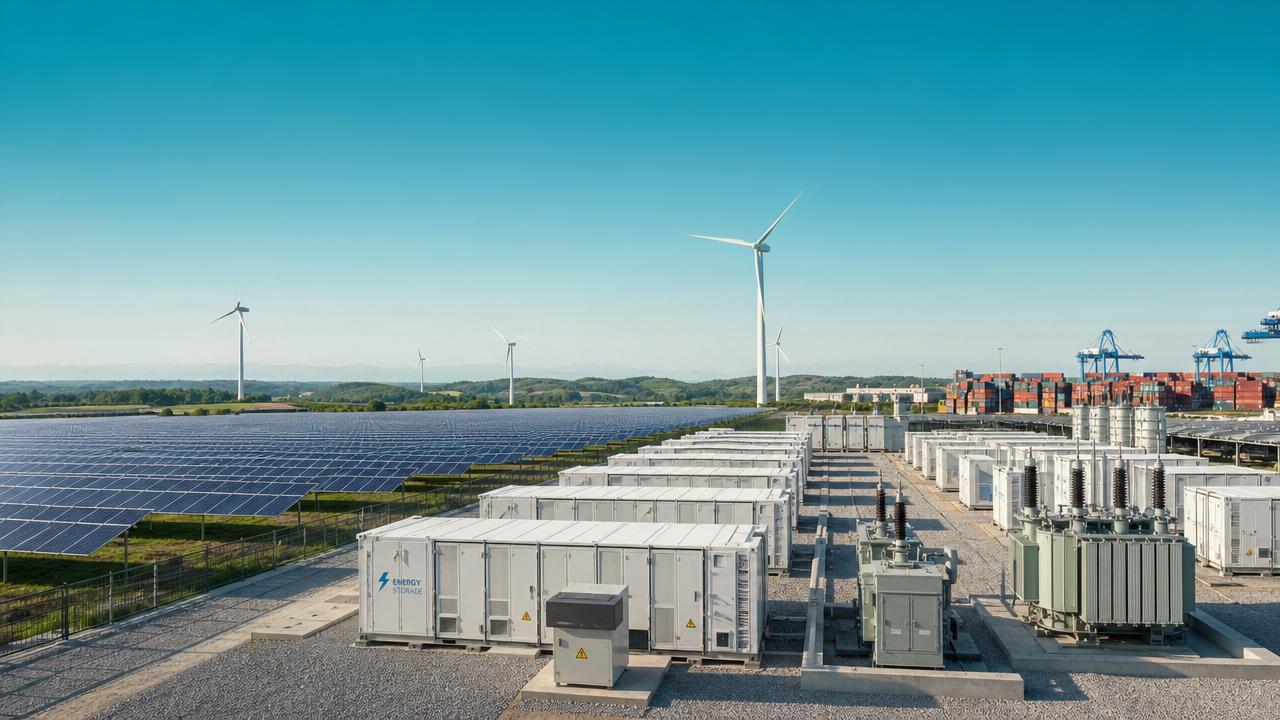
Renewable energy equipment is no longer judged by headline capacity alone. The real question is which technologies move from pilot interest to repeatable deployment with acceptable cost, stable supply, and workable grid integration.
That is why environmental equipment news for renewable energy now matters far beyond the power sector. It shapes logistics planning, industrial electrification, transport corridors, and long-life infrastructure investment across connected industries.
For organizations tracking heavy engineering assets, the issue is especially practical. G-RFE’s cross-border view of rail freight, signaling, and industrial standards makes renewable equipment scaling relevant as both an energy story and an infrastructure story.
What “scaling faster” really means
In environmental equipment news for renewable energy, scale is often misread as simple shipment growth. A better reading combines manufacturing expansion, installation speed, financing depth, maintenance maturity, and compatibility with existing networks.
A technology may post strong annual additions yet still face bottlenecks. Grid connection delays, transformer shortages, permitting complexity, and poor local service capacity can slow commercial usefulness even when factory output rises.
By contrast, a technology is scaling well when procurement becomes standardized, performance becomes bankable, and project developers can replicate installations across different geographies with fewer engineering surprises.
Solar remains the fastest mover
Solar photovoltaic equipment continues to scale faster than most alternatives. Module manufacturing is broad, balance-of-system costs have improved, and project timelines are usually shorter than those of large thermal or hydro assets.
This advantage appears repeatedly in environmental equipment news for renewable energy because solar works across utility, commercial, industrial, and distributed settings. That flexibility makes demand less dependent on one project type.
The strongest momentum is not only in modules. Inverters, mounting systems, tracker technology, and digital monitoring platforms are also scaling because they reduce yield uncertainty and improve operating visibility.
Still, solar’s speed brings a familiar constraint. Rapid generation growth can outpace local grid absorption, which shifts attention toward storage, reactive power control, and substation upgrades rather than modules alone.
Why solar expands quickly
- Shorter construction cycles than many large generation assets
- Highly modular project design and easier phased investment
- Wide supplier base across modules, inverters, and structures
- Better cost transparency for lenders and developers
Wind is scaling, but unevenly
Wind power continues to grow, though the pace differs sharply between onshore and offshore segments. Onshore wind remains commercially proven, while offshore growth depends more heavily on marine logistics, port readiness, and large-component transport.
This is where an infrastructure perspective becomes useful. Transporting towers, blades, nacelles, and transformers requires corridor planning, specialized handling, and often rail-port coordination, not just generation economics.
From a G-RFE viewpoint, scaling wind is partly a freight engineering question. Oversized cargo movement, intermodal interfaces, and standards-based route reliability can materially affect lead times and total installed cost.
Wind therefore scales more selectively. In regions with good wind resources and capable transport infrastructure, it expands well. In regions lacking those foundations, projects remain viable but less easily replicated.
Storage is becoming the critical accelerator
Battery energy storage is not always the cheapest line item, but it is increasingly the equipment category that unlocks faster renewable deployment. Without storage, variable generation often meets curtailment, congestion, or price volatility.
That is why environmental equipment news for renewable energy now gives as much attention to battery containers, thermal management, fire protection, and energy management systems as to generation hardware.
Lithium-ion systems currently dominate because supply chains are more mature and integration practices are better understood. Yet commercial evaluation still depends on cycle life assumptions, warranty structure, and local safety compliance.
Longer-duration storage technologies are gaining interest, but they are not scaling as quickly. They still require clearer operating models, stronger financing confidence, and more reference projects across varied market conditions.
What makes storage more strategic now
- It improves grid stability for variable generation fleets
- It supports better use of transmission and substation assets
- It helps industrial sites manage demand and resilience
- It converts renewable additions into more dependable delivered power
Power-conversion equipment deserves closer attention
One of the most useful signals in environmental equipment news for renewable energy is often hidden in the power-conversion layer. Inverters, transformers, switchgear, converters, and digital control systems strongly influence project bankability.
These components do not attract the same publicity as solar modules or wind turbines. Yet they often determine grid-code compliance, ramp behavior, fault response, and operational availability.
For transport-linked infrastructure, this matters even more. Electrified freight corridors, rail terminals, depots, and intermodal facilities need reliable conversion equipment if renewable power is expected to support operational loads consistently.
In practice, a weak conversion strategy can slow an otherwise promising project. That makes this category a useful early warning indicator when comparing technologies that seem similar at headline level.
How the scaling story connects with heavy logistics
Renewable equipment growth is often discussed as a pure energy trend, but large-scale deployment depends on freight systems. Ports, rail corridors, storage yards, and specialized machinery all shape delivery certainty.
This connection is increasingly visible in environmental equipment news for renewable energy. The faster technologies are usually those supported by better logistics standardization, clearer transport planning, and stronger maintenance ecosystems.
G-RFE’s industrial lens is useful here because intercontinental land transport is becoming part of the energy equation. Heavy-haul locomotives, track access, signaling reliability, and intermodal design can influence renewable project schedules indirectly but materially.
For example, a region may have strong demand for wind or storage systems. If freight corridors cannot move oversized loads or sensitive equipment predictably, actual scaling will lag the market narrative.
Signals worth tracking in real evaluations
Useful environmental equipment news for renewable energy should be read through comparable metrics, not isolated announcements. Shipment headlines matter less than repeatability, integration cost, and operating evidence.
- Watch whether equipment lead times are shortening or simply shifting between tiers.
- Compare local grid-readiness with planned generation additions, not just national targets.
- Check whether transport, port, or rail constraints are mentioned in project schedules.
- Look for evidence of service networks, spare parts support, and standards compliance.
- Treat financing comfort as a scaling indicator, especially for storage and hybrid systems.
A practical reading is simple. Solar scales fastest today, storage scales most strategically, and wind scales where infrastructure and permitting conditions are aligned. Conversion equipment remains the quiet enabler across all three.
Where to focus next
The next step is not to chase whichever technology appears most visible in current environmental equipment news for renewable energy. It is to test how each option performs within a real corridor, site, or network context.
That means comparing deployment speed with grid access, freight feasibility, service maturity, and standards alignment. In many cases, the best-performing technology on paper is not the one that scales fastest on the ground.
A disciplined review framework should connect energy equipment with transport infrastructure, system control, and lifecycle support. That broader view usually produces better decisions than cost comparison alone.
When those factors are mapped clearly, it becomes easier to distinguish temporary market excitement from durable industrial momentum.
Industry Briefing
Get the top 5 industry headlines delivered to your inbox every morning.