
Low-Emission Equipment News: What Changes Matter

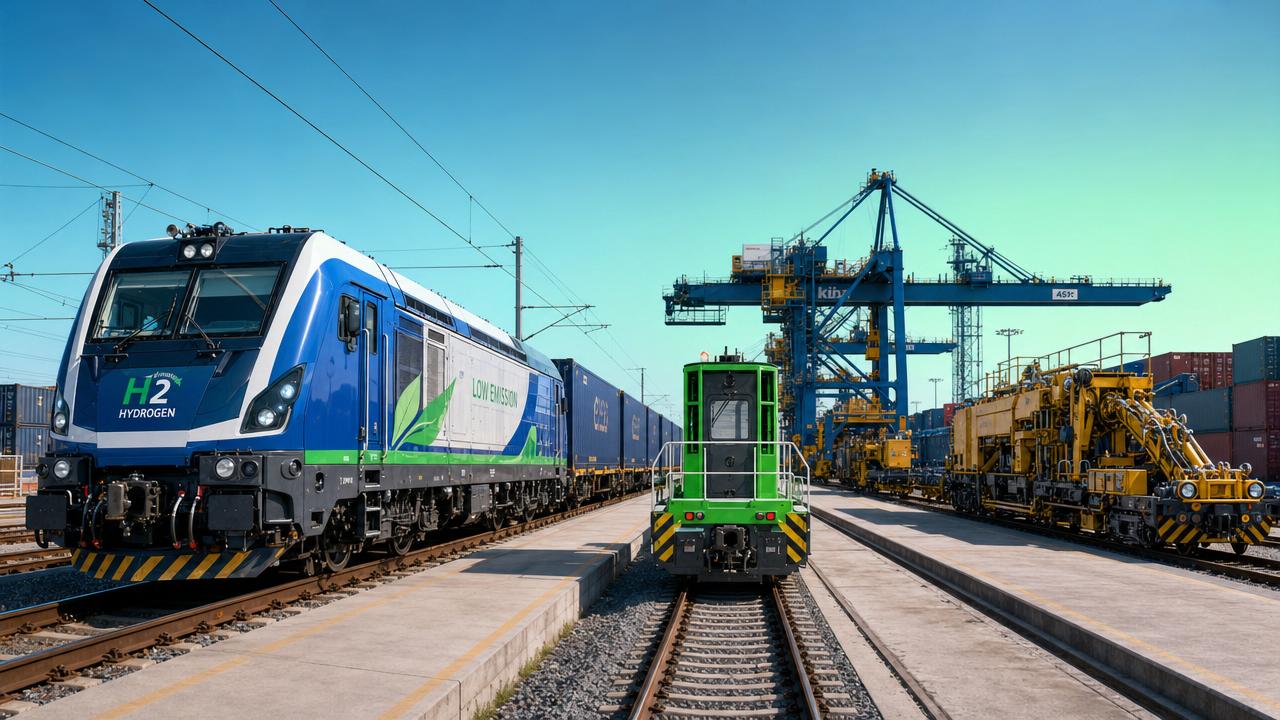
Low-emission equipment is no longer a niche topic in rail freight and engineering. It now affects fleet renewal, corridor design, maintenance planning, digital control systems, and long-term compliance across interconnected logistics networks.
That is why environmental equipment news for low emissions deserves close attention. The most meaningful updates are not always headline technologies, but practical changes that shift efficiency, emissions, reliability, and standards alignment at asset level.
Across heavy-haul locomotives, track machinery, signaling platforms, and rail-port interfaces, the real question is simple: which changes materially improve lifecycle performance without creating new operational risk?
Why this topic has moved to the center of rail decisions
Freight rail sits inside a wider decarbonization agenda, but it also faces hard engineering constraints. Payload, route gradients, duty cycles, harsh climates, and interoperability requirements leave little room for symbolic upgrades.
In this context, environmental equipment news for low emissions is valuable because it translates policy pressure into technical consequences. A new emission target can reshape engine selection, auxiliary systems, energy recovery, and depot support needs.
For organizations following cross-border freight corridors, the issue is even broader. UIC, EN, and AAR benchmarking increasingly influences whether equipment is future-ready, insurable, financeable, and operationally compatible.
This is where platforms such as G-RFE add context. By linking hardware performance with signaling, safety, and regulatory developments, equipment news becomes decision intelligence rather than isolated product publicity.
What “low-emission equipment” actually includes
The term covers more than propulsion. In rail freight and engineering, emissions are influenced by the full operating chain, from traction and braking to maintenance cycles and terminal handoff efficiency.
Core equipment categories
- Diesel-electric locomotives with cleaner engines, hybrid modules, idle reduction, and smarter energy management.
- Electric and battery-assisted shunting units for yards, depots, and port-side movements.
- Rolling stock upgrades that reduce drag, tare weight, and unplanned resistance.
- Track maintenance machinery with lower fuel use, better hydraulic efficiency, and optimized work sequencing.
- Smart signaling and communication systems that improve traffic flow and reduce stop-start energy losses.
- Intermodal equipment that cuts dwell time, repositioning, and unnecessary engine operation.
Seen this way, environmental equipment news for low emissions is not only about cleaner machines. It is also about system-level efficiency that reduces emissions per ton-kilometer and per operating hour.
The changes that matter most right now
Not every innovation deserves equal weight. Several current shifts are proving more relevant than broad claims about sustainability.
1. Better energy intelligence inside existing platforms
Many upgrades now come from software, sensors, and control logic rather than a complete asset replacement. Fuel mapping, predictive idling control, and traction optimization can generate measurable reductions quickly.
2. Cleaner yard and terminal operations
Mainline emissions remain important, but yard operations often contain avoidable waste. Battery shunters, electric handling systems, and automated scheduling can lower local emissions and noise at high-activity nodes.
3. Maintenance machines are under closer scrutiny
Track tampers, rail grinders, ballast regulators, and laying machines consume significant energy. Environmental equipment news for low emissions increasingly includes these assets because they shape corridor-wide carbon intensity and worksite compliance.
4. Signaling now has an emissions story
CBTC, ETCS, GSM-R, and related digital frameworks are usually discussed as safety or capacity tools. Yet they also reduce inefficient train movements, unnecessary braking, and congestion-related energy penalties.
5. Reporting quality is becoming a competitive factor
Claims about low emissions now need verifiable operating data. Suppliers that cannot link reductions to duty cycle, route profile, and maintenance condition are becoming harder to evaluate seriously.
How to read environmental equipment news for low emissions
A useful update should answer more than “what is new.” It should clarify what changed technically, where it performs well, what assumptions were used, and which trade-offs remain unresolved.
This is also why environmental equipment news for low emissions should be interpreted across the full corridor. A cleaner locomotive may underperform if port dwell, route congestion, or poor track condition erases the efficiency gain.
Where low-emission gains appear in real operations
The largest benefits rarely come from one equipment class alone. They usually emerge where multiple systems interact.
Heavy-haul corridors
Long-distance freight routes benefit from traction efficiency, regenerative functions where applicable, optimized wagon configuration, and dispatch logic that avoids repeated power loss events.
Cross-border operations
Interoperability matters as much as engine performance. Equipment aligned with international standards reduces duplication, retrofit risk, and compliance friction across jurisdictions.
Rail-port systems
Ports often magnify idle time, repositioning moves, and short-haul inefficiencies. Environmental equipment news for low emissions is especially relevant here because small process improvements scale quickly.
Maintenance possession windows
Low-emission maintenance machinery becomes valuable when it also shortens work duration, lowers refueling complexity, and supports stricter urban or enclosed-area rules.
Common evaluation mistakes
The market now offers many “green” claims, but several mistakes still distort selection decisions.
- Comparing emission values without matching route, load, and climate conditions.
- Focusing on tailpipe metrics while ignoring traffic management and maintenance impacts.
- Assuming digital upgrades are emissions-neutral because they are not traction assets.
- Treating retrofit complexity as secondary, even when downtime risk is high.
- Accepting vendor figures without asking for standards reference and test boundaries.
A disciplined review of environmental equipment news for low emissions should separate demonstrable engineering progress from announcements that simply repackage existing features.
A practical framework for the next review cycle
A workable assessment starts with corridor reality. That means load profile, traction demand, stop frequency, infrastructure condition, signaling maturity, and maintenance capability.
Then compare candidate changes against four questions: does it cut emissions measurably, protect throughput, fit existing systems, and remain supportable over its lifecycle?
G-RFE’s cross-pillar perspective is useful here because low-emission outcomes rarely belong to one procurement line. Locomotives, rolling stock, track access, signaling, and terminal systems all influence the result.
The next step is not to chase every new release. It is to build a short list of changes with proven relevance to the route, the asset base, and the standards environment.
Used well, environmental equipment news for low emissions becomes a filter for better capital planning. It helps identify where emissions reductions are technically credible, operationally practical, and worth deeper verification.
Industry Briefing
Get the top 5 industry headlines delivered to your inbox every morning.