
Carbon Emission Reduction News Shaping Industrial Compliance in 2026

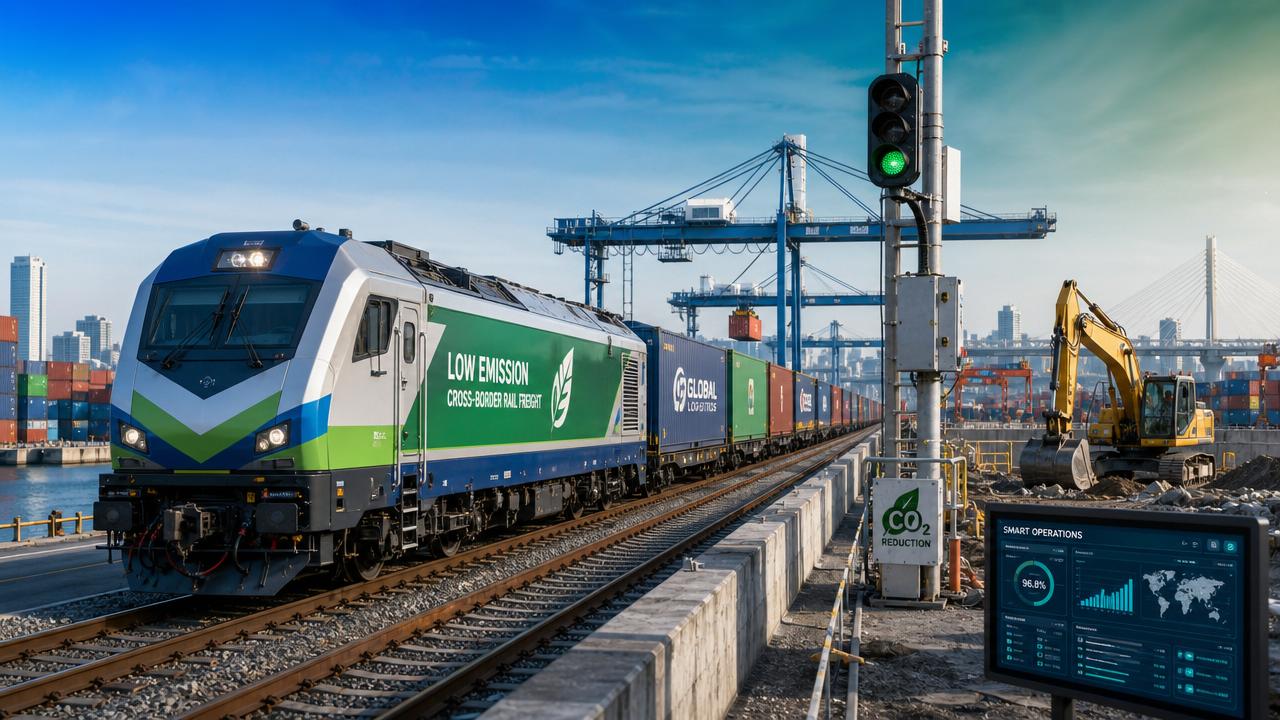
Carbon emission reduction news is no longer background noise in 2026
Industrial environmental news for carbon emission reduction now shapes boardroom timing, project financing, and compliance planning across global industry.
The shift is especially visible in rail freight, infrastructure engineering, and cross-border logistics systems.
What changed is not only the volume of regulation.
The pace of updates has accelerated, and technical interpretation now matters as much as legal interpretation.
For networks built on locomotives, track assets, signaling, ports, and engineering machinery, industrial environmental news for carbon emission reduction has become an operating variable.
This is where the market tone has clearly changed.
Low-carbon expectations are moving from annual sustainability narratives into contract clauses, maintenance schedules, procurement screens, and corridor investment models.
That creates both pressure and clarity.
The pressure comes from tighter disclosure and performance thresholds.
The clarity comes from more visible standards, more measurable targets, and a stronger link between emissions performance and long-term competitiveness.
Why this signal is getting stronger across industrial systems
Recent industrial environmental news for carbon emission reduction reflects a deeper structural shift rather than a short policy cycle.
Three forces are reinforcing each other at the same time.
- Carbon accounting is moving closer to operational data, not just corporate reporting.
- Trade and infrastructure finance increasingly reward lower-emission assets and verified transition plans.
- Standards bodies and transport authorities are aligning technical benchmarks with environmental expectations.
In practice, this means emissions news now affects engineering decisions earlier in the asset lifecycle.
Design choices, material selection, propulsion pathways, signaling upgrades, and maintenance intervals are being reviewed through a carbon lens.
For platforms like G-RFE, this matters because industrial value sits at the intersection of hardware, compliance, and system interoperability.
A locomotive upgrade no longer stands alone.
Its emissions profile can affect route approval, financing terms, fleet renewal logic, and compatibility with corridor modernization programs.
The policy signal is now technical
A notable 2026 pattern is that policy language is being translated into measurable engineering requirements much faster.
That includes traction efficiency, fuel mix assumptions, digital energy monitoring, and lifecycle emissions traceability.
Industrial environmental news for carbon emission reduction therefore reaches maintenance depots, EPC planning teams, and signaling integration programs directly.
The impact is spreading beyond a single compliance function
The most important development is that carbon compliance is no longer isolated inside reporting departments.
Its effects now run across physical assets, digital systems, and commercial relationships.
This broader spread explains why industrial environmental news for carbon emission reduction now influences strategic timing.
Waiting for final rules is becoming less practical.
By the time every detail is settled, capital allocation and technology roadmaps may already be behind the market.
Rail-linked industries are seeing a more complex compliance map
Rail is often positioned as a lower-carbon transport mode, yet 2026 brings a more demanding reality.
The market now differentiates between being relatively efficient and being demonstrably aligned with future carbon rules.
That distinction matters for heavy-haul locomotives, track maintenance fleets, port-rail interfaces, and digital control systems.
G-RFE’s institutional focus reflects this complexity well.
High-capacity freight corridors depend on more than one asset class.
They rely on coordinated performance between rolling stock, infrastructure condition, signaling precision, and engineering machinery availability.
When industrial environmental news for carbon emission reduction changes expectations, the response cannot sit in a single business silo.
For example, a corridor electrification plan may improve direct emissions metrics.
Yet the full compliance picture also depends on grid assumptions, construction methods, material traceability, and digital traffic management.
The same is true for diesel-electric fleet upgrades.
Efficiency improvements help, but regulators and financiers increasingly ask whether the upgrade pathway is compatible with future corridor standards.
Standards are becoming part of commercial risk management
UIC, EN, and AAR references still guide technical legitimacy.
What is changing is how those standards connect with emissions evidence, digital reporting, and asset bankability.
This makes standards monitoring more than an engineering exercise.
It becomes a commercial safeguard in an environment where industrial environmental news for carbon emission reduction can rapidly shift tender language.
What deserves closer attention over the next planning cycle
From recent market behavior, several signals stand out as more useful than headline noise.
- Whether carbon requirements move from disclosure wording into bid qualification criteria
- Whether retrofit projects receive stronger support than full replacement in specific corridors
- Whether signaling and communications upgrades are recognized as emissions enablers
- Whether suppliers can provide verifiable lifecycle data instead of broad sustainability claims
- Whether intermodal operators are asked for corridor-wide carbon visibility across ports and inland rail links
Each of these signals affects investment pacing differently.
Some support faster deployment of mature solutions.
Others suggest a period of careful staging, especially where standards, infrastructure readiness, and regional power conditions remain uneven.
That is why industrial environmental news for carbon emission reduction should be filtered through asset life, route strategy, and regulatory geography.
A policy update that looks minor at corporate level can be material at corridor level.
A practical response starts with better alignment, not louder pledges
The useful response in 2026 is not to react to every headline.
It is to build a disciplined view of which carbon signals affect asset decisions, contract exposure, and future interoperability.
That usually begins with four actions.
- Map where industrial environmental news for carbon emission reduction connects to current tenders, fleet plans, and infrastructure programs.
- Review whether technical teams and compliance teams use the same assumptions for emissions performance.
- Check which standards updates could alter corridor eligibility, funding terms, or supplier evaluation.
- Create a staged response plan for retrofit, digital optimization, and future asset replacement.
In sectors tied to long-life infrastructure, timing matters as much as direction.
Overcommitting early can lock in expensive pathways.
Moving too late can raise financing costs and weaken project eligibility.
The stronger approach is staged readiness supported by reliable technical intelligence.
The next advantage will come from reading carbon news as operating intelligence
In 2026, industrial environmental news for carbon emission reduction is no longer just a reputational issue.
It is becoming a working input for industrial strategy.
The organizations that adapt fastest are usually the ones that connect policy movement with engineering reality early.
Across rail freight and complex infrastructure, that means tracking how emissions rules interact with rolling stock, track assets, signaling, port integration, and specialized machinery.
The practical next step is clear.
Keep monitoring industrial environmental news for carbon emission reduction, compare it against technical standards and corridor plans, and update response priorities before market signals harden into compliance gaps.
That is where risk control, operational resilience, and long-horizon competitiveness now begin to meet.
Industry Briefing
Get the top 5 industry headlines delivered to your inbox every morning.