
Building Materials Industry News: 2026 Supply Cost Signals

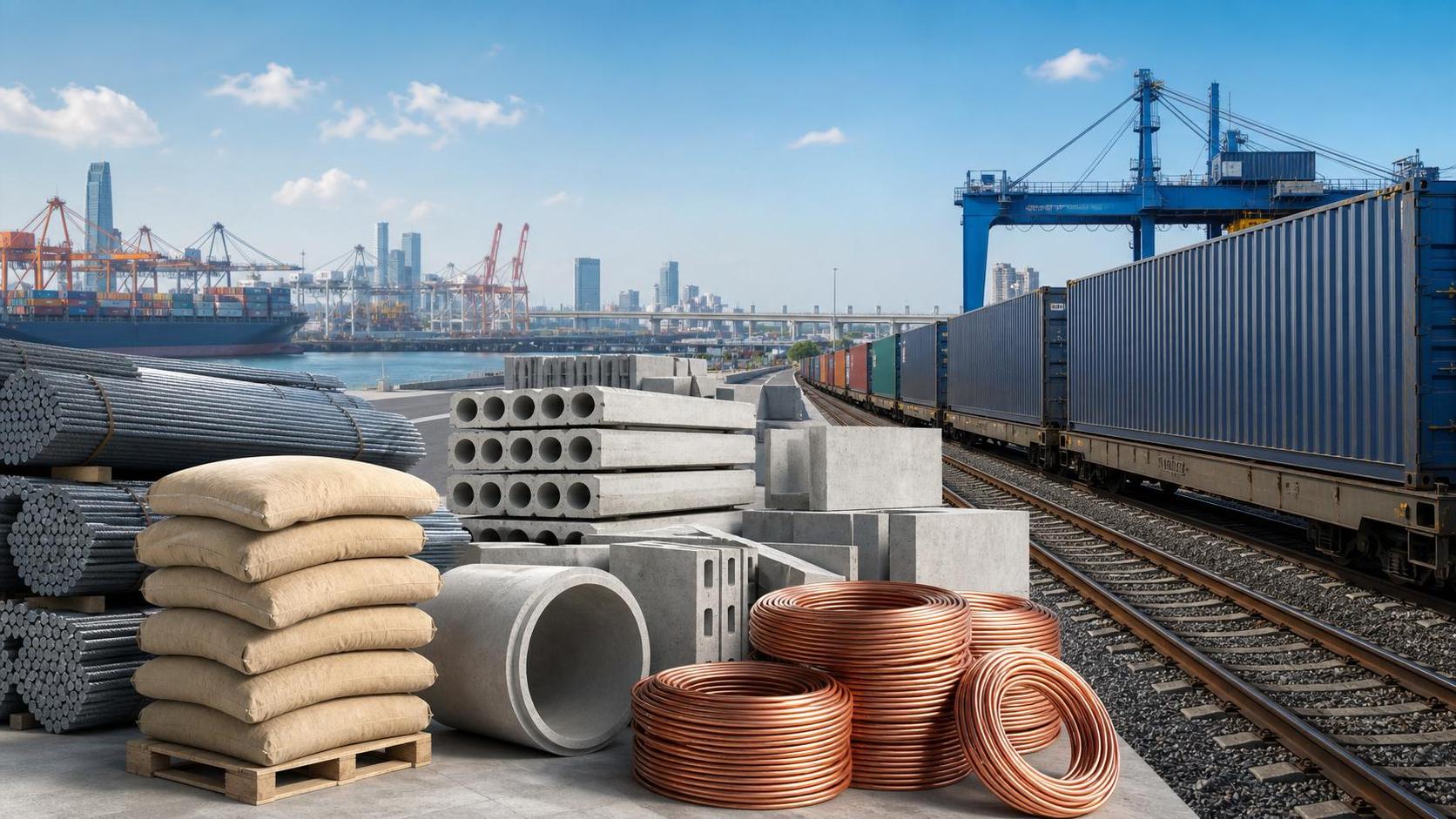
Building materials industry news now carries a sharper cost message
Building materials industry news in 2026 is no longer just about price fluctuation.
It reflects a broader reset in how supply cost signals move across heavy industry, logistics, and infrastructure delivery.
The shift matters because steel, cement, aggregates, copper-based inputs, insulation systems, and fabricated components now react to several pressures at once.
Energy volatility remains one driver, but freight bottlenecks and uneven project pipelines are becoming just as influential.
For rail engineering and cross-border construction networks, that combination changes procurement timing, contract exposure, and margin stability.
This is where recent building materials industry news becomes especially useful.
It offers early clues about where cost inflation is temporary, where it is structural, and where project planners may still be underestimating risk.
Within the G-RFE ecosystem, these signals are not abstract.
Heavy-haul locomotives, track systems, signaling installations, intermodal terminals, and specialized rail machinery all depend on building material availability and delivered cost discipline.
That is why building materials industry news increasingly intersects with engineering standards, freight planning, and capital allocation decisions.
What has changed is not one price line, but the pattern behind it
From recent market behavior, the more important signal is dispersion.
Some materials show cooling spot prices while delivered project costs continue to rise.
That gap is widening because transport, storage, compliance, and fabrication now carry more weight in final cost structures.
In building materials industry news, this creates a misleading headline effect.
A softer commodity benchmark can coexist with more expensive project execution.
More noticeable still is the return of regional divergence.
Export-oriented hubs may hold inventory longer, while corridor-driven markets tighten quickly when rail, port, or public works demand accelerates.
This is visible in track bed materials, structural steel sections, cable protection systems, and prefabricated concrete components.
In other words, building materials industry news now needs to be read through logistics geography, not only through commodity cycles.
The signals appearing most often in 2026
- Delivered cost is rising faster than ex-works quotations in several material categories.
- Lead times remain uneven, especially for fabricated and standards-sensitive components.
- Energy-sensitive materials still react abruptly to fuel and power pricing.
- Large infrastructure packages are pulling supply away from smaller rolling demand.
- Low-carbon compliance requirements are starting to affect supplier selection and pricing models.
Why these cost pressures are becoming more visible
The first reason is energy pass-through.
Materials with heat-intensive processing, including cement clinker, steel products, glass-based systems, and ceramics, still absorb power shocks quickly.
The second reason is freight friction.
Even where rail freight capacity improves, inland transfer points, port handoffs, and border procedures can still add unpredictability.
That matters for bulky, lower-margin materials where transport efficiency often determines bid competitiveness.
A third factor is infrastructure demand clustering.
When rail corridors, industrial parks, logistics terminals, and grid upgrades advance in parallel, suppliers prioritize volume certainty.
Smaller or mid-cycle projects then face tighter allocation and more aggressive repricing.
Building materials industry news often reports these issues separately.
In practice, they reinforce one another.
An energy spike can reduce output flexibility.
A freight delay then amplifies inventory pressure.
At the same time, a new infrastructure package can absorb available stock faster than expected.
The impact does not stop at materials procurement
A narrow reading of building materials industry news focuses on purchase price.
A better reading looks at schedule integrity, technical substitution risk, and capital deployment efficiency.
In rail infrastructure, for example, ballast, sleepers, reinforcing steel, cable ducts, fastening systems, and concrete inputs affect construction rhythm.
When one category slips, the issue spreads into labor utilization and commissioning timelines.
For signaling and communication packages, material cost is often a smaller share of total value.
Yet support structures, equipment shelters, trenching materials, and enclosure systems can still delay deployment if supply is unstable.
That is particularly relevant in G-RFE-covered environments where ETCS, CBTC, GSM-R, and other standards-based systems require tighter installation sequencing.
Intermodal rail-port projects show another layer of exposure.
Terminal slabs, warehouse shells, drainage materials, fencing systems, and utility structures can move from commodity status to bottleneck status very quickly.
This is why building materials industry news now matters far beyond the construction budget line.
It affects operational readiness and revenue start dates as well.
Where the pressure shows up most clearly
- Bid assumptions become outdated faster during long approval cycles.
- Substitution choices can create compliance or lifecycle performance issues.
- Fragmented delivery schedules increase site coordination costs.
- Framework contracts lose value if index clauses ignore freight and energy shifts.
What deserves closer attention over the next planning cycle
One useful lesson from current building materials industry news is that headline pricing is no longer enough for forward planning.
The more dependable signals are hidden in lead-time behavior, supplier qualification depth, and transport mode flexibility.
Projects linked to international rail corridors should also watch policy alignment.
Changes in emissions policy, industrial power support, trade documentation, and infrastructure stimulus can all reshape supply cost faster than expected.
From the G-RFE perspective, technical benchmarking adds another filter.
A cheaper material path has limited value if it weakens compatibility with UIC, EN, or AAR-linked performance requirements.
That applies not only to track assets, but also to civil interfaces supporting rolling stock, signaling, and maintenance machinery.
More worth noting is the growing divide between available supply and usable supply.
Materials may exist in the market, yet remain impractical because documentation, testing, fabrication tolerances, or delivery assurance fall short.
That distinction will likely define better risk judgment in the second half of 2026.
A practical response starts with better signal reading
The most effective response is not blanket stockpiling.
It is a more disciplined reading of building materials industry news alongside project-specific exposure mapping.
In practical terms, that means separating materials by risk profile rather than treating the supply base as one category.
- Identify inputs with high energy sensitivity and short quote validity.
- Flag materials whose delivered cost depends heavily on rail-port transfer efficiency.
- Review which items are standards-critical and difficult to substitute.
- Stress-test schedules against staggered delivery rather than full-lot arrival assumptions.
- Recheck contract clauses against actual freight and power cost behavior.
This approach supports better margin protection without forcing inflexible procurement behavior.
It also helps align commercial decisions with engineering realities, which is increasingly important in corridor-scale transport projects.
The next step is to build a repeatable review cycle.
Use building materials industry news as an early warning layer, then compare it with supplier performance, freight route reliability, and standards compliance needs.
That kind of structured observation is more valuable in 2026 than chasing isolated price drops.
The market is still offering opportunities, but they favor those reading cost signals in context rather than in isolation.
Industry Briefing
Get the top 5 industry headlines delivered to your inbox every morning.