
When coupler strength data hides a fatigue risk

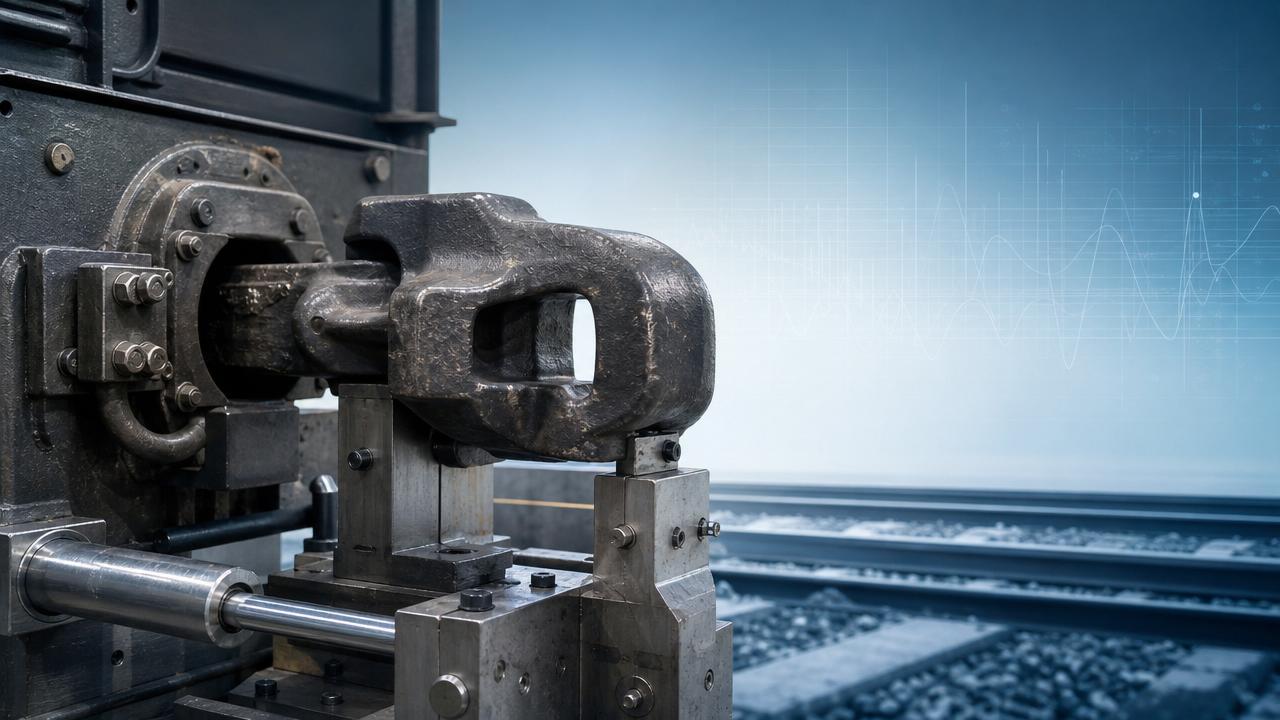
Static pass/fail results can be misleading when real-world loading is cyclic, variable, and unforgiving. For quality and safety teams, coupler strength and fatigue data must be read together, not in isolation, because a component that meets peak strength targets may still accumulate hidden damage over time. This article explains where the risk is buried and how to spot warning signs before they become operational failures.
Why scenario differences matter more than a single test result
In railway freight systems, a coupler rarely fails because of one dramatic overload alone. More often, the problem develops across thousands or millions of load cycles: draft force during acceleration, compressive buff force in braking, vertical disturbance from poor track geometry, slack action in mixed consists, and repeated impacts during yard operations. That is why coupler strength and fatigue data should never be interpreted as separate compliance boxes. Strength tells you whether a part can survive a maximum event. Fatigue data helps you understand whether it can survive the service life that operations will actually demand.
For quality control personnel and safety managers, the practical question is not “Did it pass?” but “Did it pass under conditions that match our scenario?” A coupler validated for a stable heavy-haul corridor may behave differently in intermodal trains with frequent start-stop cycles. A design that looks excellent in static laboratory loading may still become vulnerable in cold climate operation, poor maintenance environments, or routes with repeated curvature transitions. The hidden risk appears when data is transferred from one operating context to another without asking whether the loading spectrum is comparable.
Where coupler fatigue risk usually appears in real operating scenarios
The most common mistake is assuming that all freight service is mechanically similar. In reality, different routes, train makeup strategies, and handling practices create different fatigue signatures. The same coupler geometry may see long periods of stable tensile loading in one corridor and high-impact compressive reversals in another. This is why reviewing coupler strength and fatigue data by application scenario is a stronger risk-control method than relying on catalog values or basic qualification reports.
Scenario 1: Heavy-haul corridors where high strength can still mask long-life damage
Heavy-haul networks often prioritize peak load capability because train weights are extreme and coupler forces are visibly large. In this setting, procurement teams may focus first on static tensile capacity, yield behavior, and proof load margins. Those are important, but they do not automatically confirm endurance. A coupler can survive major load events and still accumulate fatigue damage at fillets, knuckle transitions, weld toes, heat-affected zones, or worn contact regions.
For this scenario, quality and safety teams should ask whether the available coupler strength and fatigue data includes mean stress sensitivity, not just alternating stress levels. Heavy-haul service often produces high average load with superimposed fluctuations. That shifts the fatigue response. If the test program used ideal alignment, smooth loading, and short duration qualification cycles, it may underrepresent actual risk. Teams should also verify whether the data reflects the real coupler assembly, including pins, draft gear interaction, and tolerances, rather than only coupon-level material properties.
What to prioritize in heavy-haul review
- Crack origin locations from prior field returns or bench failures
- Residual stress effects after forging, machining, welding, or repair
- Surface finish and hardness transitions that accelerate initiation
- Correlation between route profile and load-cycle severity
Scenario 2: Intermodal and general freight where variable amplitude loading dominates
Intermodal and mixed freight operations create a different fatigue challenge. Here, couplers may not experience the highest absolute force seen in heavy-haul service, but they are exposed to far more variation. Frequent starts, stops, train reconfiguration, mixed wagon dynamics, and differences in braking response produce repeated force reversals. This makes cumulative fatigue damage more difficult to detect through static qualification alone.
In this scenario, the value of coupler strength and fatigue data depends on whether the fatigue model reflects variable amplitude behavior. A simple S-N curve from constant amplitude testing is useful, but not sufficient by itself. Safety managers should look for load spectrum analysis, Miner’s rule assumptions, shock event treatment, and evidence that service data was used to define realistic cycle blocks. If those elements are absent, the organization may be basing operational confidence on incomplete evidence.
This is also the scenario where maintenance records become highly valuable. Recurrent wear, elongated holes, looseness, or recurring coupler alignment complaints may be early indicators that fatigue exposure is different from the original validation basis. When quality teams connect these field signs to fatigue data rather than treating them as isolated maintenance issues, hidden risk becomes visible much earlier.
Scenario 3: Yard, shunting, and low-speed impact environments
A common misjudgment is treating yard operation as mechanically mild because train speed is low. In fact, repeated coupling impacts, uneven handling, and local damage can create ideal conditions for future fatigue failure. Small dents, brinelling, wear steps, and microcracks from repeated impacts may not trigger immediate rejection. Yet they can become stress raisers that sharply reduce fatigue life in later line-haul service.
For this application, coupler strength and fatigue data should be paired with impact damage acceptance criteria and inspection discipline. A coupler that remains “strong enough” after visible contact damage is not automatically “safe enough” for continued high-cycle service. Safety managers should ensure that surface condition, deformation history, and prior impact exposure are part of disposition decisions. Non-destructive testing intervals may need to be shorter in fleets with intensive shunting patterns, even when static failures are rare.
Scenario 4: Cross-border freight and mixed-standard operating environments
Cross-border rail freight introduces another layer of complexity: the coupler may operate across different track conditions, maintenance cultures, loading patterns, and climate zones. A product qualified under one authority’s assumptions can be exposed to a very different fatigue spectrum after deployment. This is especially relevant for fleets moving between heavy axle load corridors, older infrastructure, and terminals with inconsistent handling practices.
In such cases, the main question is not whether the coupler complies with UIC, EN, or AAR references on paper, but whether the underlying coupler strength and fatigue data remains transferable. Quality and safety professionals should review boundary conditions: temperature range, corrosion environment, wagon compatibility, draft gear configuration, and actual route geometry. Without that scenario check, a formally compliant component can still present elevated fatigue risk during multi-network operation.
How different decision-makers should read the same data differently
The same test report serves different purposes depending on who reads it. Procurement may look for conformity and commercial comparability. Quality control teams focus on manufacturing consistency and defect escape risk. Safety managers are concerned with life-cycle exposure, inspection intervals, and failure consequence. For better decisions, all three perspectives should be connected.
Common misreads that hide fatigue risk
Several recurring errors make coupler strength and fatigue data look more reassuring than it really is. First, teams may compare only ultimate load values and ignore the cycle history behind service conditions. Second, they may use material-level fatigue data to represent full-assembly behavior, even though geometry, fit-up, and manufacturing variation often control real life. Third, they may assume that passing a standard qualification means equivalent durability across all train operations. Fourth, they may review fatigue in isolation from wear, corrosion, and impact damage, even though these mechanisms often interact.
Another frequent problem is weak traceability between design validation and serial production. If a supplier changes heat treatment parameters, machining radii, weld sequence, or finishing method, the static result may remain acceptable while fatigue life shifts downward. For quality teams, this is a strong reason to control not just dimensions and strength certificates, but also the process details that influence crack initiation resistance.
A practical scenario-based checklist before approving a coupler for service
- Define the real operating scenario: route, train length, braking profile, yard handling, climate, and maintenance quality.
- Check whether the available coupler strength and fatigue data matches that scenario rather than a generic benchmark.
- Verify that fatigue evidence covers the full assembly and critical interfaces, not only material coupons.
- Review field return data, crack maps, and wear history for early warning patterns.
- Align inspection intervals with expected life consumption, especially in variable or impact-heavy service.
- Require process traceability for manufacturing steps that affect fatigue life.
FAQ for quality and safety teams
If a coupler passes static testing, is fatigue review still necessary?
Yes. Static passing confirms capacity against a defined peak event, not resistance to cumulative damage. In most freight applications, cyclic loading is unavoidable, so fatigue review remains essential.
Which scenario is most likely to hide fatigue risk?
Intermodal, mixed freight, and yard-intensive operations often hide risk because force levels are variable, impacts are frequent, and damage accumulates gradually rather than through a single obvious overload.
What is the best early warning sign?
Recurring local wear, minor impact damage, alignment issues, or repeated repairs at the same geometric feature are often stronger early indicators than a clean static certificate.
Final decision guidance for scenario-fit risk control
The safest interpretation of coupler strength and fatigue data is always scenario-based. For heavy-haul service, ask whether high mean loads shorten endurance at critical features. For intermodal and mixed freight, ask whether variable amplitude loading was realistically modeled. For yard operations, ask whether impact damage is being converted into future fatigue risk. For cross-border corridors, ask whether validation assumptions still hold across infrastructure and operating differences.
For organizations managing critical railway freight assets, the goal is not just compliance but operational resilience. A coupler that looks strong on paper may still be a weak point in service if endurance, damage accumulation, and scenario fit are not assessed together. The right next step is to review your current qualification files, inspection rules, and supplier controls against the actual loading environments your fleet experiences. When coupler strength and fatigue data is read as one connected safety story, hidden risk becomes manageable before it becomes a failure.
Industry Briefing
Get the top 5 industry headlines delivered to your inbox every morning.