
Locomotive noise level benchmarks that affect depot decisions

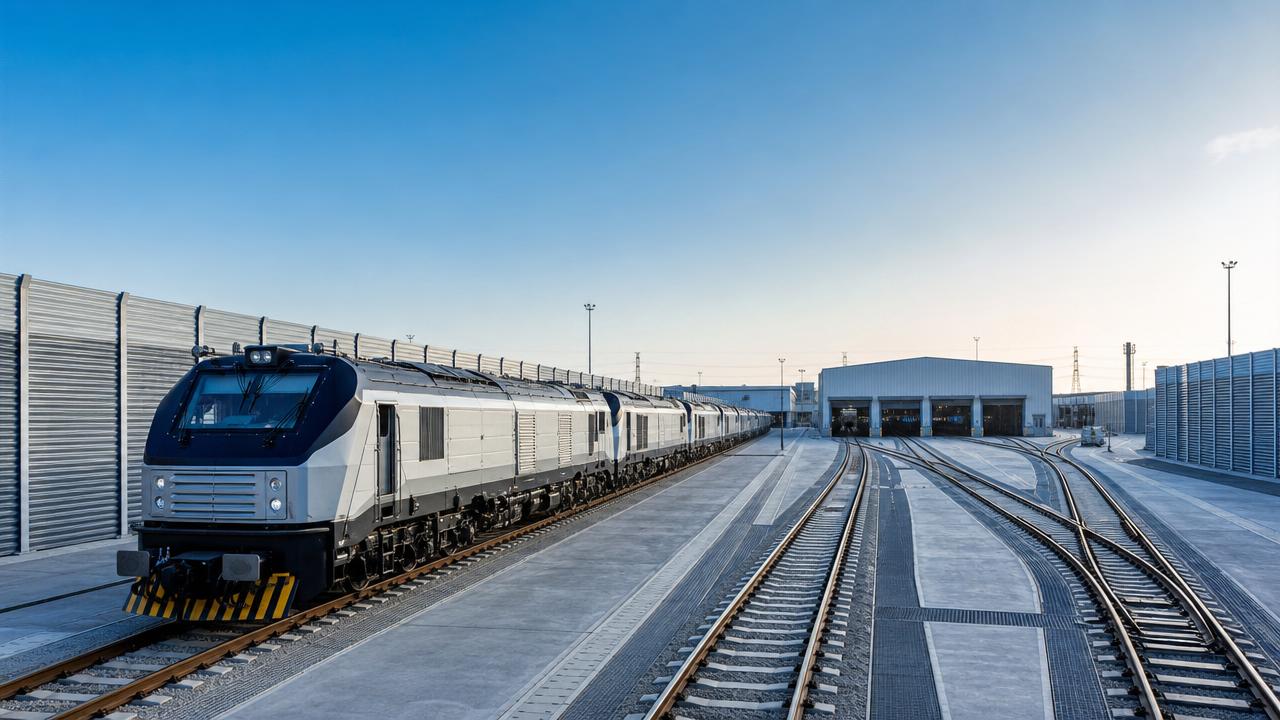
For depot planners and railway executives, locomotive noise level (db) benchmarks are no longer a secondary compliance issue—they directly influence site selection, maintenance scheduling, workforce safety, and community acceptance. Understanding how these benchmarks align with international rail standards and operational realities helps decision-makers reduce risk, control lifecycle costs, and build freight facilities that remain efficient, scalable, and regulation-ready.
The core search intent behind “locomotive noise level benchmarks that affect depot decisions” is practical, not academic. Decision-makers are looking for usable benchmarks, comparison logic, and procurement or planning implications. They want to know what noise levels are considered acceptable, which operating conditions matter most, how standards differ by geography, and when noise becomes a cost driver for depot design, permitting, and expansion.
For enterprise readers, the central question is simple: at what locomotive noise level does a depot project become more expensive, slower to permit, or harder to operate? The most valuable answer is not a single decibel figure. It is a framework that links locomotive noise level (db) benchmarks to land use compatibility, workforce exposure, maintenance activities, night operations, mitigation investments, and long-term stakeholder risk.
Why locomotive noise benchmarks now influence depot strategy
Historically, rail depots were often planned around access to track, land cost, power or fuel logistics, and maintenance throughput. Noise was addressed later, usually during environmental review. That sequence is increasingly risky. In many freight corridors, noise constraints now shape the feasibility of depot placement as early as the concept stage, especially when facilities are near mixed-use development, logistics parks, ports, or expanding urban edges.
For railway-freight operators, the issue is amplified by modern operating patterns. Higher utilization, more nighttime servicing, larger locomotive fleets, idling restrictions, and stronger occupational safety expectations all raise the strategic importance of noise. A depot that works operationally but fails community or labor expectations can trigger redesign costs, permit delays, curfews, reputational friction, and future expansion limits.
This is why locomotive noise level (db) benchmarks matter. They serve as decision thresholds. They do not only measure sound; they indicate whether a depot concept is likely to remain compliant, financeable, scalable, and socially acceptable over its lifecycle.
What decision-makers actually need from a benchmark
Executives rarely need an engineering lecture on acoustics. They need benchmark ranges that support investment decisions. In practice, that means understanding three things: the source noise of the locomotive, the exposure context at the depot, and the regulatory or contractual threshold that triggers action.
A useful benchmark should answer questions such as: Is this locomotive class suitable for a depot near sensitive receptors? Will night maintenance require acoustic treatment? Does a lower-noise fleet reduce the amount of civil mitigation needed? Can quieter assets enable denser maintenance scheduling or additional shifts? These are business questions with engineering inputs.
Because of this, a benchmark should never be used in isolation. A measured 85 dB at one distance and one operating mode may be manageable in a remote heavy-haul yard, but problematic in an urban-adjacent depot with nighttime activity and strict local ordinances. The benchmark becomes meaningful only when paired with duty cycle, measurement method, boundary conditions, and receptor sensitivity.
Typical locomotive noise level (db) benchmarks used in depot planning
There is no single universal global number, because locomotive noise depends on traction type, engine load, fan systems, braking, horn use, maintenance activity, and test conditions. However, for strategic planning, companies often work with indicative benchmark bands to assess relative risk before conducting a formal acoustic study.
At the source, modern diesel-electric locomotives under idle or low-load conditions may commonly fall into a planning range around 70 to 85 dB(A), depending on distance, equipment age, auxiliary systems, and measurement protocol. Under higher load, cooling fan engagement, dynamic braking, or engine testing, perceived levels can rise materially, often entering ranges that demand stronger mitigation planning.
Electric locomotives can offer lower engine-related noise because they avoid large onboard diesel prime mover noise, but they are not silent. Traction motors, compressors, cooling equipment, wheel-rail interaction, and maintenance testing still contribute to significant sound events. In depots, auxiliary systems and repetitive short-duration activities may matter more than line-haul pass-by levels.
For boundary planning, many projects translate source noise into target limits at the depot perimeter or at the nearest receptor. Typical strategic thresholds are often aligned with local environmental noise criteria for day and night use. Once predicted or measured levels begin to approach those limits, mitigation costs rise disproportionately. That is the point where locomotive selection and depot design must be considered together, not separately.
Which noise conditions create the biggest depot risks
Not all locomotive noise events carry the same decision weight. For depot planning, the most problematic conditions are usually not average daytime operations, but recurring high-impact scenarios. These include nighttime idling, engine warm-up and shut-down sequences, full-load testing, wheel and brake maintenance, horn usage, compressor cycling, and fan surges during hot weather.
From a permitting and community perspective, intermittent tonal or impulsive noise can attract more complaints than a steady background level. This matters because two depots with similar average decibel profiles may generate very different stakeholder responses. A facility with fewer but sharper peak events may face more opposition than one with a slightly higher but stable baseline.
For workforce management, enclosed or semi-enclosed maintenance environments can elevate exposure risk even when the depot boundary remains compliant. That means a project can pass external environmental review while still requiring significant internal hearing protection measures, shift controls, equipment barriers, or ventilation-acoustic design changes.
How international standards and regional rules shape the benchmark
Global operators should be careful not to treat locomotive noise level (db) benchmarks as interchangeable across markets. International references such as UIC, EN, and AAR frameworks help standardize testing and comparison, but actual depot decisions depend heavily on national environmental law, local zoning, labor rules, and permit conditions.
In Europe, rail noise assessments may be closely tied to structured environmental impact procedures, receptor-based limits, and detailed expectations around nighttime exposure. In North America, federal, state, provincial, and local requirements can create a layered compliance environment, especially when freight yards interface with municipalities. In emerging freight corridors, formal limits may be less mature, but social license and future regulatory tightening still justify conservative planning.
The practical implication is that decision-makers should use international benchmark data as a baseline for procurement screening, then validate it against the actual receiving environment. A locomotive platform that meets one regional standard may still create unacceptable depot impacts if local topography, reflective surfaces, nearby housing, or shift timing intensify exposure.
How noise affects site selection, layout, and expansion economics
Noise has a direct influence on land strategy. A lower-cost site near logistics demand can become expensive if it requires barriers, building treatment, restricted operating windows, or prolonged consultation. Conversely, a site with stronger buffer zones may support faster permitting and higher long-term utilization even if the land acquisition cost is higher.
Depot layout decisions also change when locomotive noise is modeled early. Engine test areas, fueling or servicing points, wash plants, wheel lathes, and access tracks can often be repositioned to reduce boundary exposure. Buildings, berms, and storage assets may serve as partial acoustic shields if integrated deliberately into the layout, rather than added later as expensive corrective measures.
Expansion economics are another overlooked factor. A depot designed around today’s minimum compliance margin may struggle to scale. If the fleet grows, operating hours extend, or neighboring land use becomes more sensitive, the facility may hit a noise ceiling before it hits a capacity ceiling. For executives, that is a strategic risk: the depot appears viable in phase one but becomes constrained just when freight volume justifies expansion.
When quieter locomotives lower total cost of ownership
Procurement teams often focus on acquisition price, fuel or energy efficiency, availability, and maintenance intervals. Yet locomotive noise level (db) benchmarks can materially affect total cost of ownership at the network level. A quieter locomotive may allow simpler depot design, fewer restrictions on shift patterns, reduced complaint handling, lower retrofit risk, and improved labor conditions.
This does not mean that the lowest-noise locomotive is always the best commercial choice. The right question is whether a quieter platform produces measurable system value in the operating context. For example, if lower source noise avoids a major acoustic enclosure or enables night servicing at a constrained site, the business case can be strong. If the depot is remote and the workforce exposure is already well managed, the premium may not pay back in the same way.
Executives should therefore compare locomotive options not only on rolling stock performance but also on depot-side infrastructure costs. This broader lifecycle view often reveals that noise is not merely a compliance variable. It is a capital allocation variable.
A practical framework for evaluating benchmark relevance before approval
Before approving a new depot, relocation, or fleet purchase, decision-makers should ask for a structured noise review at concept stage. The first step is to define the critical scenarios: idle, start-up, full-load test, fan operation, horn events, movement through switches, maintenance tooling, and nighttime routines. Average values alone are not enough.
The second step is to map receptors and constraints: residential edges, worker zones, offices, control rooms, nearby logistics tenants, schools, hospitals, and future development parcels. Noise exposure should be modeled not just for current conditions but for realistic growth cases over five to ten years.
The third step is to compare mitigation pathways. These may include quieter locomotive specifications, operational controls, relocation of noisy functions, acoustic barriers, enclosed testing bays, maintenance building treatment, scheduling changes, or land buffer acquisition. Management should see the comparative cost and operational effect of each option, not only a compliance statement.
The fourth step is governance. Companies should define who owns ongoing noise performance after commissioning. Without post-occupancy monitoring and accountability, even a well-designed depot can drift into non-compliance as maintenance practices change, equipment ages, or utilization increases.
Common mistakes that lead to avoidable depot noise costs
One common mistake is relying on generic manufacturer data without checking the exact test conditions. Reported locomotive noise values may reflect controlled measurements that do not represent depot duty cycles. Another is focusing on passing standards during procurement while ignoring boundary conditions at the actual site.
A second mistake is treating environmental compliance and occupational exposure as separate topics. In reality, they interact. Design choices that reduce external noise may alter ventilation, access, or building acoustics inside workshops. Integrated planning is essential.
A third mistake is postponing stakeholder engagement until late in the project. Community and municipal concerns become far more expensive once civil design is fixed. Early communication, backed by credible benchmark data and mitigation logic, can shorten the path to acceptance.
Finally, many operators underestimate cumulative change. A depot may start with acceptable noise margins, then lose flexibility as additional locomotives, heavier maintenance tasks, or longer operating windows are introduced. Benchmarks should support future resilience, not just initial approval.
What a strong executive decision looks like
A strong depot decision does not depend on chasing the lowest decibel number in isolation. It depends on selecting a noise strategy that fits the operating model, the site context, and long-term network goals. For some organizations, that means prioritizing lower-noise locomotives. For others, it means investing in site buffers, enclosed testing, or revised operating windows.
The best decisions use locomotive noise level (db) benchmarks as an early filter and a financial planning tool. They connect engineering data to site feasibility, labor conditions, permit confidence, and expansion capacity. Most importantly, they avoid the false economy of solving noise after the depot concept is already locked in.
For railway-freight enterprises and engineering-led infrastructure planners, the message is clear: noise benchmarks are not a technical appendix. They are part of core asset strategy. When evaluated early and tied to realistic depot scenarios, they help leaders choose sites and fleets that are operationally efficient, community-compatible, and durable under future regulatory pressure.
In summary, the most useful locomotive noise level (db) benchmarks are those that support decisions, not just reports. Executives should look beyond nominal source levels and focus on how noise interacts with location, operating hours, workforce exposure, mitigation cost, and long-term scalability. That approach turns noise from a late-stage obstacle into a manageable design and investment parameter—one that can materially improve depot performance and reduce strategic risk.
Industry Briefing
Get the top 5 industry headlines delivered to your inbox every morning.