
Freight Locomotive Manufacturers 2026: Which Suppliers Look Strongest?

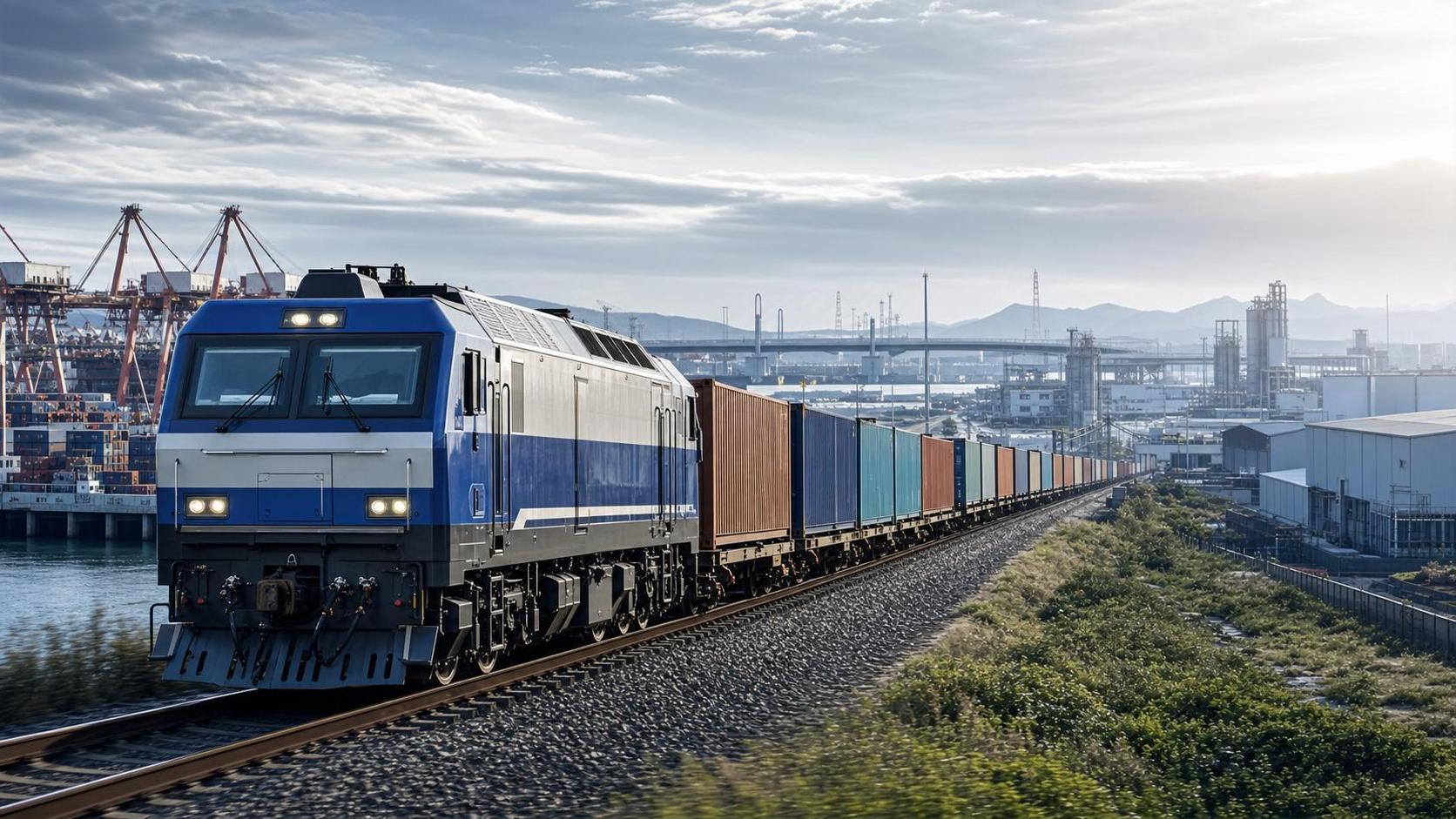
Freight locomotive manufacturers 2026 are being judged by a different standard
Rail freight is entering a new procurement cycle, but the buying logic is changing faster than many expected.
The strongest freight locomotive manufacturers 2026 are no longer defined only by horsepower, axle load, or unit price.
What now matters is whether a supplier can align heavy-duty traction, digital signaling, emissions strategy, and corridor-level reliability in one credible package.
That shift is especially visible across heavy-haul mining lines, intermodal gateways, and long-distance land corridors linking ports, industrial zones, and inland logistics hubs.
From the perspective of G-RFE, this is not a cosmetic change.
It reflects a deeper convergence between rolling stock engineering, UIC and EN compliance, AAR interoperability, CBTC or ETCS readiness, and lifecycle service discipline.
As a result, evaluating freight locomotive manufacturers 2026 has become less about catalog comparison and more about identifying which suppliers can operate across technical, regulatory, and geopolitical complexity.
Recent demand signals point to a narrower field of credible suppliers
Several market signals suggest that the competitive field is tightening.
New projects increasingly favor suppliers with proven export execution, modular platform design, and the ability to adapt locomotives to mixed operating environments.
That includes electrified corridors, diesel-electric heavy-haul lines, hybrid transition fleets, and multi-standard signaling ecosystems.
In practical terms, freight locomotive manufacturers 2026 are being screened on five fronts at once.
- Traction performance under heavy loads and difficult climate conditions.
- Compliance with emissions, safety, crashworthiness, and interoperability rules.
- Production depth, component sourcing resilience, and delivery credibility.
- Digital integration with train control, diagnostics, and fleet monitoring systems.
- Service footprint across depots, spare parts, retrofit support, and training.
This is why the conversation around freight locomotive manufacturers 2026 increasingly centers on supplier strength, not just product strength.
Why this shift is becoming more visible now
Three forces are pushing the market in the same direction.
Network expansion is becoming corridor-led
Rail investment is no longer isolated around single assets.
Locomotives are being evaluated as part of larger freight systems that include track capacity, signaling architecture, maintenance access, and port or terminal integration.
This favors suppliers able to work with EPC contractors, signaling partners, and infrastructure authorities from early design stages.
Decarbonization is shifting the technology conversation
The market is not moving in one uniform direction, but lower-carbon pressure is real everywhere.
Some corridors are accelerating electrification, while others still require high-horsepower diesel-electric fleets with better fuel efficiency and emissions control.
The strongest freight locomotive manufacturers 2026 are those offering credible transition pathways rather than one ideological answer.
Reliability has become a board-level issue
A delayed locomotive today affects mine output, port throughput, wagon turns, and contract performance across the chain.
That is why business assessment increasingly prioritizes fleet availability, remote diagnostics, and repair ecosystem maturity.
Which freight locomotive manufacturers 2026 look strongest by current signals
The answer depends on operating model, but a pattern is emerging.
Suppliers that appear strongest combine engineering scale with adaptation capability.
They are not always the cheapest, and they are not always the largest by headline volume.
They tend to perform well because they can bridge local standards, export complexity, and lifecycle accountability.
This is where global leaders and selected regional specialists are separating from the wider pack.
Some have stronger electrified freight portfolios.
Others remain highly competitive in diesel-electric heavy-haul applications, particularly where infrastructure modernization will take longer.
The real dividing line is no longer hardware alone
A locomotive can still look impressive on paper and remain a weak strategic choice.
More visible now is the gap between hardware specification and system readiness.
The freight locomotive manufacturers 2026 that look strongest are the ones able to connect rolling stock with signaling, maintenance software, driver assistance, and route-specific safety logic.
That matters because freight corridors are becoming more automated, more regulated, and more capacity-sensitive.
G-RFE’s cross-sector lens is useful here.
Heavy-haul locomotives cannot be assessed in isolation from track wear, intermodal terminal rhythm, ETCS compatibility, or communications resilience.
A supplier with weaker coordination across those interfaces may still lose ground even with strong traction engineering.
Where the impact is showing up across the business chain
The current shift affects more than procurement timing.
It changes how projects are screened, financed, and phased.
- On infrastructure-linked projects, rolling stock selection now influences signaling design and depot layout much earlier.
- On export-led industrial corridors, supplier nationality and local assembly options can shape financing confidence.
- On low-carbon routes, transition planning matters almost as much as immediate traction choice.
- On high-utilization freight lines, aftersales capability can outweigh small differences in upfront capital cost.
That is why freight locomotive manufacturers 2026 are being assessed through a wider commercial lens.
The strongest suppliers reduce uncertainty across technical delivery, compliance, and operational continuity at the same time.
What deserves closer attention before the next round of commitments
A useful assessment framework should stay practical.
The goal is not to predict one universal winner, but to identify which freight locomotive manufacturers 2026 look strongest for the corridor under review.
Focus on corridor fit, not brand reputation alone
A supplier strong in electrified Eurasian routes may be less suitable for remote heavy-haul operations with weak service ecosystems.
Test the digital stack early
Condition monitoring, train control interfaces, and communications architecture should be validated before final platform commitment.
Watch supply chain concentration
Critical subsystems tied to a narrow vendor base can undermine fleet resilience years after delivery.
Compare lifecycle economics under realistic utilization
Fuel burn, energy profile, wheel wear, overhaul intervals, and software support costs often change the ranking.
The next signal to watch
The market will likely reward suppliers that can operate across transition, not just scale.
That means freight locomotive manufacturers 2026 with strong prospects are those balancing robust traction platforms with regulatory agility, interoperable digital systems, and dependable field support.
The short-term winners may differ by region, but the broader direction is clearer now.
Stronger suppliers are increasingly those that understand locomotives as part of integrated freight engineering, not standalone machines.
A sensible next step is to map corridor requirements against supplier execution history, standards alignment, digital readiness, and service depth.
That approach will usually reveal more than headline performance figures, especially in a market where freight locomotive manufacturers 2026 are being tested by complexity as much as by capacity.
Industry Briefing
Get the top 5 industry headlines delivered to your inbox every morning.