
Bulk Cargo Freight Rail Solutions: Cost and Capacity

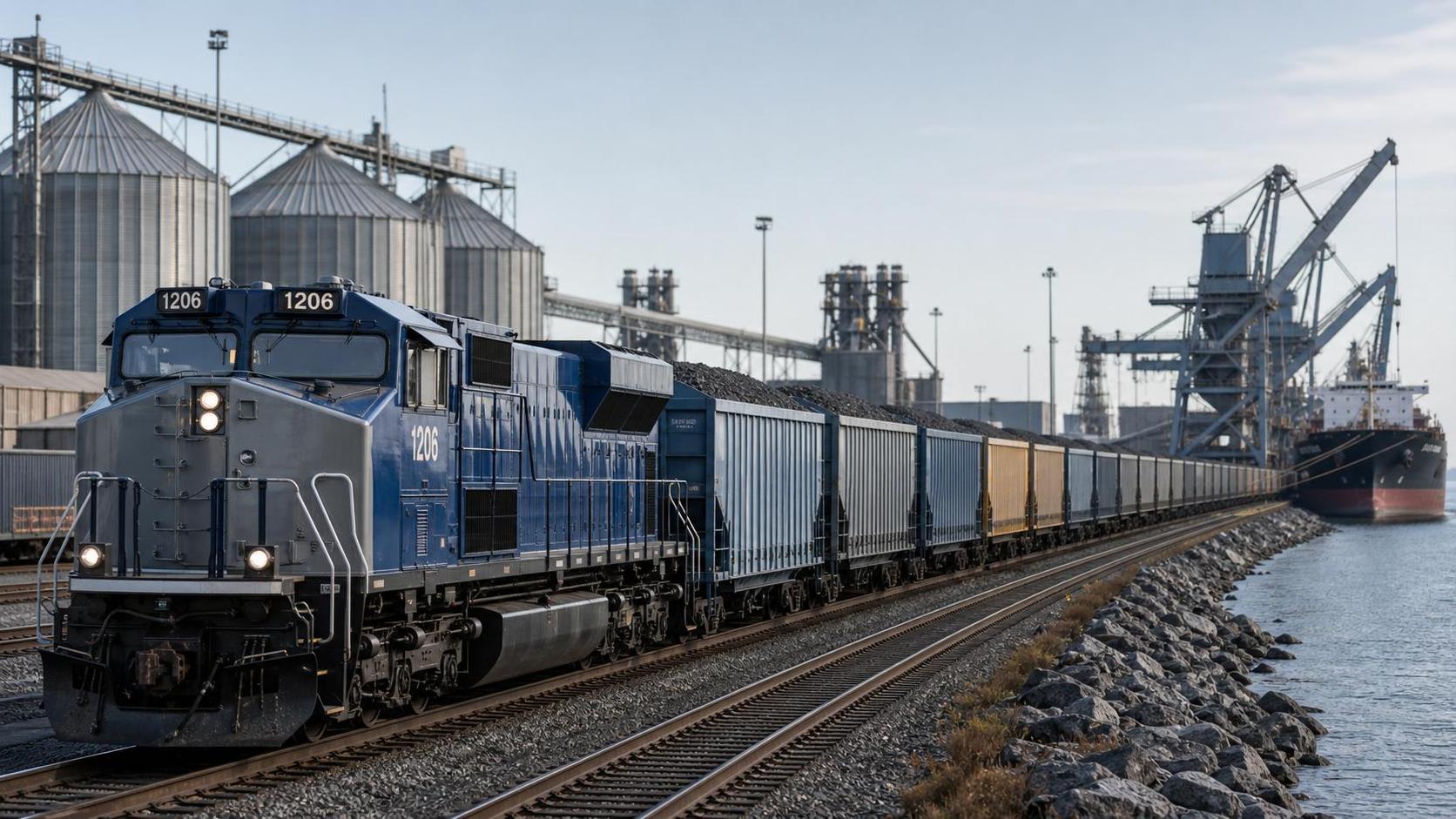
Bulk Cargo Freight Rail Solutions: Cost and Capacity
For enterprise decision-makers moving high-volume commodities, freight rail solutions for bulk cargo offer a decisive advantage in both cost control and network capacity.
As supply chains face pressure to scale sustainably, rail is moving from a transport option to a strategic infrastructure decision.
That shift matters most for coal, ore, grain, aggregates, steel inputs, chemicals, and other dense commodity flows with stable corridors and repeatable volumes.
Why freight rail solutions for bulk cargo are gaining priority
Road freight remains flexible, but its economics weaken fast when tonnage rises, haul distance grows, and terminal cycles become predictable.
In those conditions, freight rail solutions for bulk cargo usually deliver lower cost per ton-kilometer and better lane stability.
More importantly, rail gives planners access to scale that trucking struggles to match during labor shortages, fuel volatility, or port congestion.
From a procurement perspective, the real question is not whether rail is cheaper in theory.
The practical question is whether a specific corridor, commodity, and service model can convert rail capacity into measurable financial advantage.
Where the cost advantage actually comes from
The strongest rail savings do not come from one lever.
They come from combining train length, axle load, fuel efficiency, crew productivity, and higher terminal throughput into one operating model.
Well-designed freight rail solutions for bulk cargo spread fixed costs across large payloads and repeated cycles.
That makes them especially effective on long-haul routes linked to mines, mills, quarries, ports, inland depots, and export corridors.
Key cost drivers to evaluate
- Payload per train and usable wagon capacity
- Average haul distance and return-leg utilization
- Loading and unloading cycle time
- Track access fees and terminal handling charges
- Locomotive energy consumption and maintenance strategy
- Network reliability, dwell time, and schedule adherence
- Required inventory buffers caused by transit variability
In actual operations, terminal performance often decides whether the rail business case holds.
A cheap linehaul is less valuable when wagons wait too long for loading slots, discharge pits, inspections, or customs release.
Capacity is more than train size
Many buyers focus first on wagon count or locomotive horsepower.
That matters, but corridor capacity depends on the whole system working together.
Freight rail solutions for bulk cargo perform best when rolling stock, signaling, track condition, yards, and port interfaces are designed as one network.
This is where technical due diligence becomes critical.
A corridor may look strong on paper, yet still underperform because of siding length, weak bridges, slow dispatching, or low unloading rates.
Capacity constraints that usually limit growth
- Short passing loops that cap train length
- Mixed-traffic lines with passenger priority
- Outdated signaling or low dispatch automation
- Insufficient axle-load tolerance on track and structures
- Port rail bottlenecks and limited yard staging space
- Maintenance windows that reduce usable path availability
When these issues are addressed early, freight rail solutions for bulk cargo can unlock much larger throughput without proportional labor growth.
Comparing procurement models
Not every buyer should procure the same rail model.
The right structure depends on commodity risk, expected volume, route control, and balance-sheet priorities.
For many organizations, a phased approach works best.
They begin with contracted freight rail solutions for bulk cargo, then add dedicated assets once corridor demand proves durable.
Technical factors that shape long-term value
Purchase price alone is a weak decision metric.
Long-term value comes from technical compatibility, maintenance predictability, and compliance with corridor standards.
This is where organizations like G-RFE add practical value by benchmarking hardware and operating systems against UIC, EN, and AAR references.
That matters when buyers compare locomotives, wagons, track systems, signaling layers, and port interfaces from multiple suppliers.
Questions worth asking before award
- Can the wagon design match commodity density, moisture, and discharge method?
- Will axle load and braking performance fit the target corridor?
- Does the signaling environment support targeted frequency and safety margins?
- Are spare parts, maintenance skills, and digital diagnostics locally available?
- Can the rail-port handoff maintain flow during peak vessel schedules?
These questions keep freight rail solutions for bulk cargo grounded in operating reality, not just vendor promises.
Risk areas that deserve early attention
Rail procurement looks stable from the outside, but several risks can quietly erode the business case.
- Volume forecasts that assume perfect mine, plant, or port output
- Underestimated terminal dwell and wagon turnaround time
- Cross-border regulatory friction on intercontinental lanes
- Maintenance strategies built around imported parts with long lead times
- Digital systems that do not integrate with existing dispatch or safety frameworks
The clearer signal in recent projects is that resilience now matters almost as much as base transport cost.
Freight rail solutions for bulk cargo should be evaluated for disruption recovery, not only for average-day efficiency.
A practical decision framework
A workable procurement process starts with corridor facts, not supplier brochures.
- Define annual tonnage, seasonality, commodity properties, and service windows.
- Map the full corridor, including loading points, yards, ports, and border nodes.
- Test at least three cost scenarios using realistic dwell and maintenance assumptions.
- Validate technical compliance across rolling stock, signaling, and infrastructure.
- Structure contracts around performance metrics, not just asset delivery dates.
This also means aligning finance, operations, engineering, and commercial teams before tender release.
When internal assumptions differ, even strong freight rail solutions for bulk cargo can be procured on the wrong basis.
Closing perspective
Freight rail solutions for bulk cargo are not simply about moving more tons.
They are about building a corridor that stays cost-efficient, technically reliable, and scalable under real operating pressure.
The strongest decisions usually come from combining commercial modeling with engineering validation and network-level thinking.
For organizations evaluating their next bulk transport move, that is where rail becomes a strategic advantage rather than a simple mode shift.
Start with the corridor, pressure-test the cost model, and select freight rail solutions for bulk cargo that can hold performance over time, not just at contract signing.
Industry Briefing
Get the top 5 industry headlines delivered to your inbox every morning.