

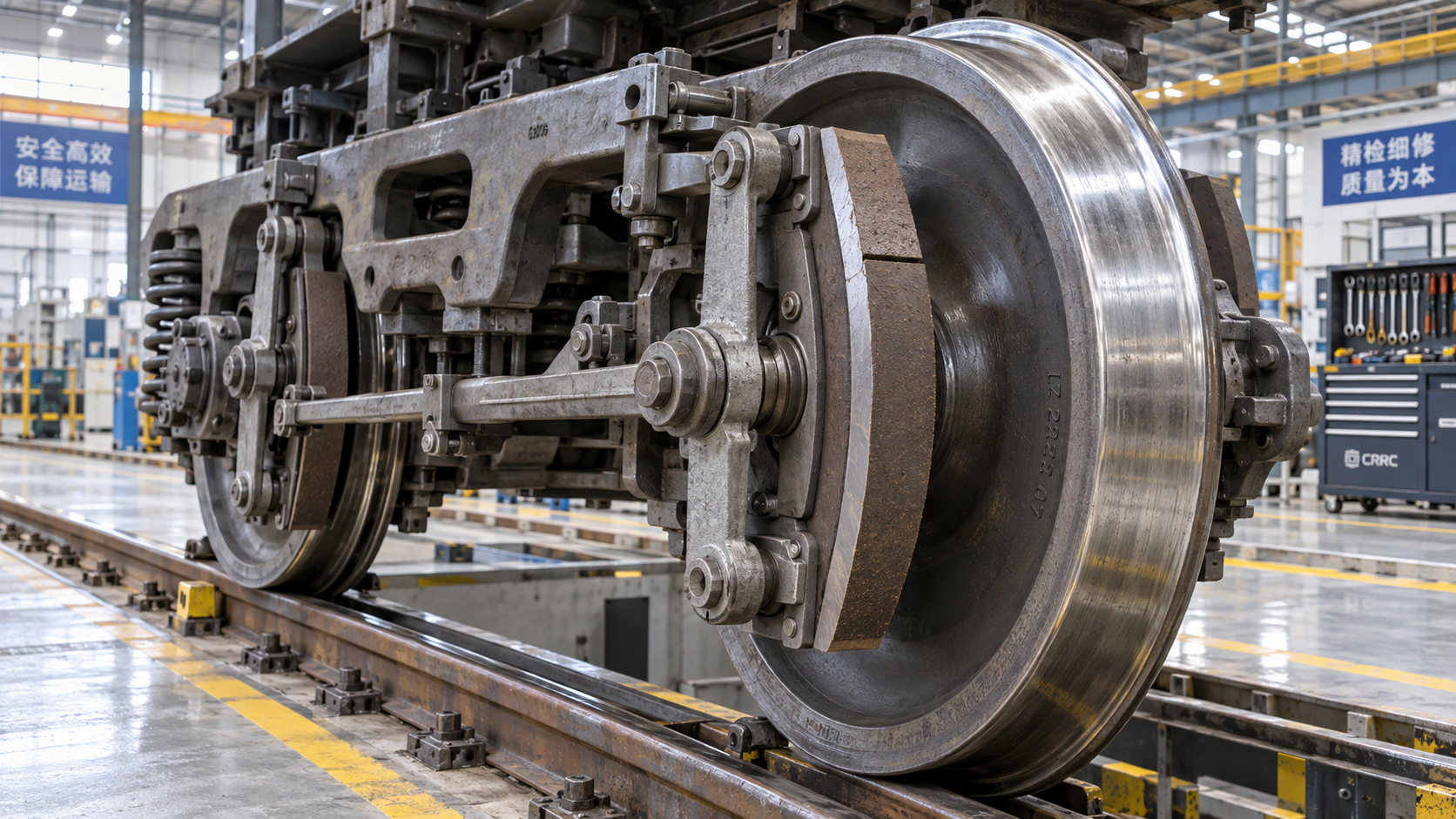
What causes uneven brake shoe wear? On freight wagons, common causes include misaligned brake rigging, sticking components, uneven shoe contact, and incomplete brake release.
Replacing worn shoes without correcting these faults can repeat the problem, increase maintenance costs, reduce braking consistency, and expose wheel treads to avoidable damage.
For fleet engineers and maintenance teams, the most useful diagnosis combines the wear pattern with rigging condition, brake movement, release behavior, and operating history.
This guide focuses on freight wagon tread brakes. It explains how to distinguish likely causes, inspect affected equipment, and select corrective actions that prevent recurrence.
What Does the Wear Pattern Tell You First?
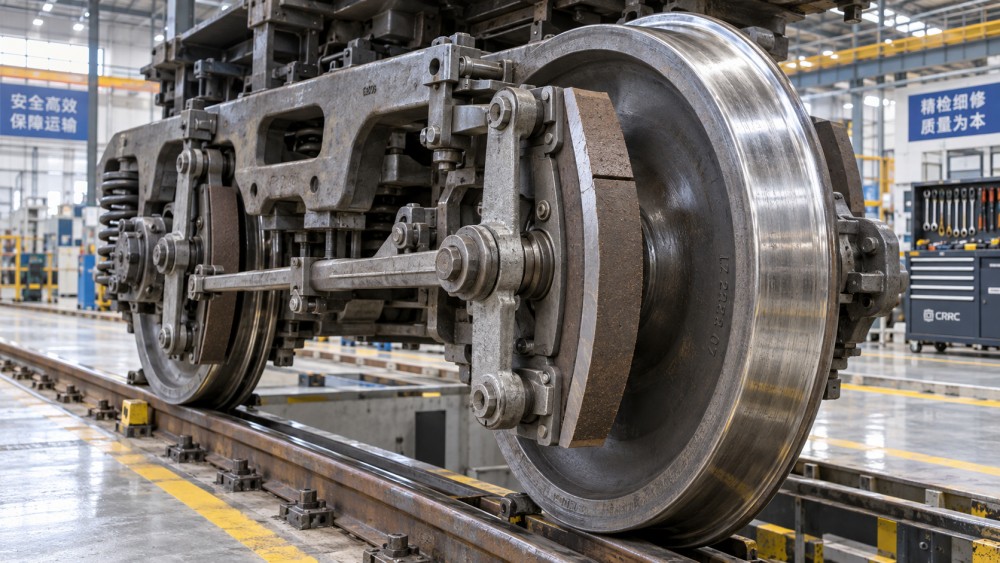
Uneven wear can mean taper across one shoe, different thicknesses between paired shoes, or unusually rapid wear at one wheel compared with equivalent positions.
These patterns suggest different mechanisms. Start by identifying whether the problem affects the contact surface, an individual brake assembly, or several positions sharing common rigging.
A shoe worn more heavily at one end often indicates angular contact. Possible contributors include holder alignment, brake beam position, or excessive joint clearance.
Wear concentrated along one edge can indicate lateral misalignment, incorrect positioning, or incompatible contact geometry. Inspect wheel tread condition before attributing everything to the rigging.
One shoe wearing substantially faster than comparable shoes suggests unequal application, local binding, incomplete release, or a material difference that requires checking against maintenance records.
Several affected shoes connected to one mechanism justify inspecting shared levers, pivots, adjustment devices, and cylinder operation before treating each shoe as an isolated defect.
Record the location and orientation of wear before removing components. Photographs and consistent thickness measurements help technicians compare findings across inspections and subsequent repairs.
Use these associations to prioritize inspection, rather than declare a diagnosis. Similar wear patterns can arise from different faults, and multiple faults may coexist.
Why Misaligned or Worn Brake Rigging Produces Uneven Contact
Brake rigging transfers cylinder force through levers, rods, beams, and holders. Its geometry determines how each shoe approaches the wheel and distributes contact pressure.
Worn pins, elongated holes, damaged bushes, or loose connections can let components move beyond their intended alignment, concentrating pressure on part of the shoe.
A bent beam or distorted holder can create similar effects even when joints remain serviceable. Look for deformation, impact evidence, and abnormal seating positions.
Inspect the mechanism in both released and applied conditions using the approved procedure. Some alignment problems become apparent only when load changes component positions.
Compare affected positions with equivalent serviceable assemblies, but verify against drawings and maintenance instructions. An apparently symmetrical arrangement does not necessarily require identical settings.
Also confirm that shoes, holders, retaining components, and rigging parts match the wagon configuration. A physically installable component may still have unsuitable geometry or specification.
Correct worn joints and distorted components before relying on adjustment alone. Adjusting around a mechanical defect can temporarily change contact while leaving the cause unresolved.
After repair, check secure retention, intended movement, and applied contact. A static inspection alone cannot establish how the assembly behaves throughout its operating travel.
How Sticking Components and Incomplete Release Accelerate Wear
A shoe that remains against the wheel after release continues generating friction. Even modest residual contact can accumulate substantial wear over long freight journeys.
Potential causes include seized pivots, corrosion, debris, damaged components, restricted movement, or a fault within the brake cylinder or its associated release mechanism itself.
Air brake faults can also prevent proper release. Investigate retained pressure or pneumatic malfunction when observations indicate that the mechanical linkage alone cannot explain dragging.
Check whether the affected shoe clears the wheel after an approved application and release sequence. Observe relevant movement and pressure indications where the equipment permits.
Include the handbrake and its linkage in the inspection. Incomplete handbrake release or interference between mechanisms can maintain contact even when pneumatic braking has released.
Repeated heating, discoloration, unusual odor, or accelerated wear may support a dragging brake diagnosis. None of these observations independently identifies the component responsible, however.
Compare available temperature information only under comparable operating conditions. Recent braking, gradients, load, weather, and measurement timing can produce differences unrelated to a mechanical fault.
If dragging or significant wheel damage is suspected, follow the applicable operating restrictions and maintenance procedures. A shoe replacement alone does not establish fitness for service.
When Adjustment, Shoe Selection, or Wheel Condition Is Responsible
Incorrect adjustment can change available clearance and operating travel. Depending on the design, this may contribute to delayed contact, restricted release, or uneven application.
An automatic slack adjuster also needs inspection when travel or clearance is abnormal. Verify its function and installation rather than assuming automatic adjustment guarantees correct geometry.
Measure cylinder travel and relevant clearances against the instructions for that wagon and brake arrangement. Universal numerical limits would be misleading across different freight fleets.
Shoe selection matters because approved materials differ in friction characteristics, wear behavior, and wheel compatibility. Confirm the specified product before evaluating whether wear is abnormal.
Mixed materials or unauthorized substitutions can complicate comparisons and alter braking behavior. Check part identification, installation records, and the approved configuration whenever wear changes unexpectedly.
A newly installed shoe may initially contact an existing wheel unevenly because their surfaces do not match perfectly. Assess bedding behavior using the applicable instructions.
Persistent severe taper should not be dismissed as bedding. Check alignment, correct shoe orientation, holder seating, and the wheel profile before accepting continued operation without repair.
Wheel tread irregularities can alter contact and accelerate localized wear. Examine the tread for relevant profile defects, surface damage, and evidence of excessive thermal exposure.
Any wheel repair or replacement decision must follow the applicable acceptance criteria. Installing another shoe cannot correct a wheel condition that remains outside those limits.
Can Route Conditions Explain the Difference Between Wagons?
Long descents, frequent stops, heavy loading, and intensive braking increase frictional duty. They can shorten shoe life even when the brake equipment functions correctly.
These conditions do not, by themselves, explain a strongly tapered shoe or one persistently dragging position. Localized patterns still require inspection of the affected assembly.
Compare wear rates among wagons with similar brake equipment, shoe material, loading, and route exposure. Mileage alone can obscure substantial differences in actual braking duty.
Load-dependent braking equipment, where fitted, should also be checked when wear differs unexpectedly between loaded and empty operation. Confirm correct sensing and operation through approved tests.
Review recent route changes, operating practices, and maintenance interventions alongside component findings. A fleet-wide change suggests a different investigation from repeated wear at one location.
Useful comparison measures include remaining thickness at defined positions, replacement intervals, and recorded operating exposure. Maintain consistent measurement methods so trends represent actual wear differences.
Fleet averages can conceal individual defects. Track recurring positions and outliers separately to identify wagons whose mechanical condition warrants attention despite acceptable overall replacement costs.
A Practical Inspection Sequence for Maintenance Teams
Begin with the wagon secured and the brake system prepared according to the approved maintenance procedure. Stored pneumatic energy and moving rigging require controlled handling.
First, document the complaint and inspect all relevant shoes. Record thickness, taper direction, surface condition, identification, and position rather than documenting only the worst component.
Second, inspect the corresponding wheel treads. Note contact bands, surface defects, and thermal evidence, then determine whether the wheel requires evaluation under applicable limits.
Third, inspect the mechanical path from the shoe holder through the rigging. Check joints, retention, deformation, interference, and freedom of movement throughout the required travel.
Fourth, carry out the specified application and release checks. Observe contact development, cylinder travel, adjustment behavior, and whether each affected shoe releases as intended.
Fifth, examine pneumatic and handbrake functions when the findings point to retained force. Select further tests from the system documentation rather than improvising adjustment changes.
Finally, relate the observations to maintenance and operating history. Identify the supported cause, required repairs, and any remaining uncertainty before returning the wagon to service.
Record measurements and test results after correction. This creates a baseline for follow-up inspection and helps distinguish an effective repair from a temporary improvement.
Which Corrective Actions Prevent Repeat Replacements?
Match the repair to the demonstrated fault. Misalignment calls for correcting geometry or damaged components; binding calls for restoring specified movement and release behavior.
Renew worn pins, bushes, holders, or other components according to their acceptance criteria. Use lubrication only where specified, with approved products and application methods.
Where adjustment is responsible, restore the specified settings and verify the adjuster function. Recheck application and release after changing settings or replacing related components.
Replace shoes that exceed wear limits or have unacceptable damage, using the approved specification. Determine whether associated shoes require replacement under the applicable maintenance instructions.
For purchasing teams, evaluate dimensional compliance, traceability, and approved compatibility alongside price. Better procurement cannot compensate for defective rigging, but unsuitable parts can undermine repairs.
For fleet managers, measure success through recurrence, unplanned maintenance, wheel damage, and verified replacement intervals. Longer shoe life alone does not demonstrate satisfactory braking performance.
Repeated defects across a common wagon type justify a focused engineering review of component condition, installation practices, approved specifications, and the maintenance process itself.
Apply the requirements governing the specific fleet, including relevant operator instructions and applicable AAR, UIC, or EN provisions. These references are not interchangeable maintenance specifications.
The Key Decision: Find the Cause Before Replacing the Shoe
Uneven freight wagon brake shoe wear usually reflects unequal contact, unequal force, or friction that continues after release. Wear patterns help identify where to investigate.
The strongest diagnosis combines physical measurements with observed brake operation and equipment history. Neither the shoe’s appearance nor an isolated temperature reading provides complete proof.
Correct the underlying mechanical, adjustment, pneumatic, or compatibility fault, then verify application and release. Follow wheel assessment requirements whenever heat or tread damage is present.
For maintenance teams and fleet managers, preventing recurrence is the practical objective: reliable braking, fewer avoidable replacements, and reduced exposure to costly wheel damage.